Loading a Machine on a Desert Shoulder
There's nothing quite like the freedom of tearing across Arizona's vast desert landscapes on your ATV or UTV, but that exhilaration often comes with a dose of harsh reality when it’s time to head home. Trying to load a heavy machine onto a trailer or into a truck bed on a narrow, dusty, and often uneven desert shoulder can feel like a high-stakes circus act, with traffic whizzing by and the sun beating down. This guide is all about navigating those real-world challenges, helping you understand the unique dangers of roadside loading in Arizona, and providing practical, step-by-step advice to get your machine safely secured for the drive home, minimizing stress and maximizing your safety.
The Realities of Arizona Desert Shoulders and Safety Risks
Arizona’s beauty comes with its own set of challenges, especially when you find yourself needing to load up your off-highway vehicle (OHV) on the side of a road. Unlike a paved parking lot at a trailhead, desert shoulders are often unpredictable and fraught with potential hazards. Ignoring these realities can turn a simple task into a dangerous situation, both for you and for passing motorists.
Understanding Arizona's Unique Roadside Environment
When you picture an Arizona road, you might envision wide-open spaces, but the reality of the shoulders themselves can be quite different. Many state highways and county roads outside of major towns like Florence, Kingman, or Payson feature shoulders that are far from ideal for loading. You're often dealing with a narrow strip of asphalt or, more commonly, loose gravel and soft, powdery sand that can give way under the weight of your vehicle or, worse, your ramps. The terrain is rarely perfectly level, even if it looks flat from the driver's seat. There might be subtle dips, washes, or hidden rocks that can destabilize your tow vehicle, your trailer, or your OHV during the loading process.
Visibility is another massive concern. On long, straight stretches, you might feel like you can see for miles, but what about those blind curves or subtle crests in the road? A moment of inattention from a passing driver, or even another OHV coming around a bend, can create a terrifying close call. You also have to consider the speed of traffic. Even on county roads, vehicles can be moving at 50 or 60 miles per hour, generating significant wind blast that can make balancing ramps or maneuvering your machine even more challenging. The distinct lack of streetlights in many remote areas also means that if dusk or darkness catches you, visibility becomes exponentially worse.
Identifying Potential Hazards Beyond Traffic
While passing traffic is undeniably the biggest and most immediate threat when loading on a desert shoulder, there are numerous other environmental hazards unique to Arizona that demand your attention. The ground itself, as mentioned, can be treacherous. You might think you've found a solid patch, only for the tires of your truck or trailer to sink slightly, throwing off the angle of your ramps or making your entire setup less stable. This can be especially true after recent rains, even if the surface appears dry; moisture can linger deeper, making sandy shoulders deceptively soft.
Then there's the heat. Arizona summers are notorious, and the asphalt of a roadway or a dark trailer bed can become incredibly hot, making kneeling, handling metal ramps, or even just standing for an extended period uncomfortable and potentially dangerous due to heat exhaustion. Beyond temperature, the desert is alive, and not always with friendly creatures. Snakes, scorpions, and other critters often seek shade under parked vehicles or trailers, and a momentary lapse in awareness could lead to an unwelcome encounter. Kicking up dust from passing vehicles or even your own OHV can also impair visibility, and sudden gusts of wind, common in the desert, can catch ramps or even an unsecured machine, adding another layer of risk to an already delicate operation.
Pre-Loading Preparation: Setting Yourself Up for Success
You can't always control where a mechanical issue happens or where you decide to wrap up a ride, but you can control how you prepare for the inevitable act of loading your machine. Proper preparation, especially when facing the unpredictable nature of Arizona's desert roadsides, is your best defense against accidents and frustration. Thinking ahead can literally save you a limb, or your ride.
Choosing the Safest Spot to Pull Over
The single most critical decision you'll make when loading on a desert shoulder is where you actually stop. Don't settle for the first available patch of dirt if it's less than ideal. Your criteria should be paramount: look for the widest possible shoulder, ensuring you have ample space between your vehicle/trailer and the active traffic lane. The ground needs to be as level as possible, both front-to-back and side-to-side, to prevent your vehicle from rocking and to keep your ramps from twisting. Most importantly, the ground must be firm. Soft sand or loose gravel is a recipe for disaster, as your ramps can dig in or shift unexpectedly.
Good sightlines are non-negotiable. Avoid pulling over immediately after a blind curve, at the crest of a hill, or anywhere that limits the visibility of oncoming traffic. You need enough distance for drivers to see you, slow down, and move over safely. If you’re near a wash, ensure it’s completely dry and stable, and consider if there's an old, seldom-used access road or a designated pull-out nearby. These spots, even if they add a few extra minutes to your drive, are exponentially safer than a precarious roadside stop. Sometimes, the safest option is to drive an extra five or ten miles down the road to the next gas station, town, or designated staging area rather than attempting to load in a truly dangerous spot. Remember, patience is a virtue, especially when safety is on the line. [Desert Gas Stations That Serve Riders] can be lifesavers in these situations, providing much better conditions.
Essential Gear for Safe Desert Loading
Having the right gear isn't just about convenience; it's about making the loading process on an unforgiving desert shoulder as safe and efficient as possible. First and foremost, let's talk ramps. Many riders skimp here, but a cheap, flimsy, or short set of ramps can be incredibly dangerous. You need ramps that are rated for the weight of your OHV, long enough to create a gentle loading angle (especially if your truck or trailer is tall), and wide enough to provide stability. Aluminum arch ramps, often found from brands like SuperATV, are popular because they're lightweight, strong, and the arch helps prevent bottoming out. Make sure your ramps have secure attachment points that prevent them from kicking out from under your machine – this is a common failure point that can lead to serious injury.
Beyond ramps, robust tie-down straps are absolutely non-negotiable. Ratchet straps are generally preferred over cam buckle straps for their superior holding power and ability to truly compress the suspension of your OHV, preventing it from bouncing. You'll want at least four good quality straps for a UTV or larger ATV, with a sufficient weight rating. For added security, wheel chocks for your trailer or tow vehicle are a smart investment, especially on unlevel ground. Traction aids, such as sand mats or even a sturdy piece of plywood, can be invaluable if you're loading on soft sand and need to give your OHV's tires something solid to grip. Finally, always carry safety cones or reflective triangles to place behind your setup, a high-visibility vest for anyone assisting, and a bright flashlight or headlamp if there's any chance you'll be loading in low light conditions. This gear acts as a visual warning to passing drivers and keeps you visible.
The Loading Process: Step-by-Step for Security and Stability
Even with the best preparation, the actual act of loading your ATV or UTV can be nerve-wracking, especially when you're doing it on the side of a busy desert road. Taking a methodical, step-by-step approach significantly reduces the risk of accidents and ensures your valuable machine is secured properly for the journey ahead. Rushing is your enemy here.
Positioning Your Vehicle and Ramps Correctly
Before you even think about putting a wheel on a ramp, ensure your tow vehicle and trailer (or just your truck) are positioned perfectly. You want them as far off the active roadway as possible, maximizing your working space and distance from traffic. Make sure the trailer is level, or as close to level as the uneven desert shoulder allows. If you’re using a trailer, ensure it’s securely hitched and that the parking brake is engaged on your tow vehicle. For an extra layer of safety, especially on a slight incline or soft ground, place wheel chocks under the trailer tires. This prevents any accidental movement of the entire setup while you’re loading.
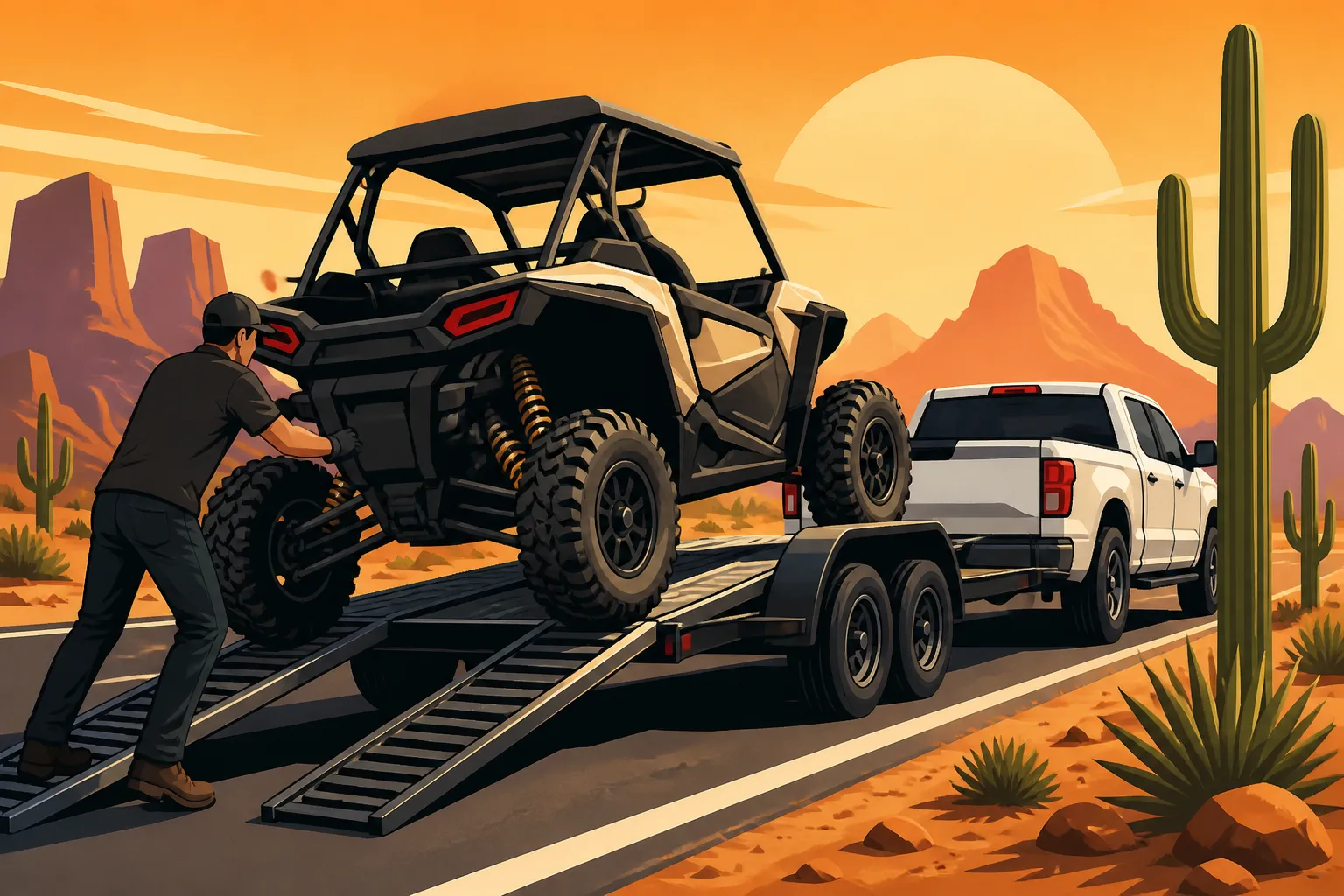
Next, it’s all about the ramps. Position them directly in line with your OHV's tires. The angle of the ramps is crucial – if they’re too steep, you risk tipping, losing traction, or bottoming out your machine. If your truck or trailer is high, longer ramps are your friend. Secure the ramps to your truck bed or trailer gate using the integrated straps or pins. This step is non-negotiable; ramps kicking out is a primary cause of serious loading accidents. Take a moment to clear any debris, rocks, or loose sand from the approach path to your ramps and the ramps themselves. A smooth, clear path is a safe path.
Driving or Winching Your Machine On
Now for the moment of truth: getting your OHV onto the trailer or truck. If your machine is operational, approach the ramps slowly and deliberately, keeping the wheels perfectly aligned. Maintain a steady, low speed—this isn't the time for heroics or excessive throttle. Look straight ahead, not down at the ramps. Having a spotter is incredibly helpful here, especially for larger UTVs where visibility can be limited. Communicate clearly and frequently. For ATVs, stand on the footpegs, centered over the machine, using your body weight to maintain balance. For UTVs, ensure all passengers are out of the vehicle before loading.
If the terrain is particularly soft, if your machine is broken down, or if you simply prefer maximum control, consider using a winch. Many aftermarket winches, including those from brands like SuperATV, are powerful enough for this task. Spool out the winch cable and attach it securely to a strong point on your trailer or truck bed. Guide your OHV up the ramps using the winch, maintaining slight tension to prevent it from rolling back. This method offers unparalleled control and can be a lifesaver when conditions are less than ideal. If you've ever had to deal with [Winching Out of a Sandy Wash], you know the value of a good winch! Always make sure to check your OHV’s tires before loading to ensure they're properly inflated for stability.
Securing Your OHV for Transport
Once your OHV is on the trailer or in the truck bed, the job isn't done—it's just beginning. Properly securing your machine is paramount for safe transport and prevents damage to your OHV, your trailer, and potentially other vehicles on the road. This is where quality tie-down straps truly shine. You want to use at least four points of contact for a secure hold, typically anchoring to the frame of your OHV and solid points on your trailer. Avoid strapping down through the suspension components like A-arms or axles if possible, as this can allow the machine to bounce and work the straps loose. The goal is to compress the suspension slightly, creating constant downward pressure that prevents movement.
Here's a quick comparison of common strapping methods:
| Strap Type | Best Use Cases | Pros | Cons |
|---|---|---|---|
| Ratchet Straps | Heavy OHVs, long hauls, securing suspension | Strong hold, high tension, very secure | Can over-tighten, more complex to release |
| Cam Buckle Straps | Lighter ATVs, shorter trips, quick release | Easy to use, quick to adjust | Less tension, can loosen over bumps, lower weight limits |
| Wheel Chock Straps | Specific for UTVs/ATVs with larger tires | Secures directly to wheels, minimizes suspension travel | May not be suitable for all tire sizes/designs |
| Soft Loops | Protecting paint/finishes, awkward anchor points | Prevents scratching, versatile | Add an extra connection point to inspect |
After securing your OHV, give it a good shake. Seriously. Try to rock the machine side to side and front to back. If there's any significant play or movement, re-adjust and re-tighten your straps. Ensure all excess strap material is tied off or tucked away so it doesn't flap in the wind, which can distract other drivers or even come undone. Double-check that your ramps are stowed away securely as well; you don’t want them flying off the back of your trailer on the highway. For more detailed instructions, make sure to review guides like [Tying a Machine Down for the Highway].
Post-Loading Considerations and Road Awareness
You’ve conquered the desert shoulder, safely loaded your machine, and secured it for the journey. But the process isn't truly complete until you've reached your destination without incident. The final steps involve diligent checks and a heightened awareness of how your newly loaded setup handles on Arizona's roads.
Double-Checking and Final Safety Measures
Before you even pull away from the shoulder, do a thorough walk-around. Are all straps tight? Are they correctly routed and not rubbing against anything that could cause chafing or premature wear? Are your ramps properly stowed and secured? Are your trailer lights functioning correctly? (This is especially important if you just registered your trailer, as covered in [Trailer Registration for Hauling Quads in Arizona].) Take a quick glance at your OHV’s tires and your trailer tires. A flat or underinflated tire on either the machine or the trailer can quickly lead to instability.
Once you hit the road, make a conscious effort to stop after the first five to ten miles of driving. This is a critical habit. Road vibrations, bumps, and turns can cause straps to loosen or shift, even if they seemed rock-solid initially. Pull over in a safe, designated spot – like a gas station or a wide pull-out – and re-check every single strap. Tighten anything that feels even slightly loose. Get into the habit of glancing in your mirrors frequently as you drive, specifically looking at your load. If you notice any unusual movement, pull over immediately to investigate. It's far better to be cautious and take an extra few minutes than to deal with a much more significant problem down the road.
Navigating Arizona Roads with a Loaded Trailer
Driving with a loaded trailer or a heavy OHV in your truck bed changes your vehicle's dynamics considerably. Your stopping distances will be significantly longer, so maintain greater following distances, especially on highways like I-10 or US-60. Your acceleration will be slower, meaning you'll need more time and space to merge or pass. Be mindful of the [Speed Limits for Arizona Machines on Roads] when you're towing, as these limits often differ for vehicles with trailers. Crosswinds, a common occurrence in the open Arizona desert, can push and pull at your trailer, requiring constant attention and minor steering corrections. A larger UTV loaded high can act like a sail, increasing the effect of wind.
Heat also remains a factor for your tow vehicle. Towing heavy loads in Arizona's extreme temperatures puts a lot of stress on your engine, transmission, and especially your tires. Ensure your tow vehicle's tires are inflated to the proper pressure for hauling and consider the impacts of [Tire Pressure on Hot Pavement]. Watch your vehicle's temperature gauges closely. If you encounter a sudden dust storm, a frequent Arizona phenomenon, remember that [Dust Storms on an Arizona Highway] can reduce visibility to zero in seconds. Slow down dramatically, pull over if safe to do so, and turn off your lights until visibility improves. Finally, always stay alert for unexpected road conditions like flash floods, particularly during monsoon season, as [Monsoon Flooding Across an Arizona Road] can appear without warning and create extremely hazardous situations. Being prepared, remaining vigilant, and exercising caution will ensure you and your OHV make it home safely, ready for your next Arizona adventure.
Disclaimer
This article is for general informational purposes only and does not constitute professional advice. Laws, prices and regulations vary by location and change over time. Consult a qualified professional for guidance on your specific situation.