Riding a River Beach on a Machine
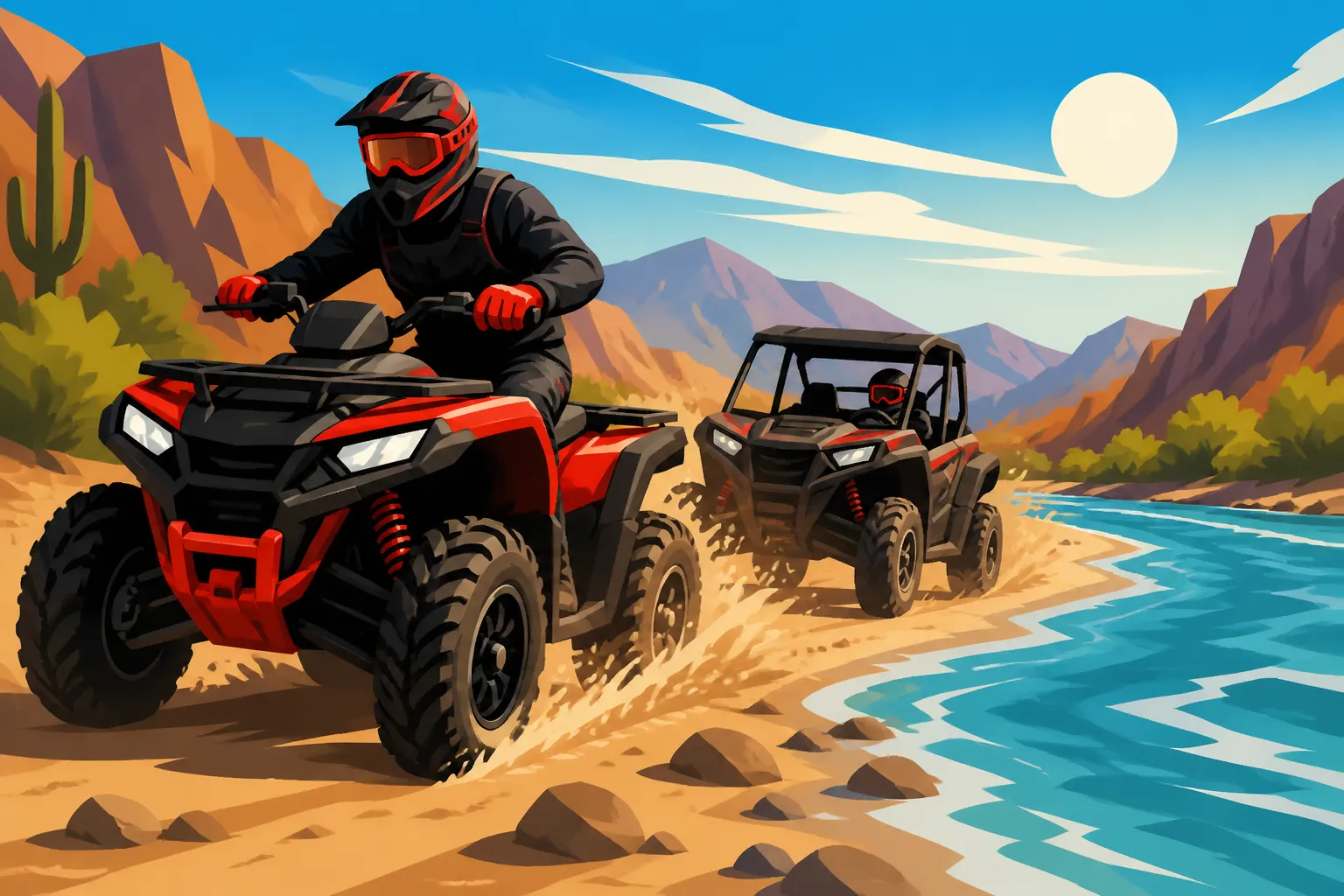
There’s something incredibly alluring about the idea of riding your ATV or UTV right up to the water's edge, feeling the spray, and cruising along a sandy river beach here in Arizona. Many of us picture those wide-open stretches of sand and gravel, imagining the perfect blend of off-road adventure and waterfront tranquility. But the reality can be a stark contrast to that dream, often riddled with confusion, unexpected legalities, and environmental restrictions that can quickly turn a fun outing into a frustrating run-in with the law. This guide aims to clear up the muddy waters, giving you a realistic understanding of what's allowed, what's not, and how to safely and legally navigate the waterways and riverbeds of our beautiful desert state.
The Allure and the Legal Labyrinth of Arizona River Beaches
Let's be honest, the desert is hot, and the thought of riding an OHV near water is incredibly appealing. Arizona might be known for its vast, arid landscapes, but we also have stunning rivers like the Colorado, Verde, Salt, and Gila, which carve their way through the terrain, creating beautiful riparian areas. These spots often feature sandy beaches, gravel bars, and shallow crossings that look like perfect playgrounds for our side-by-sides and quads. The temptation to kick up some sand by the river, or even use your machine to access a prime fishing or camping spot right on the bank, is strong.
However, the perceived freedom of these areas often clashes with a complex web of land ownership, environmental regulations, and specific OHV laws designed to protect our natural resources and public safety. What looks like an open, inviting expanse might actually be private property, sensitive wildlife habitat, or under strict government management. The dream of a carefree ride along the river quickly becomes a legal labyrinth, and many riders find themselves unintentionally breaking rules they didn't even know existed.
Why River Riding Is So Appealing to OHV Enthusiasts
The draw is undeniable. Imagine the cooler temperatures near the water, the unique terrain of riverbeds with their mix of sand, gravel, and occasional shallow flows. It’s a different kind of challenge and beauty compared to the typical rocky desert trails. For many, it's about the scenic value – the contrast of vibrant green riparian zones against the red rock or desert scrub, the chance to see wildlife drawn to the water, or simply finding a tranquil spot to relax by the river after a ride. The sense of adventure in exploring an environment that's constantly changing with the water levels and seasonal flows adds to the excitement. It also offers a refreshing break, especially during the warmer months, allowing riders to cool off and enjoy a different facet of Arizona's diverse landscape.
The Overlapping Jurisdictions That Complicate Access
The biggest headache for riders hoping to hit a river beach isn't just one rule, but many different rules from various agencies. Arizona's rivers and their adjacent lands are governed by a patchwork of entities: the Bureau of Land Management (BLM), the U.S. Forest Service (USFS), Arizona State Land Department (ASLD), Arizona Game and Fish Department (AZGFD), tribal nations, private landowners, and even local cities and counties. Each of these has its own set of regulations regarding motorized vehicle access, off-road travel, and environmental protection.
For example, a stretch of river might flow through BLM land, then private property, then a state park, and then an Indian Reservation, all within a few miles. What's allowed on one section might be strictly prohibited on another, often without clear signage. This makes it incredibly difficult for even the most well-intentioned rider to know if they're on legal ground. Add to this the fact that riverbeds themselves are often considered sensitive ecosystems, and it's easy to see why broad, unrestricted access is rarely permitted. This complex web is a common source of frustration for riders who just want to enjoy the outdoors.
Understanding Arizona's Waterway and Riverbed Regulations
Navigating Arizona's waterways with an OHV requires a deep understanding of the specific rules in place, which are often much more stringent than those for upland desert trails. It’s not just about land ownership; it's about the very nature of the riverbed itself, which is often a state trust or public resource and a vital ecological corridor. These regulations are designed to prevent erosion, protect water quality, safeguard delicate riparian habitats, and ensure the safety of other recreational users like hikers, anglers, and kayakers.
The general rule of thumb to keep in mind is that actively flowing water and its immediate banks are highly protected. While some specific, designated areas might allow limited OHV access to cross a dry wash or launch a boat, extensive recreational riding in the riverbed or along a river beach is typically restricted or prohibited. Ignorance of these laws is no excuse, and the penalties for violations can be significant, ranging from hefty fines to impoundment of your machine. [What an Arizona Ranger Asks a Rider For] is something you want to be prepared for, especially if you're venturing near sensitive areas.
The "Bed and Banks" Rule and Its Impact on OHV Use
A cornerstone of Arizona's water law is the concept of "bed and banks." Historically, the bed of a navigable river, up to its ordinary high-water mark, is often considered state land, held in trust for the public. Even if the adjacent land is private, you might still be able to legally traverse the riverbed if it's navigable and designated as public. However, the legal definition of "navigable" is often debated and can be complex, and it doesn't automatically mean "motorized vehicle accessible." For most of our rivers, the state's interest is primarily to preserve the natural flow and ecosystem, not to promote OHV recreation within the active channel or its immediate banks.
The "bed and banks" rule significantly limits OHV use because it protects the very area riders are often most interested in – the sandy or gravelly edge of the water. Even on public lands, agencies like the BLM and USFS generally restrict motorized vehicles to designated routes, and these routes rarely include riding directly in or along a river. The goal is to prevent damage to fragile riparian vegetation, reduce erosion into the water, and avoid disturbing wildlife that rely on these critical habitats. So, while you might legally cross a dry wash on a designated trail, riding up and down a flowing riverbed is almost always a no-go.
Prohibited Areas and Common Misconceptions
One of the biggest misconceptions riders have is that if it's not explicitly marked as private, it must be public and therefore open to OHV use. This is dangerously untrue, especially near water. Many riparian areas, even on public lands, are designated as "Area of Critical Environmental Concern" (ACEC) or are protected under specific habitat management plans. These areas often have blanket prohibitions on motorized vehicle travel off designated routes, and sometimes even prohibit all motorized vehicles.
Commonly prohibited areas include:
- Within the active channel or ordinary high-water mark: This is where the river actually flows, even seasonally.
- Riparian zones: The vegetated areas immediately adjacent to the river, critical for wildlife and water quality.
- Designated wilderness areas: Absolutely no motorized vehicles are allowed in these pristine areas. [Arizona Wilderness Boundaries and Machines] outlines this clearly.
- National Parks and Monuments: Highly restricted access, usually to paved roads only.
- State Parks and Natural Areas: Again, typically no OHV access outside of specific parking lots or paved roads.
- Private property: Riding on private land without explicit permission is trespassing, a serious offense.
It's also a misconception that just because you've seen others riding in a particular riverbed, it means it's legal. Often, those riders are either uninformed, ignoring the rules, or simply haven't been caught yet. The presence of tracks doesn't imply legality. Always do your research, consult current Motor Vehicle Use Maps (MVUMs) for Forest Service and BLM lands, and verify access before you venture out. [Checking Arizona Trail Status Before You Drive] is vital for any ride, especially one near water.
| Land Type | Typical OHV Access along Rivers | Common Restrictions/Considerations |
|---|---|---|
| Bureau of Land Management (BLM) | Generally restricted to designated routes; most riverbeds closed. | MVUMs are crucial. Riverbeds are often closed to protect riparian zones. Some areas allow crossing of dry washes on specific routes. |
| U.S. Forest Service (USFS) | Restricted to designated routes; riverbeds almost universally closed. | MVUMs are mandatory. Focus on designated roads and trails away from the immediate river edge. Strong emphasis on protecting water quality and riparian habitat. |
| Arizona State Land Dept. (ASLD) | Private property that requires a Recreational Permit for passage; riverbeds generally closed. | Requires an Arizona State Trust Land Recreational Permits for any recreation. Riding in riverbeds is generally not permitted, as these are considered sensitive. Trespassing is an issue without a permit. |
| State Parks/Natural Areas | Typically no OHV access; restricted to parking areas/paved roads. | Designed for conservation and passive recreation. OHV use is incompatible with their mission. |
| Private Property | No access without explicit permission from the landowner. | Always verify ownership. Riding without permission is trespassing, regardless of whether the land is fenced or posted. |
| Tribal Lands | Requires tribal permit and adherence to tribal laws; highly restricted. | Specific permits and rules vary by tribe. Generally, off-road vehicle use is strictly controlled or prohibited. Tribal Land and OHV Access in Arizona is essential reading. |
Responsible Riding and Minimizing Environmental Impact
Even in areas where limited OHV access near waterways might be permitted—perhaps a designated crossing point or a staging area near a lake—responsible riding is absolutely paramount. Our desert ecosystem, especially the areas close to water, is incredibly fragile. The impact of an OHV can be far-reaching, from direct damage to vegetation and soil to disturbing wildlife and polluting water sources. As riders, it’s our duty to be good stewards of the land, ensuring that these beautiful places remain healthy and accessible for future generations.
This isn't just about avoiding fines; it's about preserving the very landscapes we love to explore. A single irresponsible act, like riding through a protected wetland or creating new tracks in a pristine area, can lead to widespread closures and give all OHV enthusiasts a bad name. Being a responsible rider means more than just having a [Arizona's Annual OHV Decal Explained]; it means understanding your footprint and actively working to reduce it.
Staying on Designated Routes Near Waterways
The most critical rule for minimizing environmental impact, especially near water, is to stay on designated routes. This cannot be stressed enough. Designated routes, clearly marked on Motor Vehicle Use Maps (MVUMs) for federal lands or identified by local land managers, are specifically engineered and approved for motorized use. They are designed to minimize erosion, avoid sensitive habitats, and manage traffic flow. When you deviate from these routes, even for a short distance, you risk irreparable damage.
Consider this: a single pass through a vegetated riparian zone can crush young plants, compact soil, and create channels for water runoff that lead to erosion. This erosion can then carry sediment and pollutants directly into the river, harming aquatic life and degrading water quality. It disturbs nesting birds, small mammals, and other wildlife that rely on the cover and resources of the riverbanks. Even a dry wash can be a vital wildlife corridor, and riding indiscriminately through it can destroy burrows and disrupt migration patterns. Adhering to established trails helps concentrate impacts to already disturbed areas, allowing sensitive habitats to recover and thrive. This is why you'll often find specific restrictions regarding [Arizona Rules on Canal Banks] or crossing particular washes.
Preventing Pollution and Protecting Riparian Habitat
Beyond staying on trails, preventing pollution is another crucial aspect of responsible riding near water. Your OHV can be a source of various pollutants, from fuel and oil leaks to dust and trash. These substances can easily find their way into waterways, with devastating consequences for the ecosystem. Even a small fuel spill can contaminate a significant amount of water and soil.
Here are some key practices:
- Maintain your machine: Ensure your ATV or UTV is in good working order, with no leaks of oil, gas, or other fluids. Consider upgrading seals or using high-quality engine components from trusted brands like SuperATV to minimize the chance of unexpected leaks on the trail.
- Pack it in, pack it out: This old adage is absolutely vital. Leave no trace. Everything you bring with you, including trash, food scraps, and even human waste, must be packed out. Avoid using river water for washing dishes or vehicles with soap, as even biodegradable soaps can harm aquatic life.
- Mind your fluids: If you must refuel, do so well away from the water's edge and over a drip pan or absorbent mat. Carry spill kits with you for emergencies.
- Respect wildlife: Riparian areas are magnets for wildlife. Give animals space, observe from a distance, and never chase or harass them with your machine. This is especially true during nesting seasons or when young are present.
- Control dust: Excessive dust can settle on riparian vegetation, inhibiting growth, and can also contribute to air quality issues in populated areas. Driving at appropriate speeds and on established routes can help minimize this.
By consciously practicing these habits, we can ensure that our riding adventures don't come at the expense of Arizona's precious rivers and the life they support.
Navigating Specific Rivers and Lake Areas: What to Expect
While broad access to river beaches for casual OHV riding is largely restricted in Arizona, there are specific areas where some limited access to waterways or lake shores might be possible, usually for purposes like boat launching, designated crossing points, or accessing established campgrounds. These exceptions are rare, highly regulated, and generally require you to be on a clearly marked and officially recognized route. It's never about open cruising along miles of riverbank.
Your best bet for finding legal access near water will be on lands managed by the Bureau of Reclamation (BOR), which manages many of our large dam and reservoir systems, or specific areas within BLM or Forest Service lands that have been explicitly designated for OHV recreation with access to water features. Always remember that even if you find a legal access point, the "bed and banks" rules and environmental protections still apply the moment you leave the designated route.
Colorado River System: Lake Havasu, Parker Strip, Lake Mohave
The Colorado River system, particularly around Lake Havasu and the Parker Strip, offers some of the most concentrated opportunities for OHV recreation near water in Arizona. This region is famous for its dunes and desert trails that often lead to or run alongside the river. However, even here, "riding a river beach" needs clarification. You'll primarily find OHV access to:
- Designated staging areas and campsites: Many areas like Cattail Cove State Park or parts of the Parker Strip offer direct access to the water for camping or boat launching, often requiring you to drive your OHV on designated routes to reach these spots.
- Trail systems that approach the river: Some trails on BLM land, such as those around Copper Basin Dunes, might bring you close to the river or allow you to access a specific shoreline for a short period.
- Boat launch areas: Your OHV might be used to tow a boat to a launch ramp, but riding extensively on the sandy areas away from the ramp is often prohibited.
It’s crucial to check local ordinances and maps for the specific area you plan to visit. For instance, while you can ride trails that overlook Lake Havasu, actually driving your OHV on the public swimming beaches or through sensitive shoreline vegetation is generally forbidden. The goal here is usually to access the water from a designated point, not to ride in or along the water extensively.
Verde River, Salt River, and Gila River Access
Access along Arizona's interior rivers like the Verde, Salt, and Gila is significantly more restricted for OHV use compared to the Colorado River system. These rivers are vital for Arizona's water supply, agricultural needs, and serve as critical ecological corridors, often flowing through highly sensitive riparian areas.
- Verde River: Much of the Verde River is protected, with large sections designated as Wild and Scenic River. OHV access is extremely limited, typically to designated crossings on forest roads or specific recreation sites. Riding along the riverbanks or in the active riverbed is generally prohibited to protect its pristine nature and diverse wildlife.
- Salt River: While parts of the Salt River are popular for tubing and kayaking, OHV access is very controlled. You might find designated staging areas or roads that parallel the river for a short stretch, especially around the Tonto National Forest, but riding in the river itself or creating new tracks along its banks is strictly forbidden. These areas are heavily managed for recreation and conservation.
- Gila River: The Gila River, especially its more natural, undammed sections, flows through diverse lands, including tribal lands and private property, and is often ephemeral. OHV access is sporadic and almost entirely restricted to designated trails that might cross a dry Gila River bed or approach it. Active riding in the riverbed when it's flowing is virtually unheard of and would be highly illegal and damaging.
In short, for these interior rivers, the romantic idea of "riding a river beach" is largely incompatible with current land management and conservation goals. Stick to the extensive network of [Arizona's 40,000 Miles of OHV Trail] found away from these sensitive riverine environments. For those seeking specific gear for tough desert conditions that occasionally involve water crossings, brands like SuperATV offer robust components like snorkels and sealed bearings, which are valuable for protecting your machine against dust and occasional water, but they don't change the legality of where you can ride.
Disclaimer
This article is for general informational purposes only and does not constitute professional advice. Laws, prices and regulations vary by location and change over time. Consult a qualified professional for guidance on your specific situation.