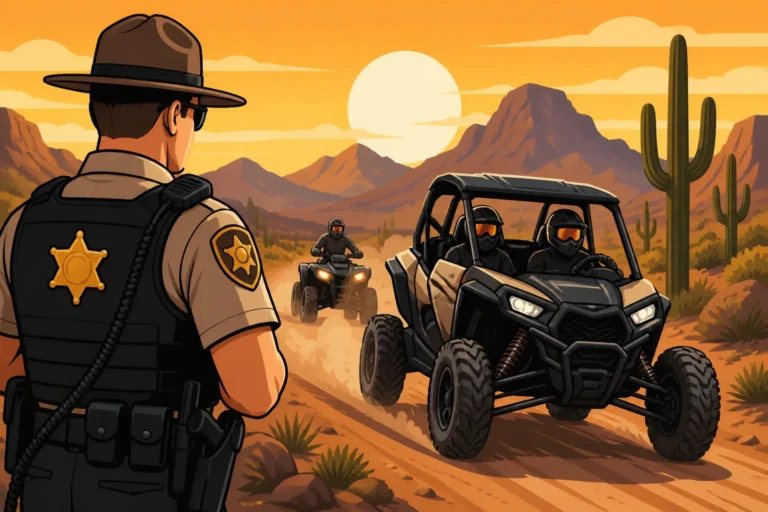
Whip Flags on a Road Section of a Ride
Navigating Arizona's incredible landscapes on an ATV or UTV is pure freedom, but that freedom often means transitioning from dusty trails to paved roads. This can bring a heap of questions, especially when it comes to safety gear like whip flags. Many riders wonder if they need to keep that tall, waving flag up on a road section, or if it suddenly becomes a nuisance. This guide will cut through the confusion, helping you understand the practicalities and considerations of running whip flags on Arizona's public roads, ensuring you stay safe and informed.
The Primary Purpose of Whip Flags: Off-Road Visibility
Let's be real: whip flags are a desert staple for a reason. Out on the vast, open spaces of Arizona's trails, especially in popular OHV areas like the Cinder Hills or the Parker Strip, dust can kick up something fierce. Imagine cruising along a sandy wash or cresting a dune, and suddenly, you're in a cloud so thick you can't see the machine right in front of you, let alone the one coming over the next rise. This is where your whip flag becomes your best friend.
A properly positioned whip flag, standing tall above your machine, acts as a visual beacon. It tells other riders, "Hey, there's a vehicle here!" even when the machine itself is obscured by terrain, bushes, or that ever-present desert dust. This is incredibly important for preventing head-on collisions, especially in areas with blind turns, rollers, or fast-moving group rides. Without these flags, some popular off-road areas would be far more dangerous, making it difficult for riders to judge distances and avoid accidents. It’s a simple, yet highly effective, piece of safety equipment that literally saves lives by ensuring you're seen when you otherwise wouldn't be. Don't forget other off-road essentials like making sure your machine is equipped with a functional spark arrestor, because without it, you're not just risking fire, you're risking a citation. It's truly crucial to understand [Why a Spark Arrestor Runs Whenever the Engine Does] and what the state expects of you.
Whip Flags on Arizona Paved Roads: What the Law Says (and Doesn't Say)
When you roll off the dirt and onto the asphalt, the rules of the road, both written and unwritten, shift. This transition is where the question of whip flags often sparks debate and confusion among riders. You’ve just spent hours relying on that flag for safety, so does it suddenly become irrelevant or even problematic on pavement?
Are Whip Flags Legally Required on Paved Roads?
Here’s the straightforward answer for Arizona: generally, no, whip flags are not legally required on paved public roads. Unlike specific off-road areas, like certain sand dunes or designated OHV parks where flags are often mandatory, Arizona state law does not mandate the use of whip flags for street-legal ATVs or UTVs operating on public highways or streets. This might come as a surprise to some, especially given their critical role off-road.
However, the absence of a legal requirement doesn't necessarily mean you shouldn't use one. It just means you won't get a ticket specifically for not having one on a paved road. It's a different situation than making sure your UTV meets the standards for [Making a UTV Street Legal in Arizona], where specific equipment like headlights, taillights, and turn signals are absolutely non-negotiable. Think of it like a golf cart in a planned community; while they have specific rules for their operation, a whip flag isn't usually on that list. For a deeper dive into unique vehicle registration, check out [Arizona Rules for a Golf Cart in a Community].
The Spirit of the Law: Safety First
Even without a specific statute dictating whip flag use on pavement, the underlying principle of all traffic laws is safety. The "spirit of the law" encourages all drivers to operate their vehicles in a manner that maximizes visibility and minimizes risk to themselves and others. So, while your whip flag might not be a legal requirement on a county road, there are still compelling reasons to consider its presence.
Consider a situation where your UTV, despite being street legal, still sits lower or is less conspicuous than a typical car or truck, especially when surrounded by larger vehicles. A brightly colored whip flag, even if not towering as high as it would in a dune field, can still provide an extra visual cue to other drivers, particularly those in taller vehicles like SUVs or pickup trucks who might struggle to see your machine in traffic. This is particularly relevant when you're making a short hop on a state route between two trail systems, where you might be moving at slower speeds than other traffic. For riders under 12, who have strict limitations on where and how they can ride, ensuring maximum visibility for everyone on the road is even more paramount, which is why understanding general safety regulations like [Arizona Rules for Operators Under 12] is important. While a whip flag isn't specifically mentioned for them on roads, the principle of being seen remains. You can find robust, highly visible safety accessories, including whip flags and lighting, from brands like SuperATV that are built to withstand the rigors of both trail and road use, providing that extra layer of confidence.
Practical Considerations for Road Sections
Making the call to keep your whip flag up or take it down for a paved road section isn't always straightforward. It often comes down to balancing maximum visibility with practical considerations like convenience and potential drawbacks. There are good arguments for both approaches, and your decision might change depending on the specific circumstances of your ride.
When to Consider Keeping Your Whip Flag Up
There are several scenarios where leaving your whip flag mounted, even on pavement, can be a smart move, adding an extra layer of safety and visibility that might otherwise be missing:
- Short Road Transitions: If you're just making a quick jump across a highway or a brief cruise through a small town to connect to another trail system, the hassle of taking down and remounting your flag might outweigh any perceived benefit of its absence. In these short bursts, the added visibility might still be appreciated by other drivers.
- Dusty Conditions Leading to Pavement: You might be leaving a particularly dusty trail and pulling directly onto a paved road. Even for a short distance, the lingering dust cloud around your machine could momentarily obscure you. Your whip flag, already active, serves as a crucial identifier.
- Large OHV Group Rides: When you're part of a convoy of multiple ATVs and UTVs, the collective presence of several whip flags can create a much more noticeable visual spectacle for oncoming traffic. This makes the entire group more visible as a distinct unit, signaling to other drivers that a group of unique vehicles is on the road.
- Low Light Conditions: While not a replacement for proper street-legal lighting, a bright, reflective whip flag can offer supplemental visibility during dawn, dusk, or overcast conditions. Your taillights are crucial for this, and knowing [Taillight Visibility From 500 Feet] is essential, but every bit of extra notice helps.
- Unique Vehicle Awareness: Let's face it, UTVs and ATVs, even when street-legal, aren't common sights on every road. A whip flag immediately signals to other motorists that they are sharing the road with an off-highway vehicle, prompting them to be more cautious or give you a wider berth. This is especially true if you are riding through a small community to grab a bite, like when you're [Riding to Breakfast in a Trail Town].
Potential Downsides or Nuisances on Pavement
While there are benefits, keeping a whip flag up on paved roads isn't without its potential drawbacks:
- Noise and Vibration: At higher road speeds, a whip flag can create noticeable noise and vibration. The flag itself might flap loudly, and the whip pole could vibrate, which can be distracting and annoying on longer paved sections.
- Wear and Tear: The constant whipping and exposure to wind at road speeds can accelerate wear and tear on both the flag material and the pole, potentially leading to fraying or breakage over time.
- Overhead Obstacles: While less common on main highways, driving through certain urban areas, under low bridges, or even through tree-lined streets could pose a risk of snagging your whip flag.
- Perception by Other Drivers: Some drivers, unfamiliar with street-legal OHVs, might view a whip flag on a paved road as an anomaly or even an invitation for unsafe driving, simply because it's not a standard street vehicle accessory.
- Inconvenience of Removal/Installation: If you're constantly switching between off-road and on-road sections, the repetitive act of removing and reinstalling your whip flag can become a chore. It takes time and effort that you might rather spend riding. Understanding the overall requirements for [What Arizona Requires on a Street-Legal Machine] often makes riders prioritize essential street-legal components over discretionary accessories like flags.
Enhancing Road Visibility Beyond the Whip Flag
Ultimately, while a whip flag might add a touch of visibility, it should never be your primary safety feature on paved roads. There are more critical components and practices that are essential for street-legal operation and overall safety:
- Proper Lighting: This is non-negotiable. Ensure your headlights, taillights, brake lights, and turn signals are all fully functional and clearly visible. Arizona has specific rules for this, such as [Arizona's 500 Foot Headlight Rule], so make sure you meet them.
- Reflective Tape or Accents: Adding reflective tape to your machine, especially on the rear and sides, can significantly increase your visibility to other drivers, particularly at night or in low-light conditions.
- Bright Clothing: As a rider, wearing brightly colored or high-visibility clothing (helmets, jackets, vests) makes you and your passengers more conspicuous.
- Mirrors: Street-legal machines require mirrors for good reason. Use them constantly to be aware of your surroundings and the traffic behind you.
- Defensive Driving: This is perhaps the most crucial "accessory." Assume other drivers don't see you. Be predictable, signal clearly, maintain safe following distances, and be prepared to react to unexpected maneuvers from other vehicles.
- Many riders upgrade their machines with enhanced LED lighting and additional visibility components. Brands like SuperATV offer a wide array of lighting solutions, from full LED light bars for off-road brilliance to smaller, street-legal auxiliary lights and even reflective decals, which can significantly boost your presence on any road.
Making Informed Decisions for Your Ride
The choice to keep or remove your whip flag on paved sections of your Arizona ride is largely a personal one, but it should always be an informed decision rooted in safety and practicality. There's no single right or wrong answer, as conditions and routes vary widely across the state.
Assessing Your Specific Ride Route
Before you even hit the trails, take a moment to look at your planned route. Will you be on a long stretch of highway, or just a quick jog on a county road to connect two trailheads?
- Road Length and Speed: A brief crossing of a low-speed town street might warrant leaving the flag up. A ten-mile stretch of a 55 mph highway, however, might make you reconsider due to noise and wear.
- Traffic Volume and Type: Will you be sharing the road with heavy commuter traffic, or is it a quiet rural road with minimal cars? The more traffic, especially larger vehicles, the more critical your visibility becomes.
- Weather and Visibility: Are you riding on a clear, sunny day, or is there heavy dust from nearby construction, or perhaps a bit of lingering fog in the early morning? These conditions can significantly impact how well other drivers can see you.
- Consider the specific roads you plan to take. Some [Arizona City Streets Open to OHVs] might have lower speed limits and more mixed traffic, while others could be fast, multi-lane arteries. Similarly, if your plan includes [Riding to Breakfast in a Trail Town], the local conditions in that town will influence your decision.
Local Ordinances and Common Sense
While Arizona state law doesn't specifically require whip flags on paved roads, it's always a good practice to be aware of any local city or county ordinances that might have specific regulations for OHVs on their streets. Though rare for whip flags, a quick check of a city's website or a call to local law enforcement can provide peace of mind.
Ultimately, common sense should be your guide. The "be seen" philosophy that makes whip flags essential in the dustiest desert washes applies equally, if not more, when you're sharing asphalt with cars and trucks. If you feel that your whip flag provides an extra margin of safety by making you more conspicuous, then by all means, keep it up. If it's a long road section, and the noise or wind resistance is genuinely bothering you, and you're confident your other street-legal lights and reflective gear are more than sufficient, then taking it down is also a reasonable choice. Quality accessories, like those from SuperATV, are designed to be durable for the trail but also versatile enough for responsible road use, offering options that can fit seamlessly into your riding strategy. Always prioritize your safety and the safety of those around you, making choices that boost your visibility and awareness, regardless of whether you're kicking up dust or cruising on pavement.
| Consideration | Keeping Whip Flag Up (On Paved Roads) | Removing Whip Flag (On Paved Roads) |
|---|---|---|
| Visibility | Pros: Extra visual cue, especially for taller vehicles or in dusty transitions. Signals "off-highway vehicle" to others. | Cons: May reduce unique visibility. |
| Safety Perception | Pros: Could increase perceived caution by other drivers. | Cons: May blend in more with general traffic, potentially reducing awareness from others. |
| Noise/Vibration | Cons: Can generate flapping noise and pole vibration at higher speeds. | Pros: Quieter ride, no pole vibration. |
| Wear & Tear | Cons: Increased exposure to wind stress, faster wear on flag and pole. | Pros: Extends life of flag and whip assembly. |
| Convenience | Pros: No need to stop and remove/reinstall for short transitions. | Cons: Requires stopping and storage/re-installation for each pavement/trail transition. |
| Legality | Neutral: Not required, but not prohibited by state law. | Neutral: Not required, no legal issue with its absence. |
Disclaimer
This article is for general informational purposes only and does not constitute professional advice. Laws, prices and regulations vary by location and change over time. Consult a qualified professional for guidance on your specific situation.