Arizona Emissions Testing for a Street Machine
Trying to get your street-legal off-highway vehicle (OHV) through emissions testing in Arizona can feel like navigating a technical obstacle course blindfolded. You've gone through all the trouble of making sure your side-by-side or ATV has all the right lights, mirrors, and horn, only to find out there's another hurdle: proving it's not polluting the desert air. This guide is here to demystify the Arizona emissions testing process specifically for street-legal machines, helping you understand the requirements, avoid common pitfalls, and confidently get your rig ready for the road.
The Basics of Emissions Testing for Arizona Street-Legal OHVs
It's a common misconception among off-road enthusiasts that their ATVs or UTVs are completely exempt from the same rules as regular cars and trucks. While that's true for machines used strictly off-highway with an [Arizona's Annual OHV Decal Explained], the moment you decide to make your rig street-legal and get it properly registered for public roads, the game changes. You're now playing by automotive rules, and that often means emissions testing, depending on where you live and ride.
Why Emissions Testing Even Applies to Your OHV
The simplest way to think about it is this: once your OHV gets an official Arizona license plate, whether it's an "MC" (motorcycle) plate for a two-wheeler or a special plate often designated for street-legal UTVs, the state considers it a motor vehicle operating on public roadways. This shifts its classification from a recreational vehicle with specific off-highway rules to a road-going vehicle that needs to meet air quality standards. Many riders go through the process of [Making a UTV Street Legal in Arizona] and are thrilled to hit the asphalt, only to be blindsided by the emissions requirement later. It can be a real headache, especially if you've done performance modifications that weren't designed with street compliance in mind. The goal of these tests isn't to punish riders but to maintain air quality, particularly in populated areas, which is why the requirements are geographically specific.
Which Areas Require Emissions Testing in Arizona
Not every corner of Arizona demands emissions testing for your street-legal OHV. The requirements are primarily focused on the state's two major metropolitan areas: the Phoenix Active Management Area (which includes cities like Phoenix, Mesa, Tempe, Scottsdale, Chandler, Gilbert, Glendale, and Peoria) and the Tucson Active Management Area. If your street-legal machine is primarily garaged or registered in one of these regions, you will almost certainly need to pass an emissions test. However, if you live in a less populated area like Prescott, Kingman, or Lake Havasu City, you're generally in the clear on this front. This regional distinction is designed to target areas with higher vehicle concentrations and, consequently, greater potential for air pollution. It’s important to clarify your specific location's requirements when you're going through the [Arizona MVD OHV Registration Explained] process, as it directly impacts your path to road legality.
What Happens at an Arizona Emissions Station
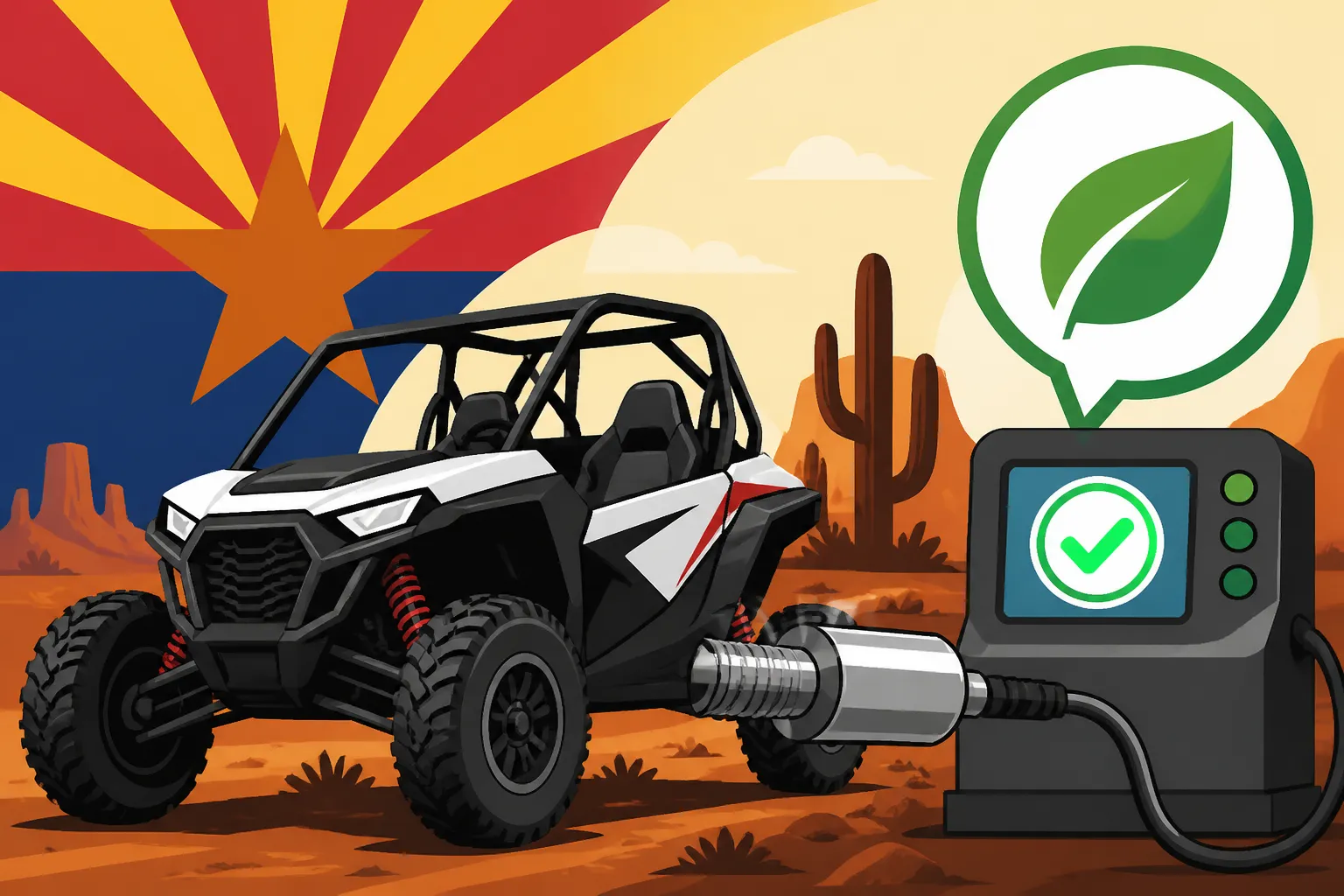
When you pull your street-legal OHV into an Arizona Vehicle Emissions Inspection Program (VEIP) station, the process can feel a bit daunting, but it’s actually quite streamlined. For newer UTVs and ATVs (typically 1996 model year and newer), the primary test method is an On-Board Diagnostic (OBDII) system check. This involves plugging a scanner into your vehicle's diagnostic port to read information directly from its computer. The inspector is looking for stored "trouble codes" or "check engine" lights that indicate a malfunction in the emissions control system, and they'll also check if all "readiness monitors" have completed their self-tests. For older machines, or those that don't have an OBDII system, a tailpipe test might be required, where a probe is inserted into the exhaust to measure hydrocarbon (HC) and carbon monoxide (CO) levels. Additionally, all vehicles undergo a visual inspection to ensure that catalytic converters, evaporative emissions controls, and other components are present and appear to be functioning correctly. The good news is that for many modern, factory-built UTVs that are then converted to street-legal, if the engine and exhaust remain largely stock and healthy, passing the OBDII test can be relatively straightforward.
Common Challenges and Solutions for OHVs During Emissions
Let's be real: many of us don't buy an OHV to keep it bone stock. We want more power, better sound, and a rig that stands out. But when you introduce performance modifications, especially to the engine or exhaust, you're stepping into a potential minefield when it comes to emissions testing. It's a common source of frustration, and it's where many street-legal OHV owners find themselves scratching their heads.
Dealing with Modified Engines and Exhaust Systems
This is arguably the biggest hurdle for many street-legal OHV owners. Aftermarket exhaust systems, like those you might find for performance enhancement from brands such as SuperATV, often offer a more aggressive sound and potentially a slight bump in horsepower. However, many aftermarket systems are designed for off-road use only and may not include the necessary catalytic converters or resonators required to meet street emissions standards. A catalytic converter, for example, is a crucial component that reduces harmful pollutants. Removing it or replacing it with a straight pipe will almost certainly lead to a failure during the visual inspection or a tailpipe test. Similarly, modifications to the engine's air intake or fuel delivery system without proper tuning can throw off the air-fuel ratio, causing the machine to run too rich or too lean, both of which can lead to excessive emissions. It's a balancing act between performance and compliance. If you're planning on making your OHV street-legal, it's wise to research if your desired modifications will hinder its ability to pass emissions before you invest in them. Always check that any modifications are clearly labeled as "50-state legal" or "emissions compliant" if street use is your intent.
Older Machines and Carburetor Adjustments
While most newer side-by-sides and ATVs are fuel-injected, there are still plenty of older carbureted machines out there that owners might want to make street-legal. These older models present a different set of challenges for emissions testing. Carburetors, by their nature, are less precise in fuel delivery than electronic fuel injection systems. Over time, or with improper tuning, a carburetor can lead to higher emissions of unburned hydrocarbons and carbon monoxide. If your street-legal OHV is carbureted and requires a tailpipe test, you'll need to ensure it's running optimally. This often means adjusting the air-fuel mixture screws, checking for vacuum leaks, and making sure the choke mechanism isn't sticking. A professional tune-up by a mechanic experienced in carbureted engines can make a significant difference in getting those numbers within acceptable limits. Trying to pass with an engine that's running rough or smells excessively rich is usually a recipe for failure and a wasted trip to the testing station.
The "Check Engine" Light and OBDII Scans
For any street-legal OHV manufactured in 1996 or later, its On-Board Diagnostic (OBDII) system is your emissions gatekeeper. If your "Check Engine" light (sometimes called a Malfunction Indicator Lamp, or MIL) is illuminated when you arrive at the emissions station, it's an automatic fail – no questions asked. This light signifies that the vehicle's computer has detected a problem with a component that could affect emissions. Common culprits for an illuminated check engine light on an OHV might include a faulty oxygen sensor, a catalytic converter operating below efficiency, or even a loose gas cap (though less common on OHVs).
Before heading to the test, it's absolutely crucial to ensure this light is off. If it's on, get the code scanned (many auto parts stores offer this service for free, or you can buy an inexpensive OBDII scanner). Address the underlying issue, make the repair, and then clear the code. After clearing codes, you'll need to complete a "drive cycle." This is a specific pattern of driving (a mix of highway speeds, city driving, and idling) that allows the vehicle's computer to re-run all its self-tests and confirm that the emissions control system is functioning correctly. If you try to test immediately after clearing codes without completing a drive cycle, the readiness monitors won't be set, which is another reason for an automatic failure. Patience and proper diagnosis here are key. For more on what components are checked, you might find details in [Arizona Emissions Testing in the Two Metros].
Practical Steps and What to Expect
Preparing your street-legal OHV for emissions testing isn't just about crossing your fingers and hoping for the best. It involves a few key steps that can dramatically increase your chances of passing on the first try, saving you time, money, and a lot of frustration. It’s like prepping for a big ride; you don’t just jump in and go, you check your gear and your machine.
Preparing Your Street Machine for the Test
Think of this as your pre-flight checklist for emissions. Getting these things right before you even leave your driveway can make all the difference.
- Warm Up Your Engine: Drive your OHV for at least 15-20 minutes before arriving at the testing station. A fully warmed-up engine runs more efficiently and produces fewer emissions. This is especially important for carbureted machines.
- Check Your "Check Engine" Light: As mentioned, if this light is on, it's an automatic fail. Get any codes read, address the issue, and ensure the light is off and readiness monitors are set before you go.
- Ensure Proper Maintenance: A well-maintained engine is a clean-burning engine. Check your air filter, spark plugs, and oil. Make sure they are relatively fresh and in good working order. A clogged air filter or old spark plugs can lead to higher emissions.
- Confirm All Street-Legal Equipment Works: While not directly tied to emissions, it’s good practice to ensure all the components that made your OHV street-legal are fully functional. This includes [Arizona's 500 Foot Headlight Rule], [Taillights and Rear Reflectors Arizona Requires], a working horn, and mirrors. An inspector might notice something amiss, even if it's not part of the emissions test itself.
- Look for Leaks: Visual inspection includes checking for obvious fluid leaks, especially fuel or oil. Leaks indicate problems that could affect emissions or safety.
- Check for Required Components: Ensure your catalytic converter (if applicable for your model) is present. If your machine is older and was originally equipped with other emissions control devices, make sure they haven't been removed. Some aftermarket exhaust systems might not include a catalytic converter or proper oxygen sensor bungs, making them non-compliant for street use. Brands like SuperATV offer excellent off-road components, but always verify street legality for emissions if that's your goal.
What to Do if Your OHV Fails Emissions
It happens. You pull out of the bay with that dreaded "FAIL" notice. Don't panic, but don't ignore it either. Arizona's Vehicle Emissions Inspection Program (VEIP) allows for retesting after repairs.
- Understand the Reason for Failure: The emissions report will clearly state why your OHV failed. Was it a high reading for a certain pollutant? A "Check Engine" light? Incomplete readiness monitors? A visual component missing? This report is your roadmap for repairs.
- Diagnose and Repair: Based on the failure report, you'll need to identify and fix the underlying problem. This might involve replacing a faulty oxygen sensor, repairing a vacuum leak, getting a carburetor professionally adjusted, or even reinstalling a catalytic converter if it was removed. For some issues, a mechanic specializing in emissions diagnostics can be invaluable.
- Retest: Once repairs are made, you can return for a retest. Often, if you return within a certain timeframe, the retest fee is reduced or waived.
- Repair Waivers: In some cases, if you've spent a significant amount of money on emissions-related repairs and your vehicle still can't pass (and meets certain criteria), you might be eligible for a repair waiver. However, these are often quite specific and less commonly granted for OHVs than for traditional passenger cars, so don't count on it as your primary solution. The best approach is always to make the necessary repairs.
Understanding the Emissions Certificate and Its Validity
Congratulations, you passed! Now what? Once your street-legal OHV clears the emissions test, you'll receive an official Certificate of Inspection. This document is proof that your machine meets Arizona's clean air standards. The results are also electronically submitted to the Arizona Motor Vehicle Division (MVD), linking directly to your vehicle's registration record. This is crucial because you cannot complete or renew your Arizona MVD registration if your vehicle requires emissions testing and hasn't passed.
The emissions certificate is typically valid for one or two years, depending on your vehicle type and the current regulations. You'll usually need to retest before your registration renewal date comes up again. Keep a copy of your certificate with your other important vehicle documents, even though the MVD has it on file. It's an essential piece of the puzzle for maintaining your OHV's street-legal status. For new residents, understanding the full scope of requirements, including emissions, is part of [Arizona Registration for a New Resident].
Exemptions and Avoiding Unnecessary Testing
While emissions testing is a requirement for most street-legal OHVs in Phoenix and Tucson, there are certain situations where your machine might be exempt, or ways you can legitimately avoid the testing requirement. Knowing these can save you time and hassle, especially if your situation fits one of the specific criteria.
Weight, Age, and Fuel Type Exemptions
Arizona's emissions testing program does have some exemptions that might apply to your street-legal OHV, though they are specific and not broad.
- Vehicle Age: Generally, very new vehicles are exempt for the first few years, and very old vehicles might also have exemptions. However, the exact cut-off years can change, so always check the current Arizona Department of Environmental Quality (ADEQ) guidelines. For example, vehicles from the current model year and the three immediately preceding model years are often exempt from the testing requirement. On the flip side, vehicles manufactured before certain older dates might also be exempt, particularly if they are classic or collector vehicles that meet specific criteria.
- Electric Vehicles: If your OHV is fully electric, it produces no tailpipe emissions and is therefore exempt from emissions testing. This is a growing segment in the OHV market, and it's a definite perk for those looking to avoid emissions hurdles.
- Diesel Vehicles: Diesel-powered OHVs, if they become street-legal, have different emissions requirements than gasoline vehicles and might follow a separate testing protocol or be exempt from the standard gasoline vehicle tests. However, street-legal diesel OHVs are relatively rare.
- Weight-Based Exemptions: Most OHVs fall well below the weight thresholds that might trigger different testing requirements for heavy-duty vehicles, so this is less likely to apply.
It's always best to consult the official ADEQ website or contact them directly with your specific OHV's year, make, and fuel type to confirm any potential exemptions before assuming you're in the clear.
Registering Your OHV Outside the Emissions Area
This is a strategy some Arizona OHV owners consider to circumvent the emissions testing requirement. If you own a property or can genuinely establish residency (or a primary vehicle address) in a county or zip code outside the Phoenix or Tucson Active Management Areas, you might be able to register your street-legal OHV there. This means your machine wouldn't be subject to the emissions testing requirements for those metro areas. For instance, if you have a second home in Payson or Prescott Valley, you could potentially register your OHV to that address.
However, there are critical considerations:
- Legitimacy: You must genuinely have a physical address and potentially some proof of residency (utility bills, voter registration, etc.) at the non-emissions-area location. Attempting to fraudulently register your vehicle to an address where it doesn't primarily reside could lead to legal issues with the MVD.
- Primary Use: The intent behind the emissions zones is to regulate vehicles primarily operating within those areas. If you live full-time in Phoenix but register your street-legal UTV in Flagstaff to avoid emissions, and then drive it daily in Phoenix, you could be in a gray area. While enforcement might be difficult, it's technically a circumvention of air quality regulations.
- Convenience: Consider the practicalities. If your OHV is truly garaged and used mostly outside the emissions area, this strategy makes sense. But if you have to drive hours to renew your registration or handle any MVD business in that distant location, the initial savings might not be worth the long-term hassle.
Ultimately, while registering outside an emissions zone is a legitimate option for those with genuine ties to non-emissions areas, it's not a loophole for full-time metro residents who wish to frequently operate their street-legal OHV in Phoenix or Tucson without adhering to the testing requirements. Your best bet for sustained street-legal enjoyment in emissions-regulated areas is to ensure your machine is compliant.
| Common Emissions Issues for Street-Legal OHVs | Potential Causes | Typical Fixes |
|---|---|---|
| "Check Engine" Light On (OBDII) | Faulty O2 sensor, catalytic converter issue, EVAP leak, misfire | Replace sensor, diagnose catalytic converter, fix leak, tune-up |
| Incomplete Readiness Monitors (OBDII) | Codes recently cleared, insufficient drive cycle | Perform manufacturer-specific drive cycle |
| High Hydrocarbons (HC) (Tailpipe Test) | Misfires, rich air/fuel mixture, vacuum leaks, faulty spark plugs | Tune-up, adjust carburetor, replace faulty parts |
| High Carbon Monoxide (CO) (Tailpipe Test) | Rich air/fuel mixture, faulty O2 sensor, clogged air filter | Adjust carburetor, replace sensor, replace air filter |
| Visual Inspection Fail | Missing catalytic converter, damaged exhaust, obvious leaks | Reinstall/replace catalytic converter, repair exhaust, fix leaks |
Disclaimer
This article is for general informational purposes only and does not constitute professional advice. Laws, prices and regulations vary by location and change over time. Consult a qualified professional for guidance on your specific situation.