Does a Car Policy Cover a UTV?
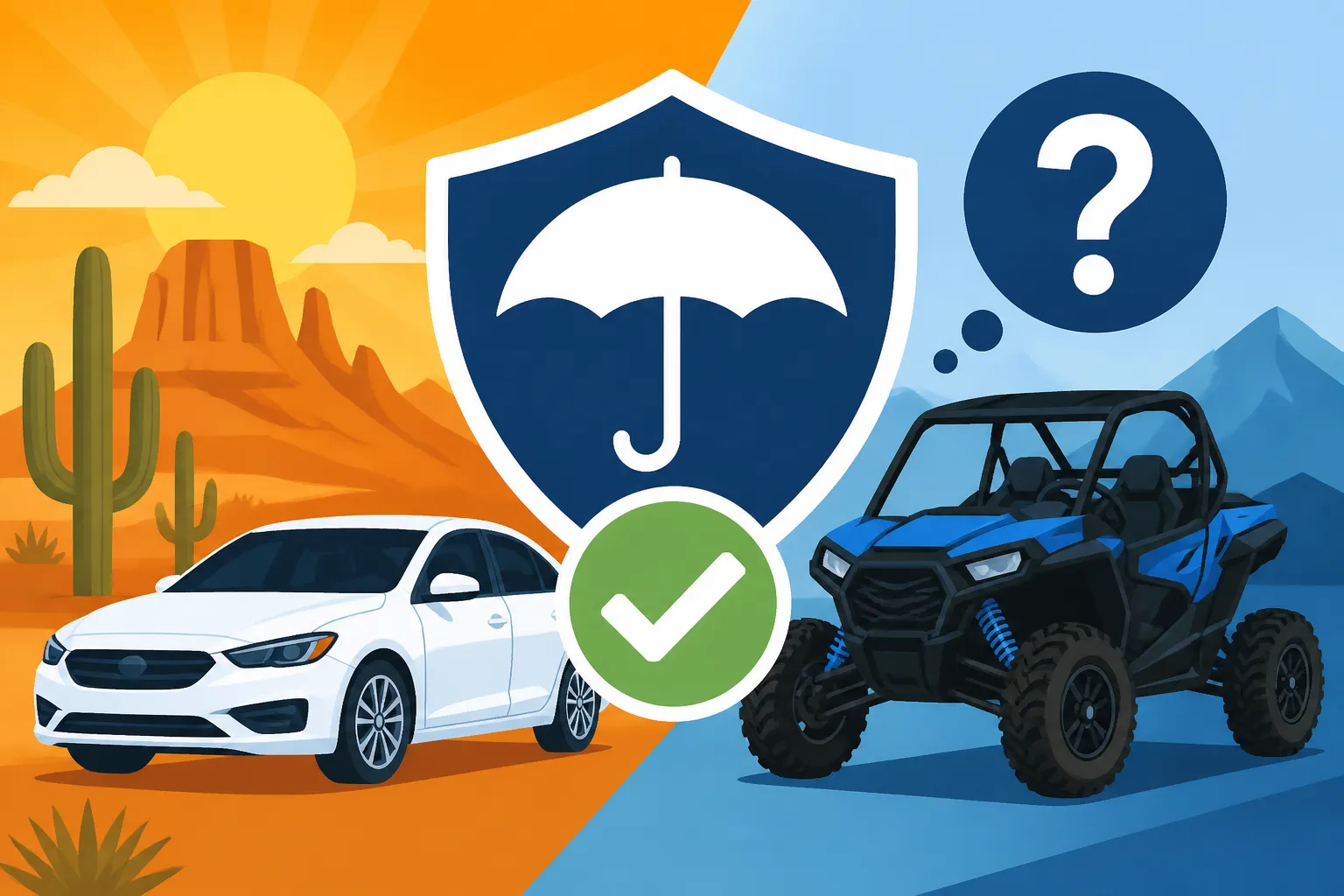
It’s a question that keeps many Arizona ATV and UTV owners up at night, especially when they're new to the off-roading world or are contemplating a big purchase: will my existing car insurance policy actually cover my side-by-side or quad? The simple truth is, for most people, the answer is a resounding "not really," and relying on it could leave you in a truly terrible spot after an accident. This guide is here to untangle the confusion and help you understand why dedicated OHV insurance is almost always the only safe bet in our beautiful desert state.
The Harsh Reality: Why Your Car Policy Probably Falls Short
Let's face it, we all try to save a buck where we can, and often the first thought is, "Can I just extend what I already have?" When it comes to your car insurance and your off-highway vehicle (OHV), the answer is usually a disappointing no. The fundamental reason comes down to how insurance companies classify vehicles and assess risk. A street-legal car or truck is designed for paved roads, with specific risks associated with that environment. An ATV or UTV, even one made [Making a UTV Street Legal in Arizona], is an entirely different beast, built for different terrains and presenting a unique set of hazards.
Vehicle Classification and Risk Profiles
Your car insurance policy is meticulously crafted to cover vehicles that operate on public roads and highways. These policies are based on actuarial data derived from millions of cars driving on pavement, obeying traffic laws, and operating under a specific set of rules and expected risks. When you take a UTV or ATV, designed for dirt, rocks, and wide-open spaces, into its natural habitat, you’re introducing variables that your standard car policy simply isn't built to account for. Insurers see OHVs as higher-risk ventures due to the nature of off-road riding, the potential for rollovers, impact with natural obstacles, and the sheer physicality involved. They also understand that off-road environments often mean slower response times for emergency services, potentially leading to greater damages and injuries.
The definitions within your car policy are crucial here. Most auto policies explicitly define what constitutes a "covered automobile," and typically, an ATV, UTV, or side-by-side won't fit that description. They might be classified as "recreational vehicles" or "off-road vehicles," which are then specifically excluded from standard auto coverage. This exclusion isn't usually hidden in tiny print; it's a core part of the policy's terms and conditions.
Typical Exclusions in Standard Auto Policies
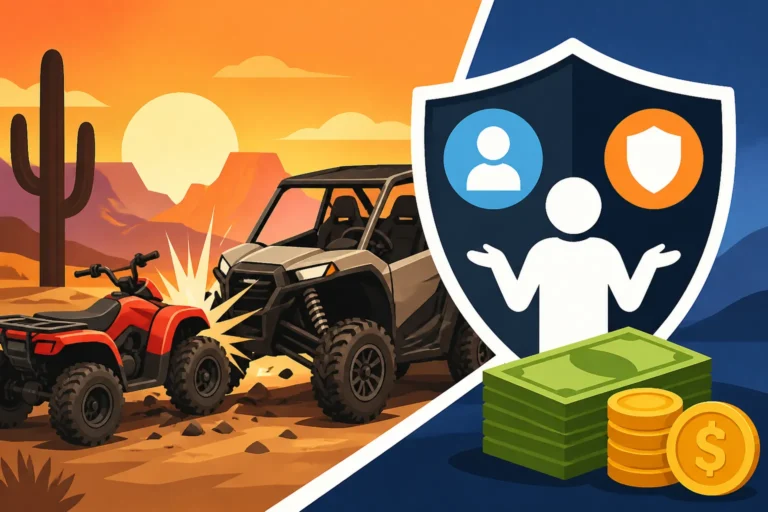
Digging into the fine print of a standard car insurance policy, you’ll almost always find language that excludes coverage for vehicles not primarily designed for highway use. This means any damage to your OHV itself, liability for injuries or property damage you cause while riding off-road, or even medical payments for your own injuries, would likely not be covered. Imagine you're out near [Table Mesa North of Phoenix], enjoying a ride, and you misjudge a turn, hitting a rock and rolling your side-by-side. If you only have car insurance, you'd be looking at paying for all repairs to your machine, any medical bills for yourself or passengers, and potentially legal fees if another party was involved, all out of your own pocket.
Even if you’ve gone through the process of [What Arizona Requires on a Street-Legal Machine] and obtained an MC plate, your standard car insurance might still not fully cover your machine for off-road use. While it might offer some liability coverage for a street-legal UTV on a public road, the moment you veer onto a dirt trail, river bed, or designated OHV area, those exclusions often kick in again. The distinction between on-road and off-road use is paramount to insurers, and they've structured their policies to reflect that. It’s a very common point of confusion, but one that can lead to significant financial distress if misunderstood.
When Your Car Insurance Might Offer a Glimmer of Hope (Limited Situations)
While a standard car insurance policy won't generally cover your OHV during off-road operation, there are a couple of very specific and limited scenarios where it might offer some protection. These exceptions are usually tied to transportation or other non-riding situations, and they are definitely not a substitute for proper, dedicated OHV insurance.
Transporting Your OHV on a Trailer
This is perhaps the most common situation where your auto policy might come into play. If you're hauling your ATV or UTV on a trailer, your car insurance might offer some limited liability coverage for the trailer itself if it comes unhitched and causes damage, or for items attached to your vehicle, under the comprehensive and collision sections of your auto policy. For example, if your truck gets into an accident while you’re towing your side-by-side to [Lake Havasu and the Parker Strip], your auto policy would primarily cover the damage to your truck and potentially the trailer.
However, this coverage typically does not extend to the OHV itself that's being transported. If your side-by-side is damaged while on the trailer, your car insurance likely won't pay to repair or replace it. This is where your dedicated OHV policy would step in, or, in some cases, your homeowner's policy might offer a very minimal amount of coverage for personal property, but often with high deductibles and strict limits, usually not enough for a modern UTV. So, while your truck's insurance might cover the trailer's damage, your valuable OHV would probably be left unprotected unless you have separate coverage.
Homeowner's or Renter's Insurance: A Very Narrow Scope
Your homeowner's or renter's insurance policy typically provides coverage for personal property at your residence. In rare cases, it might offer very limited coverage for your OHV if it's stolen from your garage or damaged by a covered peril like fire or a tree falling on it while it’s parked at home. For example, if you have a new suspension kit from SuperATV waiting to be installed, and your garage burns down, your homeowner's policy might cover the loss of the parts and the machine itself up to a certain limit. This is often where people get confused, thinking "my stuff is covered," but that coverage nearly always stops at the property line and rarely extends to liability for accidents involving the vehicle away from home.
The critical limitation here is that homeowner's policies never provide liability coverage for an OHV accident that occurs off your property. If you accidentally hit someone or something while riding, even just on a rural road near your home, your homeowner's policy won’t help with the liability claims. The coverage limits for personal property on such policies are also often quite low, especially for high-value items like a UTV, meaning you could be significantly underinsured even for a theft or fire at home. Therefore, [Does a Homeowners Policy Reach Your Quad?] is important to understand: while it might offer a sliver of protection for specific, stationary events, it's virtually useless for actual riding scenarios.
Dedicated OHV Insurance: Your Safest Bet for Arizona Trails and Roads
Given the severe limitations of car insurance and homeowner's policies, the only truly safe and comprehensive option for protecting yourself, your passengers, and your valuable machine is a dedicated Off-Highway Vehicle insurance policy. These policies are specifically designed to cover the unique risks associated with ATVs, UTVs, and other recreational off-road vehicles, whether you're tearing up the dunes at [Copper Basin Dunes in the Parker Strip] or cruising a county road.
What Dedicated OHV Insurance Typically Covers
A robust OHV insurance policy offers a range of coverages mirroring those you'd find on a car insurance policy, but tailored for the off-road environment:
- Liability Coverage: This is paramount. It protects you if you're at fault for an accident that causes bodily injury to another person or damage to someone else's property. In Arizona, even if you’re riding legally off-road, if you cause an accident, you’re responsible. If your machine is street-legal, [Arizona Liability Minimums for Street-Legal Machines] will apply to road use.
- Collision Coverage: This covers damage to your own ATV or UTV if it collides with another vehicle, an object (like a tree or a rock), or if it rolls over. This is incredibly important in the unpredictable off-road world.
- Comprehensive Coverage: This protects your machine from non-collision related damages, such as theft, vandalism, fire, natural disasters (like a flash flood during monsoon season), or hitting an animal.
- Uninsured/Underinsured Motorist Coverage: This protects you if you're involved in an accident with another rider who doesn't have insurance or doesn't have enough insurance to cover your damages and injuries.
- Medical Payments Coverage: This can help cover medical expenses for you and your passengers, regardless of who was at fault in an accident.
- Accessory and Custom Parts Coverage: Many riders invest heavily in aftermarket parts like a new winch, a light bar, or a custom roll cage – perhaps from a reputable brand like SuperATV. Standard policies might not cover these additions, but dedicated OHV policies often allow you to add specific coverage for custom parts and accessories, ensuring your investments are protected.
This comprehensive coverage means that whether you're involved in an incident on the trail or your machine is stolen from your camp, you have a financial safety net. Without it, you're exposing yourself to significant financial risk every time you hit the desert.
Why It's Not Just About Protecting Your Machine
It's easy to focus on protecting your shiny new side-by-side, but dedicated OHV insurance offers protection far beyond just the metal and plastic. It protects your personal finances. Imagine being involved in an accident where someone is seriously injured. The medical bills and potential legal judgments could be catastrophic for your family. An OHV policy with adequate liability limits, such as [Arizona Insurance Limits of 25/50/15] if you're street-legal, prevents you from having to pay those costs out of your own pocket.
Furthermore, some areas, especially state parks or organized riding events, may require proof of insurance. While [Do You Need a Decal on Private Arizona Land?] might seem to suggest less regulation, the moment you enter public lands or shared spaces, the rules and liabilities change dramatically. It’s also important to remember that Arizona Game and Fish Department rangers, sheriff's deputies, and other law enforcement regularly patrol OHV areas. While they might not be checking for insurance on non-street-legal machines as rigorously as they do for registration or decals, having it is just plain smart. If you're involved in an accident, one of the first questions will be about insurance coverage.
| Feature | Standard Car Insurance | Dedicated OHV Insurance |
|---|---|---|
| Off-Road Use | Generally EXCLUDED | Typically INCLUDED |
| Liability (Off-Road) | NO | YES |
| Collision (Off-Road) | NO | YES |
| Comprehensive (Theft/Fire at Home) | Sometimes, limited limits | YES, tailored limits |
| Transport on Trailer | May cover trailer, NOT OHV | YES, often included |
| Custom Parts/Accessories | NO | YES, add-on available |
| Medical Payments (Rider/Passenger) | NO | YES |
| Uninsured Motorist | NO | YES |
| Street-Legal Liability | May offer limited coverage | YES, specific to OHV |
Factors That Influence Your OHV Insurance Costs in Arizona
Just like with car insurance, the cost of a dedicated OHV policy in Arizona isn't a one-size-fits-all number. Several factors come into play, and understanding them can help you find the right coverage at a manageable price. Don't let the potential cost deter you from getting proper coverage; the financial risk of going without is far greater.
Your Machine's Make, Model, and Value
Naturally, a brand-new, high-performance UTV like a top-of-the-line Polaris RZR or Can-Am Maverick will cost more to insure than an older, smaller ATV. The higher the value of your machine, the more it will cost the insurance company to replace or repair it, which translates to a higher premium for you. This also extends to any aftermarket accessories or modifications. If you've invested in a sophisticated navigation system or heavy-duty protection from a company like SuperATV, you'll want to ensure those are adequately covered, which can increase your premium. The type of machine also matters: a two-seater UTV might have a different risk profile than a four-seater, or a sport quad versus a utility ATV.
Insurers also look at the claims history for specific models. Machines known for higher accident rates or theft rates might carry a slightly higher premium. When you're shopping for a new or used OHV, it's always a good idea to factor in potential insurance costs. A lower purchase price might be tempting, but if it's a model with a high insurance risk, your annual premiums could eat into those savings.
Your Riding Habits and Location
Where and how you ride plays a significant role in your insurance costs. If you’re only riding a few times a year on mellow trails, your risk profile might be lower than someone who frequently tackles extreme rock crawling routes or races in demanding terrain. Your primary residence in Arizona also matters. Areas with higher rates of theft or vandalism could see slightly elevated comprehensive coverage costs.
Some insurers might also offer discounts if you take safety courses, even though [Arizona's Free Mandatory OHV Decal Course] is now a requirement for many. Proving you're a responsible rider, perhaps by maintaining a clean driving record for your car, can sometimes positively influence your OHV insurance rates as well. If you only ride on private land, such as a ranch, your policy may reflect a different risk than someone who frequents popular public OHV areas.
Your Deductible and Coverage Limits
Just like with car insurance, choosing a higher deductible for your OHV policy will generally result in a lower annual premium. A deductible is the amount you pay out-of-pocket before your insurance kicks in. So, if you're comfortable covering a larger portion of a potential repair bill, you can save on your monthly or annual costs. However, make sure your deductible is an amount you can realistically afford to pay in an emergency.
The coverage limits you select for liability, collision, and comprehensive will also directly impact your premium. Opting for higher liability limits, while increasing your premium, offers greater financial protection in the event of a serious accident, which is crucial given the potential for significant injuries or property damage in an off-road incident. While [Arizona OHV Insurance Cost] will vary, carefully balancing these factors can help you tailor a policy that provides robust protection without breaking the bank. It's always a good idea to get multiple quotes and speak with an agent who specializes in recreational vehicle insurance to ensure you're getting the best coverage for your specific needs in Arizona.
Disclaimer
This article is for general informational purposes only and does not constitute professional advice. Laws, prices and regulations vary by location and change over time. Consult a qualified professional for guidance on your specific situation.