Parking a Side-by-Side at a Trailhead
Oh, the sheer joy of planning an Arizona off-road adventure! You've got your side-by-side fueled, your cooler packed, and your riding buddies ready to hit some epic desert trails. But then comes the moment of truth: you arrive at the trailhead, and it's a chaotic mess. Trailers are backed up, trucks are circling like vultures, and there's barely enough room to swing a cat, let alone unhitch your precious rig and its colossal trailer. It's a real frustration, a significant hurdle before the fun even begins. This guide is going to walk you through the often-overlooked challenge of parking your side-by-side and trailer at Arizona trailheads, offering practical strategies and insights to make your staging experience as smooth as your ride.
The Reality of Trailhead Parking in Arizona for Side-by-Sides
Let's be honest: finding a decent parking spot for your side-by-side and trailer at a popular Arizona trailhead can feel like trying to thread a needle with a rope. It's not just about finding a spot; it's about finding a safe, legal, and convenient spot that doesn't involve blocking other users or risking a ticket. The sheer volume of off-road enthusiasts flocking to our incredible trails means that what used to be a simple act of pulling over and unloading is now a strategic operation.
Why Trailhead Parking is Such a Headache
The explosion in popularity of side-by-sides, also known as UTVs, has fundamentally changed the landscape of trail access points. These machines are bigger, more powerful, and often require larger trailers to haul them, sometimes two at a time. Picture a busy Saturday morning at a popular spot like Table Mesa north of Phoenix, or perhaps one of the staging areas near the Parker Strip. You’ll see everything from single quads on small utility trailers to massive toy haulers carrying multiple machines and providing full living quarters. These setups take up an immense amount of space, and many trailheads, especially the older ones, simply weren't designed to accommodate this kind of demand.
Adding to the frustration is the fact that many of our beloved Arizona trails are experiencing record usage. More people are discovering the thrill of exploring the desert, mountains, and washes, which is fantastic for the OHV community. However, it puts immense pressure on existing infrastructure. Limited official parking spaces, often poorly marked or unpaved, quickly fill up, leading to a cascade of issues. People get desperate, parking haphazardly, creating bottlenecks, and sometimes even blocking gates or access roads, which can be a safety hazard, especially for emergency services. It's not uncommon to see rigs spilling out onto shoulders of county roads or into areas that clearly aren't meant for staging, all because the designated spots are long gone by mid-morning.
Knowing Your Rig's Footprint
Before you even leave your driveway, you need to have a realistic understanding of how much space your entire setup—truck, trailer, and side-by-side(s)—actually occupies. This isn't just about the length of your trailer, but also its width, especially if you're hauling a wider UTV or have multiple machines side-by-side on the same trailer. A 20-foot trailer with a 4-seat Polaris RZR on it, pulled by a full-size pickup, can easily command 40 to 50 feet of linear parking space, plus maneuvering room. When you're trying to back that into a tight spot, the game changes dramatically.
This knowledge is crucial for planning. If you know your setup is particularly large, it might influence which trailheads you choose, or at least force you to rethink your arrival time. Imagine pulling into a crowded lot only to realize there's no way you can make the turn to back into the only available slot. Or worse, you find a spot, but your trailer sticks out so far it's a hazard. Take measurements, think about turning radii, and be honest with yourself about your backing skills under pressure. Having a spotter, even if it's just your passenger, is always a good idea in these tight situations. Sometimes, the best parking strategy begins weeks before your ride, when you're looking at maps and satellite images, envisioning how your specific rig will fit.
Strategic Approaches to Finding Trailhead Parking
Given the challenges, simply showing up and hoping for the best is a recipe for stress, frustration, and potentially wasted driving time. Instead, a proactive and strategic approach to trailhead parking in Arizona will save you a lot of grief and get you to the fun part of your ride much faster. It's all about planning, flexibility, and sometimes, a little insider knowledge.
Arrive Early, Beat the Crowds
This is the golden rule, the single most effective strategy for securing a good parking spot at any popular Arizona trailhead. If you’re planning a weekend ride, especially during the cooler months from October to April when the desert is calling, you need to be an early bird. We’re talking about getting there around sunrise, or even a little before, if you want the pick of the litter. By 8:00 or 9:00 AM on a Saturday, many of the prime spots at places like Bulldog Canyon, Four Peaks, or the staging areas around Lake Havasu City will already be taken.
Consider the difference between a weekday and a weekend, too. If your schedule allows for a Tuesday or Wednesday adventure, you'll often find trailheads pleasantly uncrowded, making parking a breeze. But for those weekend warriors, plan your alarm accordingly. Yes, it means an even earlier start to your day, but the payoff is immense: less stress, more room to maneuver, and the peace of mind that comes with knowing your rig is safely parked, leaving you free to enjoy the trails. Plus, hitting the trails just as the sun warms the desert can be an absolutely magical experience, a bonus for your early wake-up call.
Scouting Alternative Staging Areas
Sometimes, the official trailhead parking simply won't cut it, or it's full when you arrive despite your best efforts. This is where scouting alternative staging areas becomes a lifesaver. Don't limit yourself to just the main lot. Often, there are designated overflow areas a little further down the road, or even wide shoulders on nearby county roads that are legally permissible for parking. You might have to ride your machine a short distance on a county road to reach the actual trailhead, which is a great reason to have a street-legal side-by-side setup.
Satellite mapping apps are your best friend here. Before you go, zoom in on the area around your chosen trailhead. Look for pull-offs, large open dirt areas, or even side roads that might offer suitable parking away from the main crush. Just be absolutely sure that any alternative spot you choose is legal, safe, and doesn't block private property or any access points. Remember, riding on [Arizona Trails on State Trust Land] often requires a permit, and this applies to staging areas on trust land as well. Always check the rules for the specific area you're visiting. Sometimes, a general search for "Arizona Trailhead Parking and Staging" can lead to forums or local insights about lesser-known spots.
The Power of Local Knowledge and Community Groups
One of the most valuable resources for navigating Arizona's OHV scene, including parking, is the collective knowledge of the riding community itself. Online forums, local OHV clubs, and social media groups dedicated to Arizona off-roading are treasure troves of real-time information. Before heading out, consider posting a question: "Anyone know the parking situation at [Trailhead Name] this weekend?" You might get up-to-the-minute reports on how busy it is, tips on where to find overflow, or even warnings about current conditions.
Local riders often know the nuances of specific areas that aren't readily apparent on maps. They might tell you about a particular ranch road that offers good staging (with permission, of course) or a wide-open area just a mile or two down a specific route. Don't be shy about tapping into this shared wisdom. Attending local club meetings or events can also connect you with experienced riders who are more than happy to share their favorite spots and parking hacks. Building these connections not only helps with practicalities like parking but also enriches your entire riding experience by linking you to a passionate community.
Legalities and Etiquette for Parking Your Side-by-Side
Parking your side-by-side at a trailhead isn't just about finding an open spot; it's about doing so legally and respectfully. Arizona's diverse land managers—from the Forest Service and BLM to State Parks and private landowners—each have their own rules. Ignoring these can lead to fines, towing, or even the closure of access points, which none of us want.
Understanding Designated Parking Areas
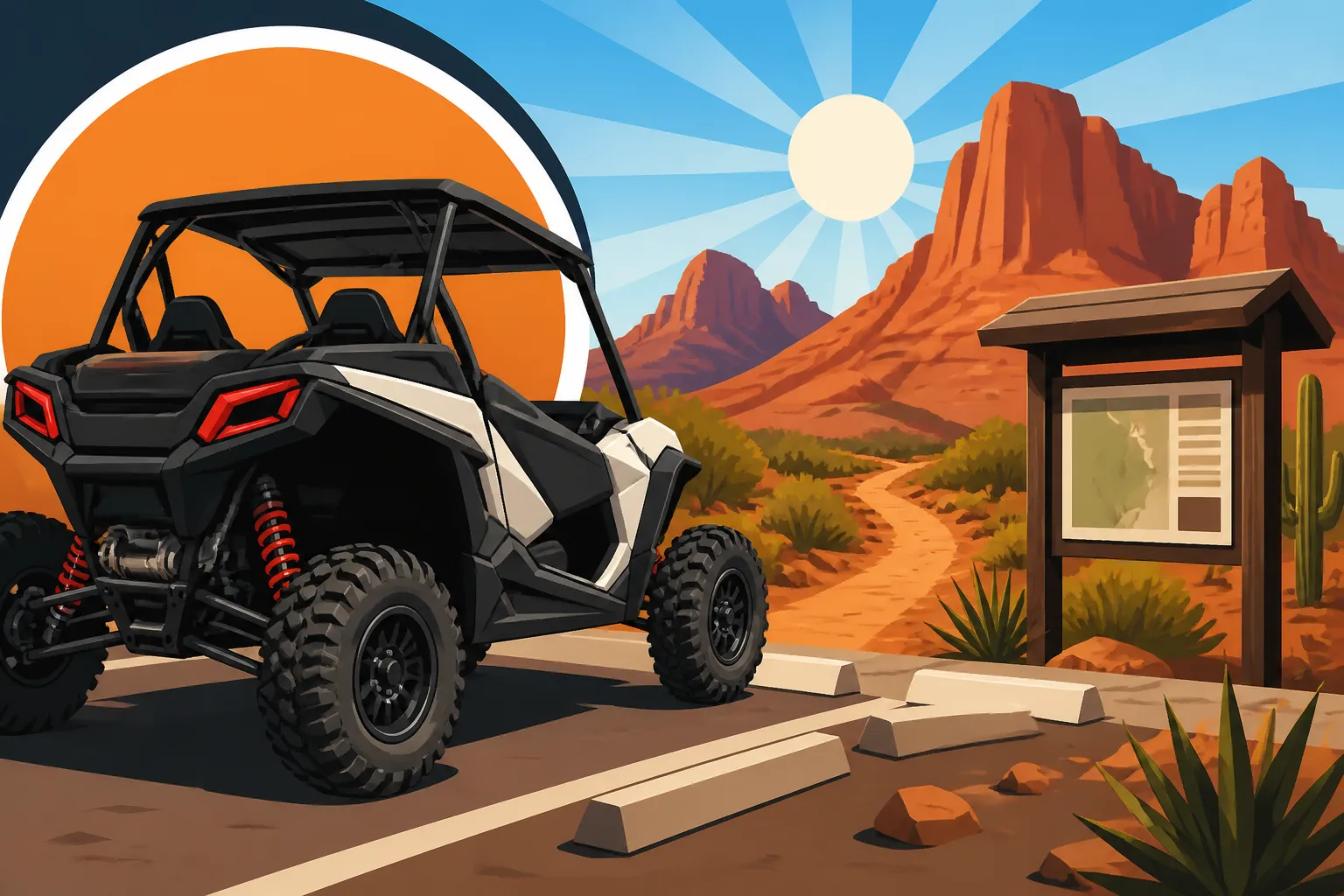
When you arrive at a trailhead, pay close attention to any signage. Designated parking areas are typically clearly marked, sometimes with white lines, gravel pads, or even "Trailer Parking" signs. These are the spots you should prioritize. Adhere to any instructions on where to park, how to orient your vehicle, and whether certain areas are off-limits. The goal is to maximize the limited space available for everyone. This often means backing your trailer in fully, not leaving it sticking out into a driving lane, and avoiding taking up multiple spots if you can fit your truck and trailer neatly into one or two.
It's absolutely critical to avoid blocking gates, fire lanes, or access points that might be needed by emergency vehicles or land managers. Imagine a brush fire breaking out, and a fire truck can't get through because someone parked carelessly. Not only is this illegal, but it's incredibly irresponsible and puts lives and property at risk. These designated areas, while sometimes crowded, are designed with safety and access in mind. If you're parking on [Arizona State Trust Land], remember that your recreational permit usually covers your activities, but proper parking is still essential. Always respect the boundaries and regulations, even if you see others not doing so. Be part of the solution, not the problem.
Street-Legal Side-by-Sides and Parking Considerations
This is where having a street-legal side-by-side really shines. If your UTV is properly equipped and registered for road use, it opens up a world of flexible parking options. Instead of needing a large spot for your truck and trailer right at the trailhead, you can park your truck and trailer further away—perhaps in a nearby town, a designated overflow lot a few miles down the road, or even a wide, legal shoulder on a county road—and simply ride your street-legal side-by-side to the trailhead. [Making a UTV Street Legal in Arizona] involves specific equipment like turn signals, mirrors, and a horn, which might sound like a lot, but it offers incredible convenience. Brands like SuperATV offer a full range of street-legal kits and accessories that can transform your off-road machine into a road-worthy vehicle, giving you that flexibility.
This strategy significantly reduces the pressure on crowded trailhead parking lots. You might find ample parking on [Which Arizona Roads Are Open to OHVs] that are a short, pleasant ride from the main staging area. However, always be mindful of local city or county ordinances. While state law allows street-legal OHVs on many public roads, some municipalities might have restrictions on where you can park or operate within their limits. A quick search of the local city's website or a call to their police department can clarify any nuances. But generally, the ability to simply drive your UTV from a less congested parking spot to the start of the trail is a game-changer for many Arizona riders.
Trailer Parking Best Practices
Parking a trailer, especially a long one, requires skill and consideration. When possible, try to pull through a parking spot rather than backing in, if the layout allows for it. If backing is necessary, take your time, use a spotter, and be prepared to correct your angle multiple times. It's far better to take an extra minute or two to park correctly than to block traffic or hit another vehicle. Once parked, ensure your trailer is secure. [Tying a Machine Down for the Highway] is important for transport, but also for security when parked. Use wheel chocks, especially on any incline, and ensure your hitch is locked if you plan to leave the trailer unhitched.
Consider unhitching your trailer and parking your truck separately if space is extremely tight. This is often allowed in larger staging areas and can free up a crucial spot. Park your trailer neatly along a curb or at the edge of the lot, ensuring it doesn't impede traffic or block any access points, and then find a standard parking spot for your truck. Again, local knowledge and observation are key; watch how others are parking in the area and emulate good practices. Remember that some staging areas, particularly those in small trail towns, might be shared with other users, like hikers or equestrians, so respecting everyone's space and access is paramount.
Essential Gear and Safety When Parking Your Rig
It's easy to get caught up in the excitement of hitting the trails, but don't let your guard down when it comes to the safety and security of your parked side-by-side and tow vehicle. Arizona's wide-open spaces can sometimes give a false sense of security, but unfortunately, thefts and vandalism can occur anywhere. Protecting your investment and being prepared for any eventuality starts the moment you pull into that parking spot.
Security Measures for Your Parked Rig
Leaving your truck and trailer, sometimes with your expensive side-by-side still loaded, at a remote trailhead for hours can be nerve-wracking. Implementing robust security measures is a smart move. Start with the basics: always lock your truck doors and trailer hitch. A sturdy hitch lock can prevent someone from simply driving off with your trailer. Consider adding a wheel lock or a tire boot to your trailer for an extra layer of deterrence, especially if you’re parking in a less-trafficked area. Visible deterrents, like heavy-duty chains or alarm system decals, can make a potential thief think twice.
It's also a good idea to remove any valuables from plain sight in your truck. Wallets, phones, GPS units, or anything that looks tempting should be tucked away or taken with you. If your side-by-side has storage compartments, make sure those are locked too. Unfortunately, even with the best precautions, theft can happen. Having [Insuring an ATV in Arizona] with comprehensive coverage is essential. Take photos of your setup before you leave it, noting the time and location. These small steps can make a big difference in preventing an incident or aiding recovery if something does go wrong.
Preparing for Remote Staging
If you've opted for an alternative, more remote staging area away from the main trailhead, you'll need to be even more prepared. This might mean riding your side-by-side a few extra miles before hitting the actual trail. Ensure your machine has enough fuel for this extended travel, plus your planned ride, and a buffer. Running out of gas miles from your truck is no fun. Consider carrying extra fuel in a secure, approved container, especially if your UTV has a smaller tank or you're planning a long day.
Communication is also key. [Cell Service in the Arizona Backcountry] can be spotty at best, and non-existent at worst, depending on the area. If you're parking in a remote spot, make sure at least one person in your group has a satellite messenger or a satellite phone in case of an emergency. Share your parking location and planned route with someone not on the ride. And as always in the Arizona desert, water is paramount. Pack more than you think you’ll need, not just for the ride itself, but for any unexpected delays or extended walks back to your remote parking spot. Brands like SuperATV offer various cargo and storage solutions that can help you carry these essential items securely, keeping them accessible but out of the way on your machine. [Water Planning for an Arizona Trail Day] cannot be stressed enough—it could save your life.
Respecting the Environment and Other Users
Our privilege to enjoy Arizona's incredible OHV trails comes with a responsibility to be good stewards of the land and considerate of others. This extends to how and where you park. Always follow the "pack it in, pack it out" principle, ensuring no trash or debris is left behind, whether at a designated trailhead or a remote staging area. The desert is fragile, and even small amounts of litter can harm wildlife and detract from the natural beauty.
Minimize your impact on vegetation when parking or maneuvering your rig. Avoid driving over delicate desert plants or disturbing wildlife. If you're parking near residential areas, especially in small trail towns, be mindful of noise levels, particularly early in the morning or late at night. [Desert Community Noise Complaints] can unfortunately lead to stricter regulations or even trail closures, so a little courtesy goes a long way in maintaining good relationships with locals. Remember that you are an ambassador for the OHV community. By parking responsibly, being prepared, and showing respect for the environment and fellow users, you contribute to ensuring that Arizona's amazing trails remain open and accessible for everyone to enjoy for years to come.
Disclaimer
This article is for general informational purposes only and does not constitute professional advice. Laws, prices and regulations vary by location and change over time. Consult a qualified professional for guidance on your specific situation.