Arizona’s Spark Arrestor Requirement
One of the most anxiety-inducing aspects of riding an ATV or UTV in Arizona, especially for those new to the desert or coming from out of state, is making absolutely sure your machine is up to snuff with local regulations. It’s not just about the decal or the plate; there’s a crucial component that often gets overlooked until a ranger is standing there, asking questions: the spark arrestor. This often-misunderstood device isn't just a minor detail; it's a cornerstone of fire prevention in our incredibly dry and fire-prone landscape, and misunderstanding its role or neglecting its maintenance can lead to hefty fines, or worse, catastrophic wildfires. This comprehensive guide will walk you through everything you need to know about Arizona's spark arrestor requirement, from what it is and why it's so vital, to how to inspect, maintain, and ensure your machine is always compliant.
Why Arizona Cares So Much About Spark Arrestors It's Not Just About Tickets!
When you’re out on the trails, kicking up dust and enjoying the wide-open spaces Arizona has to offer, the last thing you want to think about is a tiny, glowing ember. But that tiny ember is precisely why spark arrestors are so critical, and why Arizona takes this requirement so seriously. It's not just about enforcing obscure rules; it's about protecting our unique environment and preventing devastating wildfires that can impact communities and ecosystems for decades.
The Real Danger: Wildfires in Arizona's Fragile Ecosystem
Arizona's beauty is undeniable, from the towering saguaros of the Sonoran Desert to the ponderosa pines of the high country. But this beauty comes with a significant vulnerability: extreme aridity and a landscape covered in highly flammable vegetation. Imagine dry creosote bushes, brittle palo verde trees, and sun-baked grasses – all just waiting for a spark. A single, uncontrolled ember, ejected from an ATV or UTV exhaust, can quickly ignite a wildfire that spreads at an alarming rate, especially with our often-present desert winds.
These fires don't just char the landscape; they destroy crucial habitats for wildlife, contaminate air quality, and can threaten homes and livelihoods in rural and suburban communities that border wildlands. The effort and resources required to fight even a small wildfire are immense, drawing on federal, state, and local agencies. When a fire is traced back to an OHV, the individual responsible can face significant legal and financial consequences, not to mention the moral burden of knowing their oversight caused such destruction. This is why the spark arrestor isn't just a piece of equipment; it's a line of defense for our environment.
The Law, the Land, and Your Responsibility as a Rider
Given the inherent danger, it’s no surprise that a spark arrestor is not just a suggestion but a legal mandate for off-highway vehicles operating on most public and even some private lands in Arizona. Agencies like the U.S. Forest Service, Bureau of Land Management (BLM), Arizona State Land Department, and Arizona Game and Fish Department are all aligned on this requirement. When you’re riding on land managed by these entities, which covers vast stretches of our state, your machine must have a USDA-approved spark arrestor.
The requirement applies whether you're cruising through the pines of the Coconino National Forest, exploring the washes near Lake Havasu on BLM land, or crossing a section of State Trust Land with your permit in hand. Enforcement often comes from rangers, deputies, or game and fish officers who are trained to look for compliance. As riders, we have a collective responsibility to protect the very lands we enjoy. By ensuring your machine is compliant, you're not just avoiding a ticket; you're actively participating in the preservation of Arizona's natural resources and ensuring that these amazing riding opportunities remain open for everyone, for generations to come. It’s a small step that makes a monumental difference.
What Exactly Is a Spark Arrestor and How Does It Work?
For many new riders, a "spark arrestor" sounds like some kind of mythical, high-tech gadget. In reality, it's a relatively simple, yet incredibly effective, piece of engineering designed to do one job: prevent hot, glowing carbon particles from escaping your exhaust system and igniting a fire. Understanding how it works can help you appreciate its importance and properly maintain it.
The Science Behind Spark Prevention
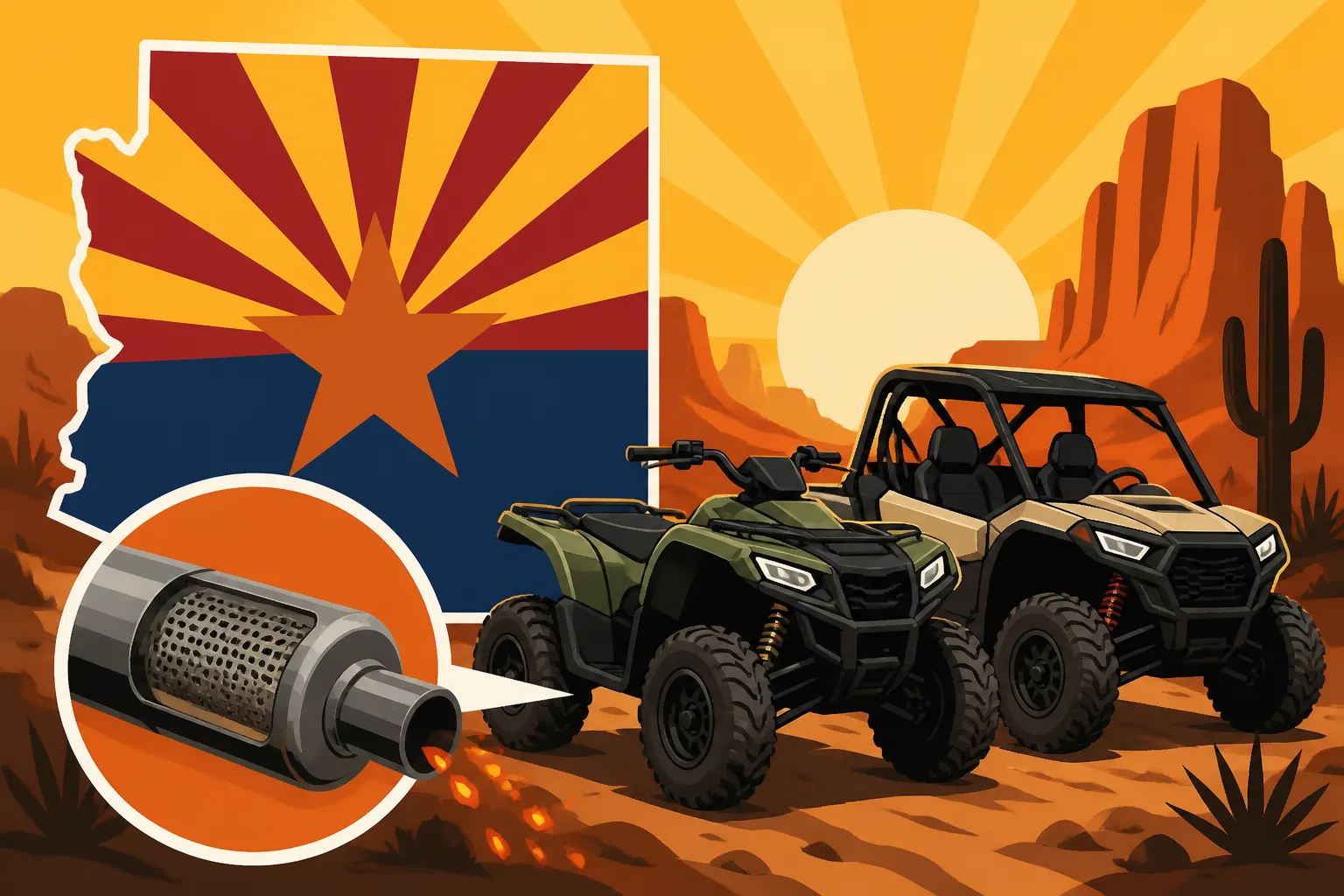
At its core, a spark arrestor is an exhaust component designed to cool hot exhaust gases and capture any incandescent carbon particles (sparks) before they can exit the muffler. Most spark arrestors operate on one of two principles: centrifugal force or impingement (screen type).
A centrifugal spark arrestor typically routes exhaust gases through a series of chambers or baffles that force the gas and particles to spin rapidly. Heavier carbon particles, due to centrifugal force, are thrown against the walls of the chamber where they cool and fall out of the gas stream, collecting in a trap or chamber. The cooled, "spark-free" exhaust then exits.
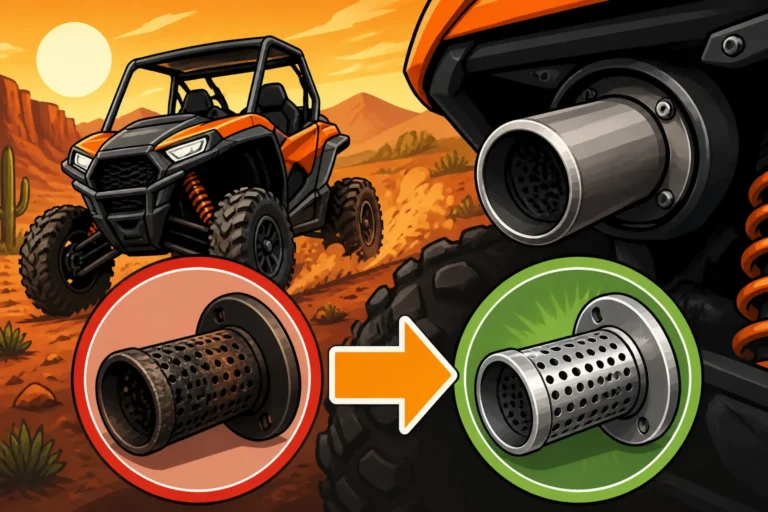
Screen-type spark arrestors, which are very common, use a fine mesh screen (usually stainless steel) through which the exhaust gases must pass. The openings in this screen are carefully sized to allow gas molecules to pass through, but they are too small for hot, larger carbon particles to escape. These particles hit the screen, cool down, and are either pulverized by the exhaust flow or fall back into the muffler to be burned up or collected. Both methods are effective, but screen-types often require more frequent cleaning due to carbon buildup. Regardless of the internal design, the goal is always the same: eliminate any potential fire hazard from the exhaust.
Identifying a USDA-Approved Spark Arrestor
This is where many riders get tripped up. It’s not enough to simply have something in your exhaust that looks like it might catch sparks. For an off-highway vehicle to be compliant on federal and most state lands in Arizona, its spark arrestor must be "USDA Forest Service approved." This approval means the device has been tested and certified to meet specific performance standards for fire prevention.
How do you know if yours is approved? Look for a stamp, label, or engraving directly on the spark arrestor or the muffler itself. It will usually say "USDA Forest Service Approved" or "USFS Approved," often accompanied by a specific model number or certification code. Sometimes, it might just be an "S" with a circle around it. This marking is your proof that the device meets the necessary safety standards. Without this clear marking, a ranger or land manager can assume it’s not compliant, even if it appears to be.
If you’re buying an aftermarket exhaust system, like something from SuperATV, always verify that it explicitly states it includes a USDA-approved spark arrestor, or that it’s designed to accept one that is. Don’t just take a seller’s word for it; look for that specific stamp. Relying on a cheap, uncertified arrestor or a modified exhaust that bypasses the arrestor is a huge gamble, not just for your wallet, but for the safety of our desert. [USDA-Approved Spark Arrestors in Arizona] is something every rider should familiarize themselves with.
Where Do Arizona's Spark Arrestor Rules Apply? Understanding Public vs. Private Land
Navigating the vast and varied landscapes of Arizona with your OHV means understanding where you can ride and what rules apply. The spark arrestor requirement isn't universal across every inch of the state, but it certainly covers the vast majority of places where riders want to recreate. Knowing the distinction between public and private land rules is key to staying compliant and avoiding issues.
Public Lands: Forest Service, BLM, and State Trust Land
When you're exploring the iconic desert trails, crossing scenic routes, or climbing mountain tracks in Arizona, chances are you're on public land. This includes the massive stretches managed by the U.S. Forest Service (like the Tonto, Prescott, Coconino, or Coronado National Forests), the Bureau of Land Management (BLM), and the Arizona State Land Department. On all of these lands, the requirement for a USDA-approved spark arrestor is non-negotiable.
Imagine you're heading out to the [Cinder Hills OHV Area] near Flagstaff, which is part of the Coconino National Forest. Or perhaps you're exploring the [Lake Havasu and the Parker Strip] on BLM land. Even if you're taking your side-by-side on a county road that happens to be an official part of the National Forest system, the spark arrestor rule is in full effect. These agencies have dedicated personnel – forest rangers, BLM officers, and state land agents – who are tasked with enforcing these regulations. They conduct patrols, set up checkpoints, and are vigilant about fire prevention, especially during dry seasons or under fire restrictions. Your machine will be subject to inspection, and if found non-compliant, you could face immediate penalties, including fines or being asked to leave the area. For more detailed information on specific land management rules, checking out [Arizona Rules on Forest Service Roads] and [Arizona Rules on BLM Roads] can be incredibly helpful resources.
Exceptions and Ambiguities: Private Property and Closed Courses
While the rule is clear for public lands, things can get a little murky when it comes to private property. Generally, if you are riding exclusively on private land that you own or have explicit permission to use, and that land is not subject to any specific local ordinances or fire codes, the state's public land spark arrestor rule might not directly apply in the same way. However, this is where common sense and personal responsibility truly come into play.
Even on private property, the risk of a wildfire starting from an unarrested spark is just as real, if not more so, given that private lands might not have the same level of fire suppression infrastructure as public lands. Many private landowners, especially those with large acreage bordering wildlands, will still expect or even require spark arrestors on any OHVs operating on their property, simply as a protective measure. It's always best practice to use a spark arrestor regardless of land ownership, especially in Arizona's tinder-dry environment.
There's also a specific exception for "closed course" operation. This typically refers to designated racing tracks or private riding parks where the environment is controlled, and specific safety protocols (including fire suppression) are in place. If you're competing in an organized race on a sanctioned closed course, the spark arrestor requirement might be waived for that specific event, but this is rare and usually clearly communicated by the event organizers. You cannot assume that riding on a private piece of desert, even if it's your friend's ranch, qualifies as a "closed course." Always err on the side of caution and equip your machine with a USDA-approved spark arrestor, because [Why a Spark Arrestor Runs Whenever the Engine Does] is about constant protection.
Checking, Maintaining, and Replacing Your Spark Arrestor
Just like your tires, oil, or air filter, your spark arrestor needs regular attention. It's not a set-it-and-forget-it component. Neglecting it can lead to reduced engine performance, a higher risk of starting a fire, and of course, a potential citation from a ranger. Proper maintenance ensures compliance, extends the life of your machine, and most importantly, keeps our wildlands safe.
Regular Inspection: Don't Wait for a Ticket
Before every ride, or at the very least, before major trips, make it a habit to inspect your spark arrestor. This isn't a complex task, and it can save you a lot of headache down the line. Start by locating the spark arrestor screen or component, which is usually found at the very end of your exhaust pipe or integrated into the muffler.
Here's what to look for during your inspection:
- Carbon Buildup: This is the most common issue. Over time, carbon deposits from combustion can accumulate on the screen or inside the arrestor's chambers. If the screen is visibly clogged, it restricts exhaust flow, which can decrease engine power and efficiency. More critically, excessive buildup can prevent the arrestor from effectively trapping sparks.
- Damage or Degradation: Check for any holes, tears, or perforations in the screen. A damaged screen can allow sparks to escape. Also, look for rust, corrosion, or physical damage to the arrestor housing. If you can see through the screen easily, but it looks like it's deteriorating, that's a red flag.
- Loose Components: Ensure the spark arrestor is securely attached to your exhaust system. Vibrations and impacts from riding can loosen fasteners, allowing the arrestor to rattle or even fall off.
- Debris: Sometimes, mud, dirt, or other trail debris can get lodged in the exhaust outlet, potentially impacting the arrestor's function.
Cleaning frequency depends heavily on your riding style, the type of fuel you use, and the specific design of your arrestor. If you ride frequently or your machine tends to run rich, you'll need to clean it more often. Many manufacturers recommend checking and cleaning every 10-20 hours of operation or after every few rides in dusty conditions. Don't wait until your machine feels sluggish or you see visible smoke; preventative inspection is key. You'll thank yourself for taking the time to do a [Spark Arrestor Inspection on a Used Machine] before you hit the trail.
Cleaning Your Spark Arrestor: A Hands-On Guide
Cleaning your spark arrestor is a relatively straightforward maintenance task that most riders can perform with basic tools.
What you'll need:
- Wrenches or sockets (to remove the end cap or muffler if necessary)
- Wire brush or stiff nylon brush
- Scraper tool (a flat-blade screwdriver can work)
- Safety glasses and gloves
- Parts cleaner or degreaser (optional, for stubborn carbon)
Steps:
- Allow to Cool: Always ensure your engine and exhaust system are completely cool before you start. Hot exhaust pipes can cause severe burns.
- Access the Arrestor: On many machines, the spark arrestor is part of the muffler's end cap and can be accessed by removing a few bolts. On others, it might be an internal screen accessible after removing the muffler from the header pipe. Consult your owner's manual for specific instructions for your model.
- Remove Carbon: Once you have access to the screen or internal baffles, use your wire brush and scraper to carefully remove any carbon buildup. Be thorough but gentle, especially with fine mesh screens, as you don't want to damage them. If the carbon is very stubborn, a parts cleaner or degreaser designed for exhaust components can help loosen it, but ensure it's safe for the arrestor material.
- Inspect Thoroughly: After cleaning, re-inspect the screen for any damage you might have missed before. Look for small holes or tears that could compromise its effectiveness.
- Reassemble: Reinstall the spark arrestor and any removed components, making sure all bolts are tightened securely.
Regular cleaning not only ensures your arrestor is working properly but also prevents performance issues caused by restricted exhaust flow. It’s an easy way to keep your machine running smoothly and legally.
When and How to Replace a Damaged Spark Arrestor
There will come a time when cleaning simply isn't enough, or the spark arrestor has sustained damage beyond repair. Knowing when to replace it is crucial.
Signs it's time for replacement:
- Pervasive Damage: If the screen has multiple tears, holes, or is severely warped, it can no longer effectively trap sparks.
- Excessive Corrosion: Rust that has eaten through the metal or caused significant weakening indicates the arrestor's integrity is compromised.
- Irreparable Clogging: If carbon buildup is so severe and baked on that it cannot be removed without damaging the screen, replacement is the only option.
- Missing Markings: If the USDA stamp is gone or unreadable due to wear or damage, you might need a new one to prove compliance, even if the arrestor still looks functional.
How to replace it:
- Identify the Correct Part: The first step is to get the right replacement. This means either ordering a genuine OEM (Original Equipment Manufacturer) part specifically for your machine's make and model or an aftermarket equivalent that is explicitly USDA Forest Service approved. Reputable brands, like SuperATV, often provide compliant aftermarket options that are specifically designed to fit various popular UTVs and ATVs, so you have choices beyond just dealer parts. Make sure to double-check the product description for the USDA certification.
- Removal and Installation: The removal process is generally the reverse of the installation, often involving unscrewing the old arrestor or end cap and fitting the new one. Again, refer to your owner's manual for precise steps. Ensure all gaskets and seals are properly seated to prevent exhaust leaks.
- Test: After installation, start your machine and listen for any unusual exhaust leaks or noises. A quick visual check will confirm that the new arrestor is securely in place.
Remember, a functional, USDA-approved spark arrestor is a legal requirement in Arizona. Don't cut corners on this critical component. [Replacing a Burned-Out Spark Arrestor] is an important part of responsible OHV ownership.
Aftermarket Exhaust and Arizona Fire Rules: What You Need to Know
Many OHV enthusiasts love to customize their machines, and changing the exhaust system is a popular modification. Whether it's for a more aggressive sound, a perceived performance boost, or simply a different aesthetic, aftermarket exhausts are common. However, with these modifications comes a significant caveat in Arizona: ensuring compliance with spark arrestor requirements. This is where many riders unknowingly run afoul of the law and create a potential fire hazard.
The Lure of Performance Exhaust: Power vs. Compliance
Aftermarket exhaust systems often promise increased horsepower, torque, and a more robust exhaust note. The appeal is strong: who doesn't want their side-by-side to sound meaner or feel a little quicker off the line? Manufacturers like Yoshimura, FMF, and Vance & Hines (though not explicitly called out in the prompt as contextual brands, they are common examples for aftermarket exhaust) produce a wide array of systems designed to enhance various aspects of performance.
However, the primary design goal for many performance-oriented aftermarket exhausts is not necessarily spark arrestor compliance. Some systems are designed for closed-course racing where spark arrestors might not be required, or for markets with different regulations. The critical mistake many riders make is assuming that any new, shiny exhaust automatically includes a compliant spark arrestor. This is often not the case. An aftermarket exhaust might modify the internal baffling, change the exit port design, or simply omit the spark arrestor screen entirely in favor of a wider opening for maximum flow. This can lead to a machine that sounds fantastic but is a wildfire waiting to happen, and illegal to operate on public lands in Arizona.
Ensuring Your Aftermarket System is Legal
If you're considering an aftermarket exhaust or already have one installed, verifying its spark arrestor compliance is paramount. Don't wait for a ranger to do it for you.
Here's how to ensure your system is legal:
- Check for the USDA Stamp (Always!): Just like with a stock system, the most reliable indicator of compliance is the "USDA Forest Service Approved" stamp or marking directly on the muffler or the spark arrestor insert. If it doesn't have it, it's not considered compliant for public land use in Arizona.
- Research Before You Buy: Before purchasing any aftermarket exhaust, thoroughly research its specifications. Look for explicit statements from the manufacturer confirming USDA Forest Service approval. If it's not mentioned, assume it's not compliant. Some companies, including those that focus on utility and protection like SuperATV, will offer exhaust upgrades or accessories that are designed to remain compliant with federal and state regulations, or they will clearly state if a separate spark arrestor insert is required and available.
- Look for Integrated vs. Removable Arrestors: Some aftermarket exhausts have the spark arrestor integrated into the design, just like stock systems. Others are designed to accept a separate, removable spark arrestor insert. If yours uses an insert, ensure that the insert itself is USDA-approved and that it's correctly installed and maintained.
- Avoid Bypass Mods: Never modify your exhaust system to bypass or remove the spark arrestor. This is not only illegal but extremely dangerous in a dry environment like Arizona. The few extra horsepower you might gain are not worth the risk of a wildfire or the severe penalties you could face.
Many aftermarket manufacturers are aware of these requirements and offer compliant solutions, but it's your responsibility as the rider to verify. Don't let the allure of performance or sound compromise safety and legality. [Aftermarket Exhaust and Arizona Fire Rules] are strict for a good reason, and adherence benefits everyone.
Penalties, Enforcement, and What to Do If You're Cited
No one wants to encounter a ranger and leave with a ticket, especially when you're out trying to enjoy the trails. However, failing to comply with Arizona's spark arrestor requirement can lead to exactly that, and potentially much worse. Understanding the penalties, how enforcement typically works, and what your options are if you receive a citation is important for any responsible rider.
The Cost of Non-Compliance: Fines and Other Repercussions
Operating an OHV on public land in Arizona without a USDA-approved spark arrestor is a violation that carries real consequences. The financial penalties can vary, but generally, you can expect a fine that might range from a couple of hundred dollars to significantly more, depending on the jurisdiction (Forest Service, BLM, State Land, or local law enforcement) and the specific circumstances. It's not uncommon for these citations to be in the same ballpark as other moving violations.
But the financial fine is often just the beginning. A ranger has the discretion to:
- Order you off the trail: Your ride day could be immediately cut short, requiring you to load your machine and leave the area.
- Impound your machine: In more serious cases, or if other violations are present, your OHV could be impounded, leading to towing and storage fees on top of the fine.
- Impose additional charges: If your non-compliant machine is found to be the cause of a wildfire, the penalties escalate dramatically. You could be held liable for the full cost of fire suppression, property damage, and environmental restoration, which can easily amount to hundreds of thousands or even millions of dollars. This isn't just a hypothetical; it happens.
- Loss of riding privileges: Repeated offenses could lead to a temporary or permanent ban from certain public lands.
Considering these potential repercussions, the minimal effort of maintaining a compliant spark arrestor becomes a very small price to pay for peace of mind and continued access to Arizona's incredible riding areas. These fines are part of a broader framework, as detailed in [Arizona Fines for Illegal Road Riding], which applies to various OHV violations.
What a Ranger Asks For: Proving Your Compliance
When a ranger or law enforcement officer stops you on the trail, they are typically looking for a few key things: your OHV decal, proof of ownership (like your registration), and your spark arrestor. They are trained to identify compliant spark arrestors.
Here's what you can expect:
- Visual Inspection: The officer will usually ask you to point out your spark arrestor or simply visually inspect the end of your exhaust pipe. They'll be looking for the physical device and, critically, the USDA Forest Service approval stamp.
- Physical Check: They might use a small tool or their finger to gently probe the screen to check for damage or excessive carbon buildup. They're trying to determine if it's actually functional and not just a clogged piece of metal.
- Questions: They might ask you about your maintenance routine, when you last cleaned it, or if it's the original part.
Your best approach is always to be polite, cooperative, and knowledgeable about your machine. Have your documentation (registration, OHV decal information, State Trust Land Permit if applicable) readily available. Being able to confidently show a clean, USDA-approved spark arrestor and explain that you maintain it properly goes a long way.
Fighting an OHV Ticket in Arizona (or Avoiding It Entirely)
If you do receive a citation for a spark arrestor violation, you generally have a few options, similar to other traffic tickets. You can typically:
- Pay the fine: This is the simplest option if you acknowledge the violation.
- Contest the ticket: If you believe the citation was issued in error (e.g., your spark arrestor was compliant and USDA-approved), you can contest it in court. You'll need to present evidence, such as photos of the stamp, maintenance records, or even bring the machine itself for inspection.
- Request a repair-and-dismiss option: In some cases, if the violation was a correctable issue (like a clogged arrestor or a missing component that can be easily added), the court or agency might offer an option to fix the problem and provide proof, potentially leading to a reduced fine or dismissal.
However, the absolute best strategy is to avoid the ticket entirely. This means:
- Proactive Maintenance: Regularly inspect and clean your spark arrestor.
- Verification: Always ensure your spark arrestor is USDA-approved and clearly marked.
- Knowledge: Understand the rules of the land you're riding on.
By taking these preventative steps, you not only protect yourself from fines but also contribute to the safety and longevity of Arizona's cherished OHV trails.
Common Questions and Misconceptions About Spark Arrestors in Arizona
Even experienced riders can have questions or hold onto misconceptions about spark arrestors. With so many different machines, riding areas, and evolving regulations, it's easy to get confused. Let's tackle some of the most frequently asked questions to clear up any lingering doubts.
"My Machine is Brand New, It Must Be Compliant, Right?"
This is one of the most common and dangerous assumptions riders make. While many new ATVs and UTVs sold by reputable dealers in the U.S. do come equipped with USDA Forest Service approved spark arrestors, it's not a guaranteed universal truth, and you should never just assume.
Here’s why:
- International Models: Some models, especially those imported or not originally intended for the U.S. market (or specifically for off-road use on federal lands), might not have a USDA-approved spark arrestor.
- Entry-Level or Youth Models: Sometimes, lower-cost or smaller youth models might have different configurations, and while they might reduce sparks, they may not carry the official USDA stamp.
- Dealer Modifications: Though rare, a dealer might perform modifications before sale that inadvertently remove or compromise the spark arrestor.
- "Race Ready" Models: Some manufacturers sell "race ready" versions of their machines that come with competition exhaust systems which are not spark arrestor compliant, as they are intended for closed course use only.
The takeaway: Always, always verify. Before you take your brand-new machine out on its maiden voyage on public lands, check the exhaust for the USDA stamp. If you can't find it, ask your dealer for clarification and ensure they can provide a compliant solution. Don't risk a fine or, worse, a fire, just because you assumed. [What Arizona Riders Need Before They Ride] often includes these types of checks.
"What About Two-Stroke Engines? Do They Need One Too?"
Absolutely, yes. The spark arrestor requirement applies to all internal combustion engines operating off-highway in Arizona, regardless of whether they are two-stroke or four-stroke. While two-stroke engines might be known for a different exhaust note and sometimes a bit more oil smoke, they are just as capable – if not more so, given their often richer fuel mixture and hotter exhaust gases – of ejecting incandescent carbon particles.
The principle of fire prevention remains the same: any engine burning fuel can create hot embers, and those embers pose a fire risk in Arizona's dry climate. So, whether you're on a dirt bike with a two-stroke engine or a modern four-stroke side-by-side, a USDA-approved spark arrestor is a mandatory piece of safety equipment for public land use. Always verify compliance for dirt bikes, especially if they are older models or have been modified.
"I Only Ride on the Street, Do I Still Need One?"
This is a nuanced question, and the answer depends on your machine's street-legal status and intended use.
- Dedicated Street-Legal Machines: If your ATV or UTV has been fully converted to be street-legal in Arizona (meaning it has all the required safety equipment like lights, horn, mirrors, and an MC or RV license plate), and you only ride it on paved roads where OHV use is permitted, then the primary concern shifts to noise and emissions standards for on-road vehicles. While the spark arrestor is still often integrated into street-legal mufflers for general safety and noise reduction, the strict "USDA-approved" requirement specifically targets off-highway operation where fire danger is paramount.
- Dual-Sported Machines / Trail-to-Town Riding: Many riders in Arizona "dual-sport" their machines, meaning they outfit them to be street-legal so they can ride from town to trailhead, or connect different trail systems via public roads. If your machine is street-legal but you also intend to take it off-highway on Forest Service, BLM, or State Trust Land, then the USDA-approved spark arrestor is absolutely required for the off-highway portions of your ride. The moment your tires hit that dirt trail, the off-highway rules, including the spark arrestor mandate, kick in.
- "Golf Cart" or Low-Speed Vehicle Exemptions: Some low-speed vehicles or golf carts might have specific exemptions within planned communities or on very limited public roads, but these are generally not considered OHVs in the context of wide-ranging public land access.
In essence, if your machine is ever going to touch dirt on public lands in Arizona, you need a USDA-approved spark arrestor. The requirement for a spark arrestor is fundamental to safe and legal off-highway recreation in the state, safeguarding our natural resources for everyone to enjoy.
Disclaimer
This article is for general informational purposes only and does not constitute professional advice. Laws, prices and regulations vary by location and change over time. Consult a qualified professional for guidance on your specific situation.