Storing a Machine Through an Arizona Summer
Arizona's summers are legendary for their intensity, and while we riders might be dreaming of cooler temperatures and dusty trails, the reality is that our beloved ATVs and UTVs face a serious challenge sitting idle in that scorching heat. Leaving your machine exposed and unattended for months can lead to a host of frustrating issues – from dead batteries and cracked tires to stale fuel and rust. This guide is all about giving you the practical, real-world advice you need to properly store your off-highway vehicle, ensuring it emerges from the long summer slumber ready to conquer the desert once again.
Protecting Your Machine from Arizona's Extreme Heat
Let's be honest, few things are tougher than an Arizona summer. That relentless sun and dry heat don't just affect us; they wage a silent war on our ATVs and UTVs. Proper storage during these months isn't just about convenience; it's about preserving your investment and avoiding costly repairs down the line.
Finding the Right Storage Location
The first and most critical step in summer storage is choosing where your machine will spend its downtime. In Arizona, this decision can make or break your ATV or UTV's condition.
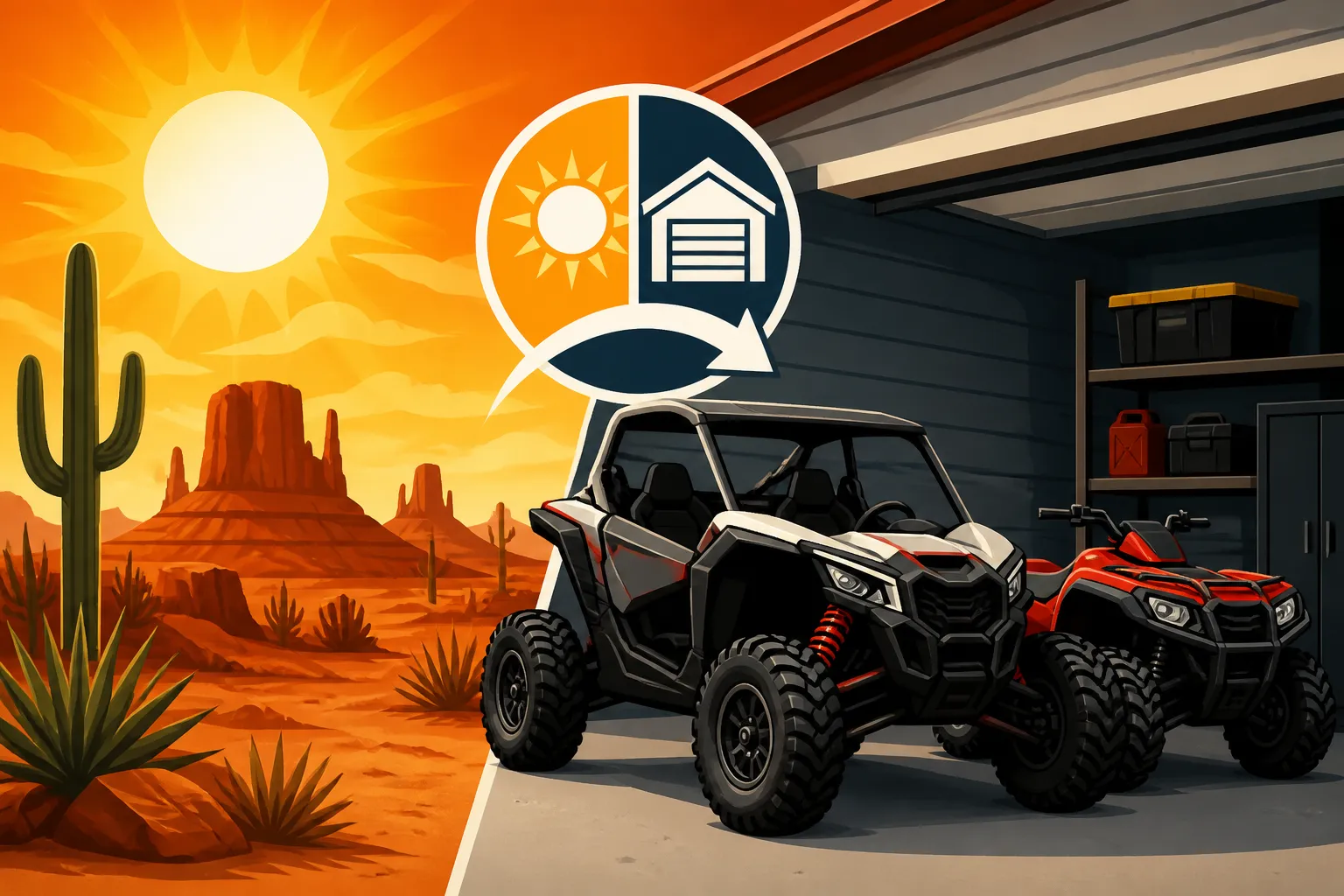
Many of us are tempted to just park it under a tarp in the backyard or leave it in the driveway, but that's a recipe for disaster. Direct sunlight bakes everything – plastics fade and become brittle, tires crack, seats degrade, and painted surfaces dull. A simple carport offers some shade, which is certainly better than nothing, but it still leaves your machine exposed to ambient heat, dust, and any sudden monsoon downpours. Ideally, an enclosed garage or a dedicated storage unit is your best bet. These spaces offer crucial protection from direct UV exposure and help regulate temperatures, even if only by a few degrees. If an indoor space isn't an option, invest in a high-quality, UV-resistant cover that breathes to prevent moisture buildup. Make sure it fits snugly to prevent wind from whipping it around and damaging your machine's finish. Remember, even in the shade, temperatures can easily soar past 120 degrees inside a closed trailer or shed, so ventilation is key.
If you're lucky enough to have extra space in a garage, consider the benefits. A garage protects from dust, critters, and, most importantly, the sun's harsh rays. If you don't have a garage, maybe a trusted friend or family member in a cooler part of the state, or even someone with a spare spot, could be an option. This isn't just about sun; it's also about preventing the kind of dust accumulation that can get into every nook and cranny, causing premature wear when you finally start it up again. And while your machine might be parked, don't forget the necessary [Arizona's Annual OHV Decal Explained], which will still need to be current for when you do decide to hit the trails again.
Cleaning and Detailing Before Storage
Before you tuck your ATV or UTV away for the season, a thorough cleaning is non-negotiable. It's more than just aesthetics; it's about preventing long-term damage. Dust, mud, and grime aren't just unsightly; they can hold moisture against metal surfaces, leading to rust and corrosion, especially with the occasional monsoon humidity.
Start with a good wash, paying close attention to the undercarriage, suspension components, and engine bay. Remove any caked-on mud or dirt, as these can harden and become difficult to remove later, or even attract rodents looking for a cozy home. Use a degreaser for oily areas, and be sure to rinse thoroughly. Once clean, dry your machine completely to avoid water spots and potential corrosion. You can even use compressed air to blow water out of hard-to-reach crevices. After washing, apply a good quality protectant to all plastic and rubber surfaces. This helps prevent fading, cracking, and hardening from the sun's UV rays and the dry heat. Wax painted surfaces to add an extra layer of protection. This attention to detail now will save you countless hours of scrubbing and restoration when riding season returns.
This deep clean is also a perfect opportunity to inspect your machine for any existing damage or wear. A small tear in a seat or a minor dent in a fender can worsen significantly over several months in the heat. Addressing these issues now, or at least noting them, gives you a head start on repairs. Think of it as a pre-flight check before it goes into hibernation. This thorough preparation also impacts the machine's overall value, which is important should you ever decide to sell it down the line. Ensuring that you have all your proper documentation, like [What an Arizona Bill of Sale Should Carry], is crucial, whether for purchase or sale.
Engine, Fuel, and Battery Preservation
Arizona's heat can be especially brutal on your machine's internal components. Neglecting the engine, fuel system, and battery during storage will almost guarantee headaches when you're itching to ride again. This section focuses on the vital steps to keep these systems in prime condition.
Stabilizing Your Fuel System
One of the biggest culprits of starting issues after extended storage is stale fuel. Gasoline can degrade over time, especially in hot conditions, leading to gumming, varnish buildup, and clogged carburetors or fuel injectors. In Arizona's extreme temperatures, this process can accelerate dramatically.
To combat this, you have two primary options. The first, and most common, is to use a high-quality fuel stabilizer. Add the recommended amount to a full tank of fresh fuel – filling the tank reduces air space, minimizing condensation and preventing rust inside the tank. After adding the stabilizer, run the engine for 10-15 minutes to ensure the treated fuel circulates throughout the entire fuel system, including the carburetor or fuel injectors. This makes sure every component that touches fuel is protected. For very long storage periods (say, six months or more, especially in extreme heat), some experts recommend draining the fuel system completely. This eliminates the possibility of fuel degradation altogether, but it does require a bit more effort. Just remember, if you drain it, you'll need to refill with fresh fuel and potentially prime the system before your next ride. Many riders often forget about their vehicle’s registration status during these long storage periods, but it's important to keep track of [Renewing an Arizona OHV Decal Each Year] so you don’t get caught off guard.
If you choose the fuel stabilizer route, make sure to use a product specifically designed for powersports engines and ethanol-blended fuels, as many modern fuels contain ethanol which can attract water and cause corrosion. A few extra dollars spent on good stabilizer now can save you hundreds on carburetor cleanings or fuel system repairs later. This is truly one of those ounce-of-prevention moments. And don't forget, even when stored, your machine remains an asset. Keeping your [Arizona Certificate of Title for an Off-Highway Vehicle] safe and sound with other important documents is always a good practice.
Battery Maintenance for the Off-Season
Batteries and extreme heat do not mix well. Arizona's summer temperatures can significantly shorten a battery's lifespan, even when it's just sitting there. A discharged battery can sulfate, leading to permanent damage and rendering it useless.
The best practice for summer storage is to remove the battery from your ATV or UTV. Clean the terminals thoroughly and store the battery in a cool, dry place – ideally not directly on a concrete floor, which can sometimes accelerate discharge in older battery types. Connect it to a "smart" trickle charger or battery tender. These devices are designed to maintain a full charge without overcharging, automatically monitoring the battery's voltage and topping it off as needed. This prevents sulfation and keeps your battery in optimal condition for months. If you have a lead-acid battery, check the electrolyte levels before connecting it to the charger and top off with distilled water if necessary (wear appropriate safety gear). For sealed or gel batteries, this step isn't required.
Neglecting your battery will almost certainly mean a dead battery when you're ready to ride. While jump-starting might seem like a quick fix, repeatedly draining and recharging a battery can diminish its overall capacity and lifespan. Investing in a good battery tender is a small cost compared to replacing a damaged battery, especially considering how quickly Arizona heat can take its toll. Make sure you know where all your critical documents are, as you might need them to prove ownership or make a claim if something goes wrong. This includes things like your registration and even your [Arizona MVD OHV Registration Explained] documents.
Tires, Suspension, and Fluids
Beyond the engine and fuel, your ATV or UTV's tires, suspension, and other vital fluids also demand attention before summer storage. These components are constantly under stress during rides, and neglect during downtime can lead to unexpected issues when you try to get back on the trail.
Tire Care to Prevent Flat Spots and Cracking
Tires are often overlooked during storage preparation, but Arizona's heat can be especially harsh on rubber. Leaving your machine parked with deflated or improperly inflated tires for months can lead to flat spots, which cause annoying vibrations and can permanently damage the tire's structure. Worse, the constant sun exposure can cause the rubber to dry out and crack, leading to premature tire failure.
To prevent flat spots, inflate your tires to the maximum recommended PSI listed on the sidewall – often higher than your typical riding pressure. This helps them maintain their shape under the weight of the machine. Even better, if possible, lift your ATV or UTV off the ground using jack stands or blocks so the tires are completely unweighted. This completely eliminates the risk of flat spots and takes stress off the suspension components. Regardless of whether they're lifted or not, cover your tires with tire covers or even heavy tarps to shield them from direct UV rays. This is critical for preventing dry rot and cracking. If you store your machine outside, this step is non-negotiable.
Taking these extra steps now means you won't be greeted by a set of warped or cracked tires when you're ready to hit the trail. Replacing tires can be a significant expense, and nobody wants to deal with that when all you want to do is ride. Remember, proper care now translates to less hassle and cost later. When you hit the road again, ensure you have all the necessary items on hand, including any specific papers relevant to [Keeping the Paperwork on the Machine].
Fluid Changes and Lubrication
Just like your car, your ATV or UTV benefits from fresh fluids before a long storage period. Old engine oil can contain contaminants and acids that can corrode internal engine components over time, especially during temperature fluctuations in storage.
It's a good practice to change the engine oil and filter before putting your machine away for the summer. This ensures that only clean, fresh oil is circulating through the engine during its dormant period, providing maximum protection. Also, check your coolant level and condition. Arizona's high temperatures mean your cooling system works hard, and you want to ensure it's topped off and free of leaks. If your coolant is old, consider a flush and refill. Don't forget other fluids like brake fluid and differential fluids; while not as critical for short-term storage, ensuring they are at proper levels and in good condition is always a wise move. Finally, take the time to lubricate all pivot points, cables, and chains. Use a good quality chain lube for chains and grease for zerks. This prevents rust and ensures smooth operation when you're ready to ride again.
This proactive approach to fluid management is a simple yet effective way to protect your machine's vital organs. Think of it as preventative medicine. While you’re thinking about the long-term health of your machine, it's also a good time to consider the overall costs you've invested in it, including any [Arizona Sales Tax on a Machine Purchase] or ongoing maintenance.
Security and Documentation During Extended Storage
Storing your ATV or UTV for the summer isn't just about mechanical preparation; it's also about safeguarding your investment from theft and ensuring all your paperwork is in order. In Arizona, where off-highway vehicles are popular, theft can be a real concern, and having your documents organized can save you a lot of grief if the unexpected happens.
Securing Your Investment
Leaving an ATV or UTV unattended for months, even in a secure location, can still present a theft risk. Thieves often target stored vehicles, knowing they might be less actively monitored. Taking extra security measures can provide significant peace of mind.
If you're storing your machine in a garage or shed, ensure all doors and windows are securely locked. Consider adding a heavy-duty chain and padlock, securing the machine to an immovable object if possible. Wheel chocks with locks can also deter opportunistic thieves. For higher value machines, or if you're storing outdoors, investing in a GPS tracker can be invaluable. Many modern trackers offer real-time location monitoring and alert systems if the vehicle is moved. Remember, no security measure is foolproof, but layers of security make your machine a less attractive target. It's also vital to ensure you have adequate insurance coverage for your stored machine. Check with your provider about [Insuring an ATV in Arizona] to understand what your policy covers during periods of non-use, especially if stored off your primary property.
The proactive steps you take now to secure your machine can prevent a devastating loss. Arizona's wide-open spaces and popular riding areas, while fantastic for recreation, can also be attractive to those looking to make off with someone else's property. Don't let your summer storage become an opportunity for theft. And always keep a detailed record of your machine, including its Vehicle Identification Number (VIN) and any modifications.
Keeping Your Paperwork in Order
Proper documentation is often overlooked until it's desperately needed. During long-term storage, it's a perfect time to ensure all your ATV or UTV's paperwork is organized, accessible, and up-to-date. This includes your title, registration, insurance documents, and any maintenance records.
Store original titles and other vital documents in a secure, fireproof location, separate from where the machine is stored. Consider creating digital copies of all important papers and storing them on a cloud service or a secure external drive. This provides a backup in case the originals are lost or damaged. If you've recently purchased or sold an ATV or UTV, ensure all transfer paperwork is complete and properly filed. Services like LawDepot can be incredibly helpful for creating robust bills of sale, storage agreements (if storing at a third-party location), or even simple transfer of ownership documents, ensuring everything is legally sound and clearly recorded. Having access to these documents quickly is crucial for insurance claims, recovery if stolen, or simply proving ownership. You can also use your [The Arizona Portal Account Every Rider Needs] to keep track of your machine's registration status.
This isn't just about being prepared for an emergency; it's also about maintaining clear ownership history, which can be important for resale value. If you ever need to replace a lost or damaged title, having digital records can significantly expedite the process. Understanding how to navigate [Replacing a Lost Arizona Title] is much easier with a clear paper trail (or digital trail!). A well-organized file means less stress and faster resolution if you ever encounter an issue, whether it’s a theft, an accident, or just verifying details for a new insurance policy. Remember to review any storage agreements created via platforms like LawDepot regularly to ensure they remain current and relevant.
| Component | Arizona Summer Storage Best Practice | Why It Matters |
|---|---|---|
| Location | Enclosed garage or shaded/covered area | Prevents UV damage, heat degradation, dust |
| Cleaning | Thorough wash, wax, plastic protectant | Prevents corrosion, fading, attracts less pests |
| Fuel System | Full tank with stabilizer OR drained fuel | Prevents stale fuel, gumming, corrosion |
| Battery | Remove, clean, connect to smart tender | Prevents discharge, sulfation, extends lifespan |
| Tires | Over-inflate OR lift off ground; cover | Prevents flat spots, dry rot, cracking |
| Fluids | Fresh oil & filter, check coolant | Prevents internal corrosion, ensures readiness |
| Security | Locks, chains, GPS tracker, insurance | Deters theft, protects financial investment |
| Paperwork | Secure originals, digital backups | Proves ownership, aids recovery, insurance claims |
Disclaimer
This article is for general informational purposes only and does not constitute professional advice. Laws, prices and regulations vary by location and change over time. Consult a qualified professional for guidance on your specific situation.