Proof of Ownership for an Arizona Title
One of the biggest headaches you can encounter when bringing home a new-to-you ATV or UTV in Arizona is realizing you don't have the right paperwork to prove you own it. Whether you bought it from a private seller, inherited it, or found an incredible deal on a machine without a clear history, getting that all-important Arizona title can feel like an uphill battle. This guide is here to walk you through exactly what documents Arizona needs for proof of ownership and how to navigate those tricky situations when the paperwork isn't quite perfect.
Why Proof of Ownership Matters for an Arizona Title
When you're dealing with off-highway vehicles, the state of Arizona takes the concept of ownership very seriously. It's not just about having a cool machine to ride; it's about establishing legal title, protecting everyone involved, and keeping stolen machines off the trails. Trying to get your quad or side-by-side titled without proper documentation is like trying to cross the desert without water – you're going to hit a wall fast.
Preventing Theft and Fraud
Imagine buying a side-by-side that you thought was legitimate, only to find out later it was stolen. This happens, and it's a terrible situation for the innocent buyer. Arizona's strict requirements for proof of ownership are designed to put safeguards in place. The Arizona Motor Vehicle Division (MVD) and its third-party partners want to ensure that the person applying for a title is the rightful owner, preventing the sale of stolen vehicles and protecting both buyers and sellers from fraudulent transactions. When you present clear proof, you're helping maintain the integrity of the OHV market in our state. This is why every detail, from the Vehicle Identification Number (VIN) to the signatures on a bill of sale, is scrutinized.
Establishing Legal Rights
A title isn't just a piece of paper; it's the legal document that formally declares who owns a specific ATV or UTV. Without a valid Arizona Certificate of Title for an Off-Highway Vehicle, you don't legally own the machine, no matter how much money you paid for it or how many hours you've spent out on the trails. This can create a host of problems. For instance, if you want to sell the machine down the road, you won't be able to provide the new buyer with a clear title, making your machine incredibly difficult to move. It can also complicate things like insuring the vehicle or making a claim after an accident, as the insurer might question your legal standing. Having a proper title protects your investment and ensures your rights as an owner are recognized.
Requirements for MVD Processing
When you head to an MVD office or a third-party MVD provider, they need specific documents to process your title application. These aren't just suggestions; they are mandatory requirements. The MVD needs a paper trail that clearly shows how the machine came into your possession, verifying its authenticity and preventing issues down the line. Each document serves a purpose in building that chain of ownership, proving that you acquired the machine legally and that it's not subject to any hidden liens or disputes. Without this complete chain, your application for an Arizona Certificate of Title for a Quad will be rejected, leaving you to track down missing paperwork.
Common Documents Accepted as Proof of Ownership
For most straightforward transactions, proving ownership for your Arizona ATV or UTV title means presenting one of a few key documents. Knowing which ones are generally accepted can save you a lot of time and frustration at the MVD office. It's always a good idea to bring originals and copies, just in case.
The Importance of a Clear Title
Ideally, when you buy a used ATV or UTV, the seller will provide you with a clear, signed-over title. This is the gold standard for proof of ownership. A clear title means there are no liens against the machine (like an outstanding loan) and the seller is the legal owner. When the seller signs the title over to you, they're essentially transferring that legal ownership. You'll then take this signed title to the MVD, along with your application, to get a new title issued in your name. It's crucial to make sure the seller's signature matches the name printed on the title and that they fill out all required fields, including the sale date and price. Don't leave the transaction without verifying every single detail on that title, as any error could cause problems when you try to get it issued in your name.
Bills of Sale and Their Essential Details
A bill of sale is an incredibly important document, especially for private party transactions where a formal dealer invoice isn't involved. Even if you have a signed-over title, a comprehensive bill of sale acts as additional, critical proof of the transaction. For ATVs and UTVs, it should include specific details about the machine and the transaction itself. Think of it as a clear record that removes any ambiguity.
What should be on that bill of sale?
- Buyer and Seller Information: Full legal names, addresses, and contact information for both parties.
- Machine Details: Make, model, year, and most importantly, the Vehicle Identification Number (VIN). The VIN is the unique identifier for the machine, just like a fingerprint.
- Sale Price: The agreed-upon purchase price of the machine. This is crucial for calculating [Arizona Sales Tax on a Machine Purchase] or [Arizona Use Tax After an Out-of-State Buy].
- Date of Sale: The exact date the transaction took place.
- Signatures: Both the buyer and seller must sign and date the bill of sale.
- "As Is" Clause: Often, sellers will include a clause stating the machine is sold "as is" to limit their liability.
- Odometer Reading: While not always applicable for OHVs, if the machine has one, it's good practice to record it.
Having a robust, detailed bill of sale protects both you and the seller. It provides a clear paper trail for the MVD and helps resolve any potential disputes later on. If you're unsure how to draft one, resources like LawDepot offer customizable bill of sale templates that guide you through including all the necessary legal details, ensuring you don't miss anything vital for your Proof of Ownership for an Arizona Title. A well-crafted bill of sale can be your best friend if any questions arise about the transaction. For more specifics, check out [What an Arizona Bill of Sale Should Carry].
Manufacturer's Certificate of Origin (MCO/MSO)
When you buy a brand-new ATV or UTV from a licensed dealer, you won't get a title right away. Instead, the dealer will provide you with a Manufacturer's Certificate of Origin (MCO) or a Manufacturer's Statement of Origin (MSO). This document is the equivalent of a birth certificate for your off-highway vehicle. It certifies that the machine is new and identifies the manufacturer, the machine's specifications, and its unique VIN.
The MCO/MSO is then assigned by the dealer to you, the first retail owner. This signed and dated MCO/MSO, along with a dealer invoice or bill of sale, is what you'll present to the Arizona MVD to apply for your very first title for that specific machine. It's absolutely critical that this document is handled with care and kept safe, as it's the foundational piece of ownership for a new vehicle. Without it, titling a brand-new machine becomes significantly more complicated, requiring extra steps and potentially delays.
Court Orders or Probate Documents
Sometimes, ownership of an ATV or UTV changes hands through legal proceedings rather than a direct sale. This can happen in cases of divorce, inheritance, or other legal judgments. If you've been awarded an OHV through a court order, that official document will serve as your proof of ownership. Similarly, if you've inherited a machine after a family member's passing, you'll need probate documents, such as a Letter of Testamentary or an Affidavit of Succession, to transfer the title into your name.
These legal documents must clearly identify the ATV or UTV by its VIN and explicitly state that ownership has been transferred to you. The MVD will accept these as valid proof, but they must be official, certified copies. Navigating these situations can be emotionally challenging, but having the correct legal paperwork is the critical step to ensuring the machine is properly titled in your name, allowing you to move forward. For information on handling an inherited machine, you might find [Inheriting a Quad in Arizona] helpful.
What If You Don't Have Traditional Proof?
It's a frustrating but all-too-common scenario: you've got an ATV or UTV, but the standard title or MCO is nowhere to be found, or perhaps the person you bought it from never titled it themselves. Don't panic, but understand that this situation requires a different approach. Arizona has processes in place to help, though they often involve more steps and a bit of patience.
The Bonded Title Process in Arizona
If you find yourself with an ATV or UTV but lack acceptable proof of ownership—perhaps the original title was lost by a previous owner, or you purchased it from someone who never titled it—Arizona offers a path: the bonded title process. This isn't a quick fix, but it's a legitimate way to establish legal ownership when traditional routes are blocked.
Here's a general overview of how it works:
- Application and Investigation: You'll apply for a bonded title with the MVD. They will conduct an investigation to ensure the machine isn't stolen and to try and locate any previous owners or liens. This involves checking VIN records and public databases.
- Affidavit of Affixation: You'll typically need to submit an affidavit detailing how you acquired the machine, how long you've had it, and explaining why you don't have traditional proof of ownership. This document helps the MVD understand the chain of custody.
- Surety Bond: If the MVD finds no issues and determines a bonded title is appropriate, you'll be required to purchase a surety bond. This bond acts as an insurance policy, protecting any previous owner or lienholder who might later come forward with a valid claim to the machine. The bond amount is usually a percentage of the machine's value.
- Waiting Period: There's often a waiting period after the bond is issued before the MVD will grant the title. This allows time for any potential claimants to come forward.
The bonded title process is designed to protect all parties and establish a clear ownership record when one is missing. It can feel daunting, but it's a necessary step for [Titling an Arizona Quad With No Ownership History]. Be prepared for some back-and-forth with the MVD and potentially a longer timeline than a standard title transfer. For detailed steps, look into [Bonded Title for a Quad in Arizona].
Affidavit of Affixation and Ownership History
In situations where a clear title or MCO is unavailable, an Affidavit of Affixation can become a crucial part of your ownership proof. This isn't a standalone document for titling, but rather a supporting piece of evidence that helps build your case with the MVD. Essentially, you, as the applicant, swear under oath to the MVD that you are the rightful owner, detailing the history of how the ATV or UTV came into your possession.
This affidavit should meticulously outline:
- How you acquired the machine: Did you buy it from a private seller? Was it a gift? Did you rebuild it from parts?
- The date of acquisition: When did it come into your possession?
- Why you don't have traditional ownership documents: Was the title lost? Did the seller never have one? Was it a very old machine without a title requirement at the time of its original sale?
- Attempts made to obtain documentation: Did you try to contact the previous owner? Did you search MVD records?
- The VIN and other identifying details: Crucially links the affidavit to the specific machine.
This document helps bridge the gap when a direct paper trail is broken. It demonstrates due diligence on your part and provides a sworn statement that the MVD can use in conjunction with other investigation methods. Sometimes, this affidavit is part of a larger process, like applying for a bonded title, but it's always about painting a clear picture of legitimate ownership for the MVD.
Titling a Machine the Seller Never Signed For
This is a scenario that causes a lot of headaches for new buyers. You bought a fantastic side-by-side, but the seller hands you a title that's still in the name of their previous owner, or worse, a title that's been "skipped" through multiple owners without proper transfer. The seller never bothered to put the title in their own name, and now they've sold it to you, leaving you in a lurch. The MVD absolutely will not process a title that has been "skipped" like this directly into your name.
If you find yourself in this situation, you essentially have two main paths, neither of which is ideal:
- Track Down the True Owner: Your best bet is to work with the person who sold you the machine to track down the legal owner (the one whose name is on the title). That person needs to sign the title over to the seller, and then the seller needs to sign it over to you. This might involve the seller getting a replacement title in their name first, which can be a lengthy process. This is the cleanest, most direct legal route.
- Bonded Title: If tracking down the true owner or getting the seller to cooperate proves impossible, you'll likely need to go through the bonded title process as described above. This is often the route for [Titling a Machine the Seller Never Signed For] when all other avenues are exhausted. It protects you and the state from potential claims, but it takes time and effort.
It's a tough lesson, but always ensure the seller is the legal owner, and that the title is properly signed over to you at the time of sale. Don't accept a "skipped" title, no matter how good the deal seems.
Special Scenarios and Unique Challenges
Not all ATV and UTV ownership transfers are straightforward purchases from a dealer or a single private party. Life throws curveballs, and sometimes you acquire a machine under less conventional circumstances. Arizona's MVD has procedures for these unique challenges, but it's crucial to understand what's required.
Inheriting a Quad in Arizona
Losing a loved one is difficult enough without having to navigate complex paperwork for their assets. If you've inherited an ATV or UTV in Arizona, the process for transferring the title depends largely on the deceased's estate and whether there was a will or other estate planning in place.
Here's how it generally works:
- Small Estate Affidavit: For smaller estates (which often include a single OHV), Arizona allows for a "small estate affidavit" process. This can simplify the transfer without full probate. You'll need to submit an affidavit, typically after a waiting period, stating your relationship to the deceased and your right to the property. This affidavit must clearly identify the ATV or UTV by its VIN.
- Probate Court Order: If the estate is larger or more complex, the machine may go through probate court. In this case, the court will issue an order naming the new owner or executor of the estate. A certified copy of this court order, along with the original title (if available) and the [Arizona Certificate of Title for an Off-Highway Vehicle] application, will be your proof of ownership.
- Executor/Administrator Transfer: If a personal representative (executor or administrator) was appointed for the estate, they would be authorized to sign over the existing title to you, usually with a copy of their Letters Testamentary or Letters of Administration.
It's wise to consult with an attorney specializing in probate if you're unsure about the specific requirements for your situation. Having the correct legal documents for [Inheriting a Quad in Arizona] ensures a smooth transfer and prevents future issues.
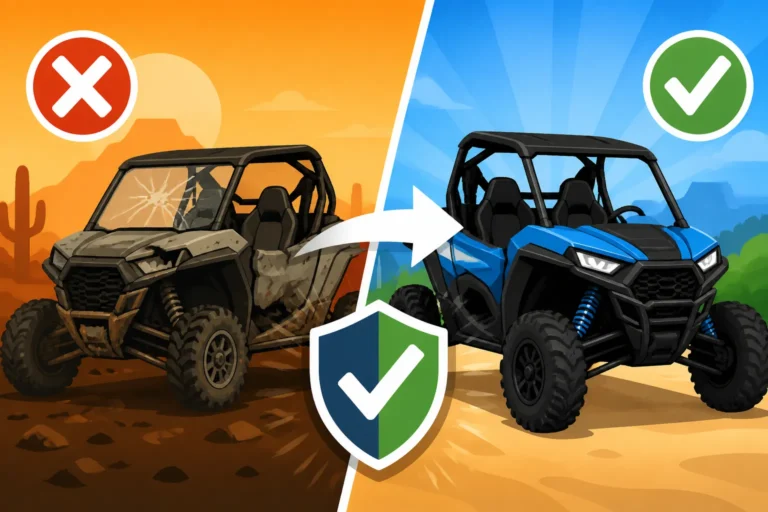
Buying a Salvage or Rebuilt Machine
The world of ATVs and UTVs often includes machines that have seen better days, been in accidents, or suffered significant damage. If you're looking to buy a project or save some money, you might encounter machines with a "salvage" title or a "rebuilt" title. These are not standard titles and come with specific implications for proof of ownership and future titling.
- Salvage Title: A salvage title is issued when an ATV or UTV has been declared a total loss by an insurance company. This means the cost to repair it exceeds a certain percentage of its market value. While you can buy a machine with a salvage title, you cannot simply ride it or title it as a regular vehicle. The salvage title itself serves as proof of ownership that you legitimately acquired the damaged machine. However, to get a regular, usable title, you'll need to repair the vehicle to a roadworthy (or off-road-worthy) condition and then undergo a specific inspection process.
- Rebuilt Title: Once a salvage machine has been repaired and inspected by the MVD (or an authorized agent), and it passes all safety and structural requirements, it can then be issued a "rebuilt" title. This rebuilt title then serves as your standard proof of ownership for the now-repaired machine. The key thing to remember is that a rebuilt title will always carry that designation, signaling its history to any future buyer. For more on what this signals, read [What a Rebuilt Title Signals to a Buyer].
When buying either of these types of machines, ensure you receive the proper salvage certificate or the signed-over rebuilt title. Always ask for documentation of the repairs and inspect the machine thoroughly.
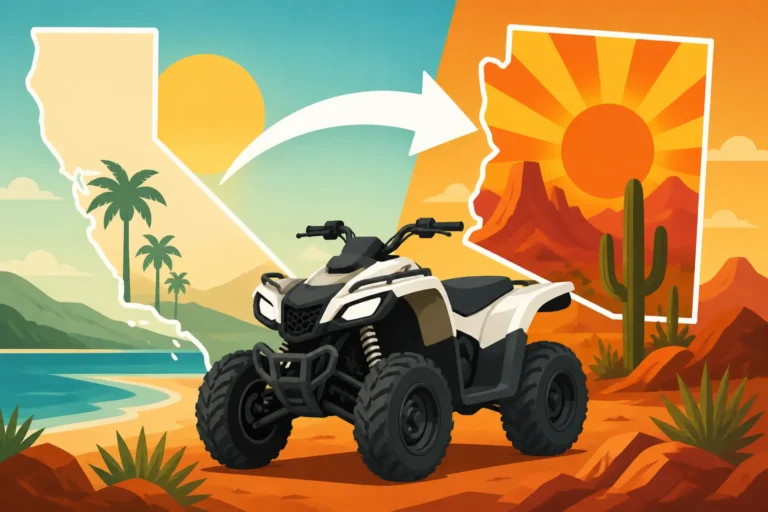
Registering an Out-of-State Machine in Arizona
Moving to Arizona with your beloved ATV or UTV, or simply buying a machine from a seller in another state, brings its own set of paperwork requirements for titling and registration. Arizona treats these machines as if they were purchased new, requiring you to provide specific proof of ownership from the previous state.
Generally, you'll need:
- The out-of-state title: This is paramount. The title from the previous state must be properly signed over to you by the seller.
- Bill of sale: Even with a title, a comprehensive bill of sale is highly recommended, especially for calculating [Arizona Sales Tax Rate on a Machine] or [Arizona Use Tax After an Out-of-State Buy] if applicable. Again, a tool like LawDepot can assist in generating a thorough bill of sale to ensure all necessary details are captured for the Arizona MVD.
- VIN inspection: The MVD may require a physical VIN inspection to verify that the numbers match the paperwork and that the machine isn't stolen. This can often be done at the MVD office or by an authorized third party.
- Emissions Testing: Depending on where you plan to ride your OHV (if it's a street-legal build or if you live in Phoenix or Tucson metro areas), emissions testing might be required even for an off-highway vehicle.
The process is generally straightforward if you have the proper out-of-state title. Just be prepared for the VIN inspection and potential tax implications. For more details on this, explore [Registering an Out-of-State Machine in Arizona] or [Registering a California Quad After Moving to Arizona].
Comparison of Common Proof of Ownership Documents
Here's a quick look at the most common documents used to prove ownership for an Arizona ATV/UTV title application:
| Document Type | When It's Used | Key Information Provided | Pros | Cons |
|---|---|---|---|---|
| Previous Arizona Title (signed over) | Used for private party sales of used machines | VIN, Make, Model, Year, Previous Owner, Lien Information, Seller's Signature | Clearest proof of transfer, often quickest titling | Can be lost, errors in signing invalidate it, requires previous owner's cooperation |
| Manufacturer's Certificate of Origin (MCO/MSO) | Used for brand-new machine purchases from dealers | VIN, Make, Model, Year, Manufacturer Info, First Dealer Assignment | Definitive proof for a new machine, establishes first ownership | Requires careful handling, cannot be used for used machines |
| Bill of Sale | Supporting document for private sales, crucial when title is missing | Buyer/Seller Info, VIN, Make, Model, Year, Sale Price, Date, Signatures | Provides clear transaction details, proof of payment, useful for bonded titles | Not sufficient alone for titling, can be incomplete if not detailed enough |
| Court Order / Probate Docs | Inheritance, divorce, legal judgments | VIN, Legal Transfer of Ownership, Case Details | Legally binding proof from a court, clear transfer | Requires legal process, can be time-consuming to obtain |
Tips for a Smooth Titling Process
Navigating the MVD or a third-party office can sometimes feel like a chore, but with a bit of preparation and understanding, you can make the process of getting your Arizona ATV or UTV titled as smooth as possible. Avoiding common pitfalls will save you stress and potential repeat visits.
Verifying the VIN Before You Buy
This cannot be stressed enough: always, always verify the Vehicle Identification Number (VIN) before you hand over any money for an ATV or UTV. The VIN is the machine's unique identifier, and it's the bedrock of its entire legal history.
Here's why and how:
- Match Everything: Compare the VIN on the machine itself (usually stamped on the frame, often near the steering head or an axle) to the VIN listed on the title, bill of sale, and any other ownership documents. If there's a discrepancy, walk away from the deal or demand clarification. A mismatch is a huge red flag for potential fraud or a stolen vehicle.
- Check for Tampering: Look closely at the VIN plate or stamping. Are there signs of grinding, re-stamping, or alteration? If it looks suspicious, it very likely is.
- VIN Check Services: Many online services allow you to run a VIN check, which can reveal valuable history about the machine, such as accident reports, previous owners, and importantly, if it's been reported stolen. This is an inexpensive step that can save you thousands of dollars and a ton of legal trouble.
- Pre-Purchase Inspection: While you're inspecting the VIN, it's also a great time to do a thorough mechanical inspection of the machine.
Taking these steps to [Checking a Serial Number Before Handing Over Cash] can protect you from buying a stolen machine or one with a hidden past, making your eventual titling process much smoother and legitimate. You definitely don't want to get involved with [Recovering a Stolen Machine in Arizona].
Using a Third-Party MVD Provider
While you can always go directly to an Arizona MVD office, many people find the experience of using a third-party MVD provider much more convenient. These are authorized businesses that can handle many MVD transactions, including titling and registration for ATVs and UTVs.
The benefits often include:
- Shorter Wait Times: Third-party offices typically have less foot traffic and shorter queues compared to state-run MVD locations.
- Extended Hours: Many offer more flexible hours, including evenings or Saturdays, which can be a lifesaver if you work a standard 9-to-5 job.
- Personalized Service: The staff at third-party providers often have more time to walk you through complex paperwork or answer specific questions about your situation.
- Convenience: There are usually more third-party locations spread across communities, making it easier to find one close to home or work.
Just be aware that third-party providers may charge a small service fee on top of the standard MVD fees, but for many, the time and stress saved are well worth it. When looking for a place to get your ATV titled, considering [Using a Third-Party MVD Office for a Quad] can significantly ease the burden. For a list of required items, consult [Documents an Arizona MVD Office Wants].
Keeping Records Safe and Accessible
Once you've gone through the process of titling your ATV or UTV, the absolute last thing you want is to lose those precious documents. Your title, bill of sale, and any other supporting paperwork are vital legal documents. Treat them as such.
Here are a few tips:
- Originals in a Safe Place: Your physical title document should be stored in a secure location, like a fireproof safe, a safe deposit box, or a locked cabinet. Do not keep the original title on the machine itself or in your glove compartment. You'll need it when you eventually sell the machine.
- Digital Copies: Scan or take clear photos of all your documents (title, bill of sale, MCO, registration, insurance cards) and store them digitally. Use cloud storage, an external hard drive, or a secure folder on your computer. This provides a backup in case the physical documents are lost or damaged.
- Copies for the Machine: While the original title should be kept safe, it's a good idea to keep a copy of your registration and insurance card on the machine (perhaps in a waterproof bag) or with you when you ride. This makes it easy to provide proof of registration if you're stopped by a ranger.
- Arizona Portal Account: Consider setting up an [The Arizona Portal Account Every Rider Needs] through Arizona Game and Fish. This can help you manage your OHV decals and sometimes access digital records related to your machines.
Losing your title can lead to needing to [Replacing a Lost Arizona Title], which means more paperwork and fees. A little organization goes a long way in protecting your investment and making future transactions much simpler.
Disclaimer
This article is for general informational purposes only and does not constitute professional advice. Laws, prices and regulations vary by location and change over time. Consult a qualified professional for guidance on your specific situation.