Young Riders at a Busy Staging Area
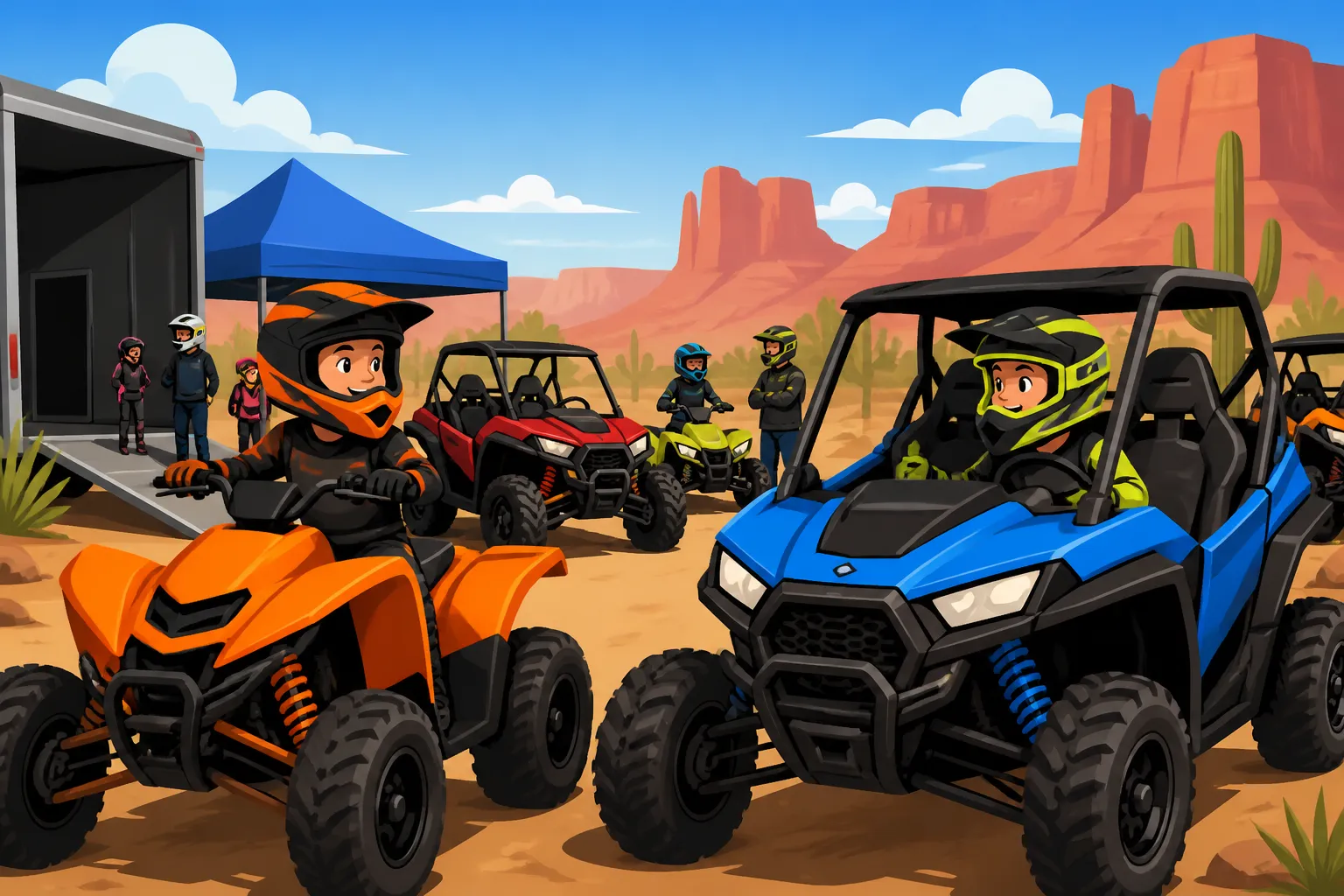
A busy staging area can feel more dangerous than the trail: trailers are backing, engines are starting, and riders are moving in every direction. For families with young ATV or UTV riders in Arizona, the safest approach is to treat staging as a separate part of the ride, with its own rules, boundaries, and adult supervision.
Set Rules Before You Reach the Staging Area
Young riders do better when expectations are clear before the noise and activity begin. Talk through the plan on the way there, then repeat the most important rules when you park. A child who is excited to ride may not hear a long list of instructions over engines and conversation, so keep the rules simple and consistent.
Agree on a few non-negotiables:
- Stay with the designated adult unless that adult says otherwise.
- Walk in the area your family has chosen as its safe zone.
- Never walk behind a vehicle or trailer, even if its engine seems off.
- Do not touch another person’s ATV, UTV, trailer, tools, or controls.
- Wait for the adult’s signal before approaching or getting on the family’s machine.
- If you cannot find your adult, stop in the agreed safe place and ask a named adult for help.
Pick a clear meeting point, such as your parked tow vehicle, and make sure the child can recognize it. A simple instruction like “stay beside this truck” is easier to follow than “stay near the trailers,” where many rigs may look alike. For a younger child, have a capable adult stay within arm’s reach in the busiest parts of the lot.
It also helps to assign one adult as the child’s supervisor during arrival and departure. The person backing a trailer, unloading a machine, or checking straps has a task that needs attention. That person should not also be expected to watch a child crossing the lot. If adults are sharing duties, say who is responsible at each point rather than assuming someone else is keeping an eye out.
Arizona’s youth rules can depend on the rider’s age, machine, and where the ride takes place. Check the current requirements before choosing a machine or deciding who may operate it. [Arizona Age Rules for Young Riders] and Arizona Rules for Operators Under 12 cover issues families should confirm. If the rider is under 18, review Arizona OHV Education Requirements and the applicable helmet rules as part of the pre-ride plan.
A staging area can also sit near land with different access conditions. A decal, permit, or registration does not necessarily authorize travel on every nearby route or parcel. Check the land manager’s current access information, and review Why a Decal Alone Will Not Let You Stage and Arizona State Trust Land Recreational Permits when your route involves Trust Land.
Make a Safe Zone for Walking, Waiting, and Gear
When you arrive, pause before unloading. Look for traffic patterns, moving trailers, dust, and places where drivers may have limited visibility. Choose a spot where your family can organize without blocking other people’s access or putting children in the path of backing vehicles. Follow posted directions and any instructions from the site manager.
Create a “home base” that has a clear boundary. It might be beside your parked vehicle, on the side away from traffic, or in another safe place allowed at that site. Tell children exactly where they may stand and where they must not go. A child should not use the travel lane between parked rigs as a shortcut, even if it looks quiet.
| Staging-area situation | Main risk for a young rider | Practical family rule |
|---|---|---|
| Tow vehicle or trailer moving | Driver may not see a child in a blind spot | Keep children with an adult and out of the vehicle’s path |
| Machine being unloaded | Ramps, straps, and moving equipment can shift | Watch from the designated safe zone; approach only when invited |
| Engines starting | Noise can hide instructions and other movement | Keep helmets on or secured as appropriate, and stay beside the supervising adult |
| Riders departing | Machines may move in groups with dust and limited visibility | Wait for the family’s agreed signal and follow the adult’s departure plan |
| Family returning | Tired riders may be focused on loading or stopping | Park, shut down as directed, and gather the group before children move around |
Keep bags, fuel containers, tools, and loose gear organized so they do not spread into walkways. If a child needs water, a jacket, or a snack, keep those items at the home base rather than sending the child across the lot to retrieve them. Avoid letting children play around ramps, hitch areas, tires, or open tailgates.
Noise matters, too. A young rider who cannot hear a warning may miss a vehicle moving nearby or an adult calling them back. Make sure the child understands that a raised hand or another agreed signal means “stop and look at the adult.” Do not rely on shouting across a running engine or dusty lot.
Staging-area etiquette protects other families as well. Keep your group’s gear inside its space, avoid blocking shared lanes, and do not allow children to climb on parked machines. If the lot is crowded, keep the group together and wait for a quieter moment rather than letting a child weave between vehicles. Arizona Trailhead Parking and Staging can help with planning the broader arrival and parking setup.
Supervise the Ride From the First Movement
A young rider’s safety plan begins before the machine moves. First confirm that the machine is appropriate for the rider and that the rider can operate it as intended. Consider whether the child can reach and use the controls, understand basic instructions, and respond calmly if something unexpected happens. Do not treat a machine’s size or speed capability as proof that it is suitable.
Before starting, check the helmet and protective equipment, secure loose clothing, and make sure the child knows how to stop. Helmet requirements can vary with the land and circumstances, so confirm the applicable rules rather than assuming one rule applies everywhere. Arizona Helmet Requirements on State Land and [Arizona Helmet Rules for a Passenger Under 18] are useful starting points for checking the details.
Give a short briefing in a quiet place where the child can hear you. Cover:
- Where the family will ride and where it will not go.
- Who the child should follow and what to do if the group stops.
- What signal means stop, slow down, or wait.
- What to do if the child loses sight of the supervising adult.
- How to handle a problem without leaving the route to look for help.
Make the first movement deliberate. The supervising adult should be ready before the child approaches the machine. Keep other family members clear while the rider gets settled, and do not start the engine while a child is standing beside a wheel, near an exhaust outlet, or behind the machine. Once underway, leave enough space to avoid dust and sudden stops, and choose a route and pace that match the least experienced rider.
Supervision means more than riding somewhere nearby. Stay close enough to notice when the child is tiring, becoming distracted, or struggling with conditions. Do not assume that an older child can safely supervise a younger one in a crowded lot or on a challenging route. The adult responsible for the young rider should be able to focus on the rider, not on a separate task or another machine.
If a child is a passenger rather than an operator, check the machine’s seating and restraint setup and follow the manufacturer’s instructions. Do not carry a passenger on a machine that is not designed for one. Make sure the child understands that sitting still, using the intended handholds or restraints, and following the driver’s directions are part of the ride. Arizona Rules for Operators Under 12 and Arizona Rules for a Child Passenger can help identify questions to verify before setting out.
For additional planning around close supervision beyond the staging lot, see Supervising a Young Rider in the Desert. The same principle applies at the staging area: the adult should have a direct view of the child and a clear plan for what happens next.
Handle Departures, Returns, and Problems Calmly
Departures are a common point of confusion because several families may start moving at once. Before anyone mounts up, gather your group and check that every rider knows the route and the order of travel. Decide who leads and who stays behind the youngest or least experienced rider. If the family cannot leave together safely, wait until the lot clears rather than rushing to join a moving line.
Do not let a child ride around the staging area to “warm up” unless the site specifically allows it and the adult has confirmed the permitted riding area. A staging lot is not automatically a practice course. Respect signs, barriers, and staff directions, and keep machines on approved routes.
When you return, use the same deliberate routine:
- Stop in the designated area and follow site directions.
- Get the group together before anyone walks around the machines.
- Shut down and secure equipment as appropriate.
- Keep children away from hot parts, moving trailers, and loading operations.
- Assign an adult to supervise while another handles straps or gear.
If the child becomes separated, the rule should be to stop—not to wander through the lot searching. Ask the child to stay at the agreed meeting point or approach a clearly identified site worker or responsible adult. The family should also decide in advance what name and contact information a child can provide if help is needed.
If a rider is upset, tired, or overwhelmed by the noise, pause. A child does not need to continue simply because the group has arrived or the machines are unloaded. Moving to a quieter area, taking a break, or ending the ride may be the safest decision. Staging areas are busy places, and a calm delay is usually easier to manage than a rushed departure.
Before each trip, check current access conditions, youth requirements, and site instructions. A familiar staging area can have different traffic, crowding, or access rules on another day. A short family briefing, a defined safe zone, and one attentive supervising adult can make the transition from parking lot to trail much more manageable.
Disclaimer
This article is for general informational purposes only and does not constitute professional advice. Laws, prices and regulations vary by location and change over time. Consult a qualified professional for guidance on your specific situation.