Youth Machine Size Rules Arizona Parents Ask About
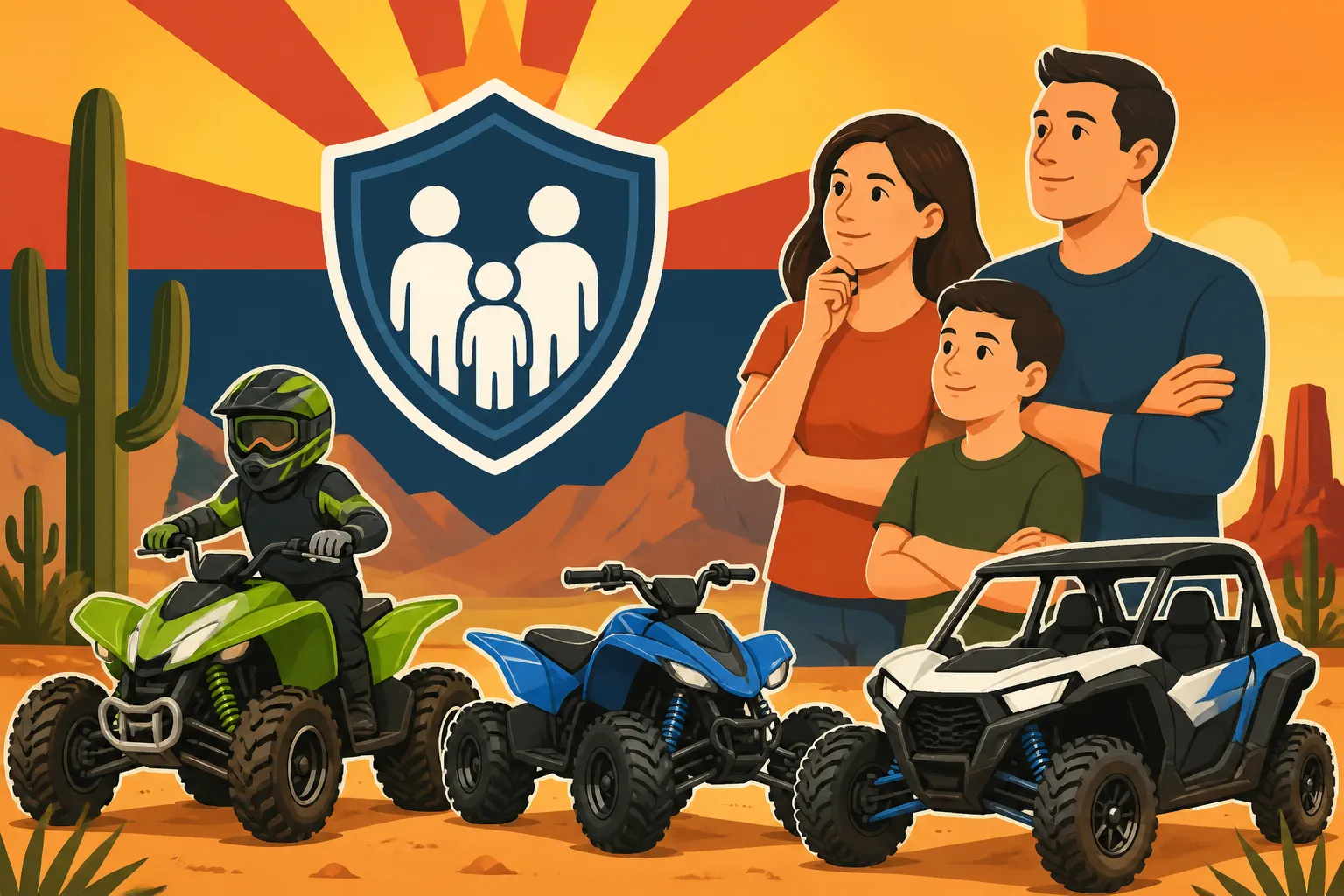
One of the biggest concerns I hear from parents in Arizona who are diving into the world of off-highway vehicles (OHVs) with their kids isn't just about where to ride, but what their kids can actually ride. It's a minefield of conflicting advice, manufacturer recommendations, and state laws, leaving many feeling lost and worried about getting it wrong. This comprehensive guide is here to cut through the confusion, explaining Arizona's specific rules regarding machine sizes for young riders, ensuring your family hits the trails safely and legally.
The Why Behind Arizona's Youth OHV Rules
It’s easy to look at a rule and wonder, "Why do they even have this?" especially when your kid seems like a natural on two or four wheels. But when it comes to youth OHV operation in Arizona, these rules aren't just arbitrary lines in the sand. They're thoughtfully put in place to protect our youngest riders, and understanding the reasoning behind them can help parents appreciate their importance.
Safety First: Protecting Young Riders
Think about it: an adult operating a powerful off-road machine has years of experience with vehicle dynamics, a fully developed sense of judgment, and the physical strength and coordination to react quickly to unexpected situations. Children, no matter how talented or enthusiastic, are still developing these crucial skills. Placing a child on a machine that's too big or too powerful for them significantly escalates the risk of accidents.
When a machine is too large, a child might struggle to reach the controls comfortably, apply enough braking force, or even touch their feet to the ground for balance. If it's too powerful, a simple twist of the throttle can lead to an uncontrollable surge, overwhelming their ability to steer or react. Imagine navigating the sandy washes and rocky trails of Arizona's desert – unexpected dips, sudden turns, and varied terrain demand instant, precise responses. A child on an oversized machine might not have the strength to counter a sudden shift in weight, leading to a loss of control, an overturn, or a collision. These rules are designed to ensure that the machine's capabilities align with the rider's developing physical and mental capacity, keeping them safer on our beautiful, yet sometimes challenging, trails.
Understanding the Legal Framework
These aren't just suggestions from a safety pamphlet; they are legal requirements enforced by the state of Arizona. The Arizona Game and Fish Department (AZGFD), in collaboration with the Motor Vehicle Division (MVD), sets and enforces these regulations to create a standardized safety environment for all OHV users, especially minors. It’s about more than just personal preference; it's about public safety and legal compliance.
These rules fit into a broader framework of OHV regulations that cover everything from [Arizona's Annual OHV Decal Explained] to proper safety gear. They are designed to prevent injuries, minimize accidents, and ensure that our shared public lands remain accessible and safe for everyone. Ignoring these guidelines isn't just risky for your child; it can also lead to legal penalties for the parents or guardians. The state wants to ensure that riding is an enjoyable and safe experience, and for children, that starts with making sure they're on the right-sized machine for their age and development stage.
Deciphering Engine Size and Weight Restrictions for Kids
One of the biggest areas of confusion for parents is understanding the specific limitations on engine size and machine weight. It’s not always as simple as picking a machine that looks like it fits. Arizona law provides guidance, and it’s important to understand the distinctions.
The Under-16 Rule: Categories of Machine Power
Arizona's rules regarding youth OHVs primarily revolve around the rider's age, which then dictates the category of machine power they can operate. While specific cubic centimeter (cc) limits for ATVs and UTVs might be detailed in state statutes, the overarching principle is to limit the raw power and speed available to younger, less experienced riders. Generally, the law categorizes youth machines, ensuring that those designed for very young children have significantly less power than those for pre-teens and young teenagers.
For instance, machines intended for the youngest riders, typically under the age of 12, are designed with engines that provide gentle acceleration and a much lower top speed. These are often entry-level youth ATVs or very small, electric-powered UTVs that prioritize stability and easy handling over performance. As riders mature into the 12-15 age bracket, they become eligible for machines with a bit more engine displacement, offering a slightly higher performance ceiling, but still within a strictly controlled range. These might include larger youth ATVs or compact side-by-sides with a limited top speed, suitable for developing skills without overwhelming the rider. The goal here is to allow for progression in skill development, gradually introducing more capable machines as the rider gains experience and maturity. It’s not about restricting fun; it's about scaling the challenge safely.
Weight Limits and Their Importance
Beyond engine size, the physical weight of an OHV is a critical factor in a child’s ability to safely operate it. A machine that is too heavy can be just as dangerous, if not more so, than one that is too powerful. Imagine trying to steer a heavy object that resists your input, especially when it starts to lean or slide unexpectedly. A child needs to have the physical strength and leverage to actively control the machine’s momentum and direction, particularly during turns, climbs, or descents.
If a machine's weight overwhelms a child, they might struggle to maintain balance on an ATV, or to correct a slide in a UTV. This challenge becomes even more pronounced in dynamic riding conditions common in Arizona, such as navigating soft sand, rocky terrain, or steep inclines. The ability to shift body weight effectively (on an ATV) or to maintain steering input and braking control (on both ATVs and UTVs) is directly impacted by the machine's overall mass. A machine that is too heavy increases the risk of rollovers, especially in off-camber situations or during sudden evasive maneuvers. Therefore, while state laws may not always specify exact weight limits as explicitly as engine displacement, the spirit of the law, combined with manufacturer guidelines, emphasizes selecting a machine that a child can physically manage, reducing the chances of them being "pushed around" by their own vehicle. [Why Machine Weight Matters in Arizona]
Manufacturer Recommendations vs. Arizona Law
This is where it can get particularly tricky for parents. Most reputable OHV manufacturers provide age and sometimes weight recommendations for their specific youth models. These recommendations are typically based on extensive testing, engineering, and a desire to ensure product safety. However, it's absolutely crucial to understand that these are recommendations, and while highly valuable, they do not supersede Arizona state law.
Arizona law sets the legal baseline—the absolute minimum requirements that must be met for a child to legally operate an OHV on public lands. If a manufacturer states their 125cc ATV is suitable for a 10-year-old, but Arizona law restricts that engine size to riders 12 and older, the state law takes precedence. Ignoring state law, even if you’re following a manufacturer’s recommendation, can expose you and your child to legal penalties, including fines. More importantly, it can put your child at increased risk. The state's regulations are designed to provide a uniform safety standard, and while your child might seem incredibly capable for their age, the law errs on the side of caution for the collective safety of all young riders. Always check both sets of guidelines, but prioritize legal compliance first and foremost.
Age-Specific Regulations for Young OHV Operators
Arizona's OHV regulations are finely tuned to a rider's age, gradually introducing more freedom and responsibility as children grow. It's not a one-size-fits-all approach, and understanding these age brackets is key to legal and safe riding.
Riders Under 12: Supervised and Limited
For our youngest aspiring desert adventurers, the rules are understandably strict. Children under the age of 12 operating an OHV are under specific limitations designed for their maximum safety. Primarily, they must be under the direct supervision of an adult. This isn't just about having an adult somewhere in the vicinity; it often implies an adult who is actively observing and capable of intervening if necessary. This supervisor must be a licensed driver and must also comply with all OHV operating requirements themselves.
Furthermore, there are restrictions on where these youngest riders can operate their machines. Generally, riders under 12 are limited to operating on private property, or specific, designated OHV areas that are explicitly marked for youth or beginner use. They are usually restricted from operating on roads or trails open to general public OHV traffic unless those trails are within an approved, supervised area. This ensures that their riding environment is controlled, predictable, and free from the complexities and potential dangers of shared public trails. The responsibility here falls squarely on the parent or guardian. [Citations That Reach an Arizona Parent] are a real possibility if these rules are not followed, highlighting the seriousness with which Arizona treats the safety of its youngest riders. [Where a Child Under 12 May Legally Ride]
The 12-15 Age Group: More Freedom, Still Rules
As children transition into their pre-teen and early teenage years (ages 12-15), Arizona's regulations acknowledge their growing maturity and skill. This age group is generally permitted to operate OHVs on public lands and designated OHV trails, but with important caveats. The primary requirement is often the successful completion of an approved OHV safety course. This course covers everything from safe operating practices to environmental stewardship, equipping young riders with the knowledge they need to navigate trails responsibly.
While direct, constant "hovering" supervision might be less explicitly required than for the under-12 group, an adult must still be readily accessible and aware of the young rider’s activities. The types of machines they can operate will also likely expand slightly in terms of engine size and performance, reflecting their increased capacity for control and judgment. However, they are still typically limited to machines designed specifically for youth or intermediate riders, avoiding the powerful, high-performance machines intended for experienced adults. This stage is about fostering independence while still providing a structured and safe environment for skill development, preparing them for the next level of OHV operation.
Turning 16: Stepping into Adult Regulations
The 16th birthday marks a significant milestone for young OHV operators in Arizona, as they generally step into the realm of adult regulations. Once a rider turns 16, they are typically considered an adult operator under Arizona OHV law, meaning they can operate any size OHV on designated public lands without specific age-related machine restrictions (though general safety and manufacturer recommendations still apply, of course). If the machine is street-legal and they possess a valid driver's license, they can also operate it on approved public roads, subject to all traffic laws and additional requirements for street-legal machines. [Arizona Rules for a Rider Who Turns 16]
However, even with this newfound freedom, the emphasis on safety and responsible riding doesn't diminish. Completing an OHV safety course, while often mandatory for younger riders, remains highly recommended for all operators, regardless of age. It's about instilling a lifelong commitment to safety. The transition at 16 means greater responsibility, and with it, the expectation that these young adults will continue to prioritize safety, respect the environment, and adhere to all OHV laws. It's a rite of passage into a world of incredible adventure, but one that demands ongoing vigilance and education.
Key Documents and Training for Young Riders
Beyond just the machine itself, there's a whole layer of administrative and educational requirements that parents need to navigate to ensure their child is riding legally and safely in Arizona. Think of it as the foundational paperwork and knowledge that backs up their adventure.
The Arizona OHV Decal and Registration
Just like adult machines, any youth OHV being operated on public lands in Arizona needs to be properly registered and display a valid [Arizona's Annual OHV Decal Explained]. This isn't just a formality; the decal directly contributes to the OHV user fund, which supports trail maintenance, signage, and enforcement—all things that make our riding experiences better. For a youth machine, the registration and title will typically be in the parent's or guardian's name. This is crucial because, legally, a minor cannot enter into a contract or own a titled vehicle.
So, when you purchase a youth ATV or UTV, you’ll go through the same titling and registration process as you would for an adult machine. The certificate of title serves as proof of ownership, and the registration ensures the machine is legally recognized by the state. When applying for the annual OHV decal, it will be associated with this registration. This means that while your child is the operator, you, as the parent, hold the legal ownership and responsibility for ensuring the machine is compliant. [Whose Name a Youth Machine Carries] can sometimes be a point of confusion, but generally, it's the responsible adult.
Mandatory Safety Education for Youth
Arizona takes rider safety very seriously, especially for its younger population. Because of this, Arizona mandates that all OHV operators under the age of 18 complete a certified OHV safety education course. This is not just a suggestion; it's a legal requirement to ride on public lands. [Arizona's Free Mandatory OHV Decal Course] is available and covers critical topics such as safe riding practices, environmental considerations, trail etiquette, and essential maintenance.
This course is invaluable, going far beyond simply checking a box for legal compliance. It instills fundamental safety knowledge, helps young riders understand the risks involved, and teaches them how to make informed decisions on the trail. For parents, it provides peace of mind that their child has received professional instruction on how to handle an OHV responsibly. Even if a child feels confident on a machine, the structured learning environment of a safety course can impart nuances and awareness that might otherwise be overlooked. Reinforcing these lessons at home and on the trail is also key to building a truly safe and skilled young rider.
Proof of Ownership and Supervision
When you and your child head out to hit the trails, having the necessary documentation readily accessible is just as important as having a properly decaled machine. [Keeping the Paperwork on the Machine] isn't just a good idea; it can save you a lot of hassle during a ranger stop. This typically includes the machine's registration card and proof of completion of the OHV safety course for the youth rider. While you might not need the physical title on the trail, having proof of current registration is essential.
For private sales, a robust bill of sale is crucial for proving ownership, and resources like LawDepot can help you generate comprehensive, legally sound documents that outline the transaction details. This is especially important for youth machines where the legal owner is often the parent. In addition, when supervising a young rider, the adult supervisor should also carry their valid driver's license and be prepared to demonstrate their compliance with all OHV operating requirements. Being able to quickly provide these documents to an Arizona Game and Fish officer or other law enforcement demonstrates your commitment to safe and legal riding, making for a much smoother experience if you're ever stopped on the trail.
Choosing the Right Machine for Your Child
Selecting an OHV for your child involves more than just picking the prettiest color or the one with the most horsepower. It's a critical decision that balances safety, skill development, and legal compliance.
Assessing Your Child's Readiness and Skill Level
This is perhaps the most important, yet often overlooked, aspect of choosing a youth OHV. While age and weight guidelines are crucial for legal compliance, a child's individual readiness and skill level are paramount for safety. Is your child mature enough to understand and consistently follow safety instructions? Do they possess the necessary coordination, balance, and reaction time? Some children might be physically large for their age but lack the mental maturity for a powerful machine, while others might be smaller but incredibly focused and coordinated.
Consider their previous experience with other motorized vehicles, bicycles, or even sports. Have they demonstrated good judgment? Can they stay calm under pressure? Starting with a smaller, less powerful machine and allowing your child to gain confidence and skills incrementally is always the wisest approach. Don't rush them onto a larger machine just because they hit a certain birthday. The goal is a positive and safe experience that builds their abilities over time, not to push them beyond their comfort or capability zone. Watching them struggle with an overly large or fast machine isn't fun for anyone, and it can quickly diminish their enjoyment and desire to ride. [Picking a First Quad for a Desert Kid] often involves this careful assessment.
ATV vs. UTV: What's Best for a Young Rider?
The choice between an ATV (All-Terrain Vehicle) and a UTV (Utility Terrain Vehicle), often called a side-by-side, for a young rider involves distinct considerations regarding safety, stability, and riding style.
ATVs (quads) require more active rider input, including body weight shifts for balance and steering. They are generally more agile and offer a very direct connection to the terrain. For a child, this means they are learning fundamental riding skills like balance, throttle control, and steering in a very hands-on way. However, ATVs can be less forgiving if a rider makes a mistake, as they lack seatbelts and a roll cage. They demand more physical engagement and quick reflexes.
UTVs, on the other hand, offer a different set of advantages. Youth UTVs come equipped with seatbelts, roll cages, and often side nets, providing a significant passive safety buffer in the event of a rollover. They have a steering wheel and foot pedals similar to a car, which can feel more familiar and intuitive for some children. Their wider stance also provides greater stability, reducing the rollover risk compared to an ATV. UTVs are excellent for family outings where multiple passengers (within vehicle limits) can ride together, promoting a shared experience. However, they can be heavier and might not teach the same dynamic balance skills as an ATV. Ultimately, the "best" choice depends on your child's personality, your family's riding style, and the specific terrain you plan to explore. Many parents opt for youth UTVs for younger or less experienced riders due to their enhanced safety features.
Features to Look For in a Youth OHV
When shopping for a youth OHV, certain features can significantly enhance safety and ease of use, making the learning process smoother and more controlled.
- Throttle Limiters: This is a non-negotiable feature for youth machines. A throttle limiter allows parents to physically restrict the maximum speed the OHV can achieve, preventing children from going too fast before they're ready. As your child's skills grow, you can gradually increase the throttle, giving them more power as they earn it.
- Parental Controls/Tethers: Some youth UTVs offer remote shut-off switches or safety tethers that allow a supervising adult to cut power to the engine from a distance if the child gets into trouble or loses control. This provides an immediate safety override.
- Adjustable Components: Look for machines with adjustable handlebars (for ATVs), adjustable seats, or even adjustable footpegs. These features allow you to customize the fit for your child, ensuring they can comfortably reach all controls and maintain a proper riding posture. A comfortable fit translates directly to better control and reduced fatigue.
- Good Suspension: Quality suspension components are not just about comfort; they significantly impact handling and control, especially on rough Arizona trails. A well-dampened ride means the machine absorbs bumps rather than transmitting every jolt to the rider, helping the child maintain control over varied terrain.
- Reliable Brakes: Powerful, easy-to-operate brakes are absolutely essential. Ensure the brakes are easily accessible and require minimal effort to engage fully, allowing your child to stop quickly and safely when needed. Always make sure to thoroughly inspect a used machine, paying close attention to these safety features, before you buy it. [Going Over a Machine Before You Buy It] can save you headaches later.
Common Parental Concerns and Misconceptions
It’s completely natural for parents to have questions and even some common misconceptions when introducing their children to OHV riding. Let’s tackle some of the most frequent ones I hear out on the trails.
"My Child Is Advanced for Their Age"
Ah, the proud parent syndrome! I get it. Your kid is a natural, a prodigy, practically born on an OHV. They handle their current machine like a seasoned pro, and you truly believe they can competently and safely operate a larger, more powerful machine than the one legally prescribed for their age. While that might be true in terms of raw skill, Arizona's youth OHV laws are designed for general safety across all young riders, not for individual exceptional talent.
The legal age and machine size restrictions are non-negotiable baselines. Operating a machine that exceeds these limits for your child's age, even if you feel they are "advanced," still puts you in violation of state law. This comes with potential fines and legal liability. More importantly, it disregards the physiological and cognitive developmental stages that these laws aim to protect. A child's judgment, reaction time, and physical strength are still maturing, regardless of how well they can navigate a particular turn. Instead of pushing the limits, celebrate their advanced skills within the legal framework. Look for opportunities like supervised riding on private land where rules might be more flexible (though safety should always be paramount) or specialized youth riding parks that cater to different skill levels with appropriate machine categories. The goal is to nurture their talent safely and legally, ensuring their long-term enjoyment of the sport.
Riding on Private Land Exemptions
This is another area where confusion often arises. Many parents believe that if their child is riding on private property, all OHV laws, including those for youth machine sizes and decals, magically disappear. While it's true that some specific OHV regulations primarily apply to public lands, the general principles of safety, liability, and often, youth machine size recommendations from manufacturers, still hold significant weight on private property. [Do You Need a Decal on Private Arizona Land?] is a common question, and the answer is generally no, if it's strictly private land and not crossing public access.
However, "private land" isn't a free-for-all. If your child is riding on land that isn't yours, you absolutely need explicit permission from the property owner. Even on your own land, you are still responsible for your child's safety and any incidents that may occur. Manufacturer age and size recommendations should always be respected to minimize the risk of injury. Furthermore, if an incident occurs on private land and your child was operating a machine clearly too large for them (against manufacturer guidelines), it could potentially impact insurance claims or liability in unforeseen ways. So, while the legal framework for public land may not apply directly, the ethical and practical reasons for adhering to appropriate machine sizes and safety practices remain just as strong, if not stronger, when you're the sole responsible party.
Avoiding Penalties and Ensuring Compliance
Nobody wants to get a ticket, especially when you're just trying to enjoy a family outing in the desert. Ignorance of the law is never an excuse, and Arizona's enforcement officers, particularly the Arizona Game and Fish Department (AZGFD) rangers, are diligent about ensuring compliance with youth OHV regulations. The potential fines and consequences for non-compliance can range from monetary penalties to more severe actions depending on the nature and severity of the violation. [Citations That Reach an Arizona Parent] for allowing a child to operate an illegal machine or without proper supervision are very real.
Beyond the immediate financial hit, there's the potential for a negative interaction with law enforcement, which nobody wants to experience during a fun family trip. The best way to avoid all of this is proactive learning and strict adherence to the rules. Before you even buy a machine, familiarize yourself with the current Arizona OHV laws for youth riders. Enroll your child in the mandatory safety course. Ensure their machine is properly registered and decaled. Double-check that their machine falls within the legal category for their age. It takes a bit of effort upfront, but the peace of mind knowing you're compliant, and more importantly, that your child is as safe as possible within the legal framework, is invaluable. Remember, these rules are ultimately designed to keep everyone safe and ensure the longevity of OHV recreation for generations to come.
Essential Safety Gear for Young Riders
While choosing the right-sized machine and understanding the rules are foundational, the gear your child wears is their primary line of defense against injury. Never skimp on safety gear, as it can literally be a lifesaver.
Helmets: Non-Negotiable Protection
Let’s be absolutely clear: a helmet is the single most important piece of safety gear for any OHV rider, especially a child. Arizona law specifically mandates that all OHV operators and passengers under the age of 18 must wear a U.S. DOT-approved helmet. This isn't a suggestion; it's a legal requirement. [Arizona Helmet Rules for Riders Under 18] exist for a very good reason. Head injuries are among the most serious types of injuries sustained in OHV accidents, and a helmet provides critical protection.
When selecting a helmet, ensure it's DOT-approved, which means it meets specific safety standards. More importantly, ensure it fits properly. A helmet that is too loose can shift during an impact, failing to protect the head effectively. It should fit snugly all around, without being uncomfortably tight, and shouldn't move easily when shaken. The chin strap must always be fastened securely. Think of a helmet as an investment in your child's future. There are many styles and designs available, so find one that is comfortable, meets safety standards, and that your child will actually want to wear.
Eye Protection, Gloves, and Long Clothing
Beyond the helmet, other protective gear is equally vital for a safe and comfortable ride in the Arizona desert.
- Eye Protection: Goggles or a full-face helmet with a visor are absolutely essential. The desert environment is notorious for dust, flying debris, and harsh sun. Proper eye protection shields your child's eyes from these elements, ensuring clear vision and preventing painful injuries. Imagine trying to navigate a trail with dust constantly irritating your eyes – it's distracting and dangerous. [Eye Protection on an Arizona Road] is not just about comfort; it's about maintaining critical vision.
- Gloves: Sturdy gloves protect hands from scrapes, blisters, and impacts. They also improve grip on the handlebars, which is crucial for maintaining control, especially over rough terrain or during long rides when fatigue might set in. Look for gloves designed for powersports, offering both protection and dexterity.
- Long-Sleeve Shirt and Long Pants: While it might seem counterintuitive in the Arizona heat, long sleeves and pants are critical. They protect against abrasions, scrapes, and impacts from branches, rocks, or falls. More importantly, they offer significant protection against the harsh desert sun, preventing sunburn and reducing the risk of heat-related illnesses. Look for breathable, moisture-wicking fabrics designed for outdoor activity. Layering can help manage temperature changes.
The Importance of Proper Footwear
The right footwear is often overlooked, but it plays a crucial role in a child's safety and control while riding an OHV. Flip-flops, sandals, or even sneakers offer virtually no protection and are completely unsuitable for OHV operation.
Your child needs sturdy, over-the-ankle boots. These boots provide essential ankle support, which can prevent sprains and fractures in the event of a fall or if a foot slips off a peg or floorboard. The tough material of powersports boots also protects the feet from impacts with rocks, roots, or other trail hazards. Furthermore, a good boot provides better grip on footpegs or floorboards, helping the rider maintain control and stability, especially when standing or maneuvering over challenging terrain. It ensures that their feet stay securely in place, reducing the risk of them slipping off the controls. Don't compromise on footwear; it's a vital part of the overall safety ensemble.
Age-Based OHV Requirements Table for Arizona
To help visualize the general framework for youth OHV operation in Arizona, here's a table summarizing the typical requirements and considerations based on age. Remember, this is a general guide, and specific laws should always be consulted for precise details, especially regarding engine sizes, as they can be nuanced.
| Age Group | General Machine Category | Typical Engine Power Profile | Key Operating Requirements | Critical Safety Gear |
|---|---|---|---|---|
| Under 12 | Youth ATVs / Small, limited-speed UTVs | Very low power, low top speed | Direct adult supervision, designated youth areas/private land only | DOT helmet, eye protection, gloves, long clothing, over-ankle boots |
| 12-15 years | Intermediate Youth ATVs / Compact UTVs | Moderate power, controlled speed | Mandatory OHV Safety Course, adult supervision nearby | DOT helmet, eye protection, gloves, long clothing, over-ankle boots |
| 16+ years | Adult-sized ATVs / UTVs (full range) | Full range of power | No specific age-based OHV restrictions; driver's license for street-legal ops | DOT helmet (under 18), eye protection, gloves, long clothing, over-ankle boots |
Disclaimer
This article is for general informational purposes only and does not constitute professional advice. Laws, prices and regulations vary by location and change over time. Consult a qualified professional for guidance on your specific situation.