Sun Protection for a Desert Ride
An Arizona ride can feel comfortable at the trailhead and punishing an hour later, when exposed ground, reflected light, and a sweaty helmet turn a fun outing into an exhausting one. Sun protection takes more than sunscreen: it means choosing the right clothing, protecting your eyes and neck, and planning your route and timing so you can respond when conditions get uncomfortable.
Plan Around Arizona Sun and Exposure
Choose ride times with less direct sun
Starting early is one of the simplest ways to reduce exposure during a desert ride. A dawn departure can mean cooler air and less time riding beneath intense midday sun. That matters on open routes around Phoenix and Tucson, where shade may be scarce, and on rocky trails where stopping beside the route may not offer much relief. Build in time to get ready before you leave; a rushed start can lead to forgotten water, sunscreen, or protective clothing.
Do not rely on the calendar alone to judge conditions. A pleasant winter day can still leave your face and hands exposed for hours, while a spring ride can become uncomfortable faster than expected. High-country routes near Flagstaff may feel different from lower desert trails, but elevation is not a reason to skip sun protection. Check the forecast for the specific area and time of day, then make a conservative plan. For seasonal planning, see Arizona’s Best Riding Months and Dawn Rides Before the Heat Builds.
A good plan also includes a turnaround time. If your group is moving slowly, a machine needs attention, or someone is already feeling overheated, shorten the ride instead of pushing toward a distant destination. A mapped route in onX Offroad can help you understand where your planned loop goes and where it may be possible to turn back, but leave room for changing conditions. A route that looks manageable at home can feel much longer when the sun is beating down and everyone is tired.
Look for shade before you need it
Shade is not guaranteed on an Arizona trail. A narrow wash, a stand of trees, or a rocky overhang may offer temporary shelter in some places, but an open desert track may have long stretches with nowhere comfortable to stop. Treat shade as a bonus, not as the foundation of your safety plan.
Before setting out, identify practical stopping points: a developed staging area, a familiar junction, or another place where your group can safely pause. Check the route and access details before you leave, and avoid assuming that a visible road or wash is open to motorized travel. Arizona Trailhead Parking and Staging can help you think through where a ride begins and ends, while Reading an Arizona Motor Vehicle Use Map is useful when checking whether a planned route is designated for motorized use.
A map app such as onX Offroad can be useful for reviewing route options and keeping track of your position, especially when the terrain looks repetitive. Download the information you need before entering an area with poor reception, and carry a backup navigation method if the consequences of getting lost would be serious. Navigation does not provide shade, but knowing where you are can help you avoid an unnecessary detour that adds more exposed riding time.
Dress for a Long, Exposed Ride
Cover skin with breathable layers
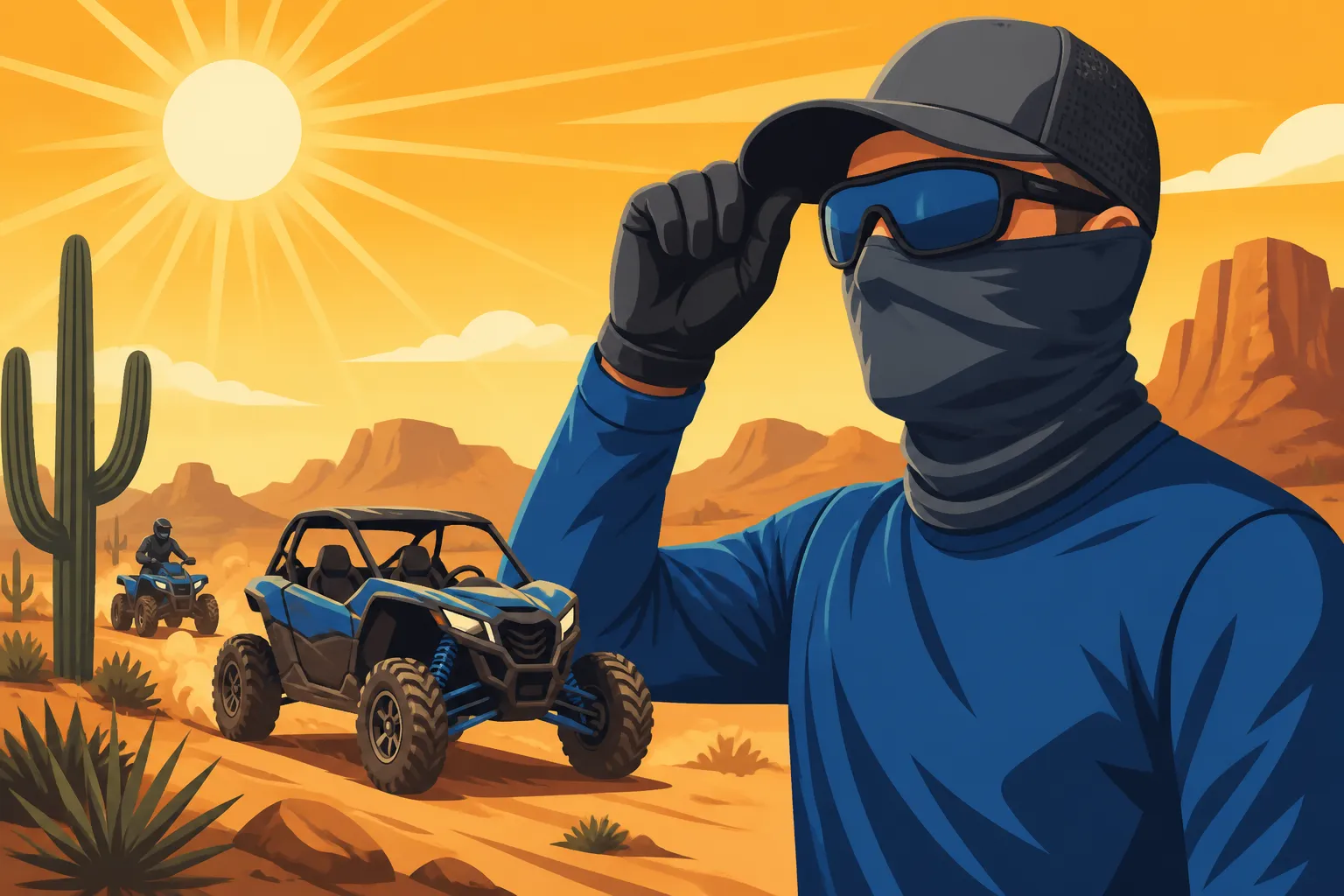
Bare skin may feel cooler at the beginning of a ride, but it leaves more area exposed to sun, dust, and wind. Lightweight, breathable clothing with long sleeves and long pants can provide practical coverage without requiring heavy layers. Look for garments that are comfortable beneath riding gear and allow you to move freely when climbing on or off the machine. A vented riding jersey or a thin sun shirt can be more comfortable than repeatedly trying to cover exposed arms with sunscreen alone.
Fit matters. Sleeves that ride up when you reach for the controls can leave the backs of your hands and wrists exposed. Pants that pull above your boots when seated can expose the lower legs. Try your clothing in a riding position before the trip, not just while standing in front of a mirror. If you wear gloves, check that they overlap your sleeves rather than leaving a strip of skin uncovered.
Color and fabric are not substitutes for sunscreen, but coverage can reduce how much skin needs it. If your clothing becomes soaked with sweat, dusty, or uncomfortable, take a safe break to adjust rather than peeling off protective layers while riding. Bring a spare light shirt if a full day out is planned. For broader preparation around heat, review How Much Water a Desert Ride Needs and Water Planning for an Arizona Trail Day.
Protect your head, neck, and ears
A helmet protects your head while riding, but it does not automatically cover every area vulnerable to sun. The ears, lower face, and neck can remain exposed, particularly when the helmet has an open face or when a rider wears a cap between stops. Choose sun protection that works with your helmet and does not interfere with its fit, straps, or visibility. Do not add bulky material beneath a helmet if it changes how the helmet sits or fastens.
A lightweight neck covering, sometimes called a sun gaiter, can protect the back and sides of the neck and help keep dust off the lower face. Make sure it stays clear of your eyes and does not restrict breathing. A wide-brimmed hat can be useful away from the machine, but it is not a replacement for a properly fitted helmet while riding. At stops, put a hat on before you start working in direct sun, rather than waiting until you feel hot.
Pay attention to the scalp and hairline, too. Riders with short hair, thinning hair, or a part that exposes the scalp may need additional coverage at breaks. Keep sunscreen accessible in a pocket or bag you can reach safely when stopped. If it is buried beneath tools and snacks, it is much less likely to be reapplied.
Use sunscreen as one layer of protection
Use a broad-spectrum sunscreen on skin that remains exposed, and apply it according to the product directions before the ride. Commonly missed areas include the ears, nose, lips, the back of the neck, and the spaces around glove cuffs. Sweat, wiping your face, dust, and long periods outdoors can all reduce protection, so carry sunscreen and reapply as directed rather than assuming a morning application will last the entire day.
Sunscreen can sting if it runs into your eyes, especially once you start sweating. Apply it carefully, allow it to settle before putting on goggles, and consider a product that is comfortable for your face. Lip balm with sun protection can also help protect lips, which are easy to forget until they feel dry or irritated.
Do a quick partner check before leaving the staging area. One person can look for missed spots around another rider’s ears, hairline, or neck—places that are difficult to see yourself. This is a small habit, but it can prevent a familiar post-ride surprise: a sharply sunburned strip just above the collar or between the helmet and goggles.
Protect Your Eyes and Manage Heat
Choose eye protection that works with the terrain
Desert glare can make it harder to see trail texture, rocks, and changes in the ground. Properly fitted goggles or other suitable riding eye protection can shield your eyes from dust and wind as well as bright light. The right option depends on the machine, helmet, route, and riding conditions, but visibility must stay clear. Tinted lenses that feel comfortable in bright sun may be a poor choice if the ride could continue into dusk or through heavily shaded terrain.
Bring a clean backup lens or eye-protection option if you expect dust, sweat, or changing light. Store it so it will not get scratched, and avoid wiping a dusty lens with a dry cloth; grit can mark the surface and make visibility worse. If your goggles fog, pull over somewhere safe and deal with the problem before continuing. Taking a brief pause is better than riding with a distorted view.
Glare also affects how quickly riders tire. Take short breaks to drink, cool down, and check that everyone is still seeing clearly. If a rider has a headache, dizziness, nausea, unusual weakness, or confusion, do not treat the problem as ordinary fatigue. Stop the ride and take the situation seriously. Heat Illness on a Summer Trail covers warning signs and why it is important to act promptly.
Carry more than a bottle on the machine
Water planning should reflect the ride’s length, exertion, weather, and access to resupply. Carry enough for the group’s plan, with a reserve for delays such as a flat tire, a wrong turn, or a machine problem. Do not assume that a convenience store near the trailhead will be open when you return, or that you can refill once you leave town.
Keep water easy to reach during a safe stop. A hydration pack can make sipping convenient, while secured bottles or a water container provide additional capacity. Check that containers are closed and restrained so they cannot fall off or interfere with the machine. If traveling with a group, do not assume that one person’s extra supply will cover everyone; each rider should know what water they have and how it will be carried.
Plan pauses before anyone feels desperate for a drink. Riders often wait until they are thirsty or already uncomfortable, especially when they are focused on keeping up with a group. Agree that anyone can call for a stop without being teased or rushed. For more detail on practical trip planning, see How Much Water a Desert Ride Needs and First Aid an Hour From Pavement.
| Sun and heat concern | Practical protection | Check before leaving |
|---|---|---|
| Exposed arms and legs | Lightweight long sleeves and pants | Check for gaps when seated on the machine |
| Neck and ears | Compatible neck covering and sunscreen | Confirm it does not interfere with helmet fit |
| Face and lips | Carefully applied sunscreen and protective lip balm | Keep products accessible for reapplication |
| Dust and glare | Suitable goggles or riding eye protection | Bring a clean backup option if needed |
| Long time in the sun | Early start, planned breaks, and a turnaround point | Review the route and expected ride length |
| Unexpected delay | Extra water and basic first-aid supplies | Secure supplies so they remain with the group |
Know when to stop rather than push through
Heat problems can begin as symptoms riders are tempted to dismiss: unusual tiredness, headache, nausea, cramps, dizziness, or irritability. Someone may insist they are fine because they do not want to slow the group down. Treat a change in how a person looks or behaves as useful information, not an inconvenience. Stop in the safest available place, get the person out of direct sun as much as possible, and seek appropriate help if symptoms are severe, worsening, or include confusion or fainting.
Do not leave a struggling rider alone while the rest of the group continues. Keep the group together, and use your emergency plan if you cannot safely manage the situation at the trail. Cell service can be unreliable in remote areas, so share your route and expected return time with someone who is not on the ride. Learn more about preparing for limited reception in Cell Service in the Arizona Backcountry.
Make a Sun-Smart Ride Plan
Prepare the group before the machines start
A quick check at the staging area prevents many avoidable problems. Confirm that every rider has suitable clothing, eye protection, sunscreen, water, and a way to contact or navigate if the group separates. Agree on a pace that works for the least experienced rider, and make sure nobody feels pressured to continue if they are getting too hot. Families should pay particular attention to children, who may not recognize or explain early signs of discomfort.
Set a simple break routine. For example, pause at a planned junction or after a stretch of exposed riding, then ask each person how they feel and whether they have been drinking. Keep breaks in safe places that do not block the trail or create a hazard for other riders. If you are using onX Offroad to follow a route, review the map together before the ride so everyone understands the general plan rather than relying on one person’s phone.
Tell someone outside the group where you are going and when you expect to be back. Be specific enough that they can notice if the plan changes, and agree on what they should do if they do not hear from you. That simple step matters when a ride takes longer than expected or the group has to change plans because of heat, weather, or a mechanical issue.
Adjust the route when conditions change
A route that looked reasonable at home may be too ambitious once the group is on the ground. Consider shortening the loop if the day is hotter than expected, if shade is scarce, or if the group is moving more slowly than planned. A navigation app can help show route choices, but do not let a planned track override your judgment. Turning around early is a sensible decision, not a failed ride.
Before leaving, check that the route is open and appropriate for your machine. Public-land maps and route information can help distinguish designated roads and trails from places where motorized use is not allowed. onX Offroad can help with route review and offline navigation preparation, but it should be used alongside responsible route checks and local information. Do not ride into an uncertain area simply because a line appears on a screen.
If the group must stop unexpectedly, choose a safe location away from moving traffic and other trail users. Use your water and shade supplies, reassess how everyone feels, and decide whether continuing is reasonable. If symptoms are concerning, prioritize getting help over completing the route.
Keep the ride comfortable without relying on one fix
There is no single item that makes a desert ride sun-safe. A cooling towel cannot replace water and sensible timing. Sunscreen cannot protect skin covered by neither clothing nor shade if it has worn off. A map cannot prevent heat illness, but it can help you make a better route decision before fatigue sets in. The most reliable approach combines coverage, hydration, breaks, preparation, and the willingness to change plans.
After the ride, check for redness, tenderness, or irritation once dust and sweat are washed away. Rehydrate, rest, and pay attention to anyone who still feels unwell. For the next outing, note what worked: perhaps the group needed an earlier start, more water capacity, a less exposed route, or better-fitting gloves. Small adjustments often make the next Arizona ride more comfortable and far less stressful.
Disclaimer
This article is for general informational purposes only and does not constitute professional advice. Laws, prices and regulations vary by location and change over time. Consult a qualified professional for guidance on your specific situation.