Secret Pass Near Kingman
A ride near Secret Pass can look straightforward on a screen, then turn into a confusing mix of rough roads, private parcels, and route restrictions on the ground. This guide explains how to plan an ATV or UTV trip near Kingman, what to check before unloading, how to prepare for desert conditions, and how to avoid treating every visible track as an open route.
Planning an ATV or UTV ride near Secret Pass
Understand the area before choosing a route
Secret Pass is a riding destination in the wider Kingman area, but a place name alone does not tell you which roads are open, what kind of machine will fit, or whether you can legally connect one route to another. Roads and tracks in northwestern Arizona can cross different land jurisdictions, and access rules may change from one segment to the next. That makes route research part of the ride, not just a task to do on the way there.
Start with a current motor vehicle use map and the relevant land manager’s route information. Look for routes marked open to motorized use, paying attention to vehicle restrictions and seasonal notes. A faint line on a phone map, an old online track, or tire marks leading away from the road are not proof that riding is allowed. For help understanding what map markings mean, see [Reading an Arizona Motor Vehicle Use Map].
Treat the mapped route as a plan, not a promise that every segment will be passable. Rain can wash out a crossing, maintenance can change road conditions, and closures can be announced for reasons that are not obvious when you arrive. Before setting out, check [Checking Arizona Trail Status Before You Drive] and carry a map that remains usable if your phone loses signal.
Choose a route that matches your machine
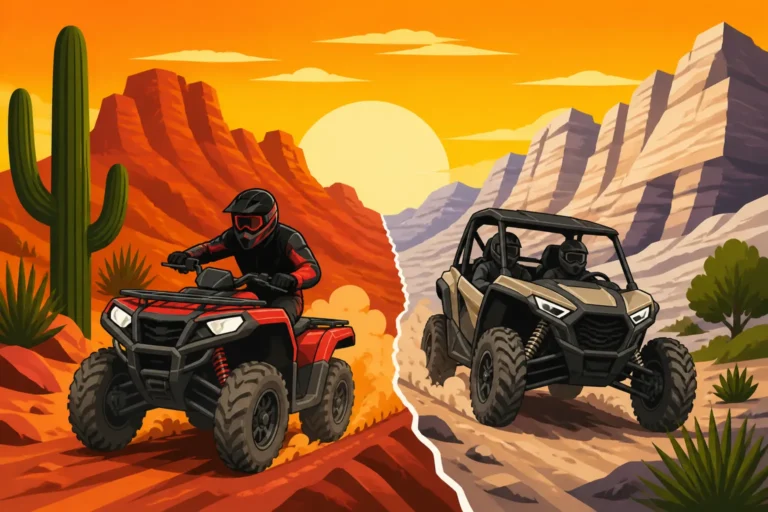
A capable four-wheel-drive UTV is not automatically suited to every rough road, and an ATV that handles a narrow track well may be tiring or awkward on a long, rocky route. Think about the narrowest section, the steepest climb, the surface, and the room available to turn around—not just the easiest-looking miles.
For a full-size side-by-side, confirm route-width restrictions and look for tight turns, brush, or obstacles that could make a mapped road difficult. A wide machine can also limit your options if a route narrows unexpectedly. Review [Arizona Trails Rated for Full-Size Rigs] before assuming a route is suitable for your vehicle.
ATV riders should consider distance, rider fatigue, and the amount of time spent standing or shifting weight over uneven ground. If your group includes machines with very different capabilities, make the route decision based on the least capable machine and least experienced rider. A conservative plan is more enjoyable than discovering halfway through that one person is struggling to keep pace or that the group cannot safely turn around.
What to expect from the ride
Plan for a remote desert outing
A ride near Kingman can feel remote even when the town is your starting point. Do not count on convenient services, reliable cell reception, or quick help once you leave pavement. Before unloading, identify your route, the nearest practical place to get back to a maintained road, and a time when someone outside the group should expect to hear from you.
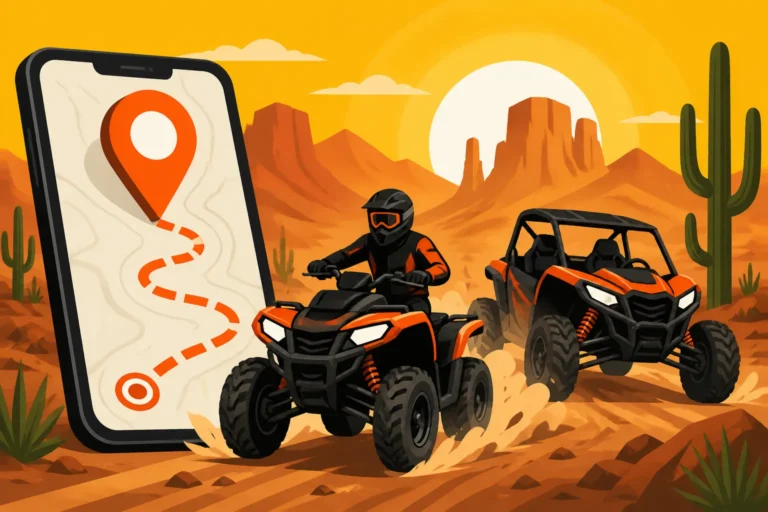
Download maps or save route information for offline use. onX Offroad can be one planning aid for viewing routes and saving map information before you lose reception, but it should not replace official land-manager maps or posted signs. Compare the information rather than relying on a single app: a route shown in a navigation tool still needs to be confirmed as legally open.
Tell someone where you plan to ride and when you expect to return. If plans change, make sure your group has a clear way to communicate that change. [Cell Service in the Arizona Backcountry] offers more guidance on planning around coverage gaps, while [Arizona Trailhead Parking and Staging] can help you think through where to unload and organize your gear.
Prepare for rocky ground, dust, and changing conditions
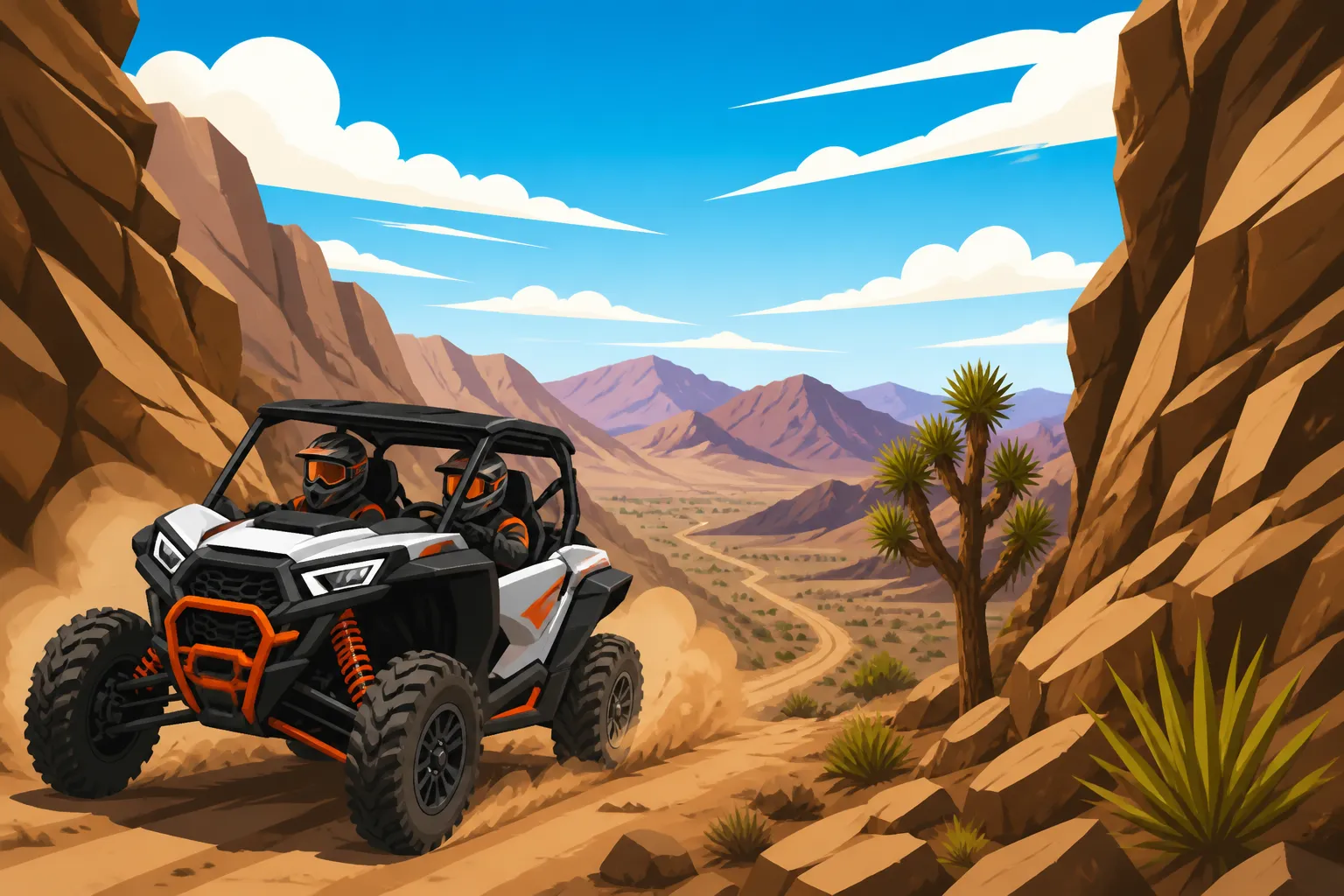
The route surface can vary, so prepare for the possibility of loose gravel, embedded rocks, ruts, dust, and uneven grades. The same road may feel different after rain or after repeated vehicle traffic. Keep a pace that gives you room to react, especially when visibility is reduced by dust or when you approach a blind bend. Leave enough space between machines to see the road and avoid riding into another vehicle’s dust cloud.
Bring basic recovery and repair gear that matches your machine and your group’s experience. That may include a tire repair kit, an appropriate spare, a pump, tools, and recovery equipment suitable for your vehicle. Before the ride, make sure everyone knows where the gear is stored and how to use it. Equipment that stays buried under luggage is less helpful when a tire loses air or a machine gets stuck.
Conditions can change quickly during Arizona’s monsoon season. A wash that appears dry may carry water after storms elsewhere in the drainage, and a road can become slick or damaged after heavy rain. Check weather and closure information before departing, and turn around if water is moving across your route or the surface looks unsafe. For more on planning supplies around the heat and distance, read [Water Planning for an Arizona Trail Day].
| Planning question | What to check | Why it matters |
|---|---|---|
| Is the route open? | Current land-manager maps, notices, and signs | A visible track may be closed or restricted |
| Will my machine fit? | Width limits, tight turns, obstacles, and terrain | A route suitable for an ATV may not suit a wide UTV |
| Can I navigate without signal? | Offline maps, a paper backup, and a known route | Cell coverage can be unreliable away from town |
| Is the weather suitable? | Heat, wind, rain, and storm conditions | Heat and runoff can change the risk of a ride |
| Can the group handle the distance? | Fuel, water, rider experience, and daylight | A conservative turnaround plan helps prevent emergencies |
A practical checklist before leaving Kingman
Confirm access, staging, and road conditions
Before driving out, verify that your intended route is open to the kind of vehicle you plan to use. Check the land jurisdiction for each segment rather than assuming that one open road makes nearby tracks open as well. Follow gates, signs, and closures, and do not cross private property without permission. If the route is unclear, choose a confirmed alternative instead of relying on a guess.
Plan where you will unload and park. Use an established staging location when available, keep access roads clear, and avoid blocking gates, driveways, or places where larger vehicles need to pass. If you are towing, check that your trailer and tow vehicle can reach the planned staging area. A narrow or rough approach road can make turning around with a trailer a bigger challenge than the ride itself.
Use onX Offroad or another mapping tool to organize your route and save it for offline use, then compare it with official maps and local notices. Keep your route simple enough that everyone in the group can follow it. Mark a turnaround point before the ride, and agree that any rider can call for a stop if the road, weather, or group’s condition changes.
Pack for heat, distance, and a breakdown
Carry more water than you expect to need, and make sure every rider can reach their own supply without waiting for someone else. Include sun protection, eye protection, appropriate clothing, food, and a first-aid kit. Start early when conditions call for it, take breaks before anyone feels unwell, and be ready to shorten the ride if temperatures or fatigue become a concern. [Arizona's Best Riding Months] can help with seasonal planning across the state.
Do a machine check before loading: inspect tires, controls, lights, belts or chains as applicable, and fluid levels. Confirm that the machine has enough fuel for the planned route plus a margin for detours or slow travel. Secure loose gear so it cannot shift, fall out, or interfere with the driver. For a group ride, check each machine rather than assuming the others are ready because they made the trip to the staging area.
Agree on simple group rules before starting. Decide how far apart to ride, what to do at a junction, and where the group will regroup if it gets separated. Keep the pace comfortable for the least experienced rider, and do not pressure anyone to attempt an obstacle or continue when they are uncomfortable. A reliable turnaround plan is a sign of good judgment, not a failed ride.
Riding responsibly near Secret Pass
Respect land boundaries and local conditions
Desert routes can pass near private property, working land, or areas with specific access rules. Stay on routes confirmed open to motorized use, avoid creating new tracks, and do not assume that an open gate grants permission to travel beyond it. If signage or map information conflicts, stop and resolve the uncertainty before proceeding. It is easier to adjust a route at a junction than to undo damage or deal with a trespass complaint later.
Keep noise and dust in mind around homes, ranch activity, and other visitors. Slow down near people, livestock, and parked vehicles, and give other road users room. Pack out trash, avoid disturbing wildlife, and leave gates as you find them unless a sign or landowner instructs otherwise. If your plan includes nearby public land, confirm its specific rules instead of applying one area’s requirements to another.
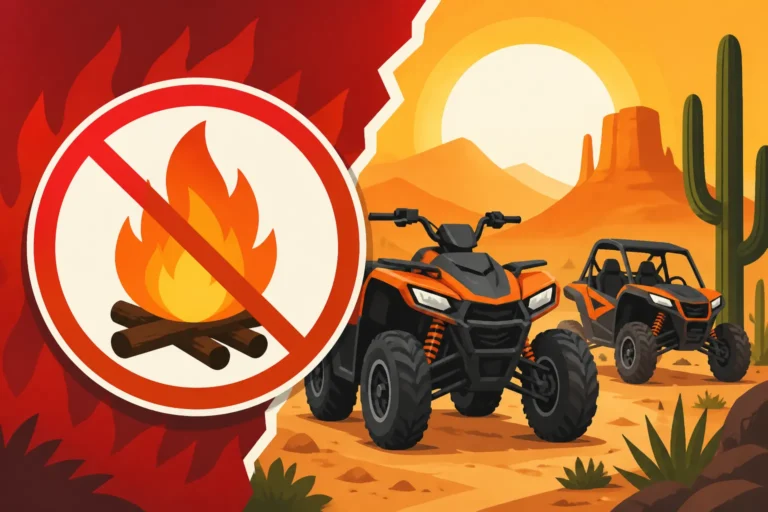
Fire restrictions can also affect what is allowed at a staging or camping area. Check the relevant restrictions before your trip, and do not assume a small campfire or charcoal use is permitted because conditions look calm. [Arizona Fire Restrictions by Stage] explains why restrictions deserve a place on your pre-ride checklist.
Make a safer decision when plans change
Turn around when the route is blocked, conditions deteriorate, or the group is no longer comfortable. A washed-out section, a closed gate, unexpected private-property signage, or a rider who is overheating all call for a change of plan. Do not let the fact that you have already driven to the area—or ridden several miles—push you into taking a risk you would not choose at the start.
If a machine breaks down, move the group to a safe place away from traffic and hazards before troubleshooting. Use your communication plan, conserve water, and avoid splitting up without a clear reason and a way to reconnect. If someone appears confused, unusually weak, dizzy, or otherwise seriously unwell in the heat, treat the situation as urgent and seek appropriate help.
A well-planned Secret Pass outing is not about covering the most ground. It is about choosing a legal route that suits your machine, carrying enough supplies to handle delays, and staying flexible when the desert does not match the plan. Check access before you go, ride within your group’s abilities, and leave room in the day to turn back safely.
Disclaimer
This article is for general informational purposes only and does not constitute professional advice. Laws, prices and regulations vary by location and change over time. Consult a qualified professional for guidance on your specific situation.