Seats and Footrests Arizona Requires
Trying to make your beloved ATV or UTV street legal in Arizona can feel like navigating a maze, especially when it comes to the nitty-gritty details like what kind of seats and footrests are actually required. It’s easy to get frustrated, wondering if your current setup passes muster or if you need to shell out for costly modifications just to get that coveted license plate. This guide is here to untangle the Arizona rules for seats and footrests, helping you understand exactly what’s expected for a safe, compliant, and legally street-ready machine.
Why Arizona Cares About Your Seats and Footrests
When you're out ripping through the desert, blazing trails, or climbing a rocky wash, the thought of your seats and footrests might not go much further than "are they comfortable?" or "will they hold up to the abuse?" But the moment you decide to take that machine from the dirt to the street, Arizona's Motor Vehicle Division (MVD) and local law enforcement suddenly have a lot more to say about how your passengers are supported. This isn't just about making your ride look pretty; it's fundamentally about safety and ensuring that every person in or on your off-highway vehicle (OHV) is secure and properly accommodated when sharing public roads with cars and trucks.
Safety First: More Than Just Comfort
Think about it: a standard passenger vehicle has seats designed with specific safety features, seat belts, and typically ample legroom to keep occupants contained and stable in various driving conditions. When an OHV goes street legal, it essentially steps into that same arena. Your seats need to provide more than just a place to sit; they need to be structurally sound, securely mounted, and capable of safely holding occupants, especially during sudden stops or turns that are common on paved roads. For passengers, this means dedicated seating that isn't just a makeshift cushion on a fender. The Arizona MVD wants to know that if you have passengers, they're not just clinging on for dear life. This focus on proper seating is a critical component of minimizing injury risk, which is why it's a non-negotiable part of the inspection process. It’s a huge shift from the "hold on tight!" mentality of the trail to the more formalized safety standards of the road.
The Law's Interpretation of "Passenger Ready"
Arizona law, specifically concerning street-legal conversions for OHVs, aims to ensure that these vehicles meet a baseline of safety equipment comparable to other vehicles on the road. When it comes to being "passenger ready," it's not enough to simply have space for someone. The law implies that if your vehicle is designed or modified to carry passengers, those passengers must have a safe and designated place to sit and stable support for their feet. This means that if your side-by-side has two seats, it's generally considered capable of carrying one driver and one passenger, assuming those seats are compliant. If you add a third or fourth seat, those additions also need to meet the same structural and safety criteria. Any modifications to increase passenger capacity must be done with safety and legal compliance in mind, not just convenience. A common frustration is realizing that your cool custom bench seat, while awesome for trail rides, might not meet the strict "individual seating position" requirements for street legality, leaving you scrambling for alternatives. You'll want to check out [Making a UTV Street Legal in Arizona] for the full picture of what this conversion entails.
Specific Seat Requirements for Street-Legal Machines
Getting your OHV registered for street use means that your seating isn't just about ergonomics or personal preference anymore; it's about meeting specific legal standards. This can be a real headache for owners who have invested in custom setups or who are used to the more relaxed seating arrangements often found on the trails. Arizona wants to ensure that every occupant has a safe and secure place, minimizing the risk of ejection or injury on paved roads. This often means a close look at how many people your machine is actually designed to carry and if those spots are up to snuff.
Driver and Passenger Seating Standards
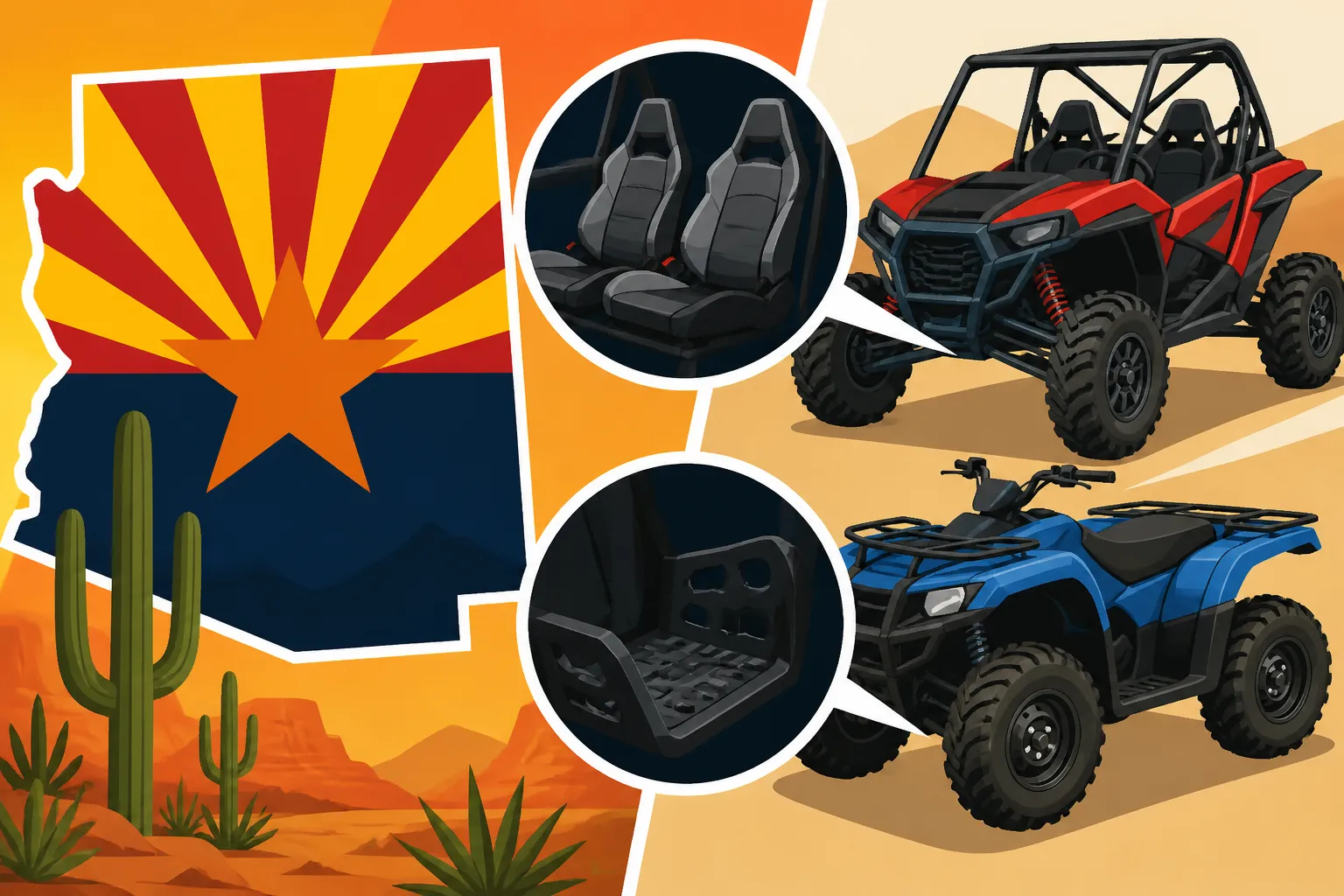
For both the driver and any passengers, Arizona law generally requires that seats be securely fastened to the vehicle's frame. They must be designed to safely contain an occupant during normal operation, including braking and turning. This usually translates to individual seating positions with adequate back support. For a side-by-side, this typically means bucket seats or a bench seat that is clearly delineated for each occupant, usually paired with seat belts for each position. For ATVs, the rules can be a bit trickier, as many ATVs are designed for a single rider. If you have an ATV that you plan to make street legal and also carry a passenger, you'll need a factory-designed or aftermarket passenger seat that securely mounts behind the driver and includes appropriate grab handles or back support for the passenger. A passenger on a quad also absolutely needs dedicated footrests, not just relying on the driver's footwells. Relying on an ATV that was never intended for two riders, even with a makeshift cushion, will almost certainly fail a street-legal inspection. It’s all about clear, designated, and safe spots for everyone on board.
The Challenge of Aftermarket Seats and Modifications
Many riders love to customize their machines with aftermarket seats, often choosing them for comfort, style, or specific off-road performance needs. Brands like SuperATV offer a wide range of aftermarket seating options, from high-back racing seats to bench seats. While these can be fantastic for trail riding, when going street legal, you need to ensure they still meet Arizona's safety standards. This means confirming that they are securely mounted, that the mounting hardware is robust, and that they provide adequate restraint points for seat belts. If you're adding additional seats, for instance, turning a two-seater UTV into a four-seater, these aftermarket additions must integrate safely with the vehicle's structure and provide the same level of security as original equipment. You might also encounter issues if your modified seating obstructs visibility or makes it difficult for passengers to access their seat belts. Always check the specific requirements and consider consulting with an MVD agent or a professional inspection service before investing in aftermarket modifications for street legal purposes. It's a lot easier to ensure compliance on the front end than to tear out newly installed seats later.
Footrests: Supporting the Ride and Staying Legal
Beyond seats, the seemingly simple requirement of footrests often trips up OHV owners trying to get street legal. Just like with seats, on the trail, you might be used to bracing yourself in various ways, but on the street, stability and containment for feet become a legal and safety concern. Every occupant, especially a passenger, needs a proper, dedicated place to rest their feet that is not only comfortable but also secure and prevents them from accidentally dragging their feet or interfering with the operation of the vehicle.
What Arizona Law Says About Foot Support
Arizona law mandates that all occupants of a street-legal OHV must have adequate footrests or foot protection. This means that if your machine carries a passenger, whether it's an ATV with a dedicated passenger seat or a side-by-side, that passenger must have a sturdy, non-slip surface to rest their feet. For ATVs, these are typically integrated into the design or can be added as aftermarket accessories. For UTVs, the floorboards usually serve this purpose, but they must be structurally sound and free of large openings where a foot could slip through or get caught. The goal is to keep feet inside the vehicle's footprint and away from tires, suspension components, or the ground while moving. Anything less creates a clear safety hazard and will likely lead to a failed inspection. The rules are designed to protect both the rider and any passengers from accidental injury, which is a major concern when your machine is sharing the road with other traffic. You can learn more about general vehicle requirements in [What Arizona Requires on a Street-Legal Machine].
Ensuring Footrests for All Occupants
If your OHV has multiple seating positions, each position, including the driver's, must be accompanied by a suitable footrest. For a side-by-side, this usually means robust floorboards for all seating rows. If you've modified your UTV with a lift kit or custom cages, you need to ensure that the footrest situation hasn't been compromised for new passengers. Sometimes, aftermarket seats elevate passengers to a point where the factory floorboards are no longer adequate footrests, requiring the addition of supplemental foot platforms. For an ATV converted to carry a passenger, specific aftermarket passenger footpegs are a common solution. These should be securely mounted to the frame, offer a good grip, and be positioned comfortably and safely for the passenger. It’s about providing stability and preventing feet from dangling or interfering with the vehicle's operation, especially during turns or bumps on a paved road. When looking at accessories from companies like SuperATV, ensure any footwell protection or add-ons explicitly state they are designed for street-legal compliance if that's your goal.
Common Pitfalls and How to Avoid Them
The journey to making your OHV street legal in Arizona is paved with good intentions, but sometimes, common misconceptions or overlooked details can turn a simple inspection into a frustrating ordeal. When it comes to seats and footrests, many owners run into similar problems, often rooted in the difference between trail-riding practices and street-legal demands. Being proactive and understanding these common pitfalls can save you time, money, and a lot of headaches.
Misinterpreting ATV Passenger Rules
One of the most frequent missteps, particularly with ATVs, is the misinterpretation of passenger rules. Many ATVs are inherently designed for a single operator. While it's common to see a second person riding on the back on private land or a friend's ranch, this practice is almost universally not permitted for street-legal operation unless the ATV is explicitly designed and equipped for two riders from the factory, or has been professionally converted with an MVD-approved passenger seat kit that includes proper footrests and grab handles. Simply adding a small, soft pad to the rear fender does not constitute a legal passenger seat. The law demands a secure, integrated seating position with appropriate support and safety features. Trying to pass an inspection with a single-rider ATV and a casual passenger setup will lead to immediate rejection. Always consult your ATV's manufacturer specifications and Arizona's MVD guidelines specifically for ATVs carrying passengers before attempting street-legal conversion. If you're coming from out of state, the Arizona rules might be different than what you're used to; make sure you understand [Arizona Registration Deadline for New Residents].
The Importance of a Pre-Inspection Check
Before you even think about heading to the MVD or a third-party provider for your street-legal inspection, perform your own thorough pre-inspection check of your seats and footrests. This means more than just a quick glance. Physically test the stability of all seats: push, pull, and try to wiggle them. Are they firmly bolted down? Is the mounting hardware secure and free of rust or damage? For footrests, stand on them or have a passenger test them. Are they solid? Do they provide good traction? Are they wide enough to adequately support a foot without slipping?
Consider these questions:
- Seating:
- Are all seat belts easily accessible and fully functional for each seating position?
- Does each seat offer adequate back support?
- If a bench seat, are the "individual" seating positions clearly defined, often by the presence of separate seat belts?
- Are there any sharp edges or exposed components near the seating areas that could pose a risk?
- Footrests:
- Are all footrests clear of debris and designed for non-slip use?
- Do they keep feet contained within the vehicle's body lines?
- Are they positioned comfortably for all anticipated passengers, including children if applicable?
- Are they robust enough to handle the weight and forces of road use?
Many aftermarket seats, even high-quality ones from brands like SuperATV, will require proper installation to ensure compliance. Don't assume that because a part is from a reputable manufacturer, it automatically makes your entire setup street legal without proper integration. A little proactive scrutiny can help you identify and rectify issues before they become costly delays or failed inspections, giving you peace of mind and a smoother path to getting your street-legal machine on Arizona's roads. Don't forget that [Arizona MVD OHV Registration Explained] will cover the full process once you're ready.
| Feature | OEM (Original Equipment Manufacturer) Seats & Footrests | Aftermarket Seats & Footrests (e.g., SuperATV) |
|---|---|---|
| Primary Design Goal | Broad consumer safety & comfort, factory compliance | Enhanced comfort, specialized performance (e.g., racing), customization, utility |
| Street Legal Status | Generally compliant out-of-the-box (if multi-passenger) | Requires careful selection & installation to meet specific MVD safety regulations |
| Mounting | Integrated directly into vehicle's frame | Must be securely bolted to frame; custom fabrication might require professional review |
| Passenger Capacity | Explicitly defined by manufacturer | Can increase or decrease capacity; new positions must still meet legal requirements |
| Foot Support | Designed to be integral with seating positions | May require additional or modified floorboards/pegs, especially with lifted seats |
| Inspection Focus | Security, intact belts, appropriate for vehicle type | Same as OEM, plus scrutiny on installation quality, structural integrity, and fit |
Disclaimer
This article is for general informational purposes only and does not constitute professional advice. Laws, prices and regulations vary by location and change over time. Consult a qualified professional for guidance on your specific situation.