Overheating on a Long Hot Ride
ATV and UTV overheating in Arizona desert heat, warning signs, radiator maintenance, and cooling prevention strategies.
Legal here, illegal one county over.
What each state allows, the mirrors, horn and signals a conversion requires, and the county and city overrides that quietly change the answer.
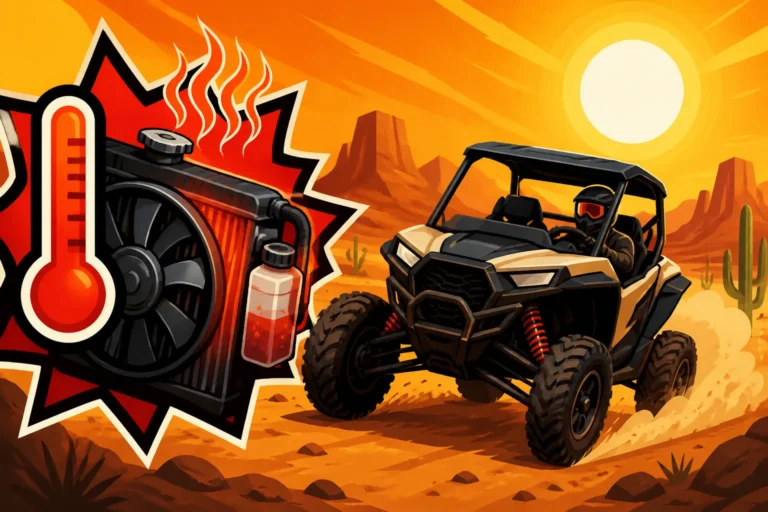
ATV and UTV overheating in Arizona desert heat, warning signs, radiator maintenance, and cooling prevention strategies.

Arizona pavement heat increases ATV tire pressure by one PSI per ten degrees, risking blowouts and poor handling.

Riding an ATV or UTV in 110 degree Arizona heat causes engine overheating, tire pressure spikes, and severe rider dehydration.

Reflective tape increases ATV and UTV visibility during Arizona desert dusk rides, preventing collisions with vehicles and wildlife.

Whip flags on Arizona public paved roads are generally not required by state law for street-legal ATVs and UTVs.
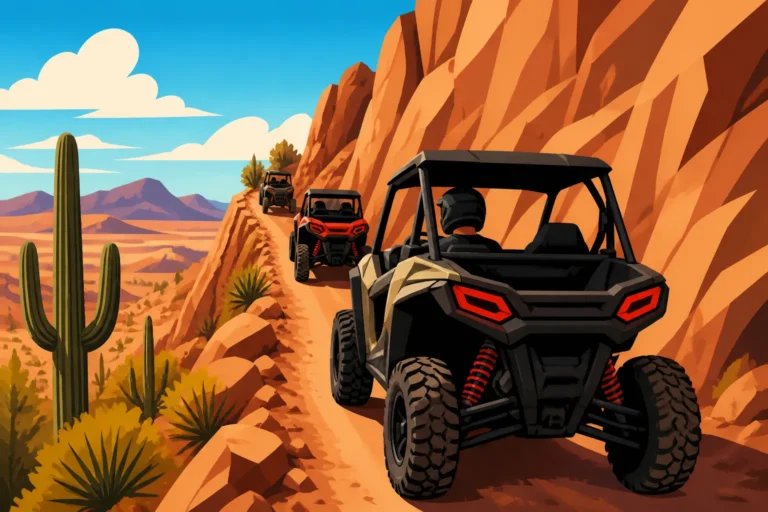
Arizona narrow desert roads and ATV trail etiquette rules for safe off-roading and preventing vegetation damage.

Arizona off-highway vehicle groups learn practical etiquette for riding respectfully through small desert towns without disturbing residents.
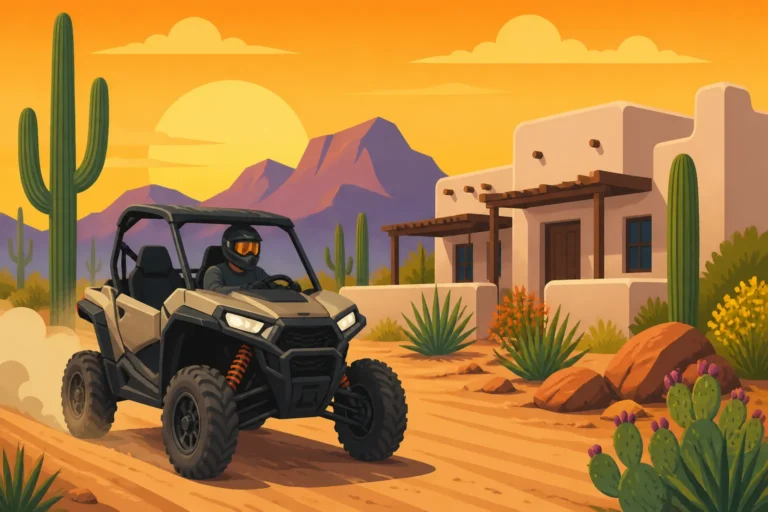
Riding off-highway vehicles slowly past desert homes reduces noise and dust pollution, protecting local communities and trail access.

Arizona desert dust reduces visibility and damages ATVs, and riders learn practical methods to minimize these hazards.
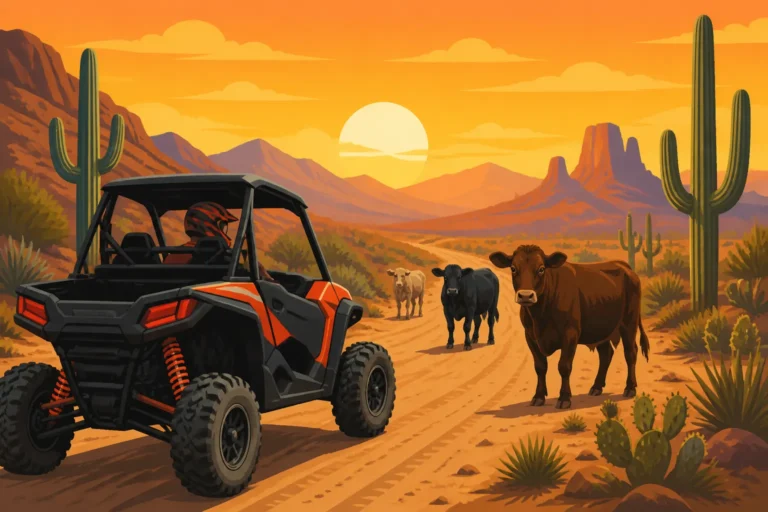
Arizona open range laws and livestock right-of-way rules explain rider liability during desert ATV and UTV encounters.