Arizona Non-Resident Decal Price and Term
A nonresident Arizona OHV decal can be easy to overlook when you’re planning a ride from out of state. The price, validity period, and delivery timing all matter, but the decal is only one part of getting ready. Here’s how to understand the cost and term, confirm the current details before you buy, and avoid confusing the decal with other permits or street-legal registration.
What the Arizona nonresident decal costs
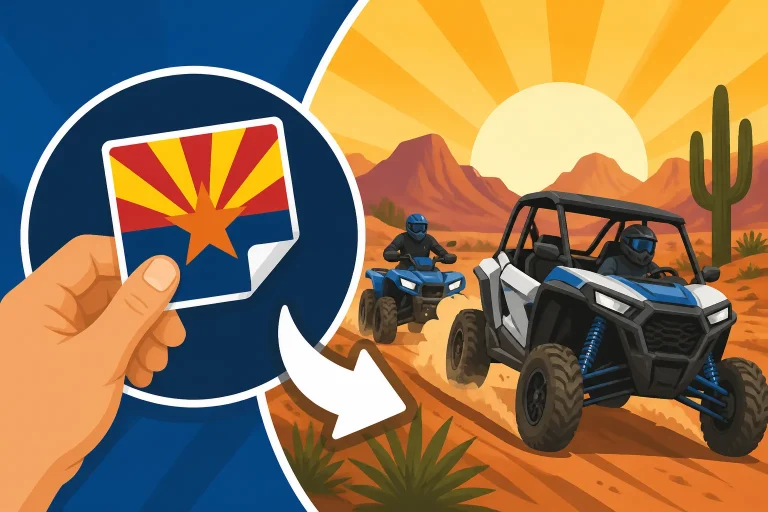
Arizona’s nonresident OHV decal is an annual requirement for many visitors who ride an out-of-state ATV, UTV, or other off-highway vehicle on eligible Arizona routes and lands. The exact price can change, so check the official Arizona Game and Fish purchasing portal before ordering. The current amount shown there is more reliable than an old receipt, forum post, or search result.
For a useful overview of who the decal is for and how the system works, see Arizona’s Non-Resident OHV Decal. If you are comparing what visitors pay with resident requirements, [Arizona Non-Resident Decal Cost] focuses specifically on the cost question.
Check the checkout total, not just a quoted price
When you buy online, look at the final checkout screen and receipt. The amount shown may include more than the decal itself, depending on the current process. Check for any separately listed service, transaction, or delivery charges rather than assuming a price you saw elsewhere is the complete total.
It helps to distinguish three things:
- The decal cost: The current charge for the nonresident decal itself.
- Any additional checkout charges: Separate charges, if shown, for processing or delivery.
- Other trip costs: A land-access permit, rental fee, registration expense, or other requirement that is not part of the decal purchase.
The decal is not a general admission ticket to every public or private property in Arizona. In particular, riding or even staging on Arizona State Trust Land may involve a separate recreational permit. The nonresident OHV decal and a Trust Land permit solve different access questions, so confirm both for your planned route. Arizona Recreational Permits for Individuals explains the separate permit, while Why a Decal Alone Will Not Let You Stage looks at a common planning mistake.
Do not assume that a permit purchased for one type of land covers another. A route can cross or border several land jurisdictions, and the applicable rules may change along the way. Check your route and staging location before traveling, especially if you are launching from a spot that appears to be public land but has a separate land manager.
Avoid unofficial sellers and stale listings
Purchase the decal through the official channel identified by Arizona Game and Fish. A retailer, marketplace listing, or social media post may offer accessories or information, but it is not a dependable way to establish the current decal price, eligibility, or term. Amazon can be useful for practical trip supplies such as a document pouch or phone mount; it is not a substitute for the official decal portal.
Be cautious with pages that advertise a fixed price without showing when the information was updated or what the quoted amount includes. A low amount may refer to an earlier fee, one part of the checkout, or a different decal. Before paying, make sure the product is explicitly the Arizona nonresident OHV decal and that the portal is issuing it for the machine and rider situation you actually have.
If another person is paying for your group, have them confirm the order details with you. A purchase confirmation should make clear which machine or application it relates to, where the decal will be sent, and what validity dates apply. Keep the confirmation until the decal arrives and is correctly displayed.
How long the decal lasts
The nonresident decal is an annual decal rather than a pass for a single weekend or a set number of riding days. Its validity is generally tied to a one-year term beginning with the purchase, not simply to the calendar year. Still, use the expiration information shown on the official order and receipt as the final word. If the portal gives you a specific effective or expiration date, save it.
For a closer look at the validity period, see How Long an Arizona Non-Resident Decal Lasts. The main practical point is to check the dates before you plan a trip, especially if you buy well before your ride or expect to return later in the season.
Don’t calculate the expiration from memory
It is tempting to assume that all decals expire on the same date or that the term always runs through the end of a calendar year. Don’t rely on that assumption. Read the dates attached to your own purchase. If the receipt does not make the term clear, contact the issuing agency before riding rather than trying to infer the expiration from the purchase date or a friend’s decal.
Keep a copy of the receipt in a place you can access without a cell connection. A screenshot saved on your phone is useful, but it should not replace checking that the physical decal arrived and is properly placed. You can also keep a paper copy with the machine’s other trip documents. A small waterproof pouch, including one bought through Amazon, can help keep receipts and route notes readable in dust or rain.
Buying mid-season still requires checking the dates
If you buy the decal shortly before a trip, make sure you understand both the term and how the physical decal will reach you. A purchase confirmation does not necessarily mean that you have a decal in hand. Check the portal’s delivery instructions, the expected mailing process, and the current guidance on riding while the decal is in transit.
If you purchase early, the same principle applies in reverse: confirm that the decal will remain valid for the dates you intend to ride. An annual term can be useful for repeat visits, but it is not automatically the best value for every trip. Compare the current fee with your travel plans, and make the decision based on the term shown by the official portal—not on an assumption that the decal covers a full calendar year.
For a one-off ride, visitors sometimes assume that the decal works like a daily trail pass. It does not. The term is not usually shortened just because you ride for only a few days. Conversely, buying the decal does not make it valid indefinitely if you leave Arizona and return much later. Your own dates control.
Who may need a nonresident decal
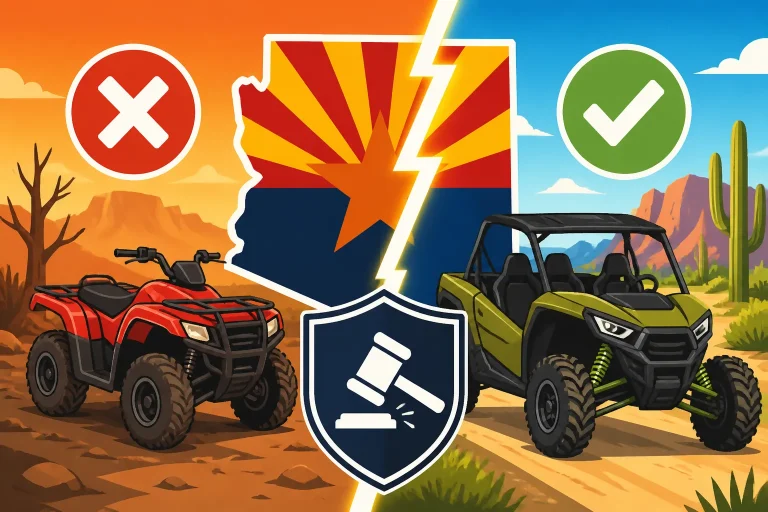
The nonresident decal is intended for qualifying OHVs associated with another state and operated in Arizona under the applicable off-highway rules. A visitor bringing an ATV or UTV for a public-land ride should not assume that its out-of-state registration or plate automatically satisfies Arizona’s decal requirement.
The answer can depend on the machine’s registration status, how it is being used, and where you plan to ride. If the machine has street-legal registration, that may affect whether a separate decal is needed, but do not guess based on the plate’s appearance. Review Street-Legal Plates in Place of an Arizona Decal and confirm that your particular registration qualifies.
A quick planning check is:
- Identify the machine’s status. Is it registered out of state, street-legal, or unregistered for road use?
- Identify where you will operate it. Public land, a trail system, private property, and State Trust Land can have different access rules.
- Check the Arizona requirement for that combination. Use the official guidance that applies to visitors and your machine.
- Check for separate land permits. A decal does not replace every property-specific permit.
- Confirm that the decal is valid for your ride dates. Use the dates on your purchase record.
The decal requirement is not necessarily determined by where you live alone. A person who lives outside Arizona but brings an Arizona-registered machine faces a different fact pattern from someone who brings an out-of-state machine. Likewise, a machine with a street-legal plate may have a different compliance path from an OHV-only machine. If your situation does not fit the typical visitor example, check the relevant registration and land-access rules before you travel.
Private property and rented machines are different cases
A visitor riding only on private property with the owner’s permission should not assume that the same rules apply as they do on public land. The land, activity, and machine status matter. See Arizona Rules on Private Land for the private-property question, and verify any additional rules that may apply to the property or event.
If you rent in Arizona, ask the rental company directly whether the machine is properly covered for the routes you intend to use. Do not assume that the rental includes the decal just because the shop provides a machine and safety briefing. Does an Arizona Rental Cover the Decal? covers what to ask. Confirm the answer in writing if your plans depend on it.
Borrowing a friend’s machine also deserves a separate check. The owner’s decal or paperwork may not automatically answer every question about who can operate the vehicle, whether the decal is current, or where the machine may be used. Ask the owner to show you the current documentation and review Decals for a Borrowed Machine before setting off.
For a machine brought from another state, the decal question is also separate from whether its title or registration paperwork is in order. A decal does not resolve an ownership or registration problem. If you are moving to Arizona rather than visiting, review the new-resident registration requirements instead of treating a visitor decal as a substitute. Moving to Arizona With an Out-of-State Quad is a useful starting point.
How to buy and verify it before your trip
Arizona’s nonresident decal is purchased online through the official process. Plan ahead: ordering time, mailing, and your departure date may not line up neatly, and the decal is a physical item that must be displayed as directed. For the purchase process itself, see Buying a Non-Resident Decal Online Only.
A careful order takes only a few minutes longer than a rushed one:
- Use the official portal. Start from the Arizona Game and Fish website or its identified portal, not an advertisement or a marketplace listing.
- Choose the nonresident product. Check the name carefully so you do not select a resident decal or another permit by mistake.
- Enter the requested machine details accurately. Have the relevant registration or identification information in front of you.
- Review the displayed price and term. Confirm the total, the effective or expiration dates, and any delivery instructions before submitting payment.
- Save the confirmation. Keep the receipt and any order number where you can retrieve them offline.
- Check delivery before departure. Verify that the decal arrived, that it matches the correct order, and that it is legible and usable.
- Apply it as instructed. Follow the current placement directions rather than copying a placement from another state or another type of plate.
If you have not yet ordered, Buying an Arizona Decal Before You Drive Out can help with timing. If you have already ordered and need to know where it is sent, use Where an Arizona Non-Resident Decal Is Mailed for the mailing question.
Keep proof, but don’t confuse proof with the decal
A saved receipt is useful if you need to check an order or explain a delay. It is not necessarily a replacement for displaying the decal. Follow official instructions about what must be affixed to the machine and what paperwork should be carried.
Before leaving home, check these items:
- The machine details on the order match the machine you are bringing.
- The decal is for the nonresident category that applies to your situation.
- The validity dates cover your planned ride.
- The physical decal has arrived, unless official instructions say otherwise.
- The decal is attached in the required location and can be seen.
- You know whether your route needs a separate State Trust Land or other permit.
- You have the machine’s registration and any other relevant documents.
- The rider and machine meet the rules for the specific trail, road, or property.
A small folder or waterproof pouch can keep paperwork together. Amazon may have simple document organizers, but choose something that fits your machine and riding setup without blocking controls, lights, or required identification. Do not put paperwork where it can interfere with safe operation.
If the decal has not arrived
If the purchase is complete but the decal has not reached you, check the confirmation and official delivery guidance first. Make sure the mailing address was entered correctly and look for any order status or contact option in the portal. If your departure is close, ask the agency what the current rules allow; do not rely on a guess, another rider’s experience, or an unofficial statement that a receipt alone is enough.
This is one reason to order before loading the trailer. A last-minute purchase can leave you with a paid order but no clear answer about whether you can ride before the physical decal arrives. The date you purchased it, the date it was mailed, and the date you intend to ride may not answer the display requirement by themselves.
If the decal is lost or damaged after delivery, use the official replacement process. Avoid trying to recreate, print, or alter a decal. A receipt can help document the original purchase, but it does not authorize you to make a replacement. Check Replacing a Lost or Damaged Arizona Decal for the next steps.
Common price and term mistakes to avoid
Most problems come from treating the decal as a simple fee rather than one part of a trip’s access and compliance plan. These mistakes are preventable.
Assuming the old price is still current
A price shared in a trip report may have been accurate when posted, but fees and checkout processes can change. The official portal is the place to confirm the present charge. If someone in your group has purchased a decal before, still check the current listing before each new order.
Buying the wrong permit
Arizona’s nonresident decal, a State Trust Land recreational permit, machine registration, and a rental agreement are not interchangeable. A decal for an OHV does not by itself grant access to every parcel of land, and a land permit does not necessarily satisfy the OHV decal requirement. Review the route, not just the machine.
Assuming the decal follows the rider
The decal relates to the machine and the applicable program rules, not simply to the person who paid for it. If you switch machines, borrow another vehicle, or bring a second ATV, check whether each machine needs its own decal. Do not assume one purchase covers an entire household or riding group.
If your party is bringing multiple machines, make a list of the vehicles and verify the requirement for each one before ordering. That also makes it easier to catch a mismatch between the machine details on the receipt and the vehicle you actually plan to use.
Treating an out-of-state plate as automatic coverage
A plate from another state may show that a machine is registered, but it does not automatically settle every Arizona OHV requirement. Confirm whether your particular street-legal registration is accepted in place of the decal. If it is not, determine what decal applies before using the machine off-highway.
Confusing an annual term with a calendar year
Do not assume a decal expires at the end of the calendar year simply because it is described as annual. Use the effective and expiration dates on the order. When planning repeat visits, add a reminder based on the actual expiration date rather than a general month or season.
A reminder on your phone or in your trip folder is helpful, but it should point back to the official record. You might keep a photo of the receipt alongside the machine’s other documents, then recheck the portal when renewal or a new purchase becomes relevant.
Waiting until arrival to sort it out
You may be able to make a purchase while traveling, but that does not solve mailing or display questions. Do not assume that a decal will be available at a trailhead, rental counter, or local store. Check the official purchase and delivery instructions before driving to Arizona. Why Arizona Sells the Decal Online Only explains the online-only process.
A little preparation prevents the most frustrating outcome: arriving with a capable machine, a route picked out, and no clear way to demonstrate that the required decal is current and displayed. Confirm the price, term, delivery, and any separate land permits while you still have time to adjust your plans.
Bottom line
Treat the nonresident decal as an annual, machine-related requirement whose current fee and exact dates should be verified through the official Arizona portal. Check the total at checkout, save the confirmation, allow time for delivery, and make sure the decal applies to your machine and riding plans. Then check land-access permits separately. That small bit of preparation is easier than trying to resolve price, eligibility, and delivery questions at the edge of the desert.
Disclaimer
This article is for general informational purposes only and does not constitute professional advice. Laws, prices and regulations vary by location and change over time. Consult a qualified professional for guidance on your specific situation.