Arizona Campgrounds With Trail Access
Finding an Arizona campground that lets you ride straight from camp is harder than it sounds. Some places sit beside popular OHV areas but have no legal connector, while others are close only if you haul your machine to a trailhead. This guide explains where to start looking, how to check access before booking, and what to plan for Arizona’s heat, terrain, and changing land restrictions.
How to choose an Arizona campground for ATV and UTV riding
Start with the riding area, not the campground name
A campground can be near an OHV area without being legally connected to it. The last stretch may run along a road where OHVs are prohibited, cross private or tribal land, or use a route that is open to some vehicles but not your machine. “Close to the trails” is useful when planning, but it is not proof that you can ride from your campsite.
Before reserving, identify the exact campground entrance and the routes you want to ride. Check whether the campground is on public or private land, whether the nearby route is open to your vehicle type, and whether you will need to trailer to a staging area. The distinction matters: a campground that is a convenient base for riding may still require a short drive with your trailer each morning.
Land status can add another layer. A route may pass through National Forest, BLM, State Trust, or private land, and each can have different access requirements. Start with the official travel map for the area and review Reading an Arizona Motor Vehicle Use Map. If your route crosses State Trust Land, check the rules before assuming that a vehicle decal alone gives you access; Arizona Trails on State Trust Land explains why land access and vehicle requirements are separate issues.
Match the campsite to your riding style
Families who want bathrooms, a designated campsite, and a predictable place to return after a ride may prefer a developed campground. Riders with more flexible plans may consider dispersed camping near a staging area, where permitted. Dispersed camping can put you closer to a route, but it usually means fewer facilities and more responsibility for packing out trash, managing waste, and choosing a durable site.
Think about your group’s daily rhythm, too. A campground next to a highway may make it easy to reach supplies but less pleasant for a quiet weekend. A remote site may offer a better sense of escape, yet require extra water, fuel planning, and a longer haul if a machine needs repair. If a riding day depends on a legal place to unload and park, review Arizona Trailhead Parking and Staging along with the camping rules.
A useful first question is: “Do we need to ride from the campsite, or do we just need a practical basecamp?” If riding directly from camp is essential, ask the campground or land manager to identify the legal connector route—not just the nearest trail on a map. If a short trailer trip is acceptable, you may have more campground choices and fewer access surprises.
Arizona campground areas to consider
The areas below are starting points, not promises of direct campground-to-trail access. Conditions and route designations can change, and a legal route for one kind of vehicle may not be suitable or open to another. Confirm the campground’s operating details and the specific route before you go.
| Area to investigate | Why riders consider it | What to confirm before booking |
|---|---|---|
| Cinder Hills near Flagstaff | Concentrated riding area and nearby camping possibilities | Whether camping is allowed at your intended site, current access rules, and where to stage |
| Williams and the Kaibab National Forest | Campground options can make a useful base for exploring forest roads | Whether the route is open to your machine and whether you must trailer to the ride |
| Payson and the Mogollon Rim | Cooler high-country options and a network of forest roads and riding areas | Seasonal campground access, road conditions, and the legal connection to your planned route |
| Standard Wash near Lake Havasu City | A desert riding area that can work for riders seeking a winter base | Dispersed-camping rules, staging locations, heat, and route status |
Cinder Hills and the Flagstaff area
The Cinder Hills OHV Area is a well-known place to investigate if your trip is centered on Flagstaff. The riding area is reached from the region around Forest Road 776, but that does not mean every nearby campsite has a legal ride-out connection. Check the boundaries, current access rules, and appropriate staging arrangements for your machine. See Arizona’s Cinder Hills OHV Area for more area-specific planning.
Flagstaff’s higher elevation can make it a more comfortable base than the low desert during hot months, but weather still deserves attention. A sunny afternoon can shift quickly in the high country, and summer storms can affect roads and routes. Confirm campground access and conditions before towing in, especially if your plan depends on an unpaved forest road.
If you prefer a developed campground, look into established options in the wider Flagstaff and Williams area, such as Ashurst Lake or Kaibab Lake, and treat them as basecamp possibilities rather than guaranteed trailhead camps. Ask whether riding from the campground is allowed and where the nearest legal staging area is. For local trail status and route planning, Checking Arizona Trail Status Before You Drive is a sensible step before departure.
Williams, Payson, and the Mogollon Rim
The Williams area offers access to National Forest scenery and campgrounds such as Kaibab Lake. It can suit riders who want a campground setting and are willing to plan around the actual road network. Before counting on a direct ride from camp, confirm that the roads you intend to use are open to your machine and that the campground permits the kind of vehicle use you have in mind.
Around Payson and the Mogollon Rim, campgrounds such as Houston Mesa, Sharp Creek, and Canyon Point may be worth researching as bases for a riding trip. Their surroundings vary, and proximity to forest roads does not guarantee a legal OHV route from a site. Ask about access for your specific vehicle, seasonal road conditions, and whether you will need to haul to a designated riding area. For a broader sense of the region, see Riding the Mogollon Rim in Summer.
Higher elevations can bring cooler riding weather, but they also bring seasonal uncertainty. A road that is comfortable for a truck and trailer in one part of the year may be muddy, snow-covered, or otherwise difficult in another. Check both the campground’s access information and the land manager’s route updates. If the trip is in summer, have a backup plan in case storms, closures, or campground availability change your original itinerary.
Standard Wash and the Lake Havasu area
Standard Wash near Lake Havasu City is another area riders may consider when looking for desert riding and a nearby camping plan. The key is to distinguish the riding area and staging choices from camping opportunities. Do not assume that being able to unload near a route means you can camp anywhere nearby, or that every track shown on a recreational app is open to OHVs. Start with Standard Wash OHV Area Access and check the current land-management information for camping and route rules.
Desert trips call for more deliberate preparation than simply packing a cooler and filling the fuel tank. Bring enough water for the group, consider the time of day you will ride, and plan how you will respond if a machine overheats or a route takes longer than expected. Water Planning for an Arizona Trail Day can help you build a more realistic plan for a ride away from services.
The Lake Havasu area may work well as a base if you are comfortable hauling between camp and the riding area. That arrangement can be less romantic than riding straight out of camp, but it gives you more control over where you sleep and where you stage. Before booking, ask about trailer parking, permitted camping locations, and whether the route you want to ride is currently open.
Check access before you reserve
Verify the route on official maps
Use the land manager’s current travel map to confirm the route designation, not just a general road map or an app display. Look for vehicle restrictions, seasonal closures, and route boundaries. A line on a screen may show a road or trail, but it does not necessarily tell you whether your ATV or UTV is allowed there.
Apps such as onX Offroad can be useful for organizing route ideas, viewing your location, and avoiding the frustration of trying to follow a paper map while stopped on a dusty junction. Still, treat onX Offroad as a planning aid rather than a substitute for official maps and posted signs. Download what you need before leaving service, and compare your proposed route with current land-manager information.
When using onX Offroad, pay attention to the route itself, not only the campground pin. Check where the route starts, whether it connects to the campground legally, and whether it continues through a permitted area. If an access point is unclear, contact the managing agency or campground rather than assuming that a line on the map settles the question.
Ask specific questions before booking
A campground office may know its own rules but not every detail of a nearby trail network. Ask concise, practical questions: Can ATVs or UTVs be ridden within the campground? Is there a legal OHV route from the campground entrance? Is trailer parking available? Where is the nearest designated staging area? Are there restrictions for a particular vehicle width or type?
It also helps to ask what happens if your plan changes. Is there a reasonable alternative riding area nearby? Can you reach it with your truck and trailer if the connector route is closed? A little extra planning can prevent the familiar arrival-day disappointment of learning that the campsite is comfortable but the ride you imagined is not permitted.
For newcomers, requirements can differ depending on where and how they ride. Review Arizona OHV Rules for First-Time Visitors and make sure your machine’s registration or decal situation fits the trip. If you are visiting from another state, confirm the requirements that apply to your vehicle and riding plans rather than relying on what is accepted at home.
Make the trip comfortable and responsible
Plan for weather, services, and recovery
Arizona’s range of elevations means campground conditions can feel very different from one trip to the next. A low-desert weekend calls for a serious heat plan, while a high-country trip may bring cold nights, rough forest roads, or sudden storms. Check the forecast for both the campground and riding area. They may be far enough apart in elevation that conditions differ.
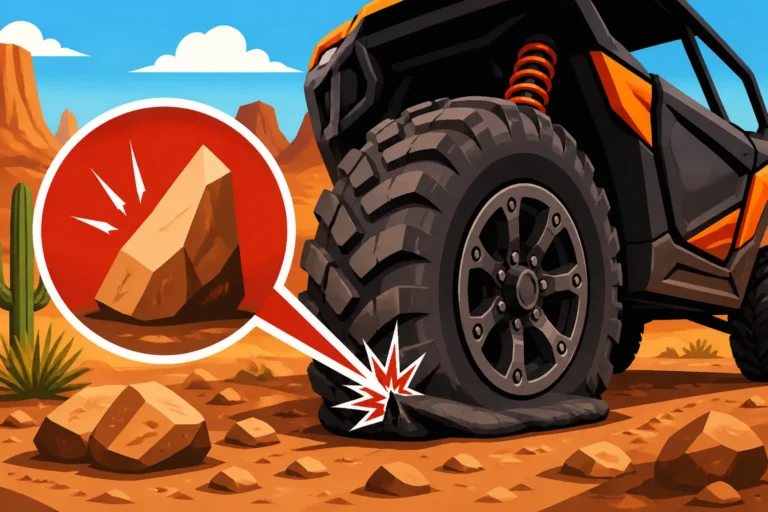
Plan fuel and food around the actual distance between camp, services, and the trailhead. Tell someone where you are going, carry a first-aid kit, and bring recovery gear suited to the terrain. In sandy areas, a strap and suitable recovery equipment may be more useful than relying on another group happening to pass by. In rocky country, inspect tires and carry the tools needed for a basic repair.
Do not make the campground choice only by looking at a map distance. A short-looking drive can become slow when towing on rough roads, and a long route can be tiring after a full day in the saddle. Estimate drive time conservatively and leave enough daylight to set up camp without rushing.
Leave the campsite and trail in good shape
Use only designated or otherwise permitted campsites. Keep vehicles on established routes, respect closures, and do not create new paths to make a campsite feel more convenient. In the desert, a shortcut can damage fragile ground long after tire marks disappear from view. Pack out trash, secure food, and follow fire restrictions and campground rules.
Be considerate of other campers when loading and unloading. Avoid unnecessary engine noise early or late, keep trailers and machines within the space allowed, and make sure dust from a passing vehicle is not blowing through neighboring sites. If the campground is not intended for OHV traffic, keep the machine on the trailer until you reach an approved staging location.
A good Arizona riding campground is not always the one closest to a trail on a map. It is the one that fits your group, has clear camping permission, and connects to a legal, practical plan for the ride. Check the land rules, confirm access directly, and keep a backup option in mind so a closure or route restriction does not derail the whole trip.
Disclaimer
This article is for general informational purposes only and does not constitute professional advice. Laws, prices and regulations vary by location and change over time. Consult a qualified professional for guidance on your specific situation.