How Much Water a Desert Ride Needs
A ride that looks short on a map can become a long, hot day when a machine breaks down, a route takes longer than expected, or the group gets turned around. In Arizona’s dry desert air, thirst is a poor planning tool. This guide explains how to estimate drinking water, carry a reserve, and adjust your plan for heat, terrain, and delays.
Estimate water for the people on your ride
Start with a full-day baseline, then adjust
For a full day outdoors, a useful starting point is at least one gallon of drinking water per person. Treat that as a baseline, not a guarantee. A demanding ride, high temperatures, direct sun, or a slower pace can increase what you need. Children and people who are not accustomed to heat may need extra attention, too.
For example, if four adults plan a day ride, begin with at least four gallons for drinking, then consider adding a reserve based on the forecast, route, and time away from camp. A loop near a staging area with an easy exit is different from a remote route where a flat tire or navigation mistake could keep you out for hours. Don’t cut your supply close simply because the planned ride is short.
If you’re deciding what to bring for a specific route, start with Water Planning for an Arizona Trail Day and build in time for stops and unexpected delays. For summer conditions, read Heat Illness on a Summer Trail before setting off.
Account for heat, exertion, and the route
A breezy morning can turn into a punishing afternoon. Sun exposure, loose sand, steep climbs, repeated stops, and the effort of helping a stuck or disabled machine all change how demanding a ride feels. So can riding at lower elevations during hot weather. A route that feels comfortable in the cooler season may be a very different outing in the summer.
Think about the whole time you may be outside, not just the time you expect to spend riding. Include the drive to the trailhead, unloading, breaks, repairs, and the trip back to your vehicle. If the group could be exposed for much longer than planned, carry enough water for that possibility rather than relying on a quick return.
Arizona riders often plan around cooler parts of the day and season. Dawn Rides Before the Heat Builds and Arizona’s Best Riding Months offer useful context for timing a trip. Even with a cooler start, bring water for the warmest part of the outing, especially if a delay could keep you in the sun.
Pack and manage water so it stays usable
Divide the supply into drinking water and reserve water
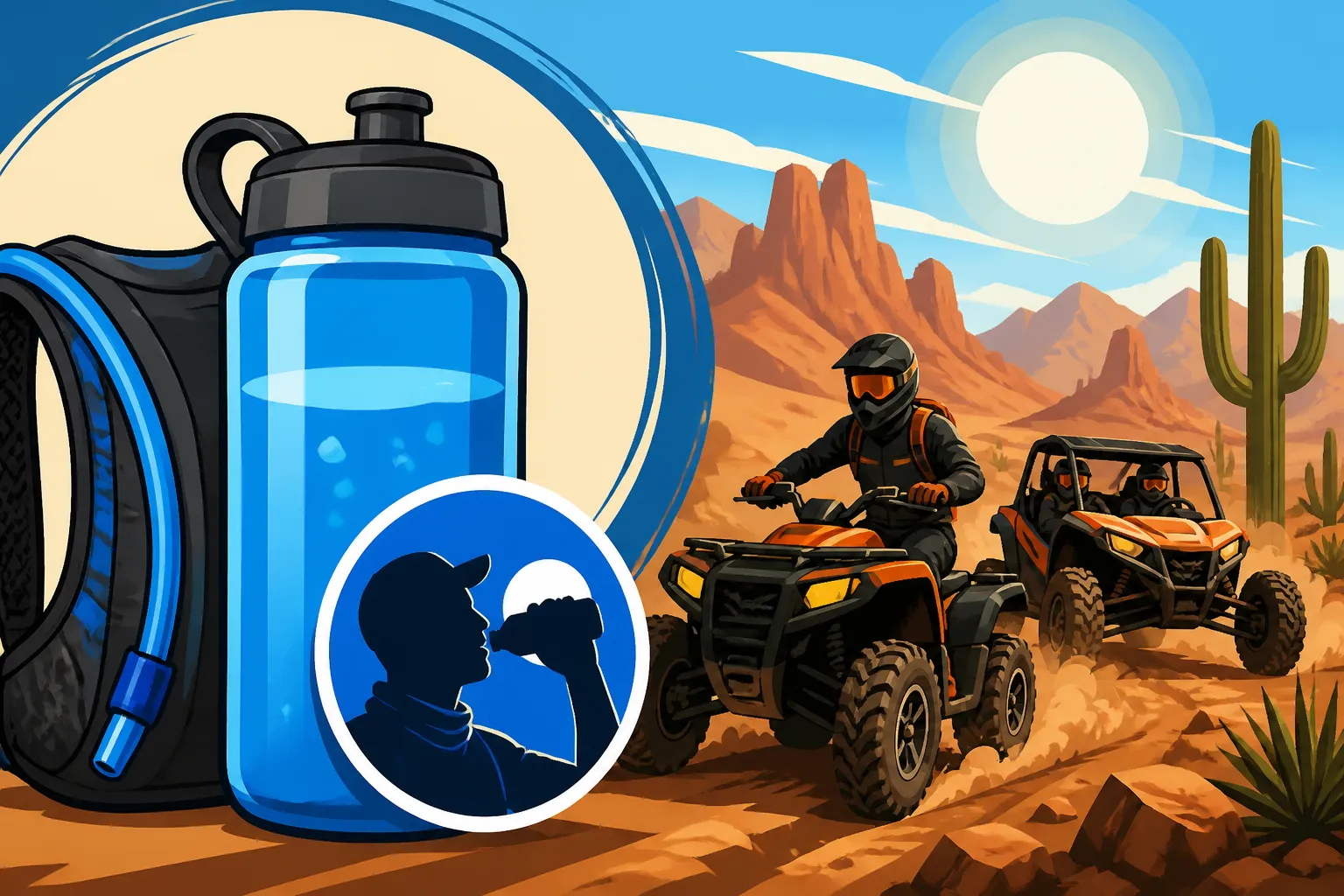
Make sure the group’s water is easy to reach while stopped, but secure it so it cannot shift or spill over rough ground. Bottles can make it simple to see how much each rider has used. A hydration pack can be convenient while riding, but it should not be the only supply: it can leak, get damaged, or be left with a machine during a breakdown.
Keep a separate reserve sealed and protected from dust and heat. That reserve is for an unexpected delay, a rider who has run through their personal supply, or a situation where someone needs help. Don’t count water intended for washing, cooking, or cleaning a machine as drinking water. If you plan to use water for cooling, carry it separately from the amount you expect to drink.
For a group, assign each rider a personal supply and make sure everyone knows where the reserve is stored. In a side-by-side, secure containers where passengers can reach them without unloading gear or leaning into a hot cargo area. Take a moment before departure to check that lids seal, containers are not cracked, and the water is not already warm from sitting in the vehicle.
Sip regularly and keep the group checking in
Don’t wait until someone feels parched to take a drink. Make short water breaks part of the ride routine, such as at trail junctions, before a long exposed section, and whenever the group stops for a navigation check. Riders can remind one another, but each person should keep track of their own supply rather than assuming the group has plenty.
Pay attention to how quickly the water is being used. If a rider is running low much earlier than expected, reconsider the route, pace, and return time. You may need to turn around or shorten the ride while the group still has enough water for a safe return. A plan that depends on every person rationing dangerously tightly is not a sound plan.
Water is essential, but don’t treat it as the only heat-safety measure. Rest in shade when possible, wear suitable sun protection, and avoid pushing through signs that someone is becoming unwell. For warning signs and practical responses, use Heat Illness on a Summer Trail as a separate planning read. If a person seems seriously ill or is getting worse, seek emergency help rather than trying to solve the problem with water alone.
Plan for delays, navigation problems, and emergencies
Make the water calculation match the least predictable part of the trip
The biggest mistake is planning only for the ideal ride. A route may take longer because of rough ground, a mechanical issue, a missed turn, or a group member who needs a slower pace. Add water for the possibility that you will be stopped in the heat, and leave enough time and supplies to return to your vehicle without rushing.
Before leaving, tell someone where you’re going and when you expect to be back. Check the route and access information, and save maps for offline use if your phone may lose service. Tools such as onX Offroad can help with route planning and checking your position, but a map app does not replace water, a backup plan, or communication equipment. For remote routes, review Cell Service in the Arizona Backcountry and consider whether Carrying a Satellite Messenger in the Arizona Desert fits the trip.
If the route becomes confusing or a machine stops working, avoid turning a manageable delay into a bigger emergency by continuing farther from your planned exit. Stop, assess the group’s condition and water supply, and choose the safest practical way back. A shorter route or early turnaround is often the sensible decision, even when it feels disappointing.
Keep children, passengers, and the slowest rider in mind
A group’s total water supply is not enough if it is difficult to reach or unevenly distributed. Make sure every person—including passengers—has drinking water available. For a family ride, check that children are actually drinking during breaks rather than assuming they will ask when they need it. Younger riders may be less able to notice or explain how the heat is affecting them.
Plan around the person who will need the most support, not the fastest rider. That could mean a child, a first-time rider, a passenger who is not used to desert heat, or someone who becomes uncomfortable sooner. Choose a route with realistic turnaround points, and agree in advance that anyone can call for a stop without pressure to keep up.
A first-aid kit and a communication plan matter when help is far away. Before a remote outing, review First Aid an Hour From Pavement and check Checking Arizona Trail Status Before You Drive for trip-planning considerations. Do not assume that a nearby trailhead, road, or recreation area guarantees cell service or immediate assistance.
Match your water plan to the day
Use a quick pre-ride checklist
A simple check before loading can catch the most common planning gaps. Ask whether the amount covers every rider, whether the route or weather calls for more than the baseline, and whether the group has a protected reserve. Then confirm that the water can be reached during a stop and that everyone knows when to drink and where the emergency supply is kept.
| Before you leave | What to check |
|---|---|
| People | Count every rider and passenger, including children |
| Time outdoors | Include driving, unloading, breaks, repairs, and the return |
| Conditions | Consider heat, sun exposure, effort, and elevation |
| Route | Identify turnarounds, exits, and sections far from help |
| Supplies | Separate drinking water from any water for other uses |
| Backup plan | Tell someone your route and expected return time |
If the forecast is hot, the route is remote, or the group is inexperienced, choose a conservative plan: carry extra water, start earlier, shorten the route, or postpone the ride. It is better to return with unused water than to discover that the supply was too small once you are far from the trailhead.
Don’t rely on finding water along the way
A mapped water feature, a wash, or a spot that looks damp is not a dependable drinking source. Water may be inaccessible, contaminated, seasonal, or simply not where you expect it to be. Plan to carry what the group needs from the start, and don’t build a route around an assumption that you can refill in the desert.
If the group’s water supply is damaged or running low, change the outing rather than trying to stretch the ride as if conditions were normal. Head toward a safe exit, avoid unnecessary exertion, and pay close attention to how everyone is doing. For rides involving public land, permits, or access restrictions, check the route details before setting out; water availability does not determine whether a route is open or appropriate.
The right amount depends on the people, conditions, route, and time outside. Use one gallon per person as a starting point for a full day, adjust upward when the outing is hot or demanding, and carry a separate reserve for delays. Most importantly, be willing to turn around when the plan no longer fits the conditions.
Disclaimer
This article is for general informational purposes only and does not constitute professional advice. Laws, prices and regulations vary by location and change over time. Consult a qualified professional for guidance on your specific situation.