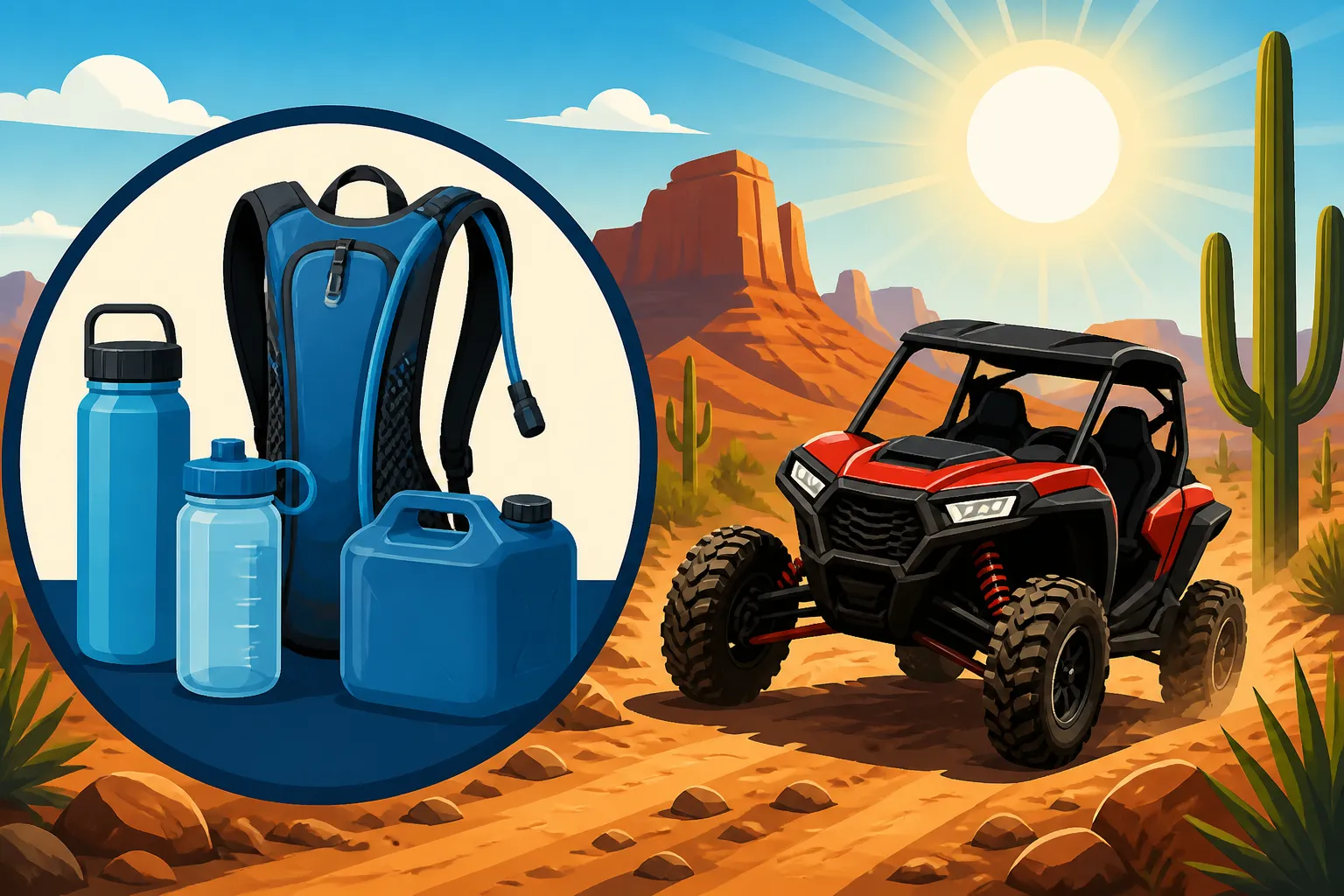
Water Planning for an Arizona Trail Day
An Arizona trail ride can turn uncomfortable quickly when a route takes longer than expected, the temperature climbs, or a small mechanical problem leaves you stopped in the sun. A good water plan accounts for every rider, the full route, likely delays, and a reserve you do not treat as ordinary drinking water. Here’s how to prepare for a safer day on Arizona’s ATV and UTV trails.
Estimate Water for the Whole Ride
Start With Time, Not Just Mileage
A short-looking route can take much longer than expected. Sandy washes, rocky climbs, photo stops, trail traffic, navigation mistakes, and a flat tire all add time. A ride that looks like a couple of hours on a map may stretch across much of the day, especially if you’re unfamiliar with the area or traveling with children and newer riders.
Estimate how long you expect to be away from the staging area, then add time for delays. Think about the whole outing, not only the time the machine is moving: include getting ready, unloading, breaks, and any time spent waiting for the group to catch up. If you’re riding somewhere with slow, technical sections, such as parts of the Sonoran Desert near Phoenix, use a more cautious estimate than you would for an easy, familiar route.
A useful starting point is to plan roughly 0.5 to 1 liter of drinking water per person for each hour of activity in hot conditions. That is a planning range, not a personal prescription: body size, exertion, temperature, acclimatization, health, and individual needs all matter. Use what you’ve learned from previous rides, and increase your plan when conditions or effort are likely to be demanding. For more on estimating an individual supply, see [How Much Water a Desert Ride Needs].
Count People and Build in a Reserve
Work out the amount for each rider and passenger before loading the machine. Do not assume that a shared cooler or a few large bottles will be enough simply because the total volume looks generous. A child may need a different arrangement than an adult, and a passenger who is not driving may still be exposed to heat, dust, and direct sun for hours.
Keep emergency water separate from the amount you expect to drink during an ordinary ride. A reserve gives you options if the group is delayed, a vehicle breaks down, someone feels unwell, or the route takes longer than planned. Label or stow it clearly so that nobody casually drinks through the backup supply early in the day.
| Ride situation | Water-planning approach |
|---|---|
| Short, familiar outing in mild conditions | Estimate each person’s normal needs and bring extra for an unexpected delay |
| Longer ride or warm weather | Plan by person and by hour, then add a separate emergency reserve |
| Remote route, technical terrain, or uncertain return time | Bring a larger reserve and identify a realistic turnaround point |
| Children, new riders, or a mixed-pace group | Carry accessible individual bottles and plan more frequent check-ins |
A reserve is not a substitute for enough water in the first place. If a trip is long, remote, or likely to involve extreme heat, consider shortening the route, starting earlier, or choosing a different day rather than relying on emergency supplies to make an under-planned ride work.
Match Your Plan to Arizona Conditions
Heat, Sun, and Effort Change the Calculation
Arizona conditions vary sharply by season and elevation. A winter morning near Phoenix can feel pleasant at the trailhead, while exposed desert sections become much hotter later in the day. A route near Flagstaff or the Mogollon Rim may begin cool and still involve strenuous climbing, bright sun, or long stretches without shade. Do not base your water plan only on how the air feels when you unload.
The machine can make it easy to underestimate exertion. Drivers and passengers may be seated, but they still absorb heat, wear protective gear, breathe dust, and spend time outside the vehicle during stops. If you are winching, changing a tire, walking a route, or helping a stuck machine, your effort can rise quickly. The same is true when a group is repeatedly stopping on a steep or rocky trail.
Check the expected conditions before leaving, but treat a forecast as one piece of the plan. Direct sunlight, reflected heat from rock and sand, wind, and a lack of shade can make a ride feel harsher than the temperature alone suggests. Review [Heat Illness on a Summer Trail] and [Sun Protection for a Desert Ride] as part of preparing for hot-weather riding.
Choose a Start Time and Route That Leave Room to Adapt
An early start can reduce the amount of the ride spent in peak heat, but it does not remove the need for enough water. Allow time for unloading and pre-ride checks without rushing. If the group is delayed getting started, reconsider whether the original route still makes sense rather than pressing ahead because it was the plan the night before.
Use route information to understand the ride’s length, difficulty, access points, and possible ways back. For areas such as Table Mesa or Four Peaks, a route can include exposed terrain and sections where turning around may take time. Check current land and route information before you go, and do not assume that a line on a phone map is an open, maintained trail. Tools such as onX Offroad can help you review mapped routes and save information for offline use, but they should support—not replace—official land-management guidance and sound judgment.
Choose a clear turnaround time before you start. If the group reaches that time without completing the planned distance, head back while everyone is still functioning well and has enough water. A flexible plan is especially important when riding with children, less-experienced drivers, or anyone who has not yet adapted to riding in Arizona heat. [Planning an Arizona Riding Trip] can help with the broader route and day-planning decisions.
Carry Water So Everyone Can Reach It
Make Drinking Water Easy to Access
Water that is technically on the machine but buried under recovery gear is not practical during a quick stop. Give each rider an accessible bottle or hydration system and decide where backup containers will be stored. Before departure, make sure everyone knows where their own water is and where the reserve is kept.
In a UTV, secure bottles and containers so they cannot roll under pedals, shift during a turn, or become projectiles if the machine stops suddenly. Keep the driver’s controls clear. In an ATV, use a hydration pack or a securely attached container designed for riding rather than balancing a loose bottle where it could fall or interfere with movement.
Plan short drinking stops into the ride. People often wait until they feel very thirsty, especially when they are focused on following a group or navigating an unfamiliar route. A pause also gives the group a chance to check whether anyone is falling behind, overheating, or running low. Do not pressure riders to drink beyond their needs; the goal is to make regular access easy, not to force a fixed amount.
Protect the Supply and Keep It Clean
Use clean, food-safe containers with closures that stay secure over rough terrain. Check bottles and hydration reservoirs before the trip for leaks, damaged caps, stale odors, or residue from a previous ride. If you refill a reservoir at home, clean and dry it properly afterward so it is ready for the next outing.
Store water where it is protected from damage and contamination. A sealed bottle that warms in the machine may not be as refreshing, but it is still more useful than a leaking or inaccessible container. Avoid leaving water in a spot where it can be crushed by cargo or exposed to grit when riders open and close a dusty storage compartment. Separate drinking water from fuel, oils, and other supplies.
If you are carrying electrolyte drinks or snacks, keep them separate from the water you have designated as an emergency reserve. Electrolyte products may be useful for some people during a long, sweaty outing, but they do not replace water, shade, rest, or ending a ride when someone is becoming ill. They are not a reason to continue riding through worsening symptoms.
Plan for Delays, Navigation Problems, and Emergencies
Do Not Count on Finding Water Along the Route
Remote desert routes may have no reliable source of drinking water. A wash, stock tank, creek, or water visible on a map should not be treated as safe or available for refilling. Conditions change, access may be restricted, and water in the environment can be contaminated. Plan to carry what your group needs from the start rather than expecting to top up on the trail.
Think through what happens if the route takes twice as long as expected. Consider a flat tire, overheating machine, a rider who needs a rest, a closed route, or a wrong turn. On a particularly exposed trail, even a brief stop can become a long wait if the group has to assist another vehicle. Keep an emergency supply in a separate, protected location and make sure someone besides the driver knows where it is.
Navigation preparation matters because getting lost can turn a manageable ride into a long, hot one. Download maps or route information before leaving service, and confirm that your device is charged and usable offline. onX Offroad can be one option for reviewing and saving route information, but keep a backup plan as well: a charged phone is not a guarantee of reception, battery life, or accurate route access. Read [Cell Service in the Arizona Backcountry] before relying on a phone for communication.
Set Group Rules Before Anyone Is Thirsty
Agree on a simple check-in system before you leave. At each planned stop, ask every rider and passenger how they feel and whether they have enough water. A quiet person may be trying not to slow the group down, so ask directly rather than waiting for someone to volunteer that they are struggling.
Choose a lead rider and a sweep rider when the group size or terrain makes that useful. The lead should know the planned route and turnaround time; the sweep should make sure nobody is left behind. If the group separates, riders should know where to stop and regroup rather than continuing alone in the hope of catching up. For more preparation around remote first aid, see [First Aid an Hour From Pavement].
If you are riding solo, tell someone where you are going, when you expect to return, and what to do if you do not check in. Keep the route conservative and carry extra water, communication equipment suited to the area, and basic recovery supplies. [Riding Alone in the Arizona Desert] covers additional considerations for a solo outing.
Recognize When to Stop or Turn Back
Watch for Early Signs of Heat Illness
A rider who becomes unusually tired, weak, dizzy, nauseated, confused, or uncoordinated needs attention—not encouragement to push through to the next viewpoint. Headache, muscle cramps, heavy sweating, and a sudden drop in energy can also be warning signs. Dust, engine noise, and the excitement of a ride can make it harder to notice a change, so group members should watch one another as well as themselves.
Stop riding and move the affected person to a cooler, shaded place if possible. Loosen unnecessary layers, use available cooling measures, and offer water only if the person is alert and able to drink safely. Do not leave someone alone while the rest of the group carries on. If symptoms are serious, worsening, or include confusion, collapse, or altered consciousness, seek emergency help. Do not assume that drinking water alone will solve a dangerous heat illness.
Make the decision early. A rider who says they feel “a little off” may be trying to avoid disappointing the group. Treat the comment as a reason to pause, assess, and adjust the plan. If the person does not improve promptly or you are concerned, stop the ride and arrange help rather than continuing farther from access.
Use Water and Turnaround Decisions Together
Water planning works best when it is part of a larger safety plan. Before leaving the staging area, know the route, identify reasonable places to stop, and decide what conditions would trigger a change of plan. Those triggers might include a late start, higher-than-expected heat, a slower group pace, water running low, a mechanical issue, or a rider who is not feeling well.
A turnaround is not a failure. If your group has used more water than expected, taken longer to cover the first part of the route, or encountered rougher terrain than anticipated, returning early is often the sensible choice. This is particularly true on routes with limited shade or where the return trip is just as demanding as the outbound section.
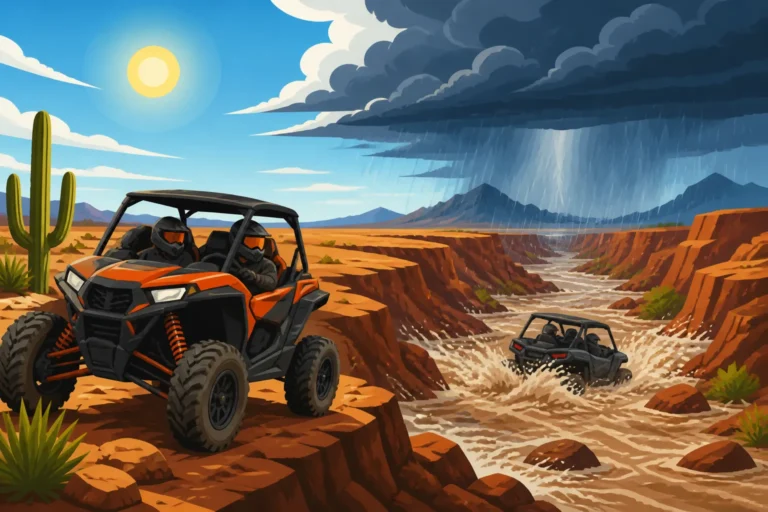
Weather can also change the route decision. A storm far away may send water through a wash or canyon, even when conditions above your group seem manageable. Check conditions and avoid riding into flowing water or a route that may be affected by runoff. See [Flash Flooding in a Desert Wash] and [Arizona Monsoon Season and Flash Flooding] when planning a ride during monsoon season. Keeping a route plan, a weather check, and a water reserve together makes it easier to make a calm decision before conditions become urgent.
Disclaimer
This article is for general informational purposes only and does not constitute professional advice. Laws, prices and regulations vary by location and change over time. Consult a qualified professional for guidance on your specific situation.