Camping Beside Arizona OHV Trails
Camping beside an Arizona OHV trail can turn a short ride into an easy weekend, but a convenient-looking patch of desert may be private property, protected land, or a place where overnight camping is restricted. This guide explains how to choose a legal campsite, plan around trail access and heat, and avoid the frustrating surprise of arriving with a trailer and nowhere suitable to stay.
Choose a campsite by land ownership first
Public land is not one set of camping rules
Arizona riding areas can cross a patchwork of Bureau of Land Management land, national forest, state trust land, state parks, tribal land, and private property. A trailhead may be beside one type of land while the road or wash you follow leads onto another. That matters because permission to ride a route does not automatically mean you can camp beside it.
Before you pick a spot, identify who manages the land and check the rules for overnight use, vehicle access, fire restrictions, and length of stay. A route that looks open on a phone map may still have a gate, a seasonal restriction, or a boundary that is hard to see on the ground. If the ride crosses several jurisdictions, check each one rather than assuming the first set of rules applies throughout the trip.
State trust land deserves particular attention. It is not simply open public camping land, and recreation may require a permit. Read [Arizona State Trust Land Recreational Permits](Arizona State Trust Land Recreational Permits) before planning to camp or stage a trailer there. If you are uncertain whether a particular flat area falls on trust land, move the question from guesswork to a land-status map or contact with the managing agency.
Dispersed camping and established campgrounds solve different problems
Dispersed camping can be appealing when you want quiet, space for a group, or a campsite close to a route. It usually means camping outside a developed campground, without the conveniences people take for granted at a designated site. You may need to bring all your water, pack out every bit of rubbish, and be prepared for rough access, no toilets, and limited or absent cell service.
An established campground may offer clearer boundaries and more predictable access, but it can involve reservations, site limits, fees, or rules about trailers and generators. It may also be a better fit if you are bringing children, have a large trailer, or do not want to manage waste and water entirely on your own. Compare [Arizona Campgrounds With Trail Access](Arizona Campgrounds With Trail Access) with [Dispersed Camping Near Arizona Trailheads](Dispersed Camping Near Arizona Trailheads) based on the needs of your group, not just the distance to the trail.
One practical approach is to decide what your trip needs before choosing the camping style. A compact group with a capable tow vehicle may be comfortable with a remote site, while a family arriving late with a large toy hauler may be happier at an established campground. The “closest campsite” is not always the easiest one once you factor in darkness, trailer maneuvering, and the distance to water or supplies.
| Camping option | Usually works well for | Check before you go |
|---|---|---|
| Developed campground | Families, larger trailers, and riders who want clearer site boundaries | Reservations, site dimensions, vehicle rules, amenities, and access to the riding area |
| Dispersed public-land site | Self-sufficient campers seeking a quieter, less developed setting | Land manager, overnight rules, road condition, fire restrictions, and waste requirements |
| Private campground or RV park | Groups wanting services and a predictable place to park | Whether OHV trailers are welcome, parking arrangements, and how you will reach the trail |
| State trust land | Only where recreation is allowed and required permissions are in place | Permit requirements, permitted activities, and the exact land boundary |
Match the campsite to the riding area
Sedona and the red rock country
Sedona can be a memorable base for a riding trip, but the combination of popular trails, narrow access roads, scenic areas, and nearby residential neighborhoods calls for careful planning. Do not assume you can pull off beside a trail and spend the night simply because there is open-looking ground. Confirm that camping is allowed at your intended location and that your vehicle and trailer can reach it without driving on a prohibited route.
A campground or lodging base outside the immediate trail area may make more sense if you are bringing a large rig or arriving during a busy period. You can then plan a legal route to the staging area instead of trying to camp on the first level patch of ground you see. For area-specific ideas, compare [Lodging in Sedona for Riders](Lodging in Sedona for Riders) with [Camping Beside Arizona OHV Trails](Camping Beside Arizona OHV Trails) as part of your trip research, and check current trail and land-management notices before you leave.
Red rock country also rewards a lighter-touch camping style. Keep vehicles on established roads and durable parking surfaces, avoid creating new tracks, and do not treat a scenic pullout as a campsite unless overnight use is clearly permitted. A spot that looks harmless in the evening can become a problem if it blocks a route, damages fragile ground, or puts your group too close to homes or other visitors.
Cinder Hills and the Flagstaff area
The Flagstaff area offers a different camping challenge from the low desert. Elevation and changing weather can make a summer trip more comfortable in some ways, but they do not remove the need to check access, forest restrictions, and seasonal conditions. A route or campsite that is passable in dry weather may become difficult after rain, and forest roads can have limits that are easy to overlook when you are focused on reaching the riding area.
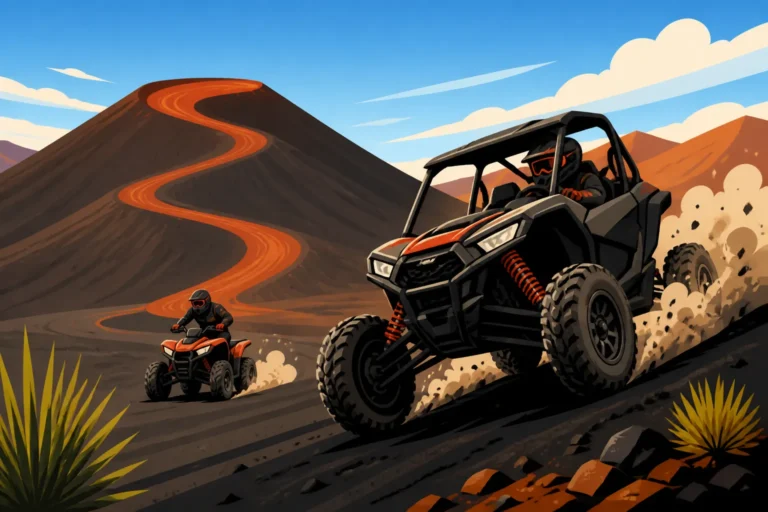
If Cinder Hills is your destination, plan the campsite and route together rather than treating them as separate decisions. Look at [Staying in Flagstaff for Cinder Hills](Staying in Flagstaff for Cinder Hills) and [Cinder Hills for Beginners](Cinder Hills for Beginners) for related planning considerations. A developed base may be a better choice for a first visit, while experienced campers with suitable equipment may prefer a more remote option where it is allowed.
Do not assume a campground near Flagstaff is beside the riding area or that a ride-in campsite is available at the exact point you want. Check road access for your tow vehicle, the length and turning needs of your trailer, and whether your group will have to travel on public roads between camp and the trail. These details matter when you are towing a loaded trailer or returning after a long day of riding.
Lake Havasu and Parker
Around Lake Havasu and Parker, heat, exposed terrain, sand, and busy riding periods can shape the camping decision as much as trail distance. A site that looks close on a map may involve a slow, rough approach or leave little shade and limited protection from wind. Think about the time of day you will arrive, how much water you can carry, and whether your camp setup can handle the conditions.
A campground or established base can be useful if you are new to the area or traveling with a large group. If you are considering a more remote site, verify land status and access before towing there. Related planning topics include [Lodging in Lake Havasu City for OHV Trips](Lodging in Lake Havasu City for OHV Trips) and [Standard Wash OHV Area Access](Standard Wash OHV Area Access). Treat maps as a planning aid, then confirm details with the relevant land manager.
For any desert camp, give yourself room to park, turn around, unload, and secure equipment without blocking other users. A narrow track that is easy to drive into may be difficult to reverse out of with a trailer. If you cannot see a safe way to turn around before committing, stop and reassess rather than hoping the ground opens up farther ahead.
Plan access, maps, and vehicle logistics
Check the route and the boundary, not just the campsite pin
A map pin can help you find a destination, but it cannot answer every practical question. It may not show a closed gate, a washed-out crossing, a property boundary, or a road that is unsuitable for a long trailer. Before departure, compare a detailed map with information from the relevant land manager, and make sure you can identify the access road and the final approach to camp.
Tools such as onX Offroad can help you study routes and land boundaries while planning, especially when a trip crosses a mix of public and private parcels. Use it as a planning tool rather than as permission to camp or ride. If an app and a posted sign, gate, or agency direction conflict, do not treat the digital map as the final word. Stop and resolve the access question before proceeding.
Download or save the information you need before leaving dependable service. In parts of Arizona, mobile coverage can fade well before you reach the campsite. Keep a second way to orient yourself, such as an offline map or a route shared with another member of your group, and tell someone who is not on the trip where you expect to camp and when you plan to return.
Make sure the campsite fits your trailer and group
A campsite can be legal and still be a poor choice for your setup. Check the final approach for steep grades, loose sand, tight turns, low branches, and places where a large rig cannot pass another vehicle. A two-seat machine and a small tent trailer have very different needs from several side-by-sides, a heavy toy hauler, and a support truck.
Before choosing an isolated site, think through the whole arrival and departure. Where will the tow vehicle and trailer sit? Can you unload without blocking the road? Is there room to turn around without driving over vegetation or creating a new track? If the answer is unclear, choose a more suitable base rather than relying on last-minute maneuvering in the dark.
Also set expectations with your group about how camp and riding will work together. Decide where machines will be parked, how children and pets will be kept away from moving vehicles, and where everyone will gather if the group gets separated. A simple arrival plan can prevent the common scramble where one driver is trying to back a trailer while others unload machines and search for a flat tent site.
Prepare for desert conditions and responsible camping
Water, heat, and changing weather
Desert camping requires more than packing a few extra bottles in the truck. Plan water for drinking, cooking, basic cleanup, and unexpected delays. Riding, loading, and setting up camp all add to your group’s needs, especially in hot, exposed areas. Do not count on finding a reliable water source at a remote campsite, and avoid building a plan around a supply point you have not confirmed.
Heat can affect people, machines, and the timing of your trip. Schedule strenuous work such as unloading and setting up for cooler parts of the day when possible, and make sure the group has shade and a way to recognize when someone needs to stop. A rider who feels unwell should not be pressured to continue because the campsite is “only a little farther.” On a remote route, rest and reassess before a small problem grows.
Arizona weather can also change quickly. A dry wash may look like an easy access road until rain upstream sends water through it. Check the forecast and local advisories, but do not treat a clear sky over your camp as proof that a wash is safe. If water is moving across the route or the surface is changing, do not drive into it. Have an alternate route or a plan to wait somewhere safe.
Fire, waste, noise, and campsite impact
Fire restrictions can change by location and conditions, so check the rules for the exact land you plan to use before bringing a fire pit or relying on a campfire for cooking. A stove may be a more dependable option, but it still needs to be used safely and in compliance with local restrictions. Keep ignition sources away from dry vegetation, and never leave a fire or hot equipment unattended.
Pack out rubbish, food scraps, and anything else you brought in. Do not leave waste beside a trail or assume that someone else will clean the site. Human waste rules vary by location and available facilities, so learn the requirements before heading to a remote camp. Keeping food secured also helps reduce unwanted visits from wildlife and prevents a mess that can affect the next group.
Noise and vehicle use matter, particularly near homes, campgrounds, and other visitors. Keep engines off when you are not actively using them, avoid unnecessary revving, and move slowly around camp. Stay on established routes and camp on durable surfaces where permitted. A tidy site that does not spread into surrounding ground is easier to leave in good condition—and less likely to create conflict with neighbors or land managers.
Build a practical camp-to-trail plan
Use a checklist before you tow
A few minutes of planning can prevent a long, exhausting search for a place to stay. Confirm the land manager, the camping rules, the access route, and any permit needs. Check that your trailer can reach and fit at the site, and work out where you will stage, unload, and park. If your plan includes a campground, confirm that its rules and layout suit your equipment rather than assuming every site accommodates an OHV trailer.
Use this short sequence before departure:
- Choose a riding area and identify the managing land agencies along the route.
- Confirm whether overnight camping is allowed at the intended location.
- Check required permits, fire restrictions, closures, and seasonal access information.
- Review the road and campsite approach for trailer clearance, turning space, and surface conditions.
- Plan water, food, fuel, waste handling, first aid, and a backup campsite.
- Save maps and directions for offline use, and share your itinerary with someone at home.
- Recheck local notices before leaving, especially after storms or during fire restrictions.
If the plan depends on a specific remote campsite being open, prepare an alternative. A gate, crowded staging area, damaged road, or restricted access can change your arrival options. Having a second legal place to stay is far less stressful than circling a dark trailhead with a trailer.
Make the first evening easy
Arrive early enough to set up in daylight whenever possible. That gives you time to inspect the ground, notice hazards, park without rushing, and make sure the location matches your plan. If you arrive and discover that the site is unsuitable or camping is not allowed, leave rather than trying to make the situation work.
Keep the first night’s setup simple. Put essential items where you can reach them, secure machines, and make sure everyone knows where water, lights, and first aid are kept. Avoid unloading everything before you have confirmed where the tow vehicle and trailer will sit. A little order at camp makes the next morning smoother, particularly when the group is eager to ride.
Before bed, review the next day’s route, weather, and meeting point. Agree on what the group will do if a machine breaks down or a rider needs to turn back. When you return, leave the campsite as you found it, check for small items that are easy to miss, and make sure no gear or rubbish has blown into surrounding brush. Good camping beside Arizona OHV trails depends on more than finding a convenient spot: it means choosing a permitted place, arriving prepared, and leaving the land in good condition.
Disclaimer
This article is for general informational purposes only and does not constitute professional advice. Laws, prices and regulations vary by location and change over time. Consult a qualified professional for guidance on your specific situation.