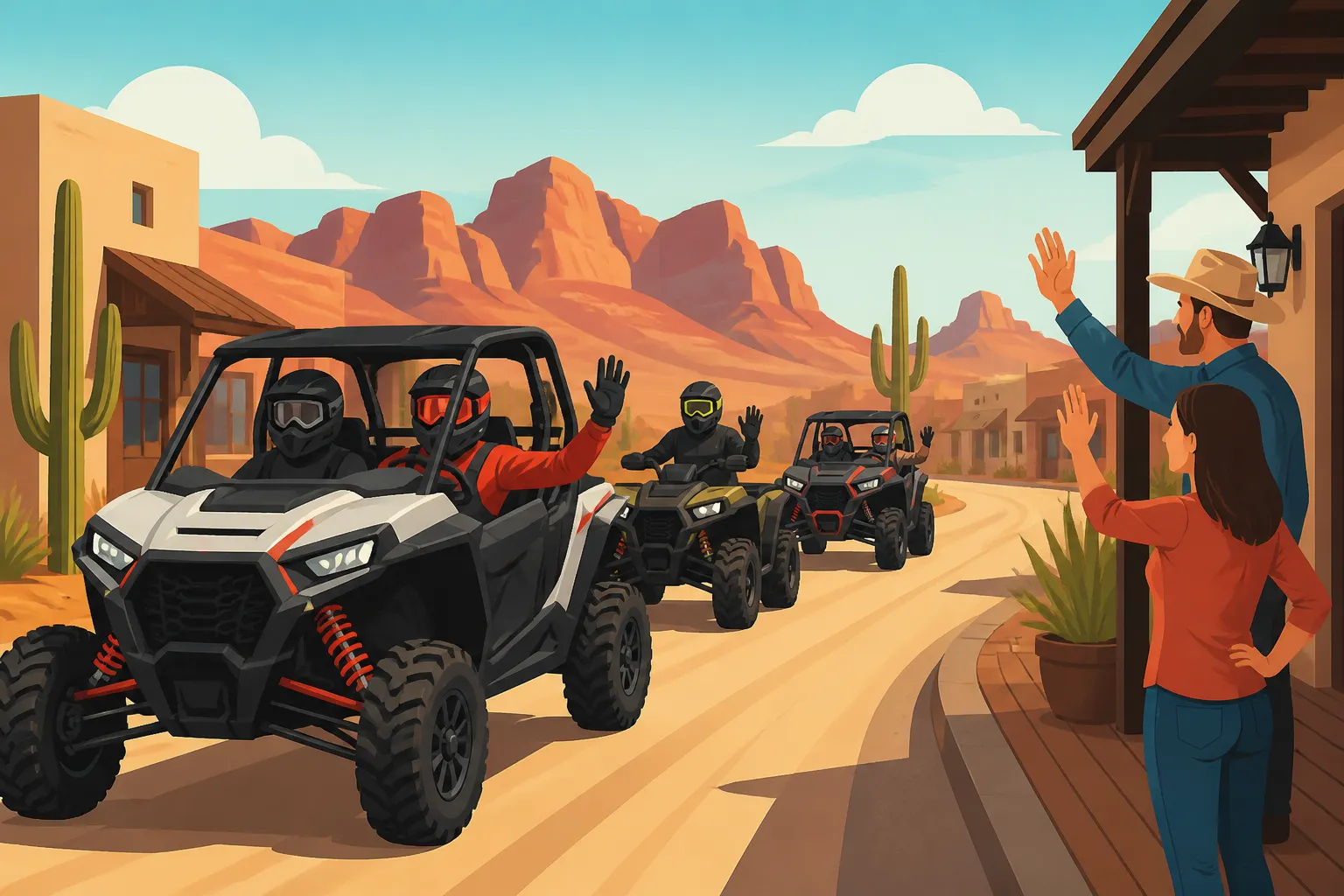
Group Etiquette Through a Small Desert Town
Riding your ATV or UTV through Arizona's charming small desert towns can be a real highlight of any adventure, connecting trails and letting you experience a slice of local life. However, it’s also a point where off-highway enthusiasts and local residents often clash due to noise, dust, and perceived recklessness. This guide aims to smooth out those interactions, offering practical advice on how your group can navigate these communities respectfully and ensure everyone—locals and riders alike—has a positive experience, protecting access for future rides.
Understanding Why Town Etiquette Matters
When you’re out on a long ride, pushing through the desert, it’s easy to see a small town as just another waypoint on the map—a place to refuel, grab a snack, or transition to the next trail. But for the people who call these places home, their town is much more than that. It's where their kids play, where they garden, and where they enjoy the quiet of the desert. Understanding this perspective is the first step toward becoming a truly responsible and welcome visitor.
The Local Perspective: Peace, Quiet, and Safety
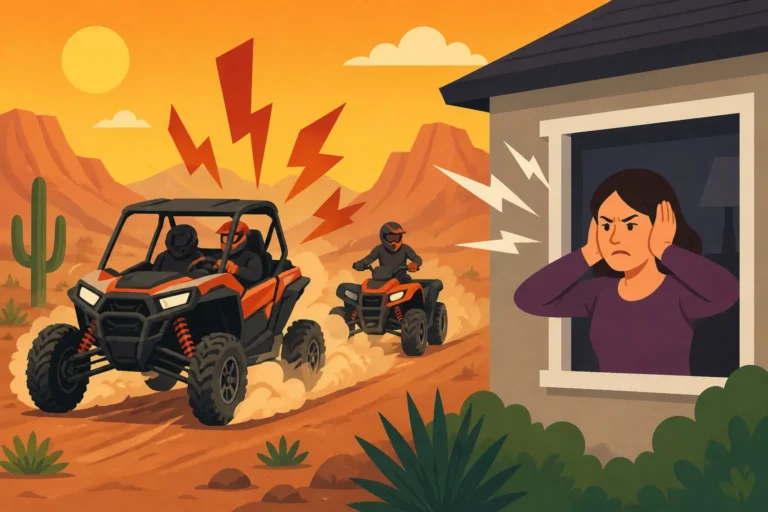
Imagine for a moment you live in a quiet, rural Arizona town. You chose it precisely for the peace and the slower pace of life. Suddenly, a group of powerful off-highway vehicles rumbles down your main street, kicking up dust, their engines echoing between buildings, and perhaps one or two riders are a little too eager on the throttle. For you, this isn't just an inconvenience; it's an intrusion on your home and your peace. Locals often voice concerns about excessive noise, particularly from modified exhausts, and the dust that settles on their homes and vehicles. They worry about their children or pets running into the street, and about the overall safety when machines are perceived to be moving too fast through their neighborhoods.
It’s crucial to remember that these small desert towns are living communities, not just scenery for your ride. Residents value their tranquility, and a sudden influx of loud, dusty vehicles can disrupt that significantly. Ignoring these local sensitivities can quickly lead to resentment, and unfortunately, that resentment often spills over into complaints to local authorities, potentially jeopardizing access for all riders.
Protecting Access and Reputation for All Riders
Every time an off-highway vehicle group passes through a small town, they are ambassadors for the entire OHV community. A single instance of disrespectful or unsafe riding can leave a lasting negative impression, creating a ripple effect that impacts everyone. When locals feel their quality of life is diminished by OHV traffic, they start to push for restrictions. This could mean road closures, stricter noise ordinances, or even outright bans on OHVs in certain areas, limiting where you can eventually ride.
The OHV community works tirelessly to maintain good relationships with towns and to keep trails and connecting routes open. Organizations advocate for riders, ensuring that access remains viable for future generations. When we disregard local concerns, we undermine these efforts and make it harder to advocate for continued access to places like [Arizona City Streets Open to OHVs] and [County Roads and Arizona OHV Access]. By riding responsibly and courteously, your group helps to reinforce the positive image of OHV recreation, ensuring that these towns remain welcoming parts of your Arizona adventure for years to come.
Essential Rules of the Road and Respectful Riding
Navigating a small desert town isn’t quite the same as tearing up a wide-open trail. The rules of engagement change, requiring a heightened sense of awareness and respect for shared spaces. Adopting a mindful approach to speed, noise, and general road etiquette is paramount.
Mind Your Speed and Machine Noise
The single most impactful thing your group can do to be courteous in town is to slow down. Posted speed limits are the absolute maximum, but in a small town, especially residential areas, you should often be going significantly slower. Keep an eye out for children playing, pets wandering, cars backing out of driveways, or pedestrians walking. A slow, steady pace communicates respect and caution. It also dramatically reduces dust and noise, two of the biggest complaints from residents. Remember, a quick blast through town might save you a minute or two, but it can cost the entire OHV community a lot more in goodwill.
When it comes to machine noise, what sounds thrilling on the trail can be jarring in a populated area. Your machine’s roar echoes off buildings and can penetrate homes, causing a disturbance. Avoid revving your engine unnecessarily, and keep conversations within your group at a reasonable volume, using helmet communicators or hand signals rather than shouting over engines. If you've modified your exhaust, consider options designed to be quieter in sensitive areas. While there isn't a specific "quiet town mode" button, a well-maintained machine with all components properly fastened—perhaps even robust aftermarket parts from a brand like SuperATV that reduce rattles and vibrations—will naturally run more smoothly and quietly than a rig with loose parts or an untuned engine.
Minimize Dust and Emissions
Arizona’s desert dust is legendary, and while it’s part of the trail experience, it's a major nuisance for town residents. Slow speeds are your best friend for minimizing dust. Rapid acceleration or braking, especially on unpaved town roads or shoulders, can kick up clouds of dirt that drift into homes, settle on cars, and make it unpleasant for anyone nearby. Drive smoothly and gently through town to keep dust to a minimum.
Similarly, consider your machine’s emissions. While off-highway vehicles might not always face the same rigorous emissions testing as street vehicles (though some larger metros have [Arizona Emissions Testing in the Two Metros] for certain machines), lingering exhaust fumes are unpleasant. Ensure your engine is well-tuned and not running excessively rich, which can produce more noticeable odors. Even a brief stop with an idling engine can leave a lingering smell that residents find offensive. Minimizing idle time in residential areas or near businesses is a small but impactful gesture of consideration.
Follow All Traffic Laws and Signals
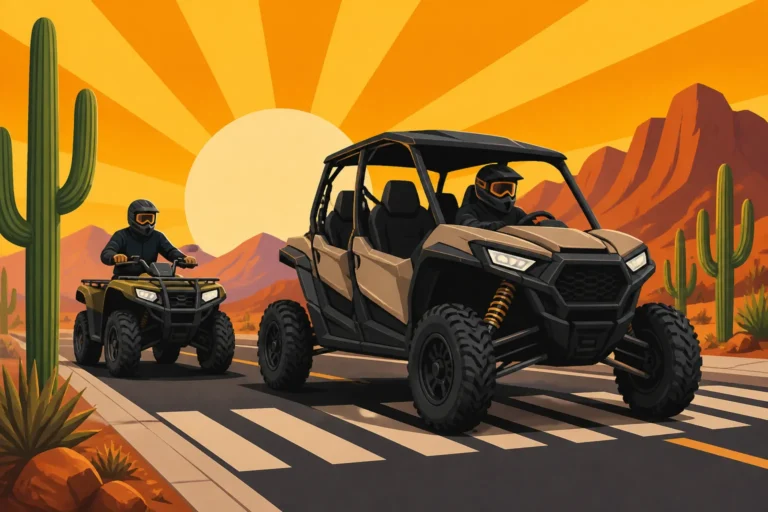
When your ATV or UTV is on a paved road in a town, it is legally considered a motor vehicle, and you are expected to obey every traffic law just like a car. This means coming to a complete stop at stop signs, yielding to pedestrians in crosswalks, using your turn signals (if your machine is street-legal and equipped with them, which is part of [What Arizona Requires on a Street-Legal Machine]), and stopping for red lights. Don't roll through intersections or assume you have the right-of-way simply because you're on a smaller machine.
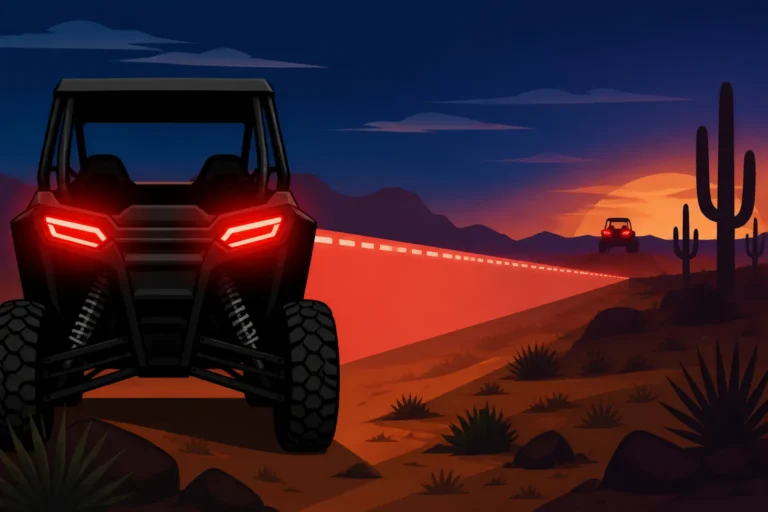
Stay in your lane, on the right side of the road, and avoid weaving or riding aggressively. Maintain a safe following distance from other vehicles, and be predictable in your movements. Your machine should also be properly equipped for road use, meaning you should have functioning headlights (adhering to rules like [Arizona's 500 Foot Headlight Rule]), taillights and reflectors (as detailed in [Taillights and Rear Reflectors Arizona Requires]), a horn that meets requirements (like [The Horn Arizona Wants Audible at 200 Feet]), and mirrors (important for [Mirrors, Seats and Footrests on an Arizona Build]). These aren’t just legal necessities; they are critical safety features that also demonstrate your group's commitment to responsible road sharing.
Parking and Staging Mindfully
Once you've ridden into town, how and where you park makes a big difference. Resist the urge to pull up wherever it's most convenient if it means blocking a driveway, a sidewalk, or the entrance to a local business. Seek out designated parking areas if they exist, or park legally and considerately along the street. If your group includes a number of machines, try to consolidate your parking footprint. Avoid taking up multiple car-sized parking spots with single machines, especially in busy areas. Think about the local business owner who needs those spaces for their customers, or the resident who needs to access their home.
The same principles that apply to [Parking a Side-by-Side at a Trailhead] often translate to town parking: be efficient, be visible, and be respectful of the space you occupy. If you're pausing for a break, move your machines to a spot where they won’t disrupt traffic flow or local pedestrian movement. This thoughtfulness prevents friction and ensures your presence is seen as a welcome addition, not an imposition.
Group Dynamics and Communication
Riding as a group adds another layer of responsibility, particularly when transitioning from open trails to the more confined and populated streets of a small town. How your group moves and communicates together can significantly impact local perceptions and overall safety.
Single File and Spacing
When your group rolls into a small town, presenting a cohesive and organized front is key. The most effective way to do this is to ride in a single file line, especially on narrow streets or in areas with moderate traffic. A long, single line looks much more disciplined and less intimidating than a spread-out, disorderly cluster of machines taking up the entire lane or even straying into the opposite lane. [Single File on a Narrow Desert Road] isn't just a suggestion; it's a practical safety measure that also shows courtesy to other road users.
Maintain adequate spacing between machines, too. This isn’t just for safety (allowing for sudden stops), but also for courtesy. It provides opportunities for passenger vehicles to safely pass portions of your group, or to turn into driveways without waiting for the entire procession to go by. A tightly packed group can feel like an impenetrable barrier to other drivers, leading to frustration. By riding with respectful spacing, you demonstrate awareness and allow for smoother traffic flow.
Communication Among Riders
Effective communication within your group becomes even more critical in town. On the trail, you might be able to shout over engine noise, but in town, this is disruptive and can be misunderstood. Utilize helmet communication systems or pre-arranged hand signals to convey messages like "slow down," "stop ahead," "turn left," or "watch for pedestrians." This quiet, efficient communication minimizes noise pollution and avoids any potential misunderstandings with locals who might misinterpret shouts.
Before entering a town, designate a clear lead rider and a sweep rider. The lead rider should be intimately familiar with the route, the town's layout, and most importantly, be hyper-aware of local traffic, pedestrians, and speed limits. Their role is to set the tone for the entire group, maintaining a slow, steady, and courteous pace. The sweep rider ensures no one gets left behind, handles any minor issues that arise, and helps manage the group’s flow. This structured approach helps your group move through town safely and smoothly.
Respecting Private Property and Open Range
The boundaries of private property can be less obvious in rural desert towns, but your responsibility to respect them remains absolute. Never assume an open field or a seemingly unused dirt track is fair game for a shortcut. Even if there are no fences, signs, or clear markings, cutting across private land without explicit permission is trespassing and can lead to serious consequences and further alienate residents. Always stick to established public roads and trails. This also applies to parking; never park on private property unless you have permission or are visiting a business that provides customer parking. Remember [Arizona Trespass Rules Along Desert Roads] apply to OHVs too.
Arizona is also a state with significant open-range areas, meaning you might encounter livestock directly on or near roads. If you come across [Cattle on Open Range Desert Roads], slow down immediately to a crawl. Give the animals a wide berth and never harass or attempt to 'herd' them. Patience is key; wait for them to move, or proceed slowly and cautiously around them. These animals are often someone's livelihood, and showing respect for them is part of showing respect for the local community.
Being a Good Ambassador for the OHV Community
Ultimately, every time your group rides through a small Arizona desert town, you have an opportunity to either build bridges or burn them. By actively choosing to be a positive presence, you contribute to a more welcoming environment for all OHV enthusiasts and help ensure that these unique communities remain part of our riding landscape.
Supporting Local Businesses
One of the most powerful ways to show goodwill and build positive relationships is to support the local economy. When your group stops in a small town, make an effort to buy gas, grab a bite to eat, or pick up supplies from local shops. [Desert Gas Stations That Serve Riders] often rely on passing tourism, and your patronage can make a real difference to these small businesses. This demonstrates that OHV tourism isn't just about noise and dust; it's also about bringing economic benefit to the community.
When you enter a business, be mindful of your appearance. Take off dusty helmets, clean off any excessive dirt from your boots before stepping inside, and be polite and friendly to staff. A simple "thank you" or a quick chat about your ride can foster a much more positive interaction than simply grabbing what you need and rushing out. Your group’s dollars, combined with courteous behavior, can turn wary locals into welcoming hosts.
Engaging with Locals Positively
A friendly wave, a nod, or a polite greeting can go an incredibly long way. When you pass by residents, acknowledge them respectfully. If someone approaches your group with questions or even concerns, listen respectfully. Instead of becoming defensive, try to understand their point of view. A simple, "We understand the noise can be a lot, and we're doing our best to keep it down as we pass through," can diffuse tension.
Demonstrate that you are responsible visitors, not just thrill-seekers. This might mean answering questions about your machines or your route with a positive attitude. Being an accessible and friendly face of the OHV community can help change negative stereotypes and build genuine connections. Remember, a positive interaction with one resident can influence their perception of the entire riding community.
The "Tread Lightly!" Philosophy in Town
The "Tread Lightly!" principles, which advocate for responsible outdoor recreation, are just as relevant in a small town as they are on the most remote trails. This means respecting the environment (by minimizing dust and emissions), respecting other users (by controlling noise and speed), educating yourself (by knowing local rules and customs), avoiding sensitive areas (like private property), and leaving no trace (by taking out anything you bring in). Extending this philosophy to your urban crossings reinforces your group's commitment to being responsible citizens.
Consider how your machine is set up. While a durable suspension or robust skid plates from a brand like SuperATV might be primarily for rugged trail use, their quality construction also means your machine handles urban environments more smoothly and reliably. A well-maintained and equipped machine is less likely to break down in an inconvenient spot, cause excessive noise due to loose parts, or contribute to other disruptions. By being prepared and riding respectfully, your group not only enjoys your adventure but also helps preserve the opportunity for others to do the same.
Summary of Town Riding Etiquette
To ensure your group enjoys every aspect of your Arizona OHV adventure—including those charming small towns—here’s a quick overview of best practices:
| DO | DON'T |
|---|---|
| Drive Slowly: Obey posted limits, go even slower in residential areas. | Speed or Rev Engines: It creates noise, dust, and a negative impression. |
| Ride Single File: Looks organized, reduces footprint, and allows traffic to pass. | Ride Side-by-Side: This blocks traffic and appears aggressive. |
| Obey All Traffic Laws: Stop signs, signals, lane etiquette – treat your OHV like any other vehicle. | Roll Stop Signs or Ignore Signals: This is illegal and unsafe. |
| Minimize Dust: Gentle acceleration and braking, especially on dirt roads. | Kick Up Dust: Avoid quick starts and stops. |
| Park Considerately: Use designated spots, don't block access. | Block Driveways or Storefronts: This causes major inconvenience to locals. |
| Support Local Businesses: Buy gas, food, or supplies. | Just Pass Through: Show appreciation for their community. |
| Wave and Be Friendly: A positive interaction goes a long way. | Be Rude or Ignorant: Negative encounters reflect poorly on all riders. |
| Use Hand Signals/Radios: For quiet, effective group communication. | Shout Over Engine Noise: It's disruptive and hard to hear. |
| Respect Private Property: Stay on public roads. | Cut Across Land: Trespassing can lead to fines and access loss. |
| Ensure Your Machine is Street-Legal (if applicable): Lights, horn, mirrors for safety and compliance. | Ride an Unsafe or Non-Compliant Machine: Puts you and others at risk. |
Disclaimer
This article is for general informational purposes only and does not constitute professional advice. Laws, prices and regulations vary by location and change over time. Consult a qualified professional for guidance on your specific situation.