Doubling Up on a One-Seat Machine
Ever found yourself staring at that single-seat ATV, wishing you could share the incredible Arizona desert with a child or a friend, but then that little voice of doubt creeps in, asking, "Is this even allowed, let alone safe?" It's a common scenario for many riders, and the urge to bring someone along on your off-highway vehicle (OHV) is totally understandable. However, the rules and, more importantly, the very real dangers of carrying a passenger on a machine designed for one rider are often misunderstood, leading to potential legal trouble and serious safety risks. This guide will meticulously break down Arizona's regulations and crucial safety considerations to help you make informed decisions when it comes to passenger capacity on your OHV.
Arizona Law and Machine Capacity: What the Rulebook Says
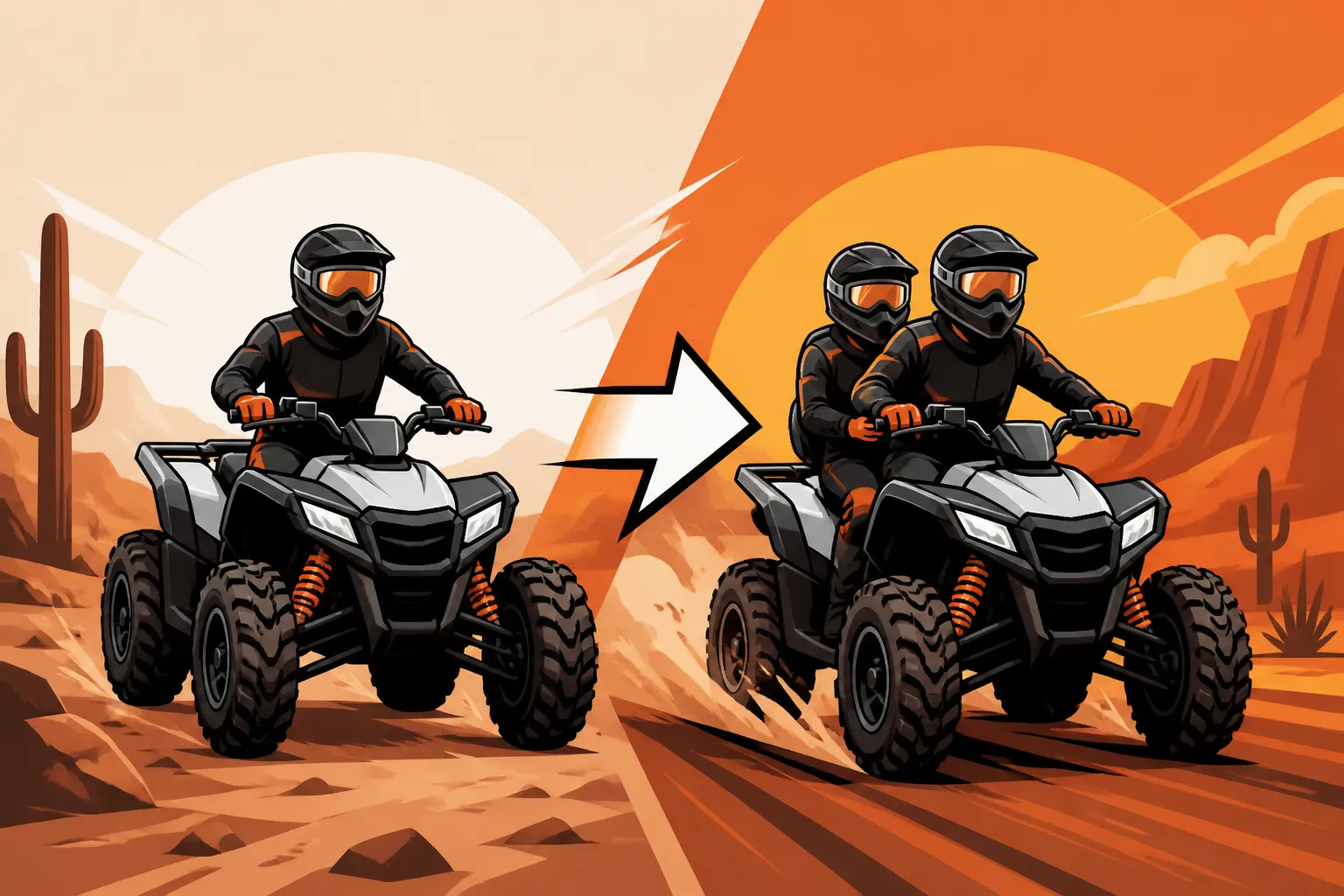
Let's cut right to it: Arizona law, much like common sense, is very clear about the capacity of your OHV. When a machine is designed and manufactured for a single operator, that's exactly what it's for. This isn't just a suggestion; it's often a legal requirement rooted in the machine's fundamental design for safe operation. Trying to squeeze two people onto a machine built for one can put you squarely outside the law and, more importantly, put lives at risk.
Understanding "Designated Seating" and Manufacturer Specifications
The key phrase you'll hear when discussing passengers on OHVs is "designated seating position." This isn't just any old spot where someone can perch; it refers to a seat explicitly designed by the manufacturer to safely accommodate a passenger, complete with proper footrests, handholds, and often, a backrest. For most traditional ATVs, especially those with smaller engines, the design is unequivocally for one rider. You'll usually find this information clearly stated on a decal attached to the machine, in the owner's manual, or even on the manufacturer's website. The VIN plate itself often has codes that can indicate seating capacity, though this can be more technical to decode.
Manufacturers spend countless hours engineering these machines for specific weight distributions and handling characteristics. When you add an extra person to a single-seat ATV, you are fundamentally altering that engineering. Imagine trying to drive a car with a passenger sitting on the dashboard – it's not designed for it, and the safety features, like airbags, wouldn't function correctly. The same principle applies here. Without a factory-installed, designated passenger seat, complete with the necessary safety features, you're looking at a violation of the machine's intended use, which carries legal and safety ramifications.
Passenger Age Limits and Designated Seating
Even if your machine does have a designated passenger seat – which is almost exclusively found on larger, two-up ATVs or side-by-sides (UTVs) – Arizona still has rules about who can occupy that seat, particularly concerning young riders. It’s not just about finding a space; it’s about ensuring the passenger can safely participate in the ride and is protected. Children, for example, have specific regulations dictating appropriate machine size and supervision, and a passenger must be able to reach the footrests and hold on properly. If a child is too small to safely ride as a passenger, even on a machine designed for two, it creates an unsafe situation. You can learn more about specific rules for younger riders in our article on [Arizona Rules for a Child Passenger] and [Arizona Age Rules for Young Riders].
The law prioritizes safety, and for good reason. A passenger, especially a child, needs more than just a place to sit. They need to be secure, stable, and able to react to the dynamics of the ride. Without dedicated footrests, their feet could get caught in moving parts. Without proper handholds, they could be easily thrown off. These aren't minor details; they are critical safety components that a single-seat ATV simply doesn't provide for a second person.
Distinguishing ATVs from Side-by-Sides
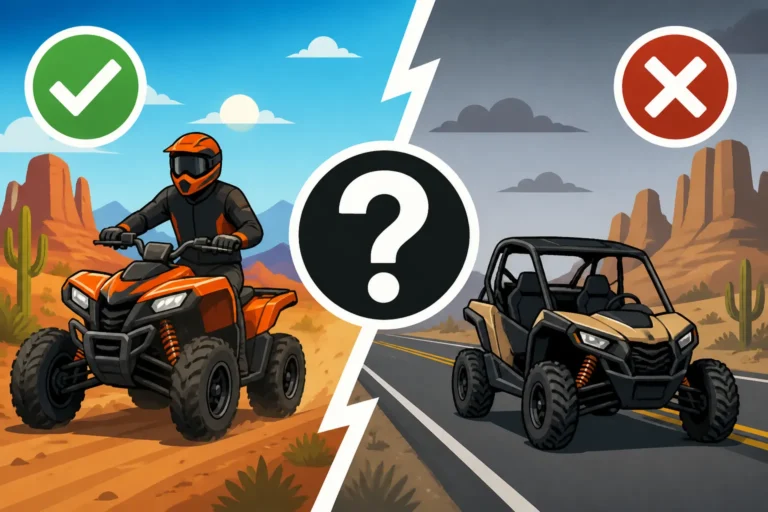
It's crucial to understand the fundamental design differences between a typical ATV (All-Terrain Vehicle) and a UTV (Utility Terrain Vehicle), often called a side-by-side. Most ATVs, especially those under 700cc, are designed as single-rider machines where the operator straddles the engine and steers with handlebars. There are "two-up" ATVs specifically manufactured with a longer seat and passenger handholds/footrests, but these are distinct from standard ATVs.
Side-by-sides, on the other hand, are designed with bench or bucket seating, a steering wheel, and often a roll cage, explicitly built to carry multiple passengers side-by-side, hence the name. These machines are engineered from the ground up for the added weight and dynamics of multiple occupants. Trying to treat a single-seat ATV like a miniature side-by-side is a recipe for disaster. The stability, suspension, braking, and power delivery are all calibrated for a solo rider. Don't confuse the two, as their capabilities and legal passenger capacities are vastly different.
Why Doubling Up on a Single-Seat Machine is Dangerous (and Often Illegal)
The dangers of carrying a passenger on an OHV not designed for it are substantial and immediate. This isn't just about getting a ticket; it's about exposing yourself and your passenger to severe risks of injury or worse. The machine simply isn't engineered to handle the additional weight and altered center of gravity that a second person introduces.
Stability, Control, and Handling Impacts
Adding a passenger to a single-seat ATV dramatically compromises its stability and handling. These machines are built to be actively ridden, meaning the operator shifts their weight to steer, turn, and navigate terrain. With a passenger perched unsafely behind them, this ability to shift weight is severely hampered, if not entirely eliminated. The center of gravity shifts higher and further back, making the machine top-heavy and far more prone to rollovers, especially during turns, climbs, descents, or when encountering obstacles.
Imagine navigating a [Blind Curves on a Desert Mountain Road] with this compromised stability. Braking distances increase, steering becomes less responsive, and the machine can feel entirely different. What was once a nimble and predictable ride becomes a clumsy, dangerous beast. The passenger's weight can lift the front wheels off the ground on inclines, or cause the rear to slide out uncontrollably on declines. In short, the machine becomes unpredictable and exceedingly difficult to control, even for an experienced rider.
Physical Injury Risks for Both Riders
Without a designated, secure seating position, the passenger is incredibly vulnerable. They lack proper footrests, increasing the risk of their feet getting caught or crushed. They lack secure handholds, meaning any sudden bump, turn, or acceleration can easily throw them from the machine. If the ATV rolls over, which is far more likely with an unbalanced load, the passenger has no protection and can be pinned or ejected with brutal force. These scenarios frequently lead to serious injuries such as broken bones, head trauma, spinal cord injuries, and internal damage. Both riders are at a heightened risk because the operator's ability to react and control the machine is impaired.
Furthermore, even if the passenger manages to hold on, their presence can interfere with the operator's ability to comfortably and safely manipulate the controls, further increasing the risk of an accident. We've seen far too many cases where the desire to share a ride leads to devastating outcomes. For a sobering look at what can happen, consider reading about [Arizona OHV Injury Claims] to understand the severity of these incidents. Safety gear like helmets are essential, but they cannot compensate for a fundamentally unsafe riding configuration.
Legal Repercussions and Insurance Headaches
Beyond the immediate physical dangers, operating a single-seat OHV with a passenger can lead to significant legal and financial consequences. Arizona law prohibits carrying passengers on an OHV not designed for such use. If you're caught, you could face citations and hefty fines. These are not minor traffic tickets; they are violations of OHV regulations that reflect serious safety concerns. For a deeper dive into potential fines, check out [Arizona Penalties for Reckless Riding].
The legal trouble only compounds if an accident occurs. If you're involved in a crash while doubling up on a single-seat machine, your actions could be deemed negligent or reckless. This can have severe implications for liability, especially if your passenger is injured. Your insurance company will almost certainly deny any claims related to an accident that occurred while operating the machine outside of its design specifications. This means you could be personally responsible for all medical bills, property damage, and legal fees. Trying to save a few bucks or share a fleeting moment could end up costing you hundreds of thousands, or even millions, of dollars. Understanding [Arizona Insurance Minimums for Road Riding] is crucial, but these minimums won't help if your policy is voided due to illegal operation. Always prioritize proper documentation and compliance, especially with [Arizona OHV Crash Reporting] requirements after an incident.
Alternatives and Responsible Riding Practices
While the desire to share your OHV adventures is strong, it's paramount to do so safely and legally. Thankfully, there are many responsible ways to enjoy the Arizona trails with friends and family without putting anyone at risk. It’s all about choosing the right machine for the job and prioritizing safety above all else.
Renting or Buying a Multi-Passenger Machine
If you frequently plan to ride with passengers, the safest and most legal option is to invest in a machine specifically designed for multiple occupants. This means a "two-up" ATV or, more commonly, a side-by-side (UTV). These machines are built with the necessary seating, seatbelts, handholds, footrests, and stability to carry passengers safely. Many dealerships in Arizona offer a wide range of UTVs from various manufacturers, designed for two, four, or even six passengers.
When considering a multi-passenger machine, look for features that enhance safety and comfort for all occupants. Brands like SuperATV offer a vast array of aftermarket accessories that can further improve your UTV experience, from reinforced doors and full windshields to secure cargo solutions and advanced suspension systems. While SuperATV provides excellent upgrades for approved multi-passenger machines, remember that no aftermarket part can convert a single-seat ATV into a safe, legal multi-passenger vehicle. Their products are designed to enhance machines that are already built for the task. Investing in a proper multi-passenger OHV ensures everyone can enjoy the ride without unnecessary risk or legal worries. For example, if you're upgrading an existing side-by-side, a quality SuperATV roll cage extension or heavy-duty grab handles can make a significant difference in passenger security and peace of mind.
Riding Two Separate Machines
For many groups, especially those with experienced riders, the simplest and safest solution is to ride separate machines. This not only eliminates the risks associated with doubling up but also allows each rider to fully experience the thrill and challenge of operating their own OHV. If you're riding with a child, ensure they are on an appropriately sized youth machine, have received proper training, and are always supervised. We have comprehensive guides like [Picking a First Quad for a Desert Kid] that can help parents make the right choices for their young riders. This approach gives everyone maximum control and minimizes the risk of injury. Plus, it's a great way to bond over a shared activity, each on your own adventure, but together.
Preparing for a Safe Group Ride
Even when everyone is on an appropriate machine, group riding requires preparation and adherence to safety protocols. Before heading out, conduct a thorough pre-ride inspection of all machines, ensuring tires are properly inflated, fluids are topped off, and all safety features are operational. Discuss the route, hand signals, and communication methods, especially if you anticipate areas with limited cell service. Consider carrying a satellite messenger or two-way radios, particularly when venturing into remote parts of the Arizona backcountry. Our guide on [Carrying a Satellite Messenger in the Arizona Desert] offers crucial advice for staying connected and safe.
Ensure all riders, especially youth, wear appropriate safety gear, including DOT-compliant helmets, eye protection, gloves, long pants, and sturdy boots. Always ride at a safe speed, maintain adequate spacing between machines, and be mindful of other trail users. Adhering to these practices makes for a far more enjoyable and secure experience for everyone, reinforcing the positive culture of responsible OHV use in Arizona.
Disclaimer
This article is for general informational purposes only and does not constitute professional advice. Laws, prices and regulations vary by location and change over time. Consult a qualified professional for guidance on your specific situation.