Horn Volume Arizona Riders Must Meet
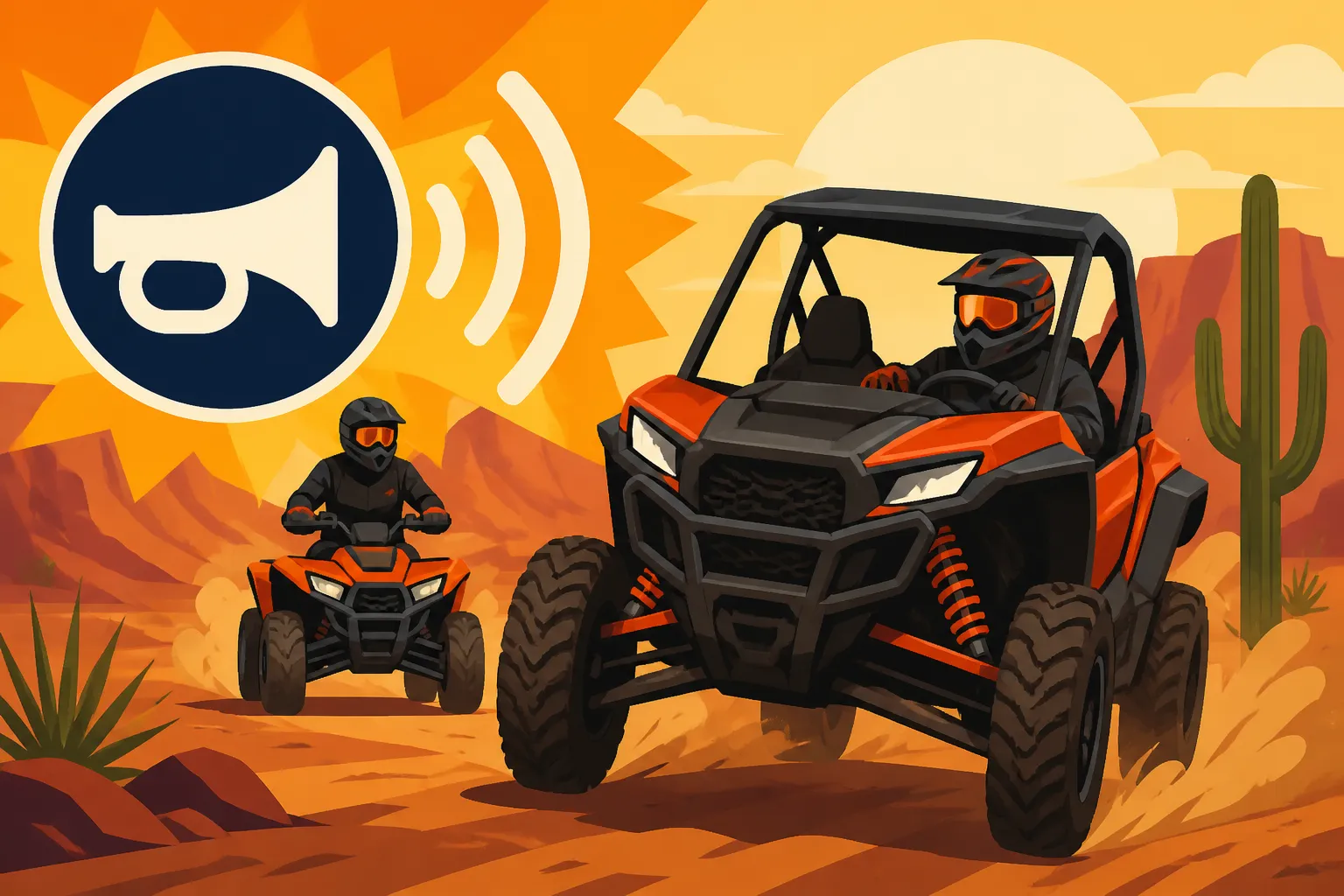
Picture this: You’ve finally got your amazing side-by-side or ATV ready for a street-legal conversion here in Arizona. You’ve tackled the headlights, the mirrors, the turn signals, and you’re feeling pretty good about it. Then you get to the horn, and you realize it’s not just about having any horn, but one that actually works and meets specific requirements. It can be a real head-scratcher trying to figure out if your stock beep is sufficient or if you need to upgrade to avoid a ticket and, more importantly, stay safe. This guide is going to clear up all that confusion, focusing specifically on the horn volume Arizona riders must meet for their street-legal machines.
Why Your OHV Needs a Horn on Arizona Roads
When you're out on the trails, a horn might feel like a novelty, useful for a quick "hello" to a friend or perhaps a playful toot. But the moment your tires hit paved public roads, that horn transforms from a trail toy into a critical safety device and a non-negotiable legal requirement. This isn't just about ticking boxes; it's about protecting yourself and others.
Safety First: More Than Just a Courtesy Beep
Think about typical road scenarios. You're approaching a blind intersection, a car is drifting into your lane, or a pedestrian steps off the curb unexpectedly. In a standard vehicle, you instinctively reach for the horn to alert others to your presence or to a potential hazard. On an OHV, especially one that might be smaller or less conspicuous than a full-sized truck, that immediate auditory warning is even more crucial. It can mean the difference between a near miss and a serious accident. Your OHV horn isn't just a polite "excuse me"; it's a direct, urgent communication tool, particularly when visual cues might be missed by other drivers who aren't expecting a side-by-side to be sharing the road. This becomes especially true when you're traversing a busy street to get to your favorite trail. [Riding Town to Trailhead in Arizona] can throw you into all sorts of traffic situations where a reliable horn is essential.
The Letter of the Law: What Arizona Statutes Say
Arizona, like most states, has clear regulations for what constitutes a legal horn. The Arizona Revised Statutes (ARS) generally state that every motor vehicle, when operated upon a highway, must be equipped with a horn in good working order, capable of emitting a sound audible under normal conditions from a certain distance. The key phrase here is "good working order" and the specified audibility. It’s not enough to simply have a horn button on your dash; the horn itself must actually function as intended to provide that audible warning. This means if your horn is rusted out, barely whispers, or simply doesn't work, you're not in compliance. The law is designed to ensure that if you need to warn someone, your warning will actually be heard.
The Urban-to-Trailhead Scenario: Why It Matters on Pavement
Let's be realistic: very few of us are flat-bedding our machines everywhere. Often, part of the adventure involves riding your street-legal OHV from your staging area or even your home, through a town, to reach the dirt. Whether you're navigating a residential street in Surprise, crossing a busy intersection in Lake Havasu City, or cruising a county road near Prescott, you're interacting with regular traffic. Other drivers in sedans, trucks, and SUVs are often not looking for an OHV. A functioning, loud enough horn provides that extra layer of protection, making your presence known when a driver might be distracted or simply not accustomed to seeing your type of vehicle on the asphalt. Without a proper horn, you're relying solely on visual cues, and in some situations, that's just not enough. For more on what it takes to get your machine legal for these journeys, check out [Making a UTV Street Legal in Arizona].
Deciphering the "Audible at 200 Feet" Rule
This is where a lot of riders get tripped up. It’s easy to read "audible at 200 feet" and immediately wonder how you're supposed to measure that. It’s not about having a decibel meter; it’s about practical, real-world functionality. The law isn't looking for a precise scientific measurement on a sound graph, but rather a common-sense assessment of whether your horn can effectively do its job.
What Does "Audible at 200 Feet" Actually Mean?
The "audible at 200 feet" rule means that the sound your horn makes should be clearly heard by a person standing 200 feet away under normal driving conditions. "Normal conditions" is the critical part here. It doesn't mean your horn has to cut through a rock concert or a jet engine taking off. It means in a typical street environment, with ambient traffic noise, wind, and other general sounds, a person standing two-thirds of a football field away should be able to hear your horn distinctly. This isn't just a technicality; it's a safety standard. If you need to alert a driver two car lengths ahead who is drifting, or someone about to back out of a driveway, 200 feet gives them enough time to react.
Testing Your Horn: Practical Tips and Considerations
So, how do you actually test this without a parade of measuring equipment? It’s simpler than you might think.
- Find a Quiet, Open Space: Head to an empty parking lot or a quiet residential street, ideally with minimal ambient noise.
- Mark the Distance: Use a tape measure or even estimate steps. Two hundred feet is about 67 paces for an average person. Have a friend stand at that distance.
- Perform the Test: Get in your OHV, start the engine (as this simulates real-world conditions with engine noise), and press the horn. Ask your friend if they can clearly hear it. Not just a faint sound, but a distinct, attention-grabbing sound.
- Vary Conditions: If possible, try it with a bit of wind, or perhaps with a radio playing softly in the background (simulating another vehicle's cabin noise). This gives you a more realistic idea of its effectiveness.
Remember, this is about common sense. If your friend has to strain their ears or guesses what the sound was, your horn likely isn't meeting the "audible at 200 feet" standard.
The Difference Between a Whimpy Squeak and a Proper Blast
Many factory-installed OHV horns are, let’s be honest, often a bit underwhelming. They might be fine for a quick "beep-beep" on the trail but fall short when trying to get the attention of a distracted driver in a larger vehicle on a busy road. A whimpy squeak won't cut it. You need a horn that has a clear, authoritative tone, capable of penetrating a vehicle's cabin or grabbing a pedestrian's attention. This often means upgrading to an aftermarket horn. Brands like SuperATV offer a range of horn kits specifically designed to provide that necessary volume and tone for street-legal conversions. These aren't just louder; they often have a more distinct pitch that cuts through ambient noise more effectively than a tiny, high-pitched stock horn.
Common Horn Types and Street-Legal Upgrades
Understanding the legal requirement is one thing; actually getting your machine up to snuff is another. Thankfully, the aftermarket is rich with options for upgrading your OHV's horn system.
Stock Horns vs. Aftermarket Solutions
Most OHVs come with a basic electric horn, often a small disc-style unit, tucked away somewhere near the front of the machine. These are generally designed for minimal use and minimal sound output. They're usually adequate for trail warnings but rarely meet the demands of street legality.
| Feature | Stock OHV Horn | Aftermarket Horn |
|---|---|---|
| Volume | Often quiet, high-pitched, easily ignored | Significantly louder, lower tone, more authoritative |
| Durability | Basic, sometimes prone to corrosion/failure | Often more robust, weather-sealed, designed for longevity |
| Power Draw | Low | Can be higher, sometimes requires a relay |
| Installation | Factory-installed, plug-and-play | Requires wiring, mounting, potentially a relay |
| Street Legal? | Often inadequate for "audible at 200 feet" | Typically designed to meet or exceed legal requirements |
| Cost | Included with vehicle | Variable, from budget-friendly to premium |
When you're aiming for street legality, an aftermarket horn is almost always the way to go. It's a small investment for a big gain in safety and compliance.
Electric Horns, Air Horns, and Their Applications
There are a few main types of aftermarket horns you'll encounter:
- Electric Horns (Disc or Snail Type): These are the most common upgrades. They look similar to stock horns but are larger, more robust, and engineered for higher sound output. Many automotive-grade electric horns are suitable for OHV use. They are generally reliable, draw moderate power, and are relatively easy to install. They provide a strong, consistent blast. You'll find many high-quality options that fit the bill perfectly for meeting the "audible at 200 feet" rule.
- Air Horns: These operate using compressed air, often from a small compressor and reservoir tank. Air horns are notoriously loud and have a very distinct, deep tone, similar to a truck or train horn. While they certainly meet the audibility requirement (and then some!), they are typically more complex to install, requiring space for the compressor and tank, and drawing more power. They are also generally more expensive. For extreme situations or a truly unmistakable warning, an air horn is unparalleled, but for most street-legal OHVs, a powerful electric horn is usually sufficient. Many riders opt for these if they want to ensure they are heard over other loud vehicles or city noise. Companies like SuperATV offer various horns that work well for both street-legal needs and demanding trail use, ensuring you can find something that fits your machine and your budget.
Installation Considerations and Wiring Your New Horn
Swapping out a horn is often a straightforward process for anyone with basic mechanical skills.
- Location, Location, Location: Choose a spot that's protected from direct impacts and excessive mud/water, but also allows the sound to project effectively. Often, mounting it behind the front grille or bumper is ideal.
- Wiring: Most aftermarket horns will connect to your existing horn wiring. However, if you're upgrading to a significantly louder or multiple-horn setup, you might need to install a relay. A relay ensures that the full power draw for the horn comes directly from the battery (or a dedicated power source), rather than routing it through your vehicle's smaller gauge stock wiring, which could overload the circuit. Always use appropriate gauge wire and ensure connections are secure and weatherproof. Many aftermarket horn kits, especially those designed for OHVs, will come with specific wiring instructions and sometimes even a relay included.
- Testing After Installation: Once installed, don't just assume it works. Test it thoroughly, both when the engine is off and running, and from a distance, just as you would before. This ensures everything is hooked up correctly and your new horn truly meets the Arizona requirement.
Beyond the Beep: Other Street-Legal Requirements in Arizona
While getting your horn sorted is a big step, it's crucial to remember that it's just one piece of the larger street-legal puzzle. Arizona has a comprehensive list of requirements to transform your trail machine into a road-worthy vehicle.
A Holistic View of Street-Legal Conversion
Making your OHV street legal isn't about one or two components; it's about a complete safety system. Beyond the horn, you'll need things like:
- Headlights and Taillights: Properly working headlights, [Arizona's 500 Foot Headlight Rule], and taillights visible from a certain distance. This also includes brake lights and a license plate light. [Taillight Visibility From 500 Feet] is just as important as the horn.
- Turn Signals: Essential for communicating your intentions to other drivers.
- Mirrors: At least one rearview mirror, often requiring two side mirrors for better visibility. Check out [Mirror Placement on a Street-Legal UTV] for more details.
- Windshield: Often required, though some states allow safety glasses.
- Brakes: Functioning service and parking brakes.
- Tires: DOT-approved tires for road use.
- Seatbelts/Restraints: For all occupants.
- License Plate and Registration: Obtaining an MC plate and proper registration from the MVD. This is a critical step, as is knowing [What Arizona Requires on a Street-Legal Machine].
- Muffler and Spark Arrestor: Your exhaust system needs to meet noise limits and prevent wildfires. [Arizona Muffler and Noise Limits] are specific.
Each of these components contributes to the overall safety and legal compliance of your machine on public roads. Neglecting any one of them can lead to citations or, worse, accidents.
Inspections and Enforcement: What an Officer Looks For
When an Arizona law enforcement officer pulls over a street-legal OHV, they're not just looking for a decal. They're often checking for the proper functioning of all required safety equipment. This includes visually checking your lights, mirrors, and, yes, asking you to honk your horn. If your horn produces a barely audible chirp, or doesn't work at all, it's a quick way to indicate non-compliance. Officers are looking for a complete package of safety features that ensure your OHV can safely share the road with other traffic. Knowing [What an Arizona Ranger Asks a Rider For] can give you an idea of what to expect during a stop.
The Consequences of Non-Compliance: Fines and Safety Risks
Riding an OHV on public roads without a horn that meets the "audible at 200 feet" standard can lead to fines and citations. These penalties can vary depending on the specific county or municipality and the officer's discretion, but they can quickly add up. Beyond the financial hit, the real risk is safety. Without an effective horn, you significantly reduce your ability to warn others of danger, increasing the likelihood of an accident. This isn't just about protecting yourself; it's about protecting pedestrians, cyclists, and other drivers who might not see your OHV until it's too late. It's a small but critical detail that could have massive consequences. For more on what citations can cost you, read [Arizona Penalties for Illegal Road Riding].
Disclaimer
This article is for general informational purposes only and does not constitute professional advice. Laws, prices and regulations vary by location and change over time. Consult a qualified professional for guidance on your specific situation.