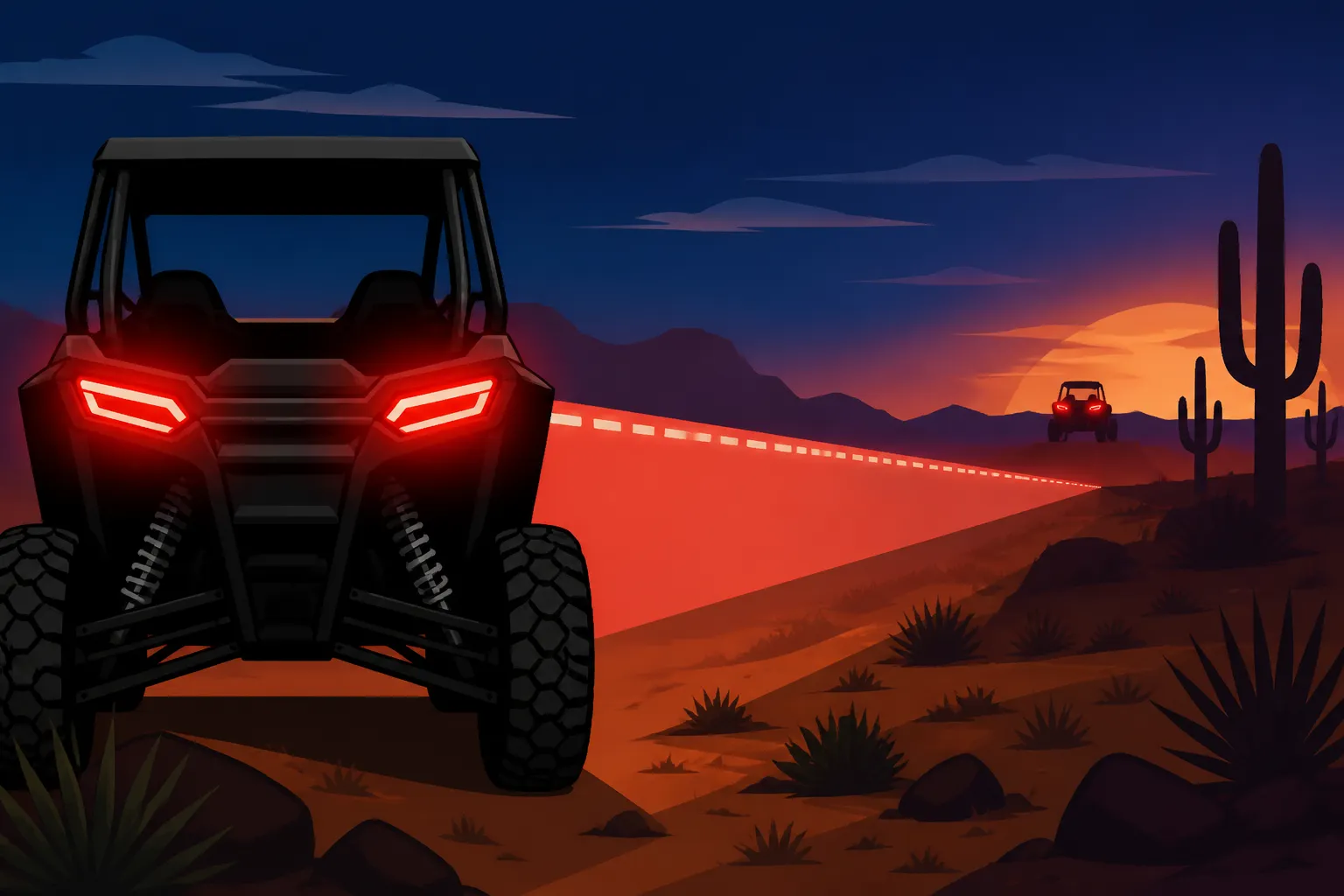
Taillight Visibility From 500 Feet
Converting your beloved off-highway vehicle (OHV) into a street-legal machine in Arizona can feel like navigating a maze of obscure regulations, and one requirement that often raises eyebrows is the need for your taillights to be "visible from 500 feet." It sounds simple enough, but in practice, ensuring your lights genuinely meet this standard – day or night, rain or shine – can be a real headache. This guide will cut through the confusion, explaining exactly why this rule exists, what it means for your build, and how you can confidently ensure your OHV is safely and legally equipped for Arizona's roads.
The "Why" Behind the 500-Foot Taillight Rule
It's easy to dismiss specific distance requirements for lighting as arbitrary, another hurdle thrown up by the Arizona Motor Vehicle Division (MVD). But when you pull back the curtain, these rules are fundamentally about road safety, especially when you're transitioning a machine designed for the dirt onto paved surfaces shared with much larger, faster vehicles. The 500-foot rule for taillight visibility isn't just about being seen; it's about providing adequate warning time to other drivers.
Protecting Yourself and Others: The Rationale for Distance
Imagine you're cruising down a two-lane county road outside of Wickenburg, the sun starting to dip below the horizon. Up ahead, an OHV is slowing down to turn off onto a dirt track. If that OHV's taillights are only visible from 100 or 200 feet, you, in your truck, have far less time to react, slow down, or adjust your position. The 500-foot requirement is designed to give following drivers a critical buffer. That distance, roughly the length of a football field and a half, allows someone traveling at highway speeds ample time to perceive your presence, recognize your braking or turn signals, and react safely. It's especially crucial because OHVs often ride lower, are narrower, and can sometimes be harder to spot than a full-size truck or car, even in broad daylight. This rule essentially levels the playing field, ensuring your off-roader doesn't suddenly appear out of nowhere in another driver's immediate path.
Night Riding and Inclement Weather: When It Matters Most
While daytime visibility is important, the 500-foot rule truly shines (pun intended!) when conditions are less than ideal. Think about those beautiful desert night rides, when the only illumination comes from your headlights and the vast Arizona sky. Or consider an unexpected monsoon downpour near Payson, where visibility drops dramatically, and road spray makes everything blurry. In these scenarios, a taillight that barely meets a minimum brightness or has a narrow viewing angle becomes a significant liability. The 500-foot mandate aims to ensure that even in darkness, fog, heavy rain, or dusty conditions, your machine remains a clear and unmistakable presence to anyone approaching from behind. It's not just about avoiding a ticket; it's about making sure you return home safely after enjoying the trails or a quick run to the store. For comprehensive details on related regulations, check out [Taillights and Rear Reflectors Arizona Requires].
What "Visible From 500 Feet" Actually Means for Your Machine
Understanding the spirit of the law is one thing, but translating "visible from 500 feet" into practical terms for your side-by-side or quad can feel a bit abstract. It’s not just about throwing on the brightest lights you can find; it’s about compliance, clarity, and consistency across various conditions. Arizona MVD guidelines are looking for reliable illumination that cuts through the distractions of the road, giving other drivers an unambiguous signal of your presence and intentions.
The Legal Standard: Interpreting Arizona MVD Requirements
When Arizona law states your taillights must be "visible from a distance of 500 feet," it's typically referring to continuous, steady red light emitted from the rear of your vehicle. This isn't just about raw lumen output; it encompasses the quality of the light, its intensity, its spread, and its ability to remain distinct from other light sources. An MVD inspector or law enforcement officer isn't just looking for any light at 500 feet; they're looking for a clearly identifiable red taillight. This means the light shouldn't be diffused, obstructed by mud or cargo, or so dim that it blends into the background at that distance. It implies a certain level of focused brightness and a wide enough beam pattern to be seen from various approach angles, not just dead center. Think about it from the perspective of a driver slightly off to one side – they still need to see you clearly.
Component Choices: Selecting Compliant Taillights
The market is flooded with aftermarket taillight options for OHVs, from basic incandescent bulbs to sophisticated LED arrays. To meet the 500-foot standard, you generally want to lean towards modern LED taillights. They offer superior brightness, faster illumination response times (crucial for brake lights), and a much longer lifespan than traditional bulbs. When choosing components, look for lights that are explicitly labeled as DOT (Department of Transportation) compliant. While not every aspect of DOT compliance directly addresses the 500-foot rule, it signifies that the light has met rigorous standards for brightness, color, and beam pattern, making it highly likely to fulfill Arizona's visibility requirements. Many riders find excellent, robust options from reputable aftermarket brands. For instance, companies like SuperATV offer a wide range of LED taillight kits and replacement assemblies designed specifically for OHVs, often exceeding the basic legal minimums for brightness and durability in harsh off-road conditions, which directly benefits street legality.
Placement and Condition: Ensuring Optimal Visibility
Even the best taillights won't do their job if they're improperly placed or poorly maintained. Arizona law dictates that taillights must be mounted on the rear of the vehicle, usually in a position that offers an unobstructed view from behind. This means avoiding placements where spare tires, cargo racks, flags, or even thick layers of desert dust could block the light. The height also matters; they shouldn't be so low they're easily obscured by dips in the road or so high they're out of a typical driver's line of sight. Regularly inspect your taillight lenses for cracks, fogging, or excessive dirt buildup, as these can drastically reduce light output and visibility. Ensure wiring is secure and free from corrosion, which can lead to intermittent operation or dimming. A clean, properly positioned, and well-maintained set of DOT-compliant LED taillights will give you the best chance of meeting the 500-foot visibility standard. For more on what's required for your machine to be street legal, delve into [What Arizona Requires on a Street-Legal Machine].
Practical Steps to Ensure Your Taillights Measure Up
So, you've got your lights installed, you think they're bright enough, but how do you really know if they’re visible from 500 feet? This isn't a task you can eyeball. It requires a bit of practical testing and attention to detail. Fortunately, you don't need specialized equipment to perform a reasonably accurate check of your OHV's taillight visibility; a friend, a measuring tape, and a little open space will do the trick.
Testing Your Visibility: The DIY 500-Foot Check
The most effective way to confirm compliance is to perform a real-world test. Find a long, flat, open stretch of pavement—perhaps an empty parking lot, a quiet cul-de-sac, or a long driveway. This is your "test track."
- Measure the Distance: Using a measuring wheel, a long tape measure, or even by pacing it out (knowing your average stride length), mark a point exactly 500 feet away from where you'll park your OHV. You can also use a vehicle's odometer to mark the distance if you're on a less-trafficked road. Accuracy is key here.
- Park Your OHV: Position your OHV with its rear facing the 500-foot mark.
- Activate Taillights: Turn on your OHV's running lights. If possible, also test your brake lights (have a friend hold the brake pedal down) and turn signals separately.
- Observe from 500 Feet: Have a friend stand at the 500-foot mark (or walk there yourself if you're testing by yourself). From that distance, can you clearly and unmistakably identify the red taillights?
- Are they bright enough to stand out against the ambient light, even during the day?
- Can you tell they are taillights and not just random reflections or other vehicle lights in the distance?
- Are they visible from slightly off-center angles, not just dead on?
- Repeat in Varying Conditions: If possible, repeat this test at dusk and, ideally, at night. If you ride in rainy or dusty conditions, try to simulate those by having a friend observe from 500 feet during a light rain shower or when there's some dust in the air. This helps ensure your lights are effective when it truly matters.
DIY Taillight Visibility Checklist
| Test Condition | Observation from 500 ft (Day) | Observation from 500 ft (Night) | Observation from 500 ft (Angle) |
|---|---|---|---|
| Running Lights | Clearly visible? | Clearly visible? | Visible from slight angles? |
| Brake Lights | Distinctly brighter? | Distinctly brighter? | Clear increase in intensity? |
| Turn Signals | Clear flash pattern? | Clear flash pattern? | Unambiguous signal? |
| Cleanliness | Lenses clean & unobstructed? | Lenses clean & unobstructed? | No mud/dust buildup? |
| Mounting | Secure and stable? | Secure and stable? | Not hidden by cargo? |
Troubleshooting Common Issues: Dim Lights and Bad Angles
During your test, you might discover your taillights aren't quite making the cut. Don't panic; there are common culprits.
- Dimness: If lights are dim, first check the electrical connections. Corrosion on terminals or loose wires can restrict current flow. A dying battery or a faulty charging system might also be to blame, though this usually affects all electrical components. If using older incandescent bulbs, they simply might not be bright enough; upgrading to modern LED units from a brand like SuperATV is often the best solution.
- Obscured View: Is something blocking the light? A large spare tire, a cooler on a cargo rack, or even a dirty whip flag can get in the way. Re-evaluate your cargo setup or consider relocating your taillights to a more prominent position. Remember to also check for mud splatter or heavy dust accumulation on the lenses, especially after a long day on the trails.
- Poor Angle/Spread: Some lights have a very narrow beam, meaning they're only truly visible head-on. If your lights disappear when viewed from a slight angle, you might need lights with a wider spread or additional marker lights to ensure lateral visibility. This is a common issue with cheaper aftermarket lights that aren't DOT compliant.
Maintenance and Upgrades: Keeping Your OHV Legal
Maintaining optimal taillight visibility is an ongoing process, not a one-and-done installation.
- Regular Cleaning: After every ride, especially in dusty Arizona conditions, wipe down your taillight lenses. A thin film of dust can reduce visibility significantly.
- Wiring Inspections: Periodically check your wiring for chafing, loose connections, or corrosion. The vibrations and elements of off-roading are tough on electrical systems.
- Upgrade When Necessary: If your current lights are struggling, invest in a quality upgrade. Modern LED taillights are not only brighter but also more durable and energy-efficient. Products from reputable aftermarket manufacturers like SuperATV are specifically designed to withstand the rigors of off-road use while providing the necessary illumination for street-legal compliance. Consider integrated brake lights and turn signals for a cleaner, brighter setup. Keeping your street-legal machine up to par with these requirements is crucial to avoid issues with [Deputy Enforcement on Arizona Back Roads].
Consequences of Non-Compliance
Ignoring the 500-foot taillight visibility rule can lead to more than just a stern talking-to. Arizona takes road safety seriously, and proper lighting is a fundamental component of safe vehicle operation. For OHV owners who have gone through the effort of making their machine street legal, a lapse in something as seemingly minor as taillight visibility can quickly escalate into frustrating, costly, and even dangerous situations. It's a key part of your machine's street-legal status, covered in guides like [Making a UTV Street Legal in Arizona].
Fines and Citations: What an Arizona Officer Looks For
When an Arizona law enforcement officer spots an OHV on a public road, they're not just looking for an OHV decal; they're also conducting a quick visual inspection of the machine's street-legal equipment. This includes headlights, mirrors, a horn, and, crucially, visible taillights. If your taillights are deemed insufficient—meaning they are too dim, obstructed, or otherwise not clearly visible from the required 500 feet—you could face a citation. The specific fine can vary depending on the county or municipality and whether it's part of a larger traffic stop for other infractions, but it will certainly involve a monetary penalty. Beyond the immediate fine, being pulled over can be a hassle, taking up your valuable riding time and potentially delaying your trip. Repeated violations could even lead to more severe consequences, depending on the officer's discretion and your driving record. To understand the broader spectrum of penalties, it's worth reviewing [Arizona Penalties for an Undecaled Machine in Arizona], which illustrates the state's seriousness about OHV compliance.
Safety Risks: Beyond the Legal Ramifications
While fines are certainly an unpleasant consequence, the most significant risk of non-compliant taillights is the increased danger to yourself and others on the road. As discussed, the 500-foot rule provides critical reaction time for other drivers. Without that buffer, you drastically increase the likelihood of a rear-end collision, especially when you're riding at night, in heavy dust, or during a sudden Arizona monsoon. OHVs, by their nature, don't offer the same crumple zones or structural protection as a full-size passenger vehicle. A rear-end impact from a truck traveling at highway speeds could have catastrophic results, leading to severe injuries or worse. It’s not just about what a state trooper sees; it’s about what the distracted driver behind you doesn’t see. Ensuring your taillights are unequivocally bright and visible is a small effort that pays massive dividends in personal safety, protecting not only yourself but also any passengers you might have, which is particularly relevant when considering [Arizona Rules for a Child Passenger].
Disclaimer
This article is for general informational purposes only and does not constitute professional advice. Laws, prices and regulations vary by location and change over time. Consult a qualified professional for guidance on your specific situation.