Do You Need a License to Ride an Arizona Road?
It's a common dilemma for anyone who loves tearing up the Arizona desert trails: you've got your side-by-side or ATV, you're decked out for adventure, but then you hit a paved road. The question immediately pops into your head: "Do I need a regular driver's license to ride this thing on an Arizona road?" The answer, like many things related to OHVs and state laws, isn't always as straightforward as we'd like it to be, and getting it wrong can lead to some real headaches or even fines. This guide will walk you through exactly what Arizona law says about operator licensing for off-highway vehicles on public roads, so you can ride confidently and legally.
The Road Rules: When Your OHV Needs a Driver's License
Let's cut right to the chase: if you plan on operating an off-highway vehicle (OHV) on any paved or publicly maintained road in Arizona, whether it’s a city street, a county road, or even crossing a state highway, you generally need a valid driver's license. This isn't about an "OHV license" – because Arizona doesn't have a separate one – but rather the standard driver's license you'd use to operate a car or truck. The distinction here is between where you're riding and how your machine is classified.
What Makes an OHV "Street Legal" in Arizona?
The biggest hurdle for many riders is understanding that putting your OHV on a public road isn't just about having an OHV decal; it's about making your machine genuinely "street legal." This transformation involves specific equipment requirements that turn your trail machine into a road-worthy vehicle in the eyes of the law. Without these modifications, your OHV isn't permitted on most public roads, regardless of whether you have a driver's license.
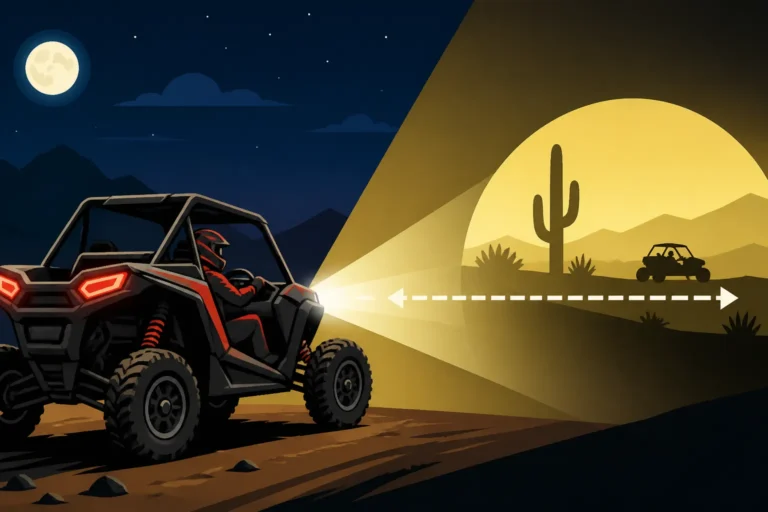
Think of it like this: your OHV needs to meet similar safety and visibility standards as any other vehicle sharing the road. This means you’ll need working headlights, and not just any lights, but ones that meet specific visibility standards, like Arizona's 500-foot headlight rule. You’ll also need functional taillights and rear reflectors to ensure you're visible from behind, especially crucial during dusk or dawn rides. A horn that's audible from at least 200 feet is a must, allowing you to signal other drivers or pedestrians. Mirrors are essential for checking your surroundings – typically, one rearview mirror is enough, but some riders prefer two for better visibility. And, of course, a license plate light is required to illuminate your plate at night. Many riders turn to aftermarket suppliers like SuperATV for these types of conversion kits, ensuring they have robust, compliant parts that can handle both the road and the trail. The modifications necessary go beyond just the basics; they also involve proper seatbelts, footrests, and often a windshield. Without these, even with a driver's license, you're still not legally allowed to cruise down Main Street.
The Standard Driver's License Requirement
Once your OHV is properly equipped and street-legal, the operator must possess a valid driver's license. It's that simple. There's no special OHV endorsement you need to add, nor is there a separate test. If you can drive your pickup truck to the trailhead, you can drive your street-legal side-by-side on the same road, provided you have all the necessary machine modifications and documentation. This requirement is in place because you're sharing the road with other motor vehicles, and the state wants to ensure that anyone operating a vehicle on these shared spaces has demonstrated basic driving competence.
This means if you're a visitor from out of state, your valid driver's license from your home state will suffice, just as it would if you were driving a rental car in Arizona. The key is that the license must be current and not suspended or revoked. Law enforcement officers, whether it's an Arizona Highway Patrol trooper, a county sheriff's deputy, or even a local police officer, have the authority to pull you over on a public road and check your license, just as they would any other driver.
Young Riders and Public Roads: A Different Set of Rules
This is where things can get particularly confusing for families who enjoy OHV riding. While Arizona has specific age rules for operating OHVs off-road, these rules often change dramatically when a machine ventures onto a public street.
Minors and Public Road Access
If a driver's license is required to operate an OHV on an Arizona road, then the standard age requirements for obtaining a driver's license apply. This means generally, an operator must be at least 16 years old and have successfully completed all the requirements for a Class D driver's license. You cannot, for example, have your 14-year-old child, who might be perfectly capable and legal to ride a smaller ATV on a designated trail, drive a street-legal UTV down a county road, even if they're supervised. The rules of the road are paramount here.
Arizona's [Driver's License Rules for Arizona Road Riding] make it clear that the operator must be licensed. This often creates frustration for parents, especially when they have capable young riders. They might think, "My kid can handle this side-by-side better than some adults," and while that might be true off-road, the law draws a hard line when it comes to public roads. The legal implications for an unlicensed minor operating a vehicle on a public road can be severe, not just for the minor but for the adult who allowed it.
Parental Responsibility and Potential Penalties
Parents or guardians who permit an unlicensed minor to operate a street-legal OHV on a public road in Arizona can face significant legal consequences. These aren't just minor infractions; they can range from fines for allowing an unlicensed driver to operate a vehicle to more serious charges if an accident occurs. Imagine the scenario: your teenager is driving your street-legal UTV, which you've proudly outfitted with new LED light bars and a windshield from a reputable supplier like SuperATV, down a quiet rural road. If they get pulled over or, worse, are involved in a fender bender, the fact that they don't have a valid driver's license will immediately complicate the situation.
These situations can result in [Citations That Reach an Arizona Parent], which can include substantial fines and could even impact your own driving record or insurance rates. The state's primary concern is public safety, and ensuring that only licensed, competent drivers are operating vehicles on shared roadways is a core part of that. It's a tough lesson to learn for families who just want to enjoy their machines, but it’s a critical one to understand to avoid legal trouble.
Decals, Exemptions, and Designated Routes: Decoding the Confusion
One of the biggest sources of confusion for OHV riders is the role of the Arizona OHV decal and how it relates to street legality and licensing. Many assume that if they have the decal, they can ride anywhere. This is a common and potentially costly misunderstanding.
The OHV Decal: For the Trails, Not the Streets
Let's be absolutely clear: the Arizona OHV Decal is primarily a permit to ride off-highway on state, federal, and county lands that are open to OHVs. It contributes to the [Arizona OHV Fund and Trail Projects], helping to maintain the vast network of trails we all enjoy. While crucial for legal off-road access, it absolutely does not make your machine street-legal, nor does it exempt the operator from needing a driver's license on public roads. Think of it as your "trail pass," not your "road license."
An off-highway only machine, even with a valid [Arizona's Annual OHV Decal Explained], is generally not permitted to operate on public paved or maintained roads. There are very specific circumstances, which we'll discuss next, where an undecaled or off-highway only machine can be on a road, but these are exceptions to the rule, not the rule itself. The decal allows you to enjoy Arizona's 40,000 miles of OHV trail, but it doesn't give you permission to take your non-street-legal machine to the grocery store.
Exceptions to the Rule: When an OHV (Sometimes) Doesn't Need a License or Decal on a Road
Arizona law does provide for a few, very specific situations where an OHV might be on a public road without full street-legal conversion and, in some cases, without an operator needing a driver's license. These are often the exceptions that create the most confusion.
Crossing: You are generally allowed to cross a public road or highway at a 90-degree angle, or ride for a very short distance on the shoulder to connect two sections of an off-highway route, provided it is safe and does not impede traffic. This is outlined in rules related to [Crossing an Arizona Highway on a Machine]. During these brief moments, the emphasis is on safety and quick transit, not prolonged travel.
Designated Roads: Some specific county roads or even city streets in certain areas are explicitly designated for OHV use. These are typically in smaller, rural communities or near popular trailheads, where OHV traffic is common. In these instances, the local jurisdiction has passed an ordinance allowing OHVs. Even on these designated roads, a driver's license is still usually required if it's a "public" road. The [Which Arizona Roads Allow OHVs] guide can provide more context here. It's crucial to check local ordinances for any town or county you plan to ride through. Never assume a road is open just because it looks like a trail.
Ranch and Farm Machines: Arizona law provides certain exemptions for OHVs used for legitimate agricultural purposes on ranch or farm lands, or when traveling between parcels of land directly across or on a public road for a short distance. These are very specific exemptions for "farm machinery" and don't apply to recreational riding. [Arizona OHV Rules for Ranch and Farm Machines] go into more detail on this.
To help clarify, here's a table summarizing the general requirements for OHV operation on Arizona public roads:
| Feature/Requirement | Street-Legal OHV on Public Roads | Off-Highway Only OHV on Public Roads (Limited Exceptions) |
|---|---|---|
| Driver's License | REQUIRED | REQUIRED for any public road travel, even exceptions |
| OHV Decal | Recommended/Often Required for off-road access; does not convey street legality | REQUIRED for off-road travel; does not convey street legality |
| Street-Legal Mods | REQUIRED (lights, horn, mirrors, etc.) | NOT REQUIRED, but limits road access significantly |
| Registration/Plate | REQUIRED (MC or RV plate) | NOT REQUIRED for public road travel, only decal for off-road |
| Insurance | REQUIRED for street-legal vehicles | Not required for off-road use, but highly recommended for all machines |
| Primary Use | Can be used for daily travel, trail access | Primarily for off-road recreation |
| Road Access | General access to most public roads | Limited to crossings, designated OHV routes, or farm use |
Staying Legal and Avoiding Penalties on Arizona Roads
The bottom line is that Arizona law is pretty clear: if you're on a public road with your OHV, treat it like any other motor vehicle. This means having the right machine, the right license, and the right attitude.
Don't Fall for Common Misconceptions
One of the most persistent misconceptions is the "rural road" fallacy. Many riders assume that if a road is unpaved, far out in the desert, or rarely traveled, it's somehow exempt from standard road rules. This is simply not true. If it's a public road – meaning it's maintained by the state, county, or a city, and is generally open to public travel – then the rules apply. Whether it's asphalt, gravel, or dirt, if it's a public roadway, a licensed driver and a street-legal machine are necessary. Ignoring this can easily lead to [Arizona Fines for Illegal Road Riding], which can include tickets for operating an unregistered vehicle, lacking a driver's license, or not having the proper safety equipment.
Another common mistake is thinking that because you're "just going a short distance," the rules don't apply. Even a quick jaunt to a gas station or across a short stretch of pavement requires adherence to the law. Enforcement officers are often familiar with these routes and will not hesitate to issue citations.
Equipping Your Machine and Yourself Beyond the License
Beyond the driver's license, there are other crucial elements to ensure you're fully compliant when operating your OHV on Arizona roads:
- Insurance: If your OHV is street-legal, it must carry liability insurance, just like any other motor vehicle. Arizona has specific minimums for coverage, often referred to as [Arizona Insurance Minimums for Street-Legal Machines], which are typically 25/50/15. This means at least $25,000 for bodily injury per person, $50,000 for bodily injury per accident, and $15,000 for property damage. Always carry proof of insurance with you.
- Safety Gear: While adults over 18 are not always required to wear helmets on street-legal OHVs on public roads, it's always a good idea, especially for side-by-sides that offer less protection than a car. However, [Arizona Helmet Rules for Riders Under 18] are strict; anyone under 18 must wear a DOT-approved helmet. Eye protection is also generally required on public roads if your machine doesn't have a windshield. Checking your machine for properly installed components from a trusted brand like SuperATV can give you peace of mind that your modifications are durable and up to the task.
- Documentation: Always carry your driver's license, vehicle registration, and proof of insurance when riding on public roads. An officer will ask for these, and not having them can lead to additional citations and delays.
By understanding these regulations, equipping your machine properly, and ensuring you and any other operators are legally licensed, you can enjoy the best of both worlds: ripping up Arizona's incredible trails and legally connecting those adventures via the state's diverse road network. It takes a little homework and investment, but the peace of mind is worth every bit of effort.
Disclaimer
This article is for general informational purposes only and does not constitute professional advice. Laws, prices and regulations vary by location and change over time. Consult a qualified professional for guidance on your specific situation.