Riding the Shoulder of a Desert Road
Let's talk about those moments when you're out riding, the dust is flying, and suddenly you hit a paved section or see a tempting stretch of road shoulder. Maybe you're trying to connect two epic trail systems, or perhaps you're just looking for a quick bypass around a particularly gnarly section of two-track. It's a common scenario, and it’s natural to wonder if you can just zip along that shoulder for a bit. But before you do, let's dive into the realities, risks, and legalities of riding the shoulder of a desert road in Arizona. This guide will help you understand the rules, the dangers, and the best ways to keep your wheels turning legally and safely.
The Lure of the Shoulder (and Why It's Often a Bad Idea)
It's easy to see the appeal of a road shoulder when you're navigating the Arizona backcountry. Maybe you've hit an unexpected dead end on a trail, or the designated path suddenly runs parallel to a paved road, making the shoulder look like a logical, albeit unpaved, extension. The desert can be full of surprises, and sometimes, that shoulder just seems like the most direct way to get where you're going. Riders often face dilemmas about trail continuity or private land blocks, and the shoulder presents itself as a seemingly harmless workaround.
The Allure of a "Shortcut" or Bypass
Picture this: You're riding near Lake Pleasant or out by Florence, enjoying a beautiful day, and your GPS shows a break in the trail. Just a few hundred yards of paved road, and then you're back on the dirt. Or perhaps the main trail is heavily rutted from recent monsoon rains, and the smooth-looking shoulder next to the county road seems like a much easier ride. It's human nature to look for the path of least resistance, and when faced with a temporary inconvenience or a short gap in a trail, that road shoulder can feel like a quick, common-sense solution. Many riders mistakenly believe that as long as they aren't on the asphalt itself, they're in the clear. However, the legal definition of a "roadway" or "highway" often extends beyond the paved surface, including the shoulder, median, and sometimes even the ditch.
Immediate Safety Concerns on the Shoulder
While the shoulder might look like a simple solution, it's often far from safe. For starters, desert roads are frequently used by high-speed traffic, and even if you're "off" the main pavement, you're still in close proximity to cars and trucks traveling much faster than your OHV. These drivers often aren't expecting a side-by-side or ATV on the shoulder, especially around blind curves or crests. You're also dealing with a different surface. Shoulders can be soft, unstable gravel, or a mixture of dirt and loose debris that can easily lead to a loss of control, especially when transitioning back to pavement. We’re talking about everything from broken glass and tire shrapnel to nails and sharp rocks that can quickly puncture a tire. What looks like a firm path can suddenly give way, pulling your machine into the paved lane or off into a ditch. It’s a completely different riding dynamic than dedicated off-road trails like those found in [Arizona's 40,000 Miles of OHV Trail].
What Arizona Law Says About Riding Road Shoulders
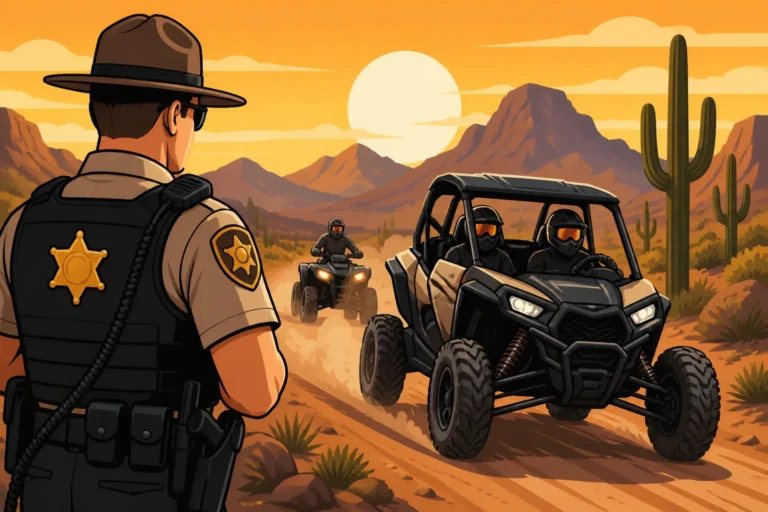
Arizona's laws concerning off-highway vehicles are pretty clear: OHVs are generally intended for off-road use. While there are provisions for street-legal conversions, the default is that your ATV or UTV should not be on public roadways, and that often includes the shoulder. Understanding these regulations is key to avoiding an unwelcome conversation with a ranger or sheriff's deputy, and more importantly, staying safe. The law draws a distinction between traversing an unpaved road that might be adjacent to a highway and actually riding on the shoulder of a state highway or county paved road.
Understanding Arizona's "Street-Legal" Requirements
If you absolutely need to use paved roads to connect trails or access services, your machine needs to be street-legal. This isn't just a matter of slapping a license plate on it; it involves a host of modifications and registrations. To be street-legal in Arizona, your ATV or UTV must have things like working headlights and taillights, brake lights, turn signals, mirrors, a horn, a windshield, and a properly mounted license plate light. You'll also need liability insurance and an Arizona [MC Plates and Street-Legal Machines] plate, not just the OHV decal. This process is detailed in guides like [Making a UTV Street Legal in Arizona] and [What Arizona Requires on a Street-Legal Machine]. Even with a street-legal machine, you're expected to follow all traffic laws, including staying off the shoulder if the main lanes are available and appropriate, and adhering to specific road access rules.
When Riding Near a Road is Permitted (and What that Means)
It's important to differentiate between riding on a paved road's shoulder and riding on a designated unpaved road or trail that happens to run parallel to a paved highway. Arizona has thousands of miles of [Arizona Rules on Forest Service Roads] and [Arizona Rules on BLM Roads] that are unpaved, publicly accessible, and perfectly legal for OHVs. These might sometimes run right alongside a state highway, but they are separate routes, often marked on a [Reading an Arizona Motor Vehicle Use Map]. In these cases, you're riding on a legitimate off-highway route, not the shoulder of the paved road. The key is knowing the difference. If it's a graded dirt road that is officially maintained by the forest service or BLM, even if it runs side-by-side with a paved road, that's generally fine. The problem arises when you veer off a designated off-highway route and onto the unpaved margins directly adjacent to a paved public highway, as those margins are often considered part of the highway right-of-way and subject to different rules.
Penalties for Improper Shoulder Use
Operating an OHV on a road shoulder without being street-legal or on a non-designated route can lead to some hefty fines and citations. A law enforcement officer could issue tickets for various infractions, including operating an unregistered vehicle (if not street-legal and on a public road), operating an OHV in an unauthorized area, or even reckless driving depending on the situation. The costs can quickly add up, easily reaching hundreds of dollars, not to mention potential towing fees if your machine is impounded. Beyond the financial penalties, you risk your own safety and the safety of others. An accident on a road shoulder involving an OHV can be severe, leading to serious injuries or worse, and your insurance might not cover you if you were operating illegally. It's a risk that's simply not worth taking, especially when you consider the potential [Arizona Fines for Illegal Road Riding].
Practical Alternatives to Shoulder Riding
Instead of risking fines or an accident by riding an Arizona road shoulder, there are much safer and smarter ways to enjoy the desert. It all comes down to planning and knowing your options. The good news is that Arizona is incredibly OHV-friendly, with many legal routes and resources available to riders.
Utilizing Designated OHV-Friendly Roads
Many [Arizona City Streets Open to OHVs] and [County Roads and Arizona OHV Access] in rural and trail-adjacent areas are specifically designated as OHV-friendly. These are regular roads where street-legal OHVs are permitted to operate, often allowing you to connect trails, access fuel, or grab a bite to eat in a small town. These roads are typically clearly marked or can be identified through local ordinances. Always check the specific rules for the county or town you're in, as regulations can vary. For example, some routes might allow OHVs up to a certain distance from a trailhead or within specific speed limits. When you stick to these designated roads, you're not only legal but also much safer, as drivers in these areas are more accustomed to seeing OHVs.
Planning Routes to Avoid Paved Sections
The best strategy for avoiding the temptation of the shoulder is thorough route planning. Before you even load up your rig, take some time with a good map or GPS app. Resources like the Arizona Motor Vehicle Use Maps (MVUMs) are invaluable for identifying legal trails and roads. These maps will show you where OHVs are permitted, distinguishing between paved highways, dirt roads open to OHVs, and non-motorized trails. There are also many excellent OHV-specific GPS apps that can help you plan seamless routes, avoiding paved sections entirely or guiding you to legal connectors. Sometimes, this might mean taking a slightly longer dirt route, but the peace of mind knowing you're legal and safe is worth the extra miles. Double-check your planned route to ensure there are no unexpected private property lines or wilderness areas that might force you onto an illegal section.
Equipping Your Machine for Legal Road Use
If your riding plans absolutely require you to use paved roads for connections, then making your machine street-legal is your best bet. This means investing in the necessary safety equipment to meet Arizona's Department of Transportation (DOT) standards. You’ll need things like a horn, turn signals, brake lights, mirrors, and a license plate bracket. Many aftermarket companies offer comprehensive kits that bundle all these components, making the conversion process much easier. For example, companies like SuperATV provide a wide range of high-quality accessories, from durable mirrors that provide clear visibility on the road to robust turn signal kits that integrate seamlessly with your machine. Ensuring your machine is properly equipped not only makes it legal but also significantly increases your visibility and safety when sharing the road with other vehicles. Think about upgrading your tires if you'll be spending any significant time on pavement; specific tire compounds can handle varied terrain better.
Understanding Road Shoulders and OHV Use
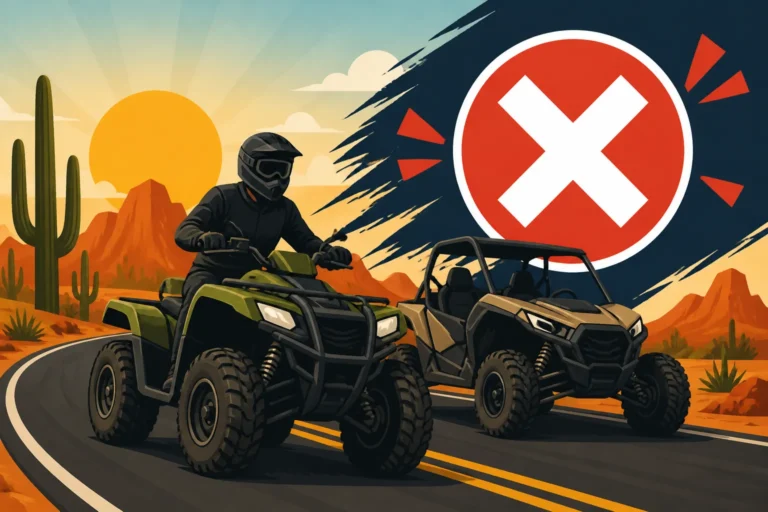
When it comes to road shoulders, it's not always black and white, but typically, an OHV should not be on them if they are part of a paved highway. The legal definitions in Arizona's motor vehicle code often encompass the shoulder as part of the "highway" or "roadway," meaning the same rules apply to it as the main paved lanes. This can be frustrating when you just need to cover a short distance, but the laws are in place for safety and traffic flow.
| Scenario | Legality for OHVs (General Arizona Rules) | Safety Considerations |
|---|---|---|
| Riding on the shoulder of a paved highway | Generally Illegal unless the OHV is fully street-legal AND the specific highway allows OHV travel. Often considered part of the highway right-of-way. | High risk of collision with fast-moving traffic, unexpected debris, unstable surface, sudden drops/culverts. |
| Riding adjacent to a paved road on an unpaved, designated OHV trail | Legal if the unpaved path is an official OHV route (e.g., Forest Service road, BLM trail) that happens to run parallel to a highway. | Safer than shoulder riding, but still be aware of nearby highway traffic, dust, and potential noise. |
| Fully street-legal OHV riding on a paved roadway | Legal on most [Arizona City Streets Open to OHVs] and [County Roads and Arizona OHV Access], following all traffic laws, including staying off shoulders. | Much safer, as you are part of expected traffic flow. Still require defensive driving and proper signaling. |
| Crossing a paved highway | Legal if done safely and directly, after stopping and yielding to traffic, to access another legal OHV route. Not for riding along the highway. | Requires extreme caution, good visibility, and quick crossing. [Crossing an Arizona Highway on a Machine]. |
Ultimately, the goal is to ride smart and stay safe. While the call of the open shoulder might be tempting, the best approach is always to prioritize legal, designated routes. Whether that means getting your machine street-legal, using an app like onX Offroad to plan around paved sections, or simply knowing your [Arizona OHV Rules for Ranch and Farm Machines], being informed is your best defense against citations and accidents. Remember, the desert has plenty of amazing places to ride legally without having to risk a ticket or, worse, an injury.
Disclaimer
This article is for general informational purposes only and does not constitute professional advice. Laws, prices and regulations vary by location and change over time. Consult a qualified professional for guidance on your specific situation.