Passengers on an Arizona Road Section
It's an age-old question for anyone who loves hitting the Arizona trails and needs to connect a few dirt roads with a short stretch of pavement: "Can I bring my buddy along for this paved section?" Or, even more commonly, "Can my kid ride with me just to get to that trailhead across the highway?" The rules around carrying passengers on your ATV or UTV when you're on a public Arizona road can feel like a minefield of "ifs" and "buts." You want to share the adventure, but you absolutely don't want to risk a citation, or worse, someone getting hurt. This guide is here to clear up the confusion, lay out Arizona's specific rules, and help you understand exactly what's required to legally and safely transport passengers on those road sections connecting your favorite desert rides.
Understanding Arizona's Core Rules for Passengers on OHVs
Navigating Arizona's vast and diverse terrain often means using public roads to connect different trail systems, access gas stations, or simply get from your camp to a scenic overlook. When you're driving an Off-Highway Vehicle (OHV) on these paved or graded county roads, the rules for passengers aren't always the same as they are off-road, and they certainly aren't the same as carrying a passenger in your car. It’s crucial to understand these distinctions, because a casual assumption can lead to serious legal trouble or, more importantly, put your passengers at risk.
Age Requirements for Passengers
Arizona law has some clear stipulations regarding the age of passengers, especially when it comes to riding on public roads. This isn't just about common sense; it's about specific statutes designed to protect younger riders. Generally, while off-road, the rules might be a bit more flexible depending on the machine, but when you transition to a public road, stricter guidelines often kick in.
For example, on ATVs, children under 16 generally aren't allowed to operate the machine on public lands (which includes most open desert and forest roads), and if they're riding as a passenger, they must be able to reach the designated footrests. For UTVs, or side-by-sides, the rules are slightly different because of the enclosed nature and seatbelt systems. However, an operator under 16 still faces restrictions, and any passenger, regardless of machine type, must be seated properly. You might see a dad with his 8-year-old on a small ATV out in a private gravel pit, and that's one thing. But take that same kid on the back of that ATV down a public county road, even for a quarter-mile, and you could be facing a fine. It’s not about how capable your child is, or how slow you’re driving; it’s about the letter of the law. Always double-check [Arizona Rules for a Child Passenger] before hitting any road with young ones.
Seating Capacity and Designated Seating Areas
This is perhaps one of the most frequently misunderstood aspects of carrying passengers on OHVs. Many riders assume that if there's space, it's fair game. This couldn't be further from the truth, particularly when operating on public roads. Arizona law, like most states, is very specific: passengers must only occupy designated seating areas that are equipped with proper restraints.
What does "designated seating area" mean? It means a seat that was designed and manufactured by the vehicle's maker for a person to sit in, typically accompanied by a seatbelt or other restraint system. This is why you often see "one-up" ATVs versus "two-up" ATVs. A standard sport quad, designed for a single rider, might technically have enough room behind the rider for a small child to perch, but that is absolutely not a designated seating area. Trying to squeeze three adults into a two-seat UTV, or allowing someone to ride on the cargo bed of a side-by-side, even if they're holding on tight, is a huge no-go on any public road. These actions not only violate the law but significantly increase the risk of injury in a sudden stop or turn. It's a common sight out in the desert to see a group piled onto a UTV, but on the asphalt, deputies are much less forgiving. Remember, your machine's manufacturer specifies its seating capacity for a reason, and Arizona MVD expects you to stick to it on public ways.
Seat Belts and Restraint Systems
For any OHV operating on an Arizona public road, proper restraint systems for all occupants are non-negotiable. This isn't just a suggestion; it's a critical safety requirement. If your machine is equipped with seat belts (which most UTVs are), every passenger must be properly buckled in. This applies whether you're cruising down a paved road at 35 MPH or just slowly crossing a short connecting section to another dirt trail.
The frustration often comes when people think, "It's just a short hop, do we really need to buckle up?" The answer is a resounding yes. A sudden stop, an unexpected swerve to avoid a hazard, or even a minor fender bender can send unbuckled passengers flying. For side-by-sides, this means utilizing the factory-installed seat belts for every person in a designated seat. If your UTV has a roll cage, which many do, and is deemed street-legal, those belts are treated much like those in a car. You can find more specific information on these components by looking at resources like [Belts and Nets in a Side-by-Side] or [Roll Cages on a Street Build]. Modifications, even those from reputable companies like SuperATV that might enhance comfort or add accessory seating, must still ensure that any new seating position includes appropriate, functioning, and legally compliant restraint systems. Don't compromise on this one; a seatbelt could be the difference between a bumpy ride and a trip to the emergency room.
Specific Equipment for Passenger Safety on Arizona Roads
Beyond the fundamental rules of age and designated seating, Arizona law also dictates specific safety equipment that passengers must use when an OHV is operating on public roads. This isn't just about general good practice; these are legal requirements designed to minimize injury in the event of an incident. Many riders are familiar with these requirements for themselves as operators, but it's crucial to extend that knowledge and compliance to every single person riding along.
Helmets for Passengers: Who Needs Them?
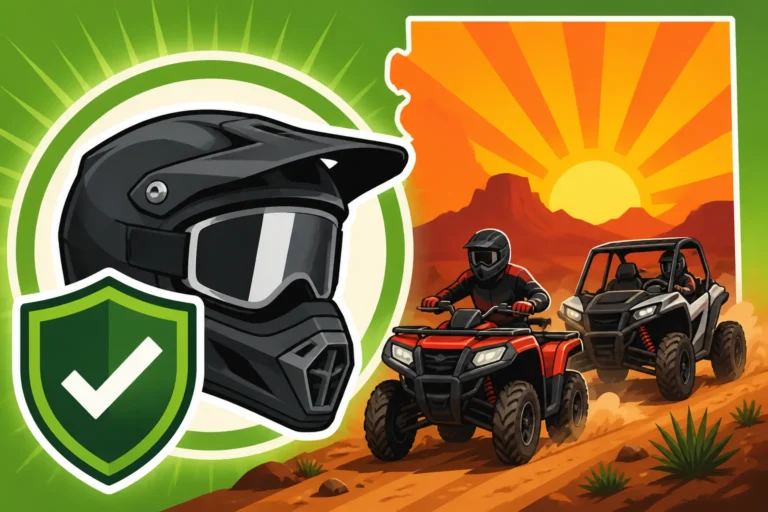
Arizona's helmet laws for OHV riders and passengers can sometimes feel a bit complex, particularly when you factor in age and whether you're on a trail versus a public road. The general rule of thumb, and the one you should always default to for safety, is that if you're under 18, you need a helmet. This applies to both operators and passengers on an OHV when riding on public lands, which certainly includes public roads.
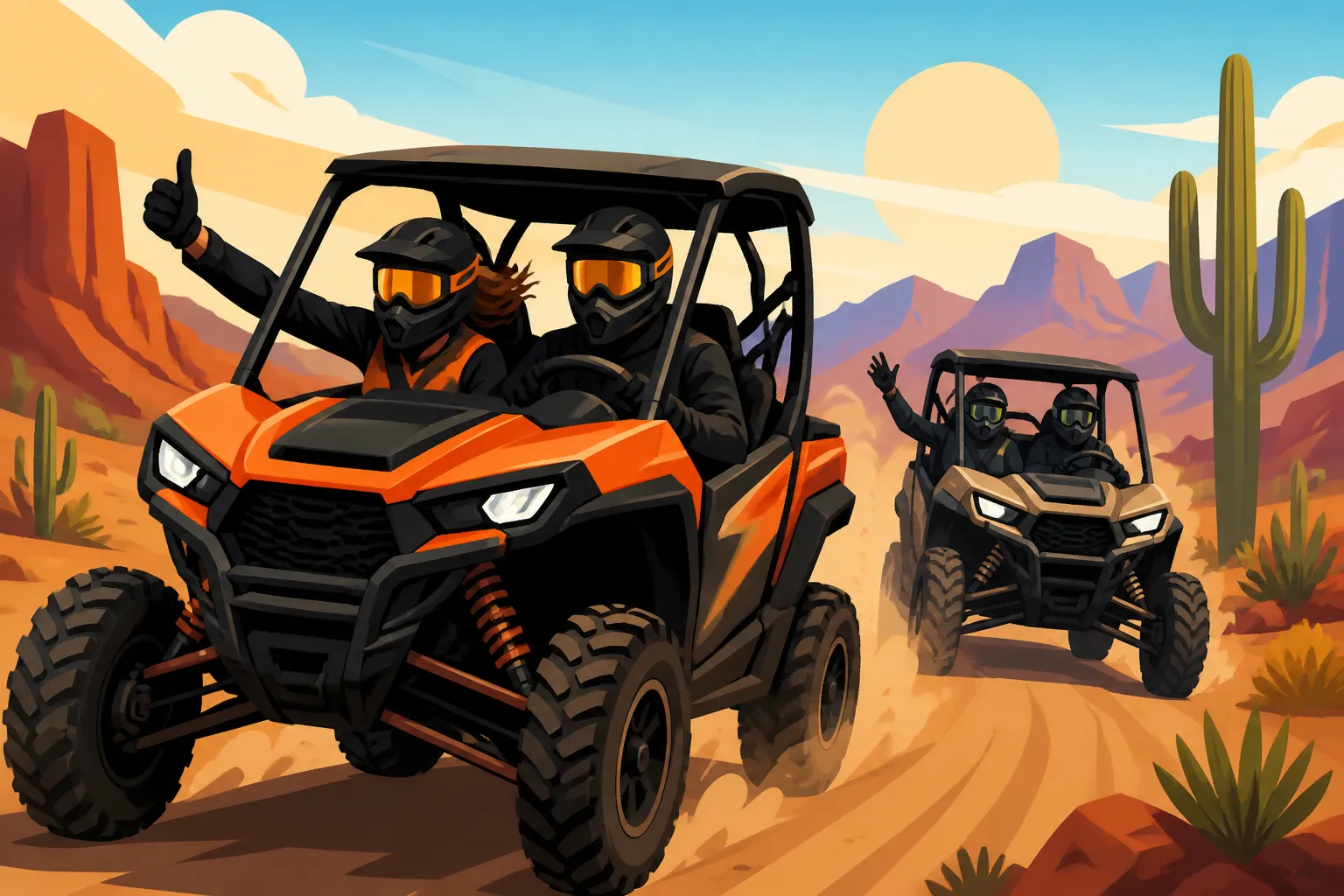
However, it gets a bit nuanced for UTVs. If you're in a UTV with a roll cage and a windshield, and it's otherwise street-legal, some people might mistakenly believe helmets aren't required for adults. While an adult operator over 18 in a street-legal UTV might not be mandated to wear a helmet on a public road in certain situations (always check local ordinances and current state law as these can change), this exemption does not automatically extend to passengers, especially those under 18. If you have a child riding with you in a side-by-side on a county road, they must have a DOT-approved helmet securely fastened. Even for adults, if you're on an ATV, regardless of age, a helmet is almost always a smart move and often legally required when on a public roadway. It's truly not worth the risk, or the potential citation. Always refer to [Arizona Helmet Rules for Riders Under 18] for the latest specifics.
Eye Protection Requirements for All Passengers
Dust, debris, insects, and sun glare are constant companions when riding in Arizona's diverse environments. When you add the higher speeds and potential for traffic on a public road, proper eye protection becomes not just advisable, but a legal necessity for all OHV passengers. Arizona law requires eye protection for anyone riding an OHV on public roads, regardless of age or whether they're an operator or a passenger.
This isn't about looking cool; it's about preserving your vision and preventing serious injury. A rock kicked up by a passing vehicle, or even a branch overhanging a dirt county road, can cause irreparable damage to an unprotected eye. Acceptable eye protection includes goggles specifically designed for riding, or a helmet with a face shield. Regular sunglasses, while helpful for glare, often don't offer sufficient impact protection or seal out dust effectively. The frustration of stopping every few minutes to wipe dust from your eyes is nothing compared to the pain and danger of an object striking your eye at speed. For a deep dive into what's required, check out [Eye Protection on an Arizona Road]. Ensure every passenger has their own set of proper goggles or a helmet with a shield that fits snugly and provides clear, unobstructed vision.
Footrests and Handholds
Beyond helmets and eye protection, secure footrests and handholds are fundamental for passenger stability and safety, especially on machines that aren't fully enclosed like a car. When you're transitioning from a bumpy trail to a smoother road, or vice-versa, the dynamics of the ride change, and passengers need stable points of contact to maintain their balance.
For ATVs designed for two riders (two-up ATVs), these machines come with extended seats, passenger grab handles, and separate footrests specifically for the rear occupant. It is illegal and incredibly dangerous to carry a passenger on a single-rider ATV, as it lacks these crucial safety features. Without proper footrests, a passenger's feet can dangle, risking injury from the machine's moving parts or being snagged by obstacles. Without secure handholds, a passenger can be easily jostled off the machine during acceleration, braking, or cornering, which are all more common and pronounced on public roads. For UTVs, while they offer more enclosed seating, it's still essential that passengers keep their feet inside the vehicle and utilize any integrated grab handles, particularly for added stability during uneven road sections or sudden maneuvers. Always ensure your passengers know where these are and how to use them effectively. These aren't luxury items; they are foundational to a safe ride.
Operator Responsibilities When Carrying Passengers on Roads
As the operator of an OHV, you hold the ultimate responsibility for the safety of your passengers, especially when venturing onto public roads. This isn't just about adhering to the law; it's about the moral obligation to ensure everyone in your care has a safe and enjoyable experience. The machine's handling characteristics change with added weight, and the risks increase exponentially when you have others on board. A responsible operator anticipates these changes and adjusts their approach accordingly.
Ensuring Passenger Readiness and Understanding
Before you even turn the key, it's crucial to have a safety briefing with your passengers. This is especially important if they are new to OHV riding or young children. Don't just assume they know what to do or how to react. Take a few minutes to explain the basics:
- Keep all body parts inside the vehicle at all times. This seems obvious but needs to be stated, especially with children in UTVs who might want to wave or point.
- Hold on to designated handholds, even on smooth roads. This prevents unexpected jostling.
- Do not distract the driver. While conversation is fine, sudden shouts or movements can be dangerous.
- Explain how to use their seatbelt/restraints properly. Make sure they're snug and not twisted.
- Briefly describe what to expect from the ride. Will there be bumps? Are you making a sharp turn soon?
An empathetic approach here goes a long way. Validate any nervousness, especially if they’re riding for the first time. This open communication builds trust and helps ensure everyone is on the same page for a safe journey. Think of it like a flight attendant's pre-flight safety announcement; it might seem repetitive, but it's absolutely vital for every trip.
Adjusting Riding Style for Passenger Comfort and Safety
Carrying passengers, particularly on roads where traffic, speed limits, and other road users are present, fundamentally changes how you should operate your OHV. Your smooth, comfortable trail riding might need to become even smoother and more deliberate.
- Gentle Acceleration and Braking: Avoid sudden starts or hard braking. These maneuvers can throw passengers forward or backward, even if they're buckled in, leading to discomfort or even injury.
- Controlled Cornering: Take turns wider and at a slower speed. The added weight of passengers raises the center of gravity, making the machine more prone to rolling over, especially at speed on paved surfaces. This is where the structural integrity of a UTV (and potentially a reinforced cage from SuperATV) really matters, but it's no excuse for reckless driving.
- Anticipate Road Conditions: Potholes, sudden dips, or gravel patches on an otherwise paved road can be jarring. Drive defensively, scanning the road ahead to anticipate and gently navigate these obstacles, rather than reacting abruptly.
- Regular Check-ins: Periodically check on your passengers. Are they comfortable? Do they need a break? Are their helmets or goggles still secure? Their comfort and well-being should be a primary concern throughout the ride.
Your aggressive trail antics need to be put on hold when you have passengers. The goal shifts from an adrenaline rush to a smooth, safe, and enjoyable shared experience.
Legal and Practical Implications of Accidents with Passengers
When an accident occurs, the presence of passengers significantly escalates the legal and practical ramifications for the operator. If a passenger is injured, even if it's a minor scrape, the operator can face increased liability, potential lawsuits, and more severe penalties if negligence is found. This is why understanding your [Arizona Insurance Minimums for Road Riding] is absolutely critical, as a standard liability policy for a street-legal machine might not be enough to cover significant medical expenses or legal fees for an injured passenger.
Consider a scenario where you're on a county road, connecting two trails. You take a corner a little too fast, the UTV slides, and a passenger breaks their arm. Not only will your insurance be heavily involved, but you could also face criminal charges if you were found to be operating recklessly or under the influence (don't forget [Arizona Alcohol Limits for OHV Operators]). Even if the accident isn't your fault, having injured passengers means more witnesses, more claims, and a more complex legal process. Always operate with the utmost caution, ensure all safety rules are followed, and verify your insurance coverage is adequate for carrying passengers on public roads.
Different Machine Types and Passenger Rules on Roads
Arizona's OHV landscape is diverse, encompassing everything from nimble dirt bikes to powerful utility task vehicles (UTVs). Each machine type has its own set of characteristics and, crucially, specific rules regarding passengers, especially when you're transitioning onto public roads. What's permissible on a multi-seat side-by-side is often strictly forbidden on a single-rider ATV, and understanding these distinctions is key to staying safe and legal.
ATVs and Designated Passenger Seating
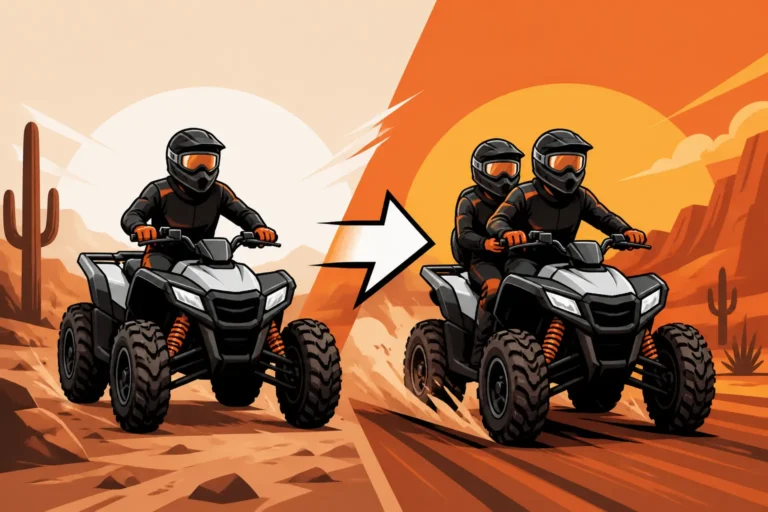
Here's a hard and fast rule that many new riders, or even some seasoned ones, regrettably overlook: Most ATVs are designed and intended for one rider only. This means if your ATV doesn't explicitly have an extended seat, separate passenger footrests, and dedicated grab handles for a second person, then it is a single-rider machine. Period.
Carrying a passenger on a single-rider ATV on an Arizona public road is not only illegal but incredibly dangerous. The machine's stability, balance, and suspension are calibrated for a single rider's weight. Adding a passenger, even a small child, significantly alters its center of gravity, making it prone to rollovers, especially during turns or over uneven road surfaces. Braking distances increase, and steering can become erratic. You might think, "It's just a quick trip down a paved road, what's the harm?" The harm is that ATVs are inherently less stable than UTVs, and any unexpected bump or swerve could lead to serious injury for both you and your passenger. If you intend to carry a passenger on an ATV, you must use a "two-up" or "tandem" ATV specifically designed for that purpose. These machines are built with the extra length, seating, and support needed for a second person. Don't risk a fine, or worse, a preventable accident by doubling up on a single-seat ATV. It's truly one of the [Arizona Road Rules Riders Get Wrong] most often.
UTVs/Side-by-Sides and Multi-Passenger Configurations
UTVs, or side-by-sides, are the workhorses and recreational favorites that inherently offer more versatility for carrying passengers. These machines are designed with multiple seats, seatbelts, and often a roll cage, making them a much safer option for group outings, particularly on road sections. However, even with UTVs, the rules about passenger capacity are rigid and must be strictly adhered to on public roads.
A UTV might come in a 2-seat, 4-seat, or even 6-seat configuration. The golden rule is simple: one passenger per designated seat, and every passenger must be properly restrained with the vehicle's seat belt. You cannot carry more people than there are factory-installed, designated seats. Allowing someone to sit on a lap, perch on the edge of a seat, or ride in the cargo bed – even for a short distance – is a violation of Arizona law when on a public road and significantly increases the risk of injury. While aftermarket accessories from companies like SuperATV can enhance your UTV with various upgrades, if you're adding seating, it must be done in a way that is compliant with safety standards and doesn't exceed the vehicle's structural and weight limitations for road use. Always remember that the manufacturer's stated seating capacity for your UTV is the legal limit, and attempting to cram more people in could result in citations and severely compromise safety.
Exceptions and Special Considerations Ranch/Farm Machines
Arizona, being a vast agricultural state, recognizes that some OHVs are essential tools for daily operations on ranches and farms. As such, there can be specific, limited exemptions for utility-focused machines when operating on certain private roads or even crossing short sections of public roads for agricultural purposes. However, these exemptions are often narrowly defined and typically do not override core safety principles.
For instance, a rancher might be able to use a utility UTV to transport workers or supplies across a county road that bisects their property without needing a full street-legal conversion. However, even in these scenarios, the general safety principles for passengers, such as using designated seating and seat belts, are usually still expected, and reckless operation is never permitted. These are very specific circumstances, and you should never assume your recreational ride falls under such an exemption. If you're using an OHV for legitimate agricultural purposes, it's crucial to understand the nuances of [Arizona OHV Rules for Ranch and Farm Machines] and always check with local authorities or the MVD for clarity on any specific exemptions that might apply to your situation. For the vast majority of recreational riders, these agricultural exemptions will not apply, and full compliance with all street-legal and passenger safety regulations is expected on public roads.
Common Mistakes and How to Avoid Them
Even with the best intentions, riders can sometimes make critical errors when carrying passengers on their OHVs, particularly when navigating those tricky road sections. These mistakes often stem from a misunderstanding of the rules, a moment of lapsed judgment, or simply underestimating the risks involved. Being aware of these common pitfalls is the first step toward avoiding them and ensuring a safe, legal, and enjoyable experience for everyone on board.
Overloading the Machine or Ignoring Seating Limits
This is, without a doubt, one of the most prevalent and dangerous mistakes riders make. Whether it's trying to squeeze "just one more" person into a UTV's bed for a quick hop or allowing a child to ride on the lap of an adult in a two-seat side-by-side, ignoring the manufacturer's designated seating capacity and the legal limits for public roads is a recipe for disaster.
The problem isn't just about comfort; it's about the fundamental physics of the machine. Every OHV has a maximum weight capacity, and adding extra passengers pushes it beyond its design limits. This can lead to:
- Compromised Stability: The machine becomes top-heavy and far more prone to rollovers, especially during turns or on sloped sections of a road.
- Reduced Braking Performance: More weight means more momentum, and your brakes will struggle to stop the machine effectively, increasing stopping distances.
- Strained Suspension: Overloading can damage shocks, springs, and other suspension components, leading to a harsher ride and potential mechanical failure.
- Steering Difficulties: The machine can become harder to control and less responsive, which is incredibly dangerous in traffic or on winding roads.
Think of it this way: if your car is designed for five people, you wouldn't try to cram eight in, especially not on the highway. The same principle applies, perhaps even more critically, to OHVs on public roads. Always stick to the designated number of seats and ensure every passenger is properly buckled in. Your UTV might look tough, but it's not invincible, especially when overloaded.
Inadequate Safety Gear for Passengers
The "it's just a short ride" mentality often leads to the second major mistake: neglecting proper safety gear for passengers. We've all been there – you're at the trailhead, someone needs a ride just a quarter-mile down the paved road to the staging area, and you think, "It's so close, they don't really need a helmet or goggles for that." This casual approach is extremely risky and can have severe consequences.
Arizona law is clear: under-18 passengers typically require helmets on public roads, and all passengers need eye protection. Ignoring these requirements, even for a brief trip, exposes passengers to unnecessary risks. A sudden stop, a low-speed tip-over, or debris flying up from the road can cause head injuries, eye trauma, or other harm that could have been prevented with the right gear. It's frustrating to carry extra helmets and goggles, especially if you're just connecting small segments of road. However, safety should always trump convenience. Keep spare, properly fitting, DOT-approved helmets and a few pairs of goggles readily available for any passengers you might pick up. It's a small inconvenience that could prevent a life-altering injury.
Disregarding Passenger Comfort and Communication
While not directly a legal violation in the same way as overloading or lacking a helmet, disregarding your passenger's comfort and failing to communicate can quickly escalate into a dangerous situation. A passenger who is uncomfortable, scared, or feeling unheard is less likely to hold on properly, might try to adjust themselves mid-ride, or could distract the driver.
Imagine taking a new rider on a particularly rough dirt county road, even if it's legally accessible. If you're not checking in, explaining the bumps, or asking how they're doing, their anxiety can build. This is especially true for children. A child who is bounced around and scared might unbuckle, try to stand, or reach for the driver, creating an immediate hazard.
- Regular Check-ins: Ask "Are you doing okay?" or "How's the ride?"
- Listen to Feedback: If a passenger says they're uncomfortable or want to slow down, respect that.
- Explain Maneuvers: Briefly announce when you're about to make a sharp turn, hit a bump, or brake suddenly. This prepares them and allows them to brace themselves.
A good driver considers not just their own experience, but the experience of everyone on board. A little communication and empathy go a long way in ensuring that the ride is not only safe but also enjoyable for everyone, fostering a positive view of OHV adventures.
Comparing Passenger Requirements on Arizona Roads
| Feature / Machine Type | ATV (Single Rider) | ATV (Two-Up/Tandem) | UTV (Side-by-Side) |
|---|---|---|---|
| Legal to Carry Passenger on Road? | NO (Not designed for it) | YES (If designed for two) | YES (Per designated seat) |
| Designated Seating Required? | N/A | YES (Extended seat with backrest) | YES (Manufacturer-installed seats) |
| Seat Belts/Restraints Required? | N/A | YES (If equipped/required by design) | YES (Factory seat belts for every occupant) |
| Footrests Required for Passenger? | N/A | YES (Separate, secure footrests) | YES (Integrated floor/footwell) |
| Handholds Required for Passenger? | N/A | YES (Dedicated grab handles) | YES (Integrated grab bars/handles) |
| Helmet Required (Under 18)? | YES (Operator & Passenger) | YES (Operator & Passenger) | YES (Operator & Passenger) |
| Eye Protection Required (All Ages)? | YES (Operator & Passenger) | YES (Operator & Passenger) | YES (Operator & Passenger) |
| Overloading Prohibited on Roads? | YES (Any passenger is overloading) | YES (Limit to one passenger) | YES (Limit to manufacturer's capacity) |
This article is for general informational purposes only and does not constitute professional advice. Laws, prices and regulations vary by location and change over time. Consult a qualified professional for guidance on your specific situation.