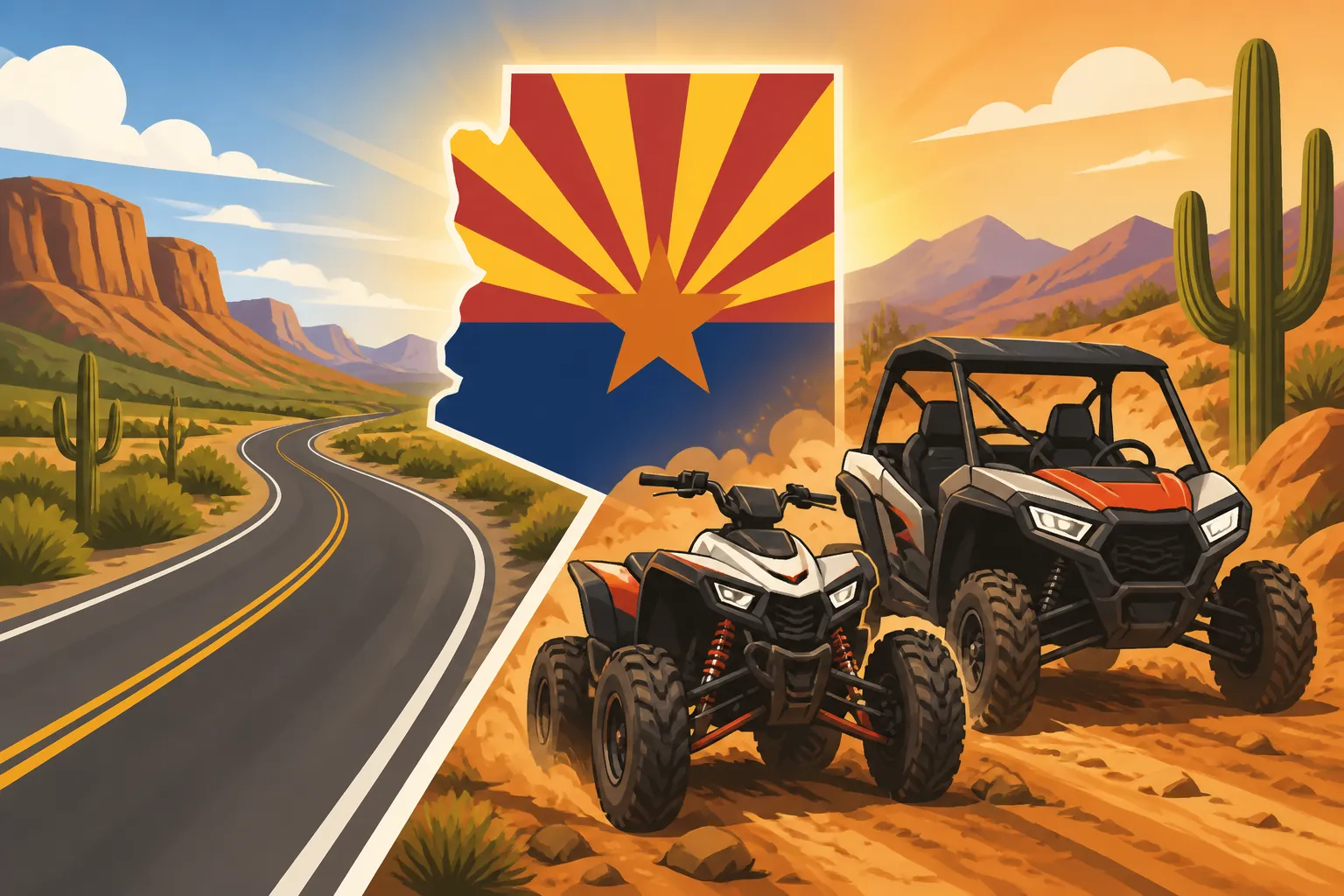
County Roads and Arizona OHV Access
It’s a truly confusing landscape out there in Arizona when you’re trying to figure out where you can and cannot legally ride your off-highway vehicle (OHV). One minute you’re on a pristine desert trail, the next you’re wondering if you can legally connect to the gas station down a county road. This guide is here to untangle the often-complex rules around riding your ATV or UTV on Arizona’s county roads, helping you navigate the routes that connect our amazing trail systems and get you to those much-needed amenities.
Understanding Arizona's General Approach to OHV Road Access
Arizona is a fantastic state for OHV enthusiasts, offering vast stretches of public land and a culture that generally embraces off-road recreation. However, this freedom comes with a critical distinction when you transition from dirt trails to paved or maintained county roads. It’s not a free-for-all, and understanding the core principles is your first step to riding legally and responsibly.
The "Street Legal" Distinction and Why It Matters
When we talk about riding an OHV on a county road in Arizona, the phrase "street legal" isn't just a casual term; it's a very specific designation with a set of requirements that your machine absolutely must meet. Simply put, an OHV that is only registered for off-highway use is generally restricted to unmaintained dirt roads, trails, and private property. The moment you want to put a tire on a county-maintained road—whether it's paved, gravel, or even a graded dirt road that is part of the public road system—your machine needs to be converted and registered as street legal.
This distinction is crucial because it dictates not only where you can ride but also what equipment your OHV needs, what kind of insurance you must carry, and even who can operate it. Think of it this way: your side-by-side, in its raw off-road form, is built for the rugged backcountry. To operate it safely and legally alongside traditional street vehicles, it needs to be equipped with safety features designed for that environment. This isn't just about avoiding a ticket; it's about ensuring visibility, signaling your intentions, and meeting basic safety standards that protect both you and other road users. It’s the difference between exploring a [Copper Basin Dunes in the Parker Strip] and driving to the nearest diner for lunch.
The Role of Arizona State Statutes vs. Local Ordinances
One of the biggest sources of confusion for OHV riders in Arizona is the layered nature of the laws. The state of Arizona sets the overarching framework for OHV registration, titling, and general operation. This includes things like the mandatory [Arizona's Annual OHV Decal Explained], basic equipment requirements, and general rules of the road. However, and this is a really important "however," individual counties, cities, and towns have the authority to enact their own ordinances that can further restrict or permit OHV access on roads within their specific jurisdictions.
This means that while your OHV might be perfectly street legal under state law, a particular county or municipality could have a local ordinance that prohibits OHV use on all county roads within their borders, or perhaps only on certain types of roads, or during specific hours. It's a patchwork quilt of regulations, and what's allowed in, say, Gila County might be entirely different from what's permitted in Maricopa County or a smaller town like Wickenburg. This is why you can’t just assume that because you have an MC plate, you’re good to go everywhere. Always remember that state law provides the foundation, but local rules can build walls or open gates. Ignorance of these local ordinances is rarely an acceptable defense if you’re stopped by law enforcement.
Navigating County Roads with a Street-Legal OHV
Once you’ve grasped the fundamental distinction of "street legal" and the influence of local ordinances, the next step is to ensure your machine and your riding habits comply with the requirements for legal operation on county roads. It’s more than just slapping a license plate on; it’s about a comprehensive conversion and adherence to traffic laws.
Essential Equipment for County Road Compliance
Making your OHV street legal in Arizona isn’t just a suggestion; it’s a strict requirement for riding on county roads. This means outfitting your machine with specific safety equipment that allows it to operate safely alongside cars, trucks, and other conventional vehicles. You can't just rely on your daytime off-road setup. The Arizona MVD, or Motor Vehicle Division, has a comprehensive list, but the main items typically include:
- Headlights: You’ll need at least one, but most modern OHVs have two, and they must be white and visible from a distance, with a high and low beam capability if operating at night. [Arizona's 500 Foot Headlight Rule] is a good one to remember.
- Taillights and Brake Lights: A red taillight visible from 500 feet to the rear, and a brake light (or lights) that illuminate when the brakes are applied.
- Turn Signals: Front and rear turn signals are mandatory for indicating your intentions to other drivers. This is often where conversion kits come in handy.
- Rear-View Mirrors: At least one, but preferably two (one on each side), to give you a clear view of traffic behind you.
- Horn: An audible warning device that can be heard from 200 feet away.
- Windshield: While not always required for every OHV type, if your machine has a windshield, it must be safety glass or approved plastic. If it doesn't, eye protection is mandatory.
- Seatbelts/Restraints: All occupants must be properly restrained, and the belts must be in good working order.
- Muffler and Spark Arrestor: While usually already present for off-road legality, your exhaust system must comply with noise regulations, and a USFS-approved spark arrestor is always required on public lands to prevent fires.
- License Plate Light: Your rear license plate needs to be illuminated at night so it’s clearly visible.
Many riders turn to aftermarket kits to convert their OHVs to street legal status. Companies like SuperATV offer a range of products, from full wiring harnesses and turn signal kits to mirrors and horns, making the conversion process much more straightforward than sourcing individual components. They understand the specific needs for [Mirrors, Seats and Footrests on an Arizona Build] and other critical components. It's an investment, but it's essential if you plan to link up trails or run into town for supplies.
Driver and Passenger Requirements on County Roads
It's not just about the machine; the operator and any passengers also have rules to follow when on county roads. Just like driving a car, you need to be properly licensed and adhere to passenger regulations.
- Driver's License: Any person operating a street-legal OHV on an Arizona county road must possess a valid driver's license. This isn't like off-roading where younger riders might be permitted with a permit or supervision; on a public road, it’s treated like any other motor vehicle.
- Age Restrictions: While the driver needs to be licensed, there are also rules concerning younger passengers. For example, [Arizona Helmet Rules for Riders Under 18] require anyone under the age of 18 to wear a DOT-approved helmet, regardless of whether they are a driver or a passenger. Even if your OHV has a full roll cage and seatbelts, this rule still applies to minors.
- Passenger Capacity: Your OHV can only carry as many passengers as it was designed for and has proper seating and restraint systems for. Overloading your machine or having passengers ride in unsafe positions (e.g., on the fenders) is not only illegal but extremely dangerous, especially on roads shared with other traffic. [Belts and Nets in a Side-by-Side] are crucial for passenger safety.
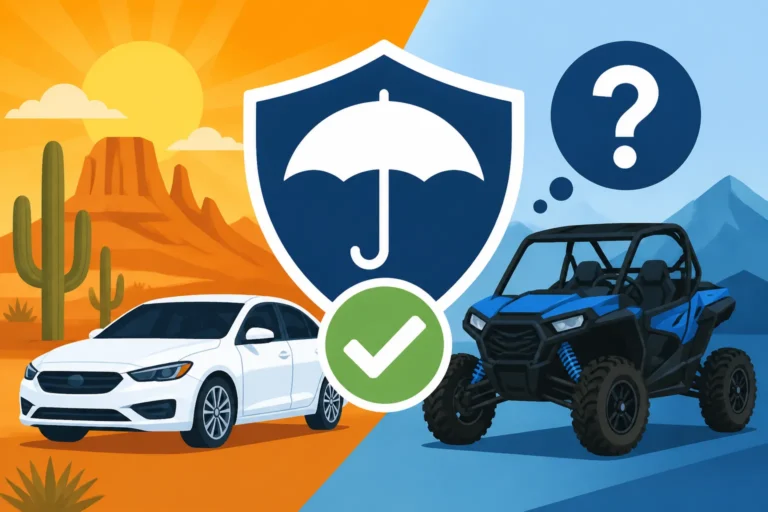
- Proof of Insurance: For a street-legal OHV, you are required to carry minimum liability insurance, just like a car. [Arizona Insurance Minimums for Road Riding] are typically 25/50/15 (meaning $25,000 for bodily injury per person, $50,000 for bodily injury per accident, and $15,000 for property damage). You must have proof of this insurance with you when operating on county roads.
These requirements ensure that every aspect of the OHV experience on county roads, from the vehicle itself to the people in it, meets a standard of safety and accountability.
Common Restrictions and Prohibitions on Arizona County Roads
Even with a fully street-legal OHV and all your documentation in order, you can't just assume every county road is open season. There are common-sense restrictions and specific prohibitions that riders need to be aware of to avoid trouble.
Speed Limits and Safe Operation
When you're riding your street-legal OHV on a county road, you are now part of the general traffic flow. This means you must adhere to all posted speed limits, just like any car or truck. County roads, particularly those unpaved, might seem like a place to let loose, but they are not. Many county roads run through residential areas, past farms, or are used by local traffic, school buses, and emergency vehicles.
- Posted Limits: Always observe the posted speed limits. If no speed limit is posted, the default maximum speed limit for unpaved county roads in Arizona is typically 25 mph, though it can vary by county. Paved county roads often follow standard rural highway limits of 45-55 mph, but always look for signs.
- Conditions: Beyond the posted limit, it's crucial to drive at a speed that is safe for the conditions. This includes factors like visibility, road surface (gravel, washboard, dust), traffic, and weather. A sudden sharp turn or an unexpected pothole on a gravel road can quickly lead to loss of control, especially with the higher center of gravity of many OHVs.
- Dust Control: On unpaved county roads, be mindful of dust. Driving too fast can create massive dust clouds that obscure vision for yourself and other drivers. Be a good neighbor, especially when passing homes or other vehicles. [Dust Behind You on a Desert Road] can be a significant hazard.
Safe operation also extends to general road etiquette. Maintain a safe following distance, use your turn signals, and be predictable in your movements. Your OHV might be smaller, but it's still a motor vehicle sharing the road with others.
Crossing State Highways and Interstates
This is one of the most frequently misunderstood areas of OHV road access. While you can often legally ride your street-legal OHV on county roads, the rules change drastically when it comes to state highways (like US Routes or State Routes) and especially interstates.
- State Highways: Generally, OHVs, even if street-legal, are not permitted to travel longitudinally (along) most state highways in Arizona. There might be very specific, short segments where it's allowed for connectivity in certain rural communities, but these are exceptions, not the rule. Always assume state highways are off-limits unless explicitly signed otherwise.
- Interstates: Absolutely no OHVs are permitted on interstate highways (I-10, I-17, I-40, etc.), even if street-legal. These are high-speed, limited-access roads designed for conventional highway traffic. [Crossing an Arizona Interstate on a Quad] is strictly prohibited and can result in severe penalties.
- Crossing: You are typically allowed to cross a state highway or interstate at a designated intersection, provided your OHV is street-legal and you obey all traffic signals and signs. This allows you to connect county roads on either side of a major highway. However, you cannot ride along the shoulder or use exit/entrance ramps for anything other than immediate crossing. Be particularly cautious when performing [Crossing an Arizona Highway on a Machine].
The key takeaway here is to always check your maps and local ordinances. Don't assume that just because a road is paved, it's open to your OHV. Large, numbered highways are usually restricted.
Specific County-Level Prohibitions and Signs to Watch For
As mentioned earlier, local jurisdictions have the power to create their own rules. This means that a particular county, city, or even a smaller community within a county can enact ordinances that prohibit or restrict OHV use on their county roads, even if the state law would otherwise permit it.
- "No OHV Access" Signs: The clearest indication of a prohibition will be signage. Look for signs at county lines, town entrances, or specific road intersections that explicitly state "No OHV Access," "OHV Prohibited," or similar language. These signs are legally enforceable.
- Community Ordinances: Some desert communities or suburban areas within a county might have blanket prohibitions on OHVs on all their roads, or they might restrict them to only crossing points. This is often due to noise concerns, safety for residents, or traffic congestion. A quick call to the county sheriff's non-emergency line or checking the county's public works or transportation department website can often clarify these rules before you go. This is especially true when you are [Riding a Machine Into Sedona] or another tourist-heavy area, as these places often have specific restrictions.
- Seasonal or Time-Based Restrictions: Less common, but still possible, are restrictions based on time of day (e.g., no OHV use after dark in residential areas) or seasonally (e.g., during specific events or high traffic periods).
Always keep an eye out for these local directives. A street-legal OHV is a privilege on public roads, and local communities have a right to manage traffic flow and safety within their borders. Being respectful of these local rules is crucial for maintaining positive relationships between OHV riders and residents.
The Benefits and Challenges of Using County Roads for OHV Access
Using county roads with a street-legal OHV can be a game-changer for many riders, opening up new possibilities for exploration and convenience. However, it also comes with its own set of challenges and responsibilities that riders need to be prepared for.
Connecting Trails and Accessing Services
One of the biggest advantages of having a street-legal OHV is the ability to seamlessly connect different trail systems without having to trailer your machine. Imagine being able to ride from one incredible desert trail network, through a small town or across a rural county road, and onto another exciting set of trails. This eliminates the time and hassle of loading and unloading, making for much more fluid and expansive riding experiences. You can explore routes like [Backway to Oatman and the Old Mining Roads] and then ride into town for a bite.
Beyond connecting trails, street-legal access to county roads significantly enhances convenience. No longer are you restricted to staging areas accessible only by truck and trailer. You can ride directly from a campground, hotel, or even your own property to the trailhead. Need to refuel? Head to the nearest gas station. Craving a hot meal or a cold drink after a long day in the saddle? You can ride your OHV right into town to a restaurant or convenience store. This flexibility is a huge benefit, transforming your OHV from a purely recreational vehicle into a versatile mode of transportation for your outdoor adventures. It means you can often avoid the extra work of trailering for things like [Riding to Breakfast in a Trail Town].
Potential for Conflicts with Other Road Users
While the freedom of county road access is fantastic, it also brings OHV riders into closer proximity with a wider range of road users, leading to potential conflicts if not handled with care and respect. This is where being a responsible ambassador for the OHV community really comes into play.
- Traditional Vehicles: Cars, trucks, and even large commercial vehicles use county roads. OHVs are often slower, narrower, and less visible than these vehicles. This means riders need to be extra vigilant, maintain situational awareness, and be prepared for drivers who may not be accustomed to sharing the road with OHVs. This could mean [Sharing a Road With Ore Trucks] in some rural areas.
- Dust and Noise: OHVs, especially on unpaved county roads, can generate significant dust and noise. While this is part of the experience off-road, it can be a nuisance or even a health concern for residents living along these roads. Being mindful of your speed, especially near homes, and ensuring your muffler system is in good repair helps mitigate these issues. [Noise Rules in Arizona Desert Communities] are real and enforced.
- Resident Concerns: Many county roads pass through residential or agricultural areas. Residents have a right to peace and quiet, and excessive speed, dust, or noise from OHVs can quickly lead to complaints and calls for stricter local ordinances. If you're [Riding Slowly Past Desert Homes], you're more likely to be seen as a respectful rider than a nuisance.
- Safety Perceptions: Some members of the public may view OHVs on county roads as inherently unsafe or inappropriate. It's up to riders to demonstrate responsible behavior, strict adherence to traffic laws, and courteous interactions to help shift these perceptions positively.
Navigating these challenges requires a commitment to responsible riding. It means slowing down, being courteous, and understanding that you are sharing a public resource. By doing so, OHV riders can help ensure continued access to these valuable connecting routes.
What to Do Before You Ride on Arizona County Roads
Preparation is key to a smooth and legal OHV experience on Arizona's county roads. A little research and a quick check of your machine can save you a lot of hassle and potential fines down the line. Don't just "wing it" when it comes to public roads.
Researching Local Ordinances and Maps
Before you even load up your machine, or even if you’re riding out from your home, taking the time to research the specific county and city ordinances for your intended route is paramount. As we discussed, state law provides the baseline, but local rules can drastically change what's permissible.
- County Websites: Most Arizona counties have websites for their Sheriff's Office, Transportation Department, or Public Works. These are excellent resources for finding information on OHV access policies specific to that county's roads. Look for sections on "OHV," "off-road vehicles," or "traffic ordinances."
- City/Town Websites: If your route takes you through or near an incorporated city or town, check their municipal code or local government website. Many towns have very specific rules about OHVs on their streets, ranging from full prohibition to limited access on certain roads. This is critical for [Finding an Arizona City's OHV Ordinance].
- Contact Law Enforcement: When in doubt, call the non-emergency line of the local Sheriff's Office or Police Department in the area you plan to ride. They are the ultimate authority on local enforcement and can provide the most accurate, up-to-date information.
- Motor Vehicle Use Maps (MVUMs): While primarily focused on federal lands (Forest Service, BLM), these maps sometimes show connecting county roads and can indicate where motorized access is permitted or restricted. Resources like [onX Offroad for Arizona Trails] can often integrate this type of information.
- Online Rider Forums/Groups: While not official sources, local OHV rider forums or social media groups can sometimes offer practical insights into common routes and local restrictions, but always cross-reference with official sources.
A little time spent researching upfront can save you from a frustrating encounter with law enforcement or an unexpected dead end on your ride.
Ensuring Your Machine is Properly Equipped and Documented
Beyond understanding the rules, you need to ensure your machine is a legal participant on those roads. This means a thorough check of its equipment and having all the necessary paperwork ready to present if stopped.
- Street-Legal Conversion Check: Go through the list of street-legal requirements we covered earlier (headlights, taillights, turn signals, mirrors, horn, etc.) and physically verify that every component is installed, functioning correctly, and meets the legal specifications. Consider a robust turn signal kit from a company like SuperATV to ensure your signals are bright and visible. It's easy to overlook a burnt-out bulb or a loose wire, so do a pre-ride inspection.
- Registration and Decal: Your OHV must be registered as "street legal" with the Arizona MVD. This means it will have a standard Arizona license plate (often an "MC" plate for motorcycles, which OHVs fall under for street-legal purposes, or an "RV" plate for off-highway vehicles that are not street-legal, but we are discussing street-legal here). In addition to the plate, you'll still need your [Arizona's Annual OHV Decal Explained], which should be properly affixed to your license plate in the upper-left corner as detailed in [Decal Placement on the Upper-Left Corner].
- Title and Proof of Ownership: Always carry proof of ownership, such as your [Arizona Certificate of Title for an Off-Highway Vehicle] or registration document. While you might not need the physical title itself, a copy of the registration is essential.
- Insurance Card: As a street-legal vehicle, your OHV requires liability insurance. Have your current insurance card readily accessible. Law enforcement will ask for this, and failure to provide it can result in a citation. Make sure your coverage meets [Arizona Liability Minimums for Street-Legal Machines].
- Driver's License: Make sure your driver's license is valid and on your person.
Having all your ducks in a row – the right equipment, the right registration, and the right documentation – will not only keep you legal but also make any interaction with law enforcement brief and straightforward. It's simply [Keeping the Paperwork on the Machine].
Enforcement and Penalties on County Roads
Despite your best efforts to comply, sometimes things go wrong, or you might unintentionally violate a rule. It's important to understand what law enforcement officers are looking for and what the potential consequences are for non-compliance on Arizona county roads.
What an Arizona Ranger or Deputy Looks For
When an Arizona Game and Fish Ranger or a County Sheriff's Deputy sees an OHV on a county road, they're looking for several key indicators to ensure compliance. They aren't trying to ruin your fun, but they are ensuring public safety and adherence to the law.
- License Plate and Decal: Is there a visible license plate? Is it properly illuminated at night? Does it have the current [Arizona's Annual OHV Decal Explained] affixed correctly? A missing or improperly placed decal is a common reason for a stop.
- Street-Legal Equipment: Officers will quickly scan for the required equipment: working headlights, taillights, brake lights, turn signals, mirrors, and a horn. If any of these are obviously missing or non-functional, it's a red flag. For instance, if your OHV lacks sufficient [Taillights and Rear Reflectors Arizona Requires], you're likely to get pulled over.
- Driver's License and Insurance: If they pull you over, the first things they'll ask for are your driver's license, vehicle registration, and proof of insurance. Having these documents readily available and valid is crucial. [What an Arizona Ranger Asks a Rider For] typically includes these items.
- Safe Operation: Officers observe driving behavior. Speeding, reckless driving, driving erratically, or driving under the influence are immediate reasons for a stop and much more serious citations. [Arizona Alcohol Limits for OHV Operators] are the same as for any other vehicle.
- Local Ordinances: If you're in an area with specific local OHV prohibitions, an officer will be looking to see if you're operating where you shouldn't be. This is why local research is so important.
If you are pulled over, remain calm, courteous, and follow the officer's instructions. Present your documents clearly and answer questions truthfully. Arguing or being uncooperative will rarely improve your situation.
Consequences of Non-Compliance
Violating OHV laws on Arizona county roads can lead to a range of penalties, from minor citations to more severe consequences, depending on the nature and severity of the offense.
- Fines and Citations: The most common consequence is a monetary fine. These can vary widely depending on the specific violation (e.g., missing equipment, no decal, speeding). [Arizona OHV Ticket Amounts] can add up quickly, and they can be substantial. For example, [Penalties for an Undecaled Machine in Arizona] can be hundreds of dollars.
- Vehicle Impoundment: In more serious cases, such as operating an unregistered OHV, driving without a valid license, or DUI, your machine could be impounded. Recovering an impounded vehicle is a costly and time-consuming process involving impound fees, storage fees, and potentially other administrative costs.
- Loss of Riding Privileges: Repeated or severe violations, particularly those involving reckless driving or DUI, can lead to the suspension or revocation of your OHV riding privileges, and potentially your regular driver's license. [Losing Arizona Riding Privileges] means you won't be enjoying the trails or roads for a while.
- Criminal Charges: Driving under the influence (DUI) on an OHV on a county road is treated with the same seriousness as a DUI in a car and can result in criminal charges, significant fines, jail time, and loss of driving privileges. Likewise, reckless driving or causing an accident due to negligence can lead to criminal charges.
The bottom line is that operating an OHV on Arizona county roads comes with adult responsibilities and consequences. Understanding and adhering to the rules isn't just about avoiding a ticket; it's about protecting yourself, other road users, and preserving the privilege of OHV access for everyone. Be smart, be safe, and ride legally.
Disclaimer
This article is for general informational purposes only and does not constitute professional advice. Laws, prices and regulations vary by location and change over time. Consult a qualified professional for guidance on your specific situation.