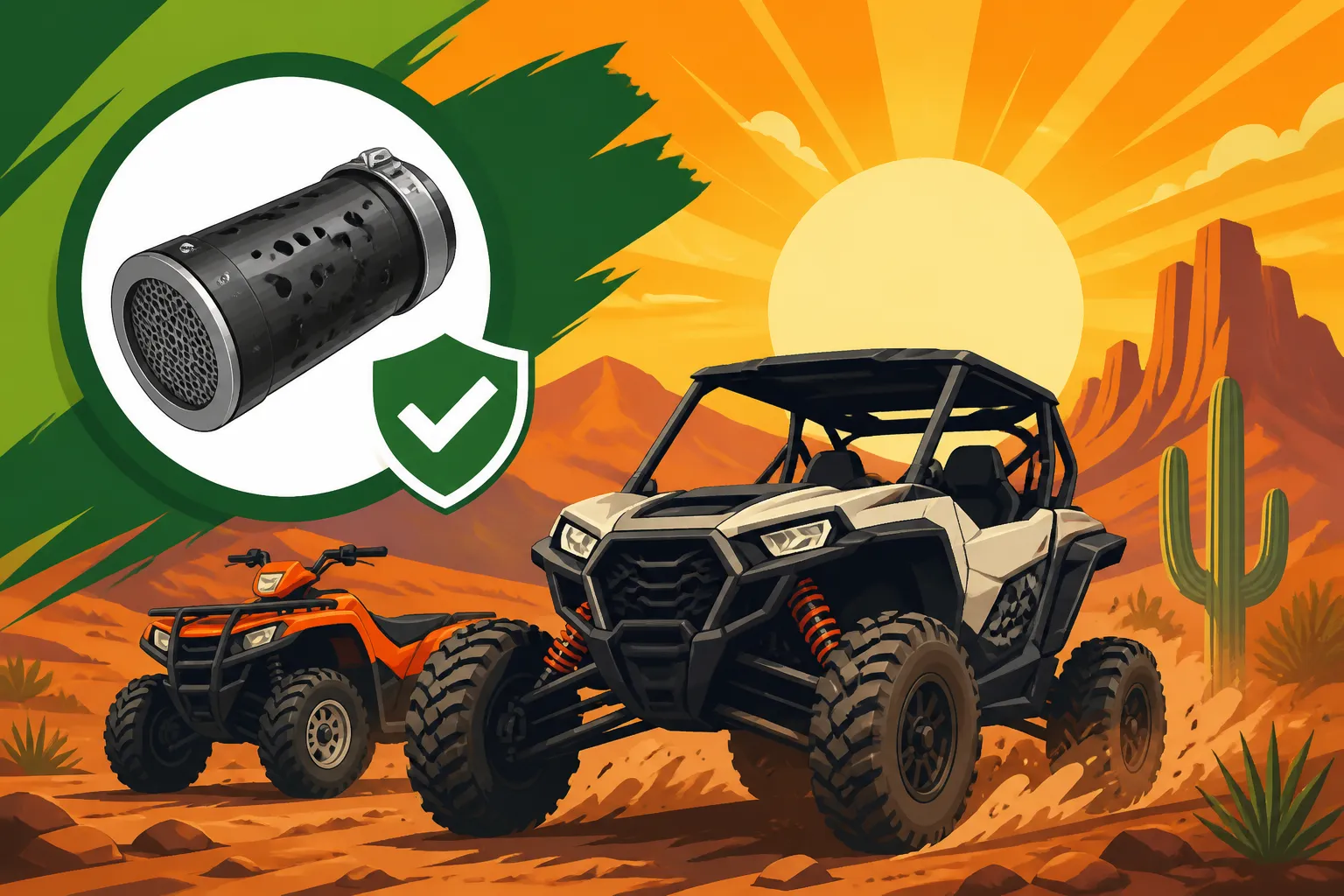
USDA-Approved Spark Arrestors in Arizona
There's nothing quite like the freedom of exploring Arizona's vast and stunning off-highway vehicle (OHV) trails. But with that freedom comes a big responsibility, especially when it comes to fire safety in our beautiful, yet often parched, desert and forest lands. Many riders, especially newcomers or those with modified machines, often scratch their heads trying to figure out what a "USDA-approved spark arrestor" actually means for their ATV or UTV, and where they even need one. This guide is going to clear up all that confusion, walking you through why this little device is so critical, how to make sure your machine is compliant, and what to do if it's not.
What Exactly Is a Spark Arrestor and Why Arizona Cares So Much
Before we dive into the specifics of approval and regulations, let's get down to basics. What exactly are we talking about when we say "spark arrestor"? Simply put, it's a device integrated into your machine's exhaust system, designed to prevent incandescent particles (sparks) from being emitted into the environment. These sparks, which are essentially tiny pieces of burning carbon, are a natural byproduct of combustion in an internal engine. While minuscule, they carry enough heat to ignite dry vegetation, particularly in Arizona's tinder-dry conditions.
The concern here isn't just theoretical; it's a very real, tangible threat to our wildlands and the communities that border them. Arizona, with its sprawling deserts, dense forests, and high fire danger, takes this threat extremely seriously. A single spark from an unequipped or faulty exhaust can quickly turn into a devastating wildfire, destroying natural habitats, threatening homes, and closing down the very trails we love to ride. The rules around spark arrestors aren't just bureaucratic red tape; they are a direct response to the ecological and economic realities of living and recreating in a fire-prone state.
The Basic Mechanics of Fire Prevention
The core principle behind a spark arrestor is quite clever in its simplicity. As exhaust gases flow through your muffler, they pass through a series of screens or baffles within the spark arrestor. These barriers are specifically designed to trap and cool any hot carbon particles. Think of it like a fine mesh filter: the exhaust gases can pass through freely, but the heavier, burning sparks are forced to strike against the cooler metal surfaces, extinguishing them before they can exit the tailpipe. This process is continuous, meaning that as long as your engine is running, the spark arrestor is working to contain potential fire hazards.
It's a critical component for every ride, from a quick jaunt on a local trail to a multi-day adventure deep in the backcountry. The device must be effective, durable, and regularly maintained to ensure it performs its life-saving function without hindering your machine's performance. Without this simple but vital piece of equipment, every ride carries an unacceptable risk, turning a day of enjoyment into a potential disaster. That's why [Why a Spark Arrestor Runs Whenever the Engine Does] is such an important concept to grasp – it's always working, and always needs to be working correctly.
Why Arizona's Climate Demands Vigilance
Arizona's diverse geography, from the saguaro-studded Sonoran Desert to the pine forests of the Mogollon Rim, shares one critical characteristic: extended periods of heat and dryness. Our monsoon season brings some relief, but often arrives with lightning, which also sparks fires, adding to the general fire danger. Outside of that, we typically have long, dry spells where vegetation becomes incredibly flammable. Even a small ember can find purchase in dry grasses, brush, or fallen leaves, especially when fanned by Arizona's often strong and unpredictable winds.
This unique combination of climate factors means that state and federal land managers, as well as local communities, are acutely aware of fire risks. The rules and regulations for spark arrestors are a direct reflection of this awareness, putting the onus on riders to ensure their machines are safe. When you're out on public land, whether it's Forest Service ground or BLM land, you're not just riding for yourself; you're part of a larger community responsible for protecting these precious resources. A functional, approved spark arrestor is your fundamental contribution to that collective safety effort.
The Nitty-Gritty of USDA Approval: What It Means for Your Ride
Now that we understand why spark arrestors are so important, let's talk about the "USDA-approved" part. It’s not enough to simply have a spark arrestor; it must be one that meets specific federal standards established by the U.S. Forest Service, which falls under the U.S. Department of Agriculture (USDA). This isn't just an arbitrary label; it means the device has undergone rigorous testing to prove its effectiveness in preventing spark emissions.
When a spark arrestor is "USDA-approved," it means it has been laboratory-tested and certified to prevent the escape of any particle larger than 0.023 inches in diameter. This standard is crucial because it ensures a consistent and high level of fire prevention across all certified devices. Without this uniform standard, there would be no guarantee that various aftermarket or homemade arrestors would adequately protect against wildfires. This testing involves subjecting the device to various exhaust flow rates and temperatures to simulate real-world riding conditions, making sure it holds up to the demands of off-road use.
The Testing Process and Certification Stamp
The testing process for a spark arrestor is quite involved. Manufacturers submit their designs to a certified laboratory where they are put through a series of tests to measure their efficiency in trapping sparks. The device is typically mounted on a test engine, and its exhaust is directed through a chamber where any escaping particles are collected and measured. If the device consistently meets the 0.023-inch maximum particle size standard across a range of engine RPMs and loads, it earns its "approved" status.
Once approved, the manufacturer is allowed to mark the spark arrestor with a specific stamp or label indicating its compliance. This mark is your visible proof that the device meets the federal standard. It often includes "USDA Forest Service Approved" or similar wording, sometimes with a model number or specific certification number. This stamp is what law enforcement and land managers will look for when checking your machine on the trail. If your machine doesn't have this clearly visible stamp, or if the stamp is worn off, you could face issues, even if you believe the device is compliant.
Why Just "Any" Spark Arrestor Won't Do
This emphasis on USDA approval often surprises new riders. They might think, "I have a screen in my muffler, isn't that good enough?" The answer, unequivocally, is no. A homemade screen, a generic baffle, or an aftermarket exhaust system without explicit USDA approval might not meet the stringent particle retention standards. They might look the part, but they haven't been tested to the federal standard. This is where the distinction becomes critical for both your safety and your legal standing.
Riding with a non-approved spark arrestor is essentially the same as riding without one in the eyes of the law on most public lands in Arizona. If you're caught, you could be cited for violating fire safety regulations, which can carry significant fines. More importantly, you're putting yourself and countless others at risk. When considering aftermarket options, always prioritize those that clearly state their USDA approval. Reputable brands, like SuperATV, often design their exhaust systems with integrated, approved spark arrestors or offer approved arrestor inserts, ensuring riders can upgrade performance without compromising safety or legality.
Checking Your Machine for a Spark Arrestor: What to Look For
So, you're ready to hit the trails and want to make sure your ATV or UTV is compliant. How do you go about checking for a USDA-approved spark arrestor? This is a question many riders ponder, especially if they've bought a used machine or installed an aftermarket exhaust. It's not always obvious, but with a bit of know-how, you can typically find what you're looking for. The key is knowing where to look and what to look for.
Most modern ATVs and UTVs come from the factory with an integrated, USDA-approved spark arrestor as part of their original equipment manufacturer (OEM) exhaust system. Manufacturers understand the regulations and build their machines to be compliant for sale and use on public lands. However, issues arise when machines are modified, exhausts are replaced, or if you're dealing with an older model.
Locating the Spark Arrestor on Your Machine
The spark arrestor is always located within the muffler or at the very end of the exhaust pipe, where gases exit. For most ATVs and UTVs, you'll find the muffler at the rear of the machine, often tucked away for protection. The spark arrestor itself might be:
- Integrated into the muffler: This is common for OEM systems. You might not see a separate "part," but rather a screen or baffle system inside the muffler.
- A removable insert: Some systems, especially aftermarket ones, have a spark arrestor that is a separate, removable insert that fits into the end of the exhaust tip.
To check, you'll typically need to look directly into the exhaust outlet. You should see a screen or series of screens. On some machines, you might need a flashlight and a small mirror to get a good view. For certain models, especially if it's an insert, you might need to remove a bolt or two to take off the end cap of the muffler to fully inspect the arrestor. This is often the case for dirt bikes and some smaller ATVs.
The All-Important USDA Stamp
Once you've located what you believe to be the spark arrestor, the next crucial step is to find the USDA approval stamp. This stamp is usually engraved directly onto the metal of the spark arrestor itself, or on the muffler body very close to where the exhaust exits. It might be small, so look carefully.
Here's what you're looking for:
- "USDA Forest Service Approved"
- "USFS Approved"
- "Spark Arrester"
- A specific "SA" (Spark Arrestor) rating, sometimes followed by a part number.
If you don't see any of these markings, or if the markings are unreadable due to rust, damage, or being caked in mud, then you have a problem. An unidentifiable spark arrestor is, for all intents and purposes, considered non-compliant by land management agencies. It's often worth carrying a small wire brush or steel wool to gently clean the area if the stamp is obscured by grime, just be careful not to damage the underlying metal.
OEM vs. Aftermarket Considerations
When you have an OEM exhaust, the likelihood of it being USDA-approved is very high. Manufacturers build them to meet these standards. However, if you've installed an aftermarket exhaust, the responsibility shifts entirely to you. Many performance exhausts are not designed with an integrated spark arrestor or come with one that isn't USDA-approved. This is a common oversight that can lead to a citation.
If you have an aftermarket exhaust, you need to verify two things:
- Does it have a spark arrestor built-in or as an insert?
- Is that specific spark arrestor clearly marked as USDA-approved?
If the answer to either is no, you'll need to purchase and install an approved spark arrestor insert that fits your aftermarket exhaust, or replace the entire system with one that is compliant. Brands like SuperATV often clearly list the compliance of their exhaust systems or offer specific spark arrestor inserts for their products, making it easier for riders to stay legal. This is also a critical step when buying a used machine; always [Spark Arrestor Inspection on a Used Machine] before you hand over any cash.
When and Where Arizona Requires a Spark Arrestor
Understanding what a spark arrestor is and how to check for it is only half the battle. The other crucial piece of information is knowing when and where it's actually required in Arizona. This isn't a blanket rule for every patch of dirt; it's specifically tied to public lands and certain conditions, though the safest bet is to always have one installed and functional.
Arizona's fire danger varies throughout the year and across different elevations and ecosystems. During periods of high fire danger, usually in late spring and early summer before the monsoons, or during extended drought conditions, enforcement becomes even more stringent. It's always best practice to assume you need a spark arrestor whenever you're riding off your own private property.
Public Lands: The Primary Requirement Zone
The primary areas where USDA-approved spark arrestors are legally mandated are public lands managed by federal agencies. In Arizona, this includes:
- National Forests: Such as the Coconino National Forest, Prescott National Forest, Tonto National Forest, and Coronado National Forest. These are federal lands, and the USDA Forest Service regulations apply directly.
- Bureau of Land Management (BLM) Lands: The vast majority of Arizona's desert riding areas fall under BLM management. Again, federal regulations, including spark arrestor requirements, are strictly enforced.
- National Parks and Monuments: While OHVs generally have very restricted access in these areas, if there are any designated routes open to OHVs, spark arrestors will be required.
- Arizona State Trust Land: While managed by the state, these lands often have similar fire prevention rules, especially given their proximity to federal lands and communities. [Arizona State Trust Land Recreational Permits] are also required to use these lands.
If you're riding on any of these public lands, which constitute the bulk of Arizona's OHV trail network, your machine must have a functional, USDA-approved spark arrestor. This is not negotiable. [Arizona's Spark Arrestor Requirement] is a fundamental rule for responsible off-roading here.
Private Land and Closed Courses
What about private land? Generally, if you're riding exclusively on private property that you own or have explicit permission to use, and you're not traversing public land to get there, a spark arrestor might not be legally mandated by state or federal law. However, this is where common sense and good neighbor practices come into play. Even on private land, a spark-induced fire can quickly spread, causing damage to your property, your neighbors' land, and potentially public resources. It’s always responsible to use a spark arrestor regardless.
For closed-course racing or events, some specific exemptions may apply. [Arizona Closed-Course Exemptions] typically require the event to be held on designated tracks or private facilities with specific fire prevention measures in place. But unless you are participating in such a sanctioned event on a closed course, you should always assume the requirement for a spark arrestor applies.
Fire Restrictions and Increased Vigilance
During periods of high fire danger, land management agencies in Arizona will often implement fire restrictions, sometimes escalating through different stages. These restrictions can impact everything from campfires to target shooting, and they certainly affect OHV use. While a spark arrestor is always required on public lands, during Stage 1 or Stage 2 fire restrictions, enforcement becomes much more visible and penalties can be harsher.
It's crucial to check local conditions and fire restriction levels before you head out. Agencies like the Forest Service and BLM will post notices at trailheads, on their websites, and through local news outlets. Ignoring these warnings, or riding with a non-compliant machine during high fire danger, is not only dangerous but can also lead to significant fines and even criminal charges if your machine is linked to a wildfire. Always be informed and prepared for [Arizona Fire Restrictions by Stage].
Maintenance and Replacement: Keeping Your Spark Arrestor Legal
Having a USDA-approved spark arrestor is a great start, but it's not a set-it-and-forget-it deal. Like any component on your ATV or UTV, it requires regular maintenance and inspection to ensure it remains effective and legal. A spark arrestor that's clogged with carbon, damaged, or simply missing its screen is just as useless – and illegal – as not having one at all.
This aspect often gets overlooked by riders. They might think that once it's on, it's good for life. Unfortunately, exhaust gases, especially from engines that run rich or burn oil, can quickly build up carbon deposits on the screen. Over time, this buildup can restrict exhaust flow, reduce engine performance, and paradoxically, make the spark arrestor less effective at trapping sparks. Proper care is key to both your machine's health and fire safety.
Cleaning Your Spark Arrestor
The most common maintenance task for a spark arrestor is cleaning. Carbon buildup is the enemy here. How often you need to clean it depends on your riding habits, your machine's engine condition, and the type of fuel you use. Some manufacturers recommend cleaning every 10-20 hours of operation, while others might suggest checking it at every oil change. Always refer to your owner's manual for specific recommendations.
Here's a general process for cleaning:
- Remove the spark arrestor: If it's a removable insert, you'll need to unbolt the end cap of your muffler. If it's integrated, you might have to remove the entire muffler for a thorough cleaning.
- Inspect for damage: Look for any holes, tears, or warping in the screen. If it's damaged, it needs to be replaced, not just cleaned.
- Clean carbon deposits: The most effective way to clean carbon is with a wire brush or by carefully scraping it off. For stubborn buildup, some riders soak the arrestor in a carbon-removing solvent, a solution of oven cleaner, or even boil it in water. Always wear appropriate eye protection and gloves.
- Reassemble: Make sure everything is put back together correctly and securely.
It’s tempting to skip this step, but a clogged spark arrestor can actually hinder your machine’s performance, leading to back pressure and reduced power. Plus, an ineffective one is a safety hazard.
Inspection for Damage and Wear
Beyond cleaning, regular inspection for physical damage is crucial. The spark arrestor is exposed to extreme heat, vibration, and sometimes even impacts from debris. Over time, the metal screen can degrade, warp, or develop holes.
What to look for during inspection:
- Holes or tears in the screen: Even small holes can allow sparks to escape.
- Warping or deformation: This can indicate excessive heat or physical damage, compromising its effectiveness.
- Corrosion: Rust can weaken the metal, leading to holes.
- Missing components: Ensure all baffles and screens are intact.
If you find any significant damage, it's time for a replacement. Trying to patch or repair a damaged screen is generally not recommended, as it might not meet the original USDA standards.
When to Replace Your Spark Arrestor
Knowing when to replace is as important as knowing when to clean. If your spark arrestor is damaged, excessively corroded, or if the USDA stamp is no longer visible and you can't restore it, it's time for a new one. [Replacing a Burned-Out Spark Arrestor] is a relatively inexpensive fix that offers immense peace of mind and keeps you legal.
When purchasing a replacement, whether it's an OEM part or an aftermarket insert, always confirm that it is USDA-approved. Don't assume. Check the packaging and the part itself for the necessary stamp. If you're running an aftermarket exhaust, make sure the replacement spark arrestor is specifically designed for your model and is still USDA compliant. Again, brands like SuperATV are good places to start when seeking quality, compliant replacements. Taking these simple steps ensures you're riding safely and legally on Arizona's beautiful trails.
Avoiding the Hassle: Common Mistakes with Spark Arrestors
Nobody wants to get a ticket or, worse, be responsible for starting a wildfire. Yet, every season, riders encounter problems related to spark arrestors. Often, these issues stem from simple oversights or a lack of understanding. By being aware of common mistakes, you can easily avoid the hassle and ensure your rides are always safe and compliant.
The goal here isn't just about avoiding a fine; it's about being a responsible steward of Arizona's natural environment. Our trails and wildlands are a privilege, not a right, and maintaining them requires everyone to do their part. Understanding these common pitfalls will help you ensure your machine is always ready for the trail.
Not Checking Before Every Ride (or Season)
One of the biggest mistakes riders make is assuming their spark arrestor is fine simply because it was fine last week, or last season. Carbon builds up, screens can get damaged, and that small bolt holding the end cap on can vibrate loose over time. Before you even load your machine onto the trailer, make it a habit to quickly inspect your spark arrestor.
A pre-ride check should be quick: look into the exhaust, confirm the screen is present and intact, and verify the USDA stamp is visible. If you're a seasonal rider or store your machine for extended periods, a more thorough inspection and cleaning should be part of your pre-season prep. This small step can save you a lot of trouble at a trailhead inspection or, more critically, prevent an accidental fire. [What an Arizona Ranger Asks a Rider For] often includes checking for a spark arrestor.
Aftermarket Exhausts Without Integrated Arrestors
This is a recurring problem, especially for riders who enjoy modifying their machines for performance or a different sound. Many aftermarket exhaust systems are designed primarily for increased airflow and horsepower, and they don't always come with an integrated, USDA-approved spark arrestor. Some even sell the spark arrestor as a separate, optional add-on.
The mistake is installing a new exhaust and not simultaneously ensuring it has the proper spark arrestor. If your new aftermarket exhaust does not explicitly state it includes a USDA-approved spark arrestor, or if it doesn't have the stamp, you must acquire and install a compliant insert or system. Don't be swayed by the promise of more power if it means sacrificing fire safety and legality. [Aftermarket Exhaust and Arizona Fire Rules] are very clear on this.
Buying Used Machines Without Verification
Purchasing a used ATV or UTV can be a great way to get into the sport, but it comes with its own set of due diligence requirements. One of the most common oversights is not verifying the spark arrestor status. A previous owner might have removed it, installed an unapproved aftermarket exhaust, or allowed it to become damaged or clogged.
When inspecting a used machine, always look for the spark arrestor and its USDA stamp. Don't just take the seller's word for it. If it's missing or damaged, factor the cost of replacement into your offer. It's a non-negotiable item for riding on public lands in Arizona.
Neglecting Cleaning and Maintenance
As discussed earlier, a clogged or damaged spark arrestor is a non-functional one. Ignoring regular cleaning allows carbon to build up, which can eventually restrict exhaust flow, reduce engine performance, and ironically, diminish the spark arrestor's ability to trap sparks effectively. It's a simple maintenance task that pays dividends in both performance and compliance.
Failing to properly maintain your spark arrestor not only risks a citation but also increases the likelihood of starting a wildfire, which is a far more serious consequence. Make it a routine part of your machine's upkeep, just like checking the oil or tire pressure.
By avoiding these common mistakes, you'll ensure that your Arizona OHV adventures are always enjoyable, safe, and fully compliant with the rules designed to protect our precious environment.
Disclaimer
This article is for general informational purposes only and does not constitute professional advice. Laws, prices and regulations vary by location and change over time. Consult a qualified professional for guidance on your specific situation.