Arizona Penalties for a Missing Plate
There's nothing quite like hitting the Arizona trails, the desert stretching out around you, sun on your face, and the roar of your ATV or UTV echoing through the canyons. It's a freedom that few other activities can match. But that freedom comes with responsibilities, and sometimes, the complexities of vehicle registration, especially when it comes to plates, can throw a real wrench in an otherwise perfect day. Many riders, in their excitement to explore, either overlook or misunderstand the requirements for displaying a proper license plate, particularly if their machine is venturing onto paved roads. This guide is here to unravel those tricky rules and, more importantly, lay out the frustrating and often expensive penalties you could face for having a missing or improper plate on your Arizona off-highway vehicle.
Understanding Arizona's Plate Requirements for OHVs
Before we dive into the nitty-gritty of penalties, it's crucial to understand what kind of "plate" we're even talking about for an off-highway vehicle (OHV) in Arizona. Many folks get confused between the annual OHV decal and an actual license plate, and that misunderstanding can lead straight to a citation.
The Difference Between a Decal and a Plate
Let's clear this up right away. The Arizona OHV Decal is a small, sticky tag that goes on your license plate. It's an annual sticker that signifies you've paid your dues to the OHV program, which helps fund trail maintenance, education, and enforcement across the state. Every OHV that operates on public or state trust land in Arizona needs this decal, regardless of whether it's street legal or not. Think of it as your entry ticket to the vast network of Arizona's [Arizona's 40,000 Miles of OHV Trail].
A "plate," on the other hand, is the actual metal license plate issued by the Arizona Motor Vehicle Division (MVD). This is what allows your OHV to be legally operated on paved public roads. If your machine is street-legal, it will be issued either an "MC" (motorcycle) plate or an "RV" (recreational vehicle) plate, depending on its specific classification and weight. [Why Arizona Plates Read MC or RV] explains this distinction in more detail. This plate, with the current OHV decal affixed to it, is what law enforcement is looking for when you're cruising through a small town or crossing a highway. A missing plate generally means you're operating a street-legal machine without its proper identification, or trying to pass an off-highway-only machine off as street-legal without going through the proper channels.
When a Plate is Absolutely Required
The rule of thumb is simple: if your OHV touches a paved public road, it needs to be street legal, and that absolutely includes displaying a valid, current license plate. This isn't just for long stretches of highway. Even if you're just crossing a paved county road to get to another section of trail, or riding into a small trail town for gas and lunch, your machine needs to meet street-legal requirements and display its plate.
What does it mean to be street legal? Well, Arizona has a pretty specific list of [What Arizona Requires on a Street-Legal Machine]. This typically includes things like headlights, taillights, brake lights, a horn, mirrors, turn signals, and a windshield. Once you've equipped your machine with all these safety features and had it inspected, you can apply for an MC or RV plate. Without that plate, even if you have all the other street-legal components, you're not legally allowed on those paved roads. This is a common point of contention for riders who have invested in making their UTV or ATV street-ready but haven't completed the final MVD step.
Common Misconceptions About Plate Exemptions
There are so many myths floating around the OHV community about when you might be "exempt" from needing a plate. Let's bust a few of the most persistent ones:
- "It's only a short distance." This is a classic. Many riders think if they're just going a quarter-mile down a paved road to connect to another trail, or riding from their campsite to a gas station that's "just around the corner," they don't need a plate. Wrong. The law doesn't specify a minimum distance. If you're on a public road, you need to be street-legal and plated.
- "It's a rural road, nobody cares." Again, a dangerous assumption. While enforcement might feel less frequent in remote areas, county sheriffs, MVD enforcement officers, and even Game and Fish rangers patrol all kinds of roads, including those rural two-laners that feel like part of the wilderness. They absolutely care, and they are trained to spot violations. [Deputy Enforcement on Arizona Back Roads] is a good read on this.
- "I have my OHV decal, that's enough." As we discussed, the decal is for off-highway operation. It doesn't magically turn your trail machine into a street-legal vehicle. Without the actual metal plate indicating street-legal registration, the decal is just a stamp on a non-existent document in the eyes of road-use law.
- "My machine is technically a golf cart in my community." This is a tricky one. While some communities might have specific ordinances allowing golf carts on certain streets, a true OHV (like a UTV or ATV) is almost always considered different. Don't assume your UTV, even a small one, falls under "golf cart rules" without explicitly checking local city or county ordinances. [Arizona Rules for a Golf Cart in a Community] goes into this.
The Specific Penalties for a Missing Arizona OHV Plate
Okay, so now you know when a plate is required. But what happens if you get caught without one? The answer, unfortunately, ranges from a costly inconvenience to a full-blown headache that can spoil your entire riding season.
Citations and Fines: What to Expect
The most common penalty for a missing OHV plate is a citation, which comes with a hefty fine. This isn't just a slap on the wrist. A missing plate is generally considered a moving violation or a serious equipment violation, and the fines can be substantial. While I can't give specific dollar amounts (those change), it's safe to say you'll be looking at figures that could easily cover a tank of gas, a new set of tires, or even a weekend's worth of camping fees.
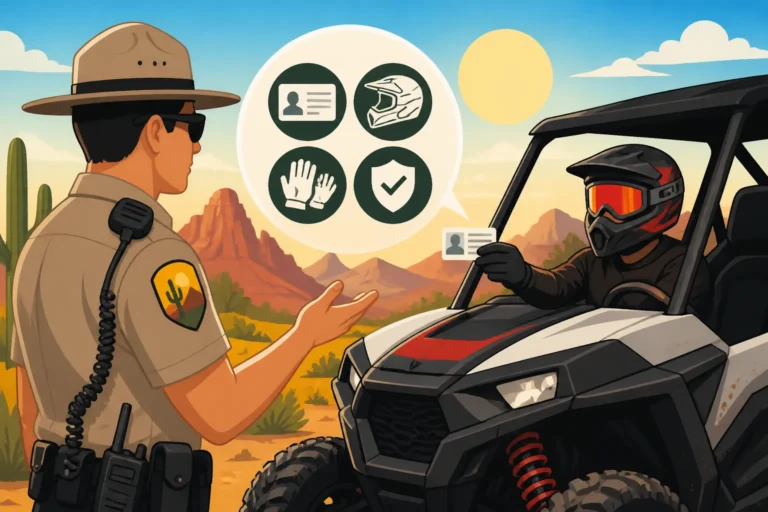
Imagine this scenario: You're riding your newly kitted-out side-by-side, proud of all the street-legal modifications you've made. You've got your horn, your mirrors, your turn signals – everything except the plate you "just haven't gotten around to picking up from the MVD yet." You're crossing a state highway connector road to reach another fantastic trail system when a local sheriff's deputy pulls you over. They'll ask for your driver's license, registration, and proof of insurance. When they see the missing plate, the conversation will quickly shift to a citation. Not only will you get the ticket for the missing plate, but you might also be cited for other related offenses like improper registration for road use. It's a quick way to turn a fun day into a frustrating and expensive one.
These citations, if not handled, can lead to even bigger problems. Ignoring a ticket can result in increased fines, late fees, and potentially even a warrant for your arrest or a suspension of your driving privileges. Always address a citation promptly. You can often pay the fine, or, if you believe you were wrongly cited, explore options for [Fighting an OHV Ticket in Arizona].
Impoundment and Towing: A Costly Hassle
This is where things can get truly awful. Depending on the specifics of the situation and the officer's discretion, your OHV could be impounded and towed. This isn't just an inconvenience; it's a major financial hit and a logistical nightmare.
Consider this: You're deep in the desert, maybe an hour from the nearest town. You're pulled over for a missing plate while riding on a county road. The officer decides to impound your machine. Now, not only do you have the citation, but you're stranded. You'll need to arrange a ride for yourself and potentially any passengers. Then, you'll have to deal with the impound lot. Impound fees accumulate daily, plus there's the initial towing fee. These costs can quickly run into hundreds, if not thousands, of dollars, far exceeding the initial fine for the missing plate. You might even need to present all your corrected paperwork (including proof of getting that plate) before the impound lot will release your machine. It's a scenario that can ruin a whole vacation and severely impact your wallet.
Impact on Your Driving Record and Future Registration
While a missing plate might seem like a minor offense, if it's treated as a moving violation, it can absolutely affect your driving record. Accumulating several such violations could lead to points on your license, increased insurance premiums for your regular vehicle, or even a suspension of your driver's license.
Repeated offenses, or operating a vehicle that is habitually unregistered or improperly plated, can also impact your ability to register other vehicles in the future. The MVD keeps records, and a pattern of non-compliance can raise red flags. While it might not seem like a big deal for a joyride in the desert, consistent disregard for vehicle laws can have broader consequences for your driving and registration privileges.
Insurance Implications for Undocumented Machines
Most OHV insurance policies are written based on how you intend to use your machine – off-road, or street-legal (requiring specific endorsements and higher liability coverage). If you're operating your OHV on paved roads without the required street-legal registration and plate, you could be giving your insurance company a reason to deny a claim if you get into an accident.
Imagine you're involved in a collision with a passenger car while riding your unplated OHV on a paved road. Even if you have an OHV insurance policy, the company could argue that you were operating the vehicle illegally by not having the proper street-legal registration and plate for that type of use. This could mean you're personally liable for damages and injuries, which could be catastrophic. Understanding [Arizona Insurance Minimums for Street-Legal Machines] is critical, but meeting those minimums is pointless if your machine isn't legally registered for road use in the first place. Always ensure your machine's registration status matches its intended use, especially when it involves public roads.
Steps to Ensure Your OHV is Properly Plated in Arizona
Avoiding these frustrating penalties is entirely within your control. It comes down to understanding the rules, diligently following the MVD process, and staying on top of your paperwork.
Getting Your Machine Street Legal
The path to a street-legal OHV is clear, though it requires some effort. First, you'll need to equip your machine with all the necessary components as outlined by Arizona law (headlights, taillights, brake lights, horn, mirrors, turn signals, etc.). Once your machine is properly outfitted, you'll need to go through an inspection process, typically at the MVD or an authorized third-party provider, to verify it meets all safety standards.
After passing inspection, you can apply for your Arizona title and registration, specifying that you intend to make the machine street legal. You'll be issued either an MC or RV plate, which you then need to affix securely to your machine. [Getting an MC Plate for a Side-by-Side] provides a great walkthrough of this process specifically for side-by-sides, which are very popular for street-legal conversions. Remember, the OHV decal will still need to be placed on this new metal plate to signify you're also compliant for off-highway use.
Maintaining Your Plate and Registration
Getting the plate is just the first step; maintaining it is equally important. Your plate must be clearly visible, securely mounted, and free from obstructions like mud, dirt, or aftermarket accessories. Arizona law requires the plate to be mounted horizontally on the rear of the machine, with the numbers and letters clearly legible. A common mistake is letting mud accumulate on the plate after a day on the trails, which can still lead to a "missing plate" citation in the eyes of an officer.
Beyond visibility, ensure your registration and OHV decal are always current. The OHV decal needs to be [Renewing an Arizona OHV Decal Each Year], and your street-legal registration will have its own renewal cycle. Set reminders, use the Arizona MVD's online portal, or keep good records to avoid any lapses. Staying current means you won't get caught with an expired tag, which is just as bad as a missing one.
Handling a Lost, Stolen, or Damaged Plate
Plates can get lost on rough trails, fall off due to vibrations, or simply be stolen. If your plate goes missing, you need to act quickly.
- Report it: If you suspect it was stolen, file a police report immediately. This creates a paper trail and protects you if the plate is used improperly. Even if it just fell off, reporting it as lost to the MVD can be a good idea.
- Obtain a replacement: You'll need to apply for a replacement plate through the Arizona MVD. There will be a fee, but it's a small price to pay compared to the fines and hassle of an impoundment. While you're waiting for your new plate, avoid operating your machine on public roads if at all possible. If you must, carry documentation proving you've applied for a replacement.
- Documentation for "Lost" Circumstances: In some cases, such as an insurance claim after a theft, you might need formal documentation of loss. While not directly for MVD, if you ever needed to prepare an affidavit stating the circumstances under which your plate was lost or stolen for insurance or other legal purposes, resources like LawDepot can provide templates to help you draft such formal declarations.
It's similar to dealing with [Replacing a Lost Arizona Title] – the key is prompt action and proper documentation.
What to Do if You Receive a Citation
So, despite your best efforts, you found yourself with a citation for a missing plate. Don't panic, but don't ignore it either.
Understanding Your Rights and Options
The first thing to do is carefully read the citation. It will contain crucial information: the specific violation, the issuing agency, the due date for payment or appearance, and instructions on how to proceed. You generally have two main options:
- Pay the Fine: If you acknowledge the violation and the facts are clear, paying the fine by the specified deadline is often the simplest route. You can typically do this online, by mail, or in person at the court.
- Contest the Citation: If you believe you were wrongly cited, or there were extenuating circumstances, you have the right to contest the citation in court. This means pleading not guilty and presenting your case to a judge.
It's important to understand the implications of each choice. Paying the fine usually closes the matter, though it might result in points on your driving record. Contesting it means spending more time and effort, but could potentially get the citation dismissed or reduced.
Preparing to Contest a Citation
If you decide to contest the citation, preparation is key. Here's what you should consider:
- Gather Evidence: Did you apply for a replacement plate and have proof? Did the officer misinterpret the law? Were you actually on private land and mistakenly cited for a public road violation? Collect any and all documents, photos, or witness statements that support your case.
- Understand the Law: Research the specific statute you were cited under. Knowing the precise legal definition of the offense can help you argue your position effectively.
- Present Your Case: When you go to court, be respectful, clear, and concise. Present your evidence logically. Sometimes, if it's a fix-it ticket (e.g., you fix the issue before the court date), a judge might be lenient.
- Legal Assistance: For more complex situations, especially if other violations are involved, consider seeking legal advice. An attorney specializing in traffic or OHV law can guide you through the process.
- Formal Statements: In some cases, especially if you're dealing with multiple agencies or insurance companies after a contested incident, you might need to provide a formal written statement or affidavit. LawDepot offers templates for various legal documents, which can be useful if you need to formalize your account of events for court or other official purposes, ensuring your narrative is clearly and legally structured.
Avoiding Future Violations
The best way to handle a citation is to avoid getting one in the first place. A few simple habits can go a long way:
- Pre-Ride Checks: Before every ride, especially if you plan to hit any paved roads, do a quick check of your machine. Is the plate securely mounted and visible? Is your OHV decal current? Do you have your registration and proof of insurance with you (or easily accessible on your phone)? [What an Arizona Ranger Asks a Rider For] details the documents you should always have.
- Know Your Route: Plan your route and know where you're allowed to ride. Understand which [Arizona City Streets Open to OHVs] and which ones are off-limits. Avoid inadvertently entering a restricted zone.
- Stay Informed: Laws and regulations can change. Keep up to date with Arizona MVD and Game and Fish Department announcements. Consider taking [Arizona's Free Mandatory OHV Decal Course], even if you’re an experienced rider, as it covers many basic rules and safety tips that apply to all OHV use.
- Ask Questions: If you're unsure about a specific rule or requirement, don't guess. Contact the Arizona MVD, Game and Fish Department, or a local law enforcement agency for clarification. It's better to ask than to pay a fine.
Here’s a quick overview of what you risk:
| Violation Type | Potential Consequence |
|---|---|
| Missing Plate | Citation, significant fine |
| Expired Registration | Citation, significant fine |
| Improper Plate Use | Citation, fine (e.g., using OHV-only on road) |
| Repeated Offenses | Higher fines, impoundment, driving record impact |
| Accident with No Plate | Insurance claim denial, personal liability, fines |
| Impoundment | Towing fees, daily storage fees, recovery hassle |
Getting out into the Arizona desert on your ATV or UTV is a truly unique experience. Don't let a missing license plate turn your adventure into a costly legal mess. By understanding the regulations, properly outfitting and registering your machine, and diligently keeping your paperwork in order, you can enjoy the trails and roads of Arizona worry-free. Stay safe, stay legal, and happy riding!
Disclaimer
This article is for general informational purposes only and does not constitute professional advice. Laws, prices and regulations vary by location and change over time. Consult a qualified professional for guidance on your specific situation.