Arizona Liability Minimums for Street-Legal Machines
Making your beloved side-by-side or ATV street-legal opens up a whole new world of adventure, allowing you to connect trails, grab a quick bite in town, or even commute short distances. But with this newfound freedom comes a new set of responsibilities, especially when it comes to insurance. It’s not just about getting your off-highway decal; once you’re on paved roads, Arizona wants to make sure everyone is protected. This guide will walk you through Arizona's specific liability minimums for street-legal off-highway vehicles, helping you understand what's required to keep you legal and protected on public roads.
Understanding Arizona's Insurance Mandate for Street-Legal OHVs
When you’re out on the designated trails, many of the risks associated with riding are understood to be "at your own risk" (within limits, of course, always ride responsibly!). However, the moment you put street-legal plates on your off-highway vehicle and venture onto public roads, you enter a different sphere of legal requirements and liabilities. The state of Arizona, like most others, mandates that any registered motor vehicle operated on public thoroughfares must carry a minimum level of liability insurance. This isn't merely a formality; it's a critical component designed to protect all road users from the potential financial hardships that can arise if you're found at fault in an accident. It's a fundamental part of the process when considering [Making a UTV Street Legal in Arizona].
This legal mandate stems from the principle that those who cause accidents should be financially responsible for the harm they inflict on others. Without adequate insurance, the burden of medical bills, property damage, and other related costs would fall directly on the injured parties or, eventually, potentially you. Your standard off-highway vehicle (OHV) decal, while crucial for trail access, doesn't inherently come with liability insurance coverage. That’s a completely separate and additional requirement that comes into play specifically when you decide to make your machine street-legal. Many riders, understandably, sometimes misunderstand this distinction, assuming their trail-use status covers all bases.
Beyond the legal obligation, having proper insurance is simply a smart decision for any street-legal OHV owner. The potential financial fallout from an accident, especially one involving significant injuries or extensive property damage, can be astronomical. A single incident could result in lawsuits that could jeopardize your personal assets, savings, and even your future financial stability. The peace of mind that comes from knowing you're adequately covered allows you to enjoy your ride without constant worry about worst-case scenarios.
Why Insurance Becomes Mandatory on Paved Roads
The transition from off-road to on-road riding brings a significant shift in legal exposure and risk. Out in the desert or on mountain trails, collisions typically involve other OHVs or natural obstacles, and the speed limits are often lower, with fewer third-party vehicles involved. However, once you transition to asphalt, you're sharing the road with cars, trucks, motorcycles, and pedestrians, often at higher speeds and in more complex traffic situations. The potential for severe accidents, leading to significant bodily injury or property damage to third parties, increases dramatically.
Arizona's requirement for minimum liability insurance for street-legal OHVs isn't just about covering your own machine; it’s primarily about protecting other drivers, passengers, and property. If you're involved in an accident that is deemed your fault, your liability insurance kicks in to cover the costs incurred by the other party. This safeguard is a cornerstone of responsible vehicle operation on public roads, ensuring that victims of accidents are not left to bear crippling financial burdens due to someone else's negligence.
Think of it this way: your off-highway decal grants you access to recreational areas, contributing to trail maintenance and search and rescue efforts. It’s a permit for specific types of use. But when you apply for an actual vehicle registration plate, like an "MC" (motorcycle) or "RV" (recreational vehicle) plate, that machine is now being classified as a motor vehicle for road use. This reclassification automatically triggers the need for standard automotive-style liability insurance, aligning it with all other vehicles on Arizona's roads. It truly is a different set of rules and responsibilities than simply having your [Arizona's Annual OHV Decal Explained].
Different Requirements for Different Machines
It's important to understand that not all off-highway vehicles are treated equally under Arizona law, especially when it comes to insurance. A quad or side-by-side that is strictly ridden off-road and never touches a public paved road only needs the annual OHV decal. This decal does not require proof of liability insurance. However, a street-legal side-by-side, ATV, or sand rail that has been converted to meet all Arizona Department of Transportation (ADOT) requirements for road use, needs both proper vehicle registration and proof of minimum liability insurance.
For street-legal OHVs, the type of license plate you receive often reflects its status. Many such machines will be issued an "MC" (motorcycle) plate if they meet all the necessary street-legal conversion requirements, which can include things like DOT-approved tires, turn signals, mirrors, and more. Other OHVs, particularly those over a certain weight, might fall into an "RV" (recreational vehicle) classification for plate purposes. Regardless of the specific plate type, the moment it's registered for street use, the liability insurance mandate applies. This is why [Arizona Insurance Minimums for Road Riding] are such a critical topic for many riders.
It's also worth briefly noting that while this article focuses specifically on OHVs converted for street-legal use, Arizona has other categories of vehicles that operate on streets, such as low-speed vehicles (like some golf carts) which have their own specific regulations. However, the general principle of requiring liability insurance when operating on public roads remains consistent across almost all motorized vehicle types. The rules are designed to be comprehensive, ensuring that anyone sharing the paved thoroughfares has a baseline of financial responsibility.
Breaking Down the Numbers: What 25/50/15 Actually Means
When you start looking at insurance policies for your street-legal OHV, you'll inevitably encounter figures like "25/50/15." These aren't just arbitrary numbers; they represent the minimum liability coverage amounts mandated by the state of Arizona. Understanding what each number signifies is crucial for ensuring you're not only compliant with the law but also aware of the financial protection (or lack thereof) these minimums offer. Many new street-legal riders find these numbers confusing, but breaking them down makes it clear what they really mean for your potential liabilities.
These figures refer to thousands of dollars in coverage. The "25" is $25,000, the "50" is $50,000, and the "15" is $15,000. Each number corresponds to a specific aspect of liability coverage, designed to cover costs associated with bodily injury and property damage you might cause in an accident. It's important to remember that these are the minimums, meaning they are the lowest acceptable amounts. While meeting these minimums keeps you legal, they might not always be enough to protect your personal finances in the event of a serious incident.
Failing to understand these minimums, or worse, riding without the proper coverage, can lead to severe legal and financial repercussions. Arizona takes its insurance mandates seriously, and the penalties for non-compliance can be steep, ranging from fines to suspension of your registration and even your driver's license. Therefore, a clear grasp of what 25/50/15 entails is not just for compliance but for your own financial security.
Bodily Injury Liability Per Person and Per Accident
The first two numbers, "25" and "50," relate directly to bodily injury liability coverage. The "25" signifies a maximum of $25,000 for bodily injury liability coverage per person in an accident where you are at fault. This means that if you cause an accident and one person is injured, your insurance policy will pay up to $25,000 for their medical expenses, lost wages, and other related damages. If their total damages exceed $25,000, the remaining balance becomes your personal responsibility.
The "50" represents a maximum of $50,000 for bodily injury liability coverage per accident. This is the total amount your insurance company will pay for all bodily injuries sustained by all parties in a single accident you caused, regardless of how many people were hurt. So, if three people are injured and their combined medical bills and other damages total $75,000, your policy will pay a maximum of $50,000, leaving you personally responsible for the remaining $25,000. This two-tiered limit is what [Arizona Insurance Limits of 25/50/15] really refers to.
It's crucial to understand that medical costs can escalate incredibly quickly, especially after serious accidents. A single hospital stay, emergency surgery, or long-term physical therapy can easily exceed $25,000 for one person, let alone multiple individuals. This is why financial advisors and insurance experts often recommend carrying coverage limits significantly higher than the state minimums. While the 25/50 limits will keep you legal on paper, they may offer very little protection for your personal assets in a real-world, high-cost scenario.
If you are found liable for damages that exceed your insurance limits, your personal assets could be at risk. This includes your savings, investments, home equity, and even future wages, which could be subject to garnishment. A court judgment against you could lead to years of financial struggle, impacting your credit score and your ability to secure loans or mortgages. The seemingly small difference in premium for higher coverage can offer immense protection against this kind of financial ruin.
Property Damage Liability
The final number in the 25/50/15 sequence is "15," which represents $15,000 for property damage liability coverage. This amount is the maximum your insurance company will pay for damage to other people's property in an accident where you are found to be at fault. This can include damage to their vehicle, a fence, a mailbox, a building, or any other physical property you may have damaged during the incident.
To put this into perspective, imagine you accidentally collide with a relatively new pickup truck, or even a mid-range sedan. The cost of repairing modern vehicles, which are packed with sensors, complex bodywork, and sophisticated electronics, can easily exceed $15,000, even for what might seem like a minor fender-bender. If the repair bill comes in at $20,000, your policy will cover $15,000, and you will be personally responsible for the additional $5,000. This is a common situation that many drivers face, highlighting the limitations of minimum coverage.
Beyond just other vehicles, property damage liability extends to a wide range of potential targets. If you swerve to avoid something and hit a utility pole, a lamppost, or even the corner of a commercial building, the costs associated with repairing or replacing these items can quickly climb. Even seemingly innocuous items like landscaping or garden walls can incur substantial repair expenses. These scenarios underscore why relying solely on minimum coverage for property damage can leave you very vulnerable.
Ultimately, adequate property damage liability coverage is about protecting your financial future. While the focus of liability insurance often leans towards bodily injury due to higher potential costs, property damage can still result in significant financial strain. Just like with bodily injury, if your property damage causes losses that exceed your policy limits, you become personally liable for the difference. This means your personal assets are once again on the line, making a strong case for opting for higher limits than the bare minimum.
Finding the Right Coverage for Your Street-Legal Machine
Navigating the world of insurance for your street-legal OHV can feel a bit daunting, but it’s a critical step in responsible ownership. While understanding Arizona’s 25/50/15 minimums is essential for compliance, it's equally important to consider whether those minimums provide adequate financial protection for you and your family. For most riders, simply meeting the legal floor is not enough, as the potential costs of an accident can far outreach those limits. Finding the "right" coverage means balancing legal requirements with your personal financial risk tolerance and asset protection.
The good news is that there are many reputable insurance providers who offer specialized policies for powersports vehicles, including street-legal ATVs and UTVs. These policies can be tailored to your specific needs, offering a range of coverage options beyond the basic liability. It's worth taking the time to research, compare quotes, and speak with insurance professionals who understand the unique aspects of insuring off-highway vehicles for on-road use. Don't assume your current auto policy will simply extend to your OHV; often, it won't, or it will have significant limitations.
Your choice of insurance should reflect the value of your machine, your riding habits, and your overall financial situation. A rider who occasionally takes their street-legal side-by-side to grab groceries might have different needs than someone who uses it for daily commuting or extensive road travel. Considering all these factors will help you make an informed decision that provides true peace of mind, allowing you to focus on the enjoyment of your street-legal adventures.
More Than Just Minimums: Beyond 25/50/15
While 25/50/15 is the legal floor in Arizona, it is rarely the safest floor for your financial well-being. The smart choice for many street-legal OHV owners is to go above these minimums. The medical and repair costs associated with even a moderate accident can quickly surpass these figures, leaving you personally responsible for the difference. Many riders find that for a relatively small increase in premium, they can significantly boost their liability protection, opting for limits like 100/300/50 or even higher, which aligns more closely with standard auto insurance policies.
When considering higher limits, think about your personal assets—your home, savings, and investments. If you were found liable for an accident that resulted in $150,000 in bodily injury damages, and you only had $50,000 in coverage, the remaining $100,000 could be pursued from your personal assets. Higher limits act as a buffer, shielding your financial future from such devastating scenarios. Your driving habits, how frequently you ride on public roads, and the typical traffic conditions you encounter should also influence your decision.
Beyond just higher liability limits, consider other types of coverage that protect you and your machine. Collision coverage pays for damages to your street-legal OHV if you hit another vehicle or object, regardless of who is at fault. Comprehensive coverage protects against non-collision incidents like theft, vandalism, fire, or damage from natural disasters. Uninsured/underinsured motorist (UM/UIM) coverage is also incredibly valuable; it protects you if you're hit by a driver who either has no insurance or insufficient insurance to cover your damages. Medical payments (MedPay) coverage can help with your medical bills regardless of fault. These aren't legally required for basic street-legal operation, but they are incredibly valuable additions to a comprehensive policy.
When shopping for coverage, don't be afraid to compare quotes from several different providers. Some insurance companies specialize in powersports vehicles and might offer more tailored plans and competitive rates. Others might offer discounts if you bundle your street-legal OHV policy with your existing auto, home, or renters insurance. It pays to do your homework and find a policy that not only meets Arizona's legal requirements but also provides the robust financial protection you deserve.
Proving Your Coverage on Arizona Roads
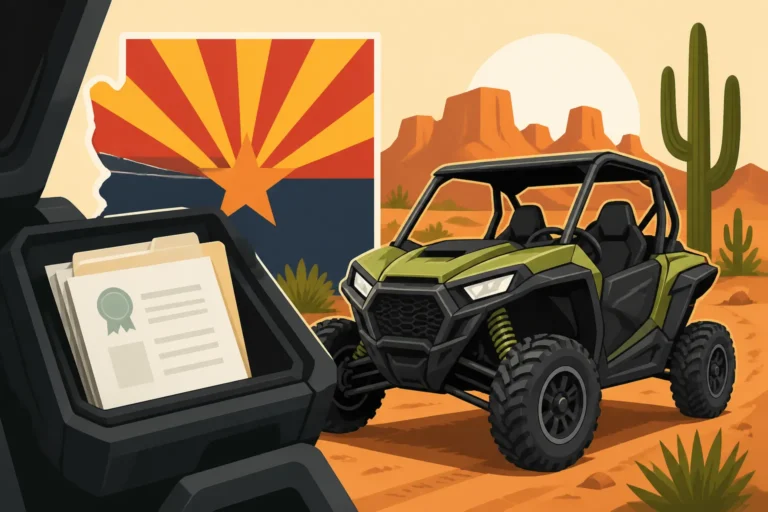
Once you've secured the appropriate insurance for your street-legal OHV, the next critical step is to ensure you can always prove you have that coverage when you're out riding. Just like operating a car, when you're on public roads in your street-legal side-by-side or ATV, you need to carry proof of insurance at all times. This is non-negotiable and something any law enforcement officer will ask for if you're pulled over or involved in an accident. Knowing [Proving Coverage on an Arizona Road] is not just good practice, it's mandatory.
Fortunately, proving coverage has become more convenient in the digital age. Most insurance companies now offer digital ID cards through their mobile apps or via email. These digital proofs are generally accepted by Arizona law enforcement, offering a convenient way to keep your information accessible. However, it's always a smart idea to have a physical copy of your insurance card stored securely on your machine, perhaps laminated or in a waterproof pouch. Cell service can be spotty in many parts of Arizona, and relying solely on a digital copy might leave you in a bind if you're in a dead zone.
It's also essential to verify that your insurance card accurately reflects all the pertinent details of your street-legal OHV. This includes the correct Vehicle Identification Number (VIN), make, model, and the effective dates of your policy. Any discrepancies could lead to complications during a traffic stop or, worse, after an accident, where delays in verifying your coverage could cause significant headaches. A quick double-check when you receive your new or renewed policy documents can save you a lot of trouble down the line.
Beyond proof of insurance, be prepared to present your valid driver's license and your OHV's current vehicle registration. These three documents are the standard triumvirate that law enforcement officers will request during a traffic stop. Having them readily available and organized will make the encounter smoother and quicker, allowing you to get back to enjoying your ride. Being prepared shows responsibility and helps avoid unnecessary delays or further scrutiny from authorities.
The Consequences of Riding Underinsured or Uninsured on Arizona Roads
Riding your street-legal OHV is all about freedom and adventure, but ignoring Arizona’s insurance requirements can quickly turn that dream into a nightmare. Many riders, whether through oversight or intentional decision, might find themselves riding on public roads without the proper minimum liability insurance. The consequences for this can be severe, extending far beyond a simple ticket. It’s not just about fines; it’s about potential registration suspensions, driver’s license suspensions, and catastrophic financial liability if you’re involved in an accident.
The Arizona Department of Transportation (ADOT) and law enforcement agencies take uninsured motorist laws very seriously because of the significant risk these drivers pose to the public. If you cause an accident without adequate insurance, the financial burden placed on the injured parties can be immense, and the legal system is designed to hold the at-fault party accountable. Understanding the full scope of these penalties is crucial for any street-legal OHV owner, as prevention is always the best approach.
The peace of mind that comes with adequate coverage is invaluable. Weighing the cost of a proper insurance policy against the potential financial and legal fallout of riding underinsured or uninsured makes the choice clear. It’s not just about what happens if you get caught, but what happens if a serious incident occurs, threatening your personal assets and future financial stability.
Penalties for Non-Compliance
Getting caught operating your street-legal OHV on Arizona public roads without the mandated minimum liability insurance can lead to a host of immediate and escalating penalties. The first thing you'll likely face is a significant financial hit in the form of fines. These aren't minor infractions; initial fines can be substantial, often running into hundreds of dollars, and they tend to increase with subsequent offenses. It's a direct and costly consequence for failing to meet your legal obligations.
Beyond the immediate monetary penalties, Arizona MVD can suspend your vehicle's registration. This means your street-legal side-by-side or ATV is no longer legally allowed to be operated on public roads. You would then have to go through the process of reinstating your coverage, paying any outstanding fines, and potentially additional reinstatement fees to get your registration back in good standing. During this suspension period, riding your OHV on paved roads would be an additional offense, compounding your problems.
In more severe cases, particularly for repeated offenses or if you are involved in an accident while uninsured, you could face the suspension of your actual driver's license. This has wider implications, affecting your ability to drive any vehicle, not just your OHV. Imagine not being able to drive your car to work or pick up groceries, all because of an uninsured OHV. These are serious consequences that can significantly disrupt your daily life.
In the most serious instances, especially if you're involved in an accident while uninsured, law enforcement might even impound your street-legal machine. This adds towing and storage fees to your already mounting expenses. Recovering an impounded vehicle can be a lengthy and costly process, further demonstrating the severe repercussions of riding without proper insurance. The financial penalties for an [Arizona OHV Crash Reporting] incident without insurance are far-reaching.
Financial Ruin After an Accident
Beyond the immediate legal penalties, the true, devastating cost of being uninsured or underinsured comes to light after an accident where you are at fault. If your liability coverage is insufficient or nonexistent, you are personally responsible for all damages that exceed your policy limits. This includes significant bodily injury costs, property damage, and any other related expenses incurred by the injured party. Medical bills for even moderate injuries can easily soar into the tens or hundreds of thousands of dollars, far surpassing Arizona’s minimum 25/50/15 coverage.
The injured party or their insurance company has every right to sue you to recover their losses. A civil judgment against you can lead to severe long-term financial repercussions. This might include wage garnishment, where a portion of your paycheck is automatically withheld to satisfy the debt. Liens could be placed on your property, including your home or other real estate, preventing you from selling them until the judgment is paid. Furthermore, a substantial judgment can severely damage your credit score, making it difficult to obtain loans, mortgages, or even rent property in the future.
It's also important to consider what happens to your own street-legal OHV in an at-fault accident. Without collision coverage, any damage to your side-by-side or ATV will be entirely your financial responsibility. Your minimum liability insurance only pays for damages you cause to others, not to your own machine. This is why many riders find that specific [Does a Car Policy Cover a UTV?] policies or standalone powersports insurance offer better protection than trying to rely on a limited auto policy.
Planning for these "what ifs" is not pleasant, but it's an essential part of responsible street-legal OHV ownership. Protecting your assets and your future should be paramount. While insurance is often seen as an expense, it's truly a shield against catastrophic financial loss. Moreover, being prepared extends to all legal aspects of ownership; for any other legal documentation related to your machine, such as a properly drafted bill of sale when you eventually sell it, services like LawDepot can provide peace of mind by ensuring your ownership transfers are clear and legally sound, helping prevent future disputes that could complicate even an insured accident claim.
Disclaimer
This article is for general informational purposes only and does not constitute professional advice. Laws, prices and regulations vary by location and change over time. Consult a qualified professional for guidance on your specific situation.