Screening a Used Quad for a Theft Report
There's nothing quite like the thrill of finding that perfect used ATV or UTV in Arizona – envisioning those desert rides, exploring trails, and making memories. But that excitement can quickly turn into a nightmare if you unknowingly purchase a machine that's been stolen. This guide is here to walk you through the essential steps and red flags to look for, helping you protect your hard-earned money and avoid the headache of buying a hot quad.
Why Screening a Used Quad for Theft is Non-Negotiable in Arizona
The Arizona desert is a vast and wild place, offering incredible riding opportunities but also, unfortunately, places where stolen machines can disappear or be re-sold without much scrutiny if buyers aren't careful. Taking a few proactive steps can save you immense grief down the road.
The Heartbreak of a Stolen Machine
Imagine this: You've just shelled out a few thousand dollars for what you thought was a great deal on a side-by-side. You're riding happily, maybe even showing off your new pride and joy to friends. Then, one day, you're stopped by an Arizona Game and Fish ranger or a sheriff's deputy, they run the VIN, and suddenly, your heart sinks. The machine you own is reported stolen, and just like that, it's gone. It's confiscated, returned to its rightful owner, and you're left without the machine and without the money you paid.
This isn't just a financial blow; it's an emotional one. You've been defrauded, and you're stuck in a difficult situation, potentially even facing questions from law enforcement about how you came into possession of stolen property. Recovery of stolen vehicles in Arizona can be incredibly difficult due to the sheer size of the state and the remote areas where machines might be stashed or stripped. Don't let yourself become a secondary victim of theft.
Legal Ramifications for the Unwitting Buyer
Even if you had no idea the quad was stolen, possessing stolen property can land you in a heap of trouble. While most jurisdictions recognize the difference between an intentional thief and an unknowing buyer, the machine will still be seized. You'll then be in the unenviable position of trying to recover your money from the person who sold you the stolen item – a person who is likely untraceable or unwilling to cooperate. This process can involve small claims court, legal fees, and a huge amount of stress. It can also complicate any future attempts to register an OHV, as the MVD may have records of your involvement, however innocent. It really highlights why the paperwork around your purchase, including how you go about [Buying a Used Side-by-Side in Arizona: The Paperwork], is so critically important.
The Critical Steps to Check for a Theft Report
Before you hand over any cash or sign a single document, you need to arm yourself with information. Here's how to conduct a thorough check to minimize your risk.
Locating and Verifying the Vehicle Identification Number (VIN)
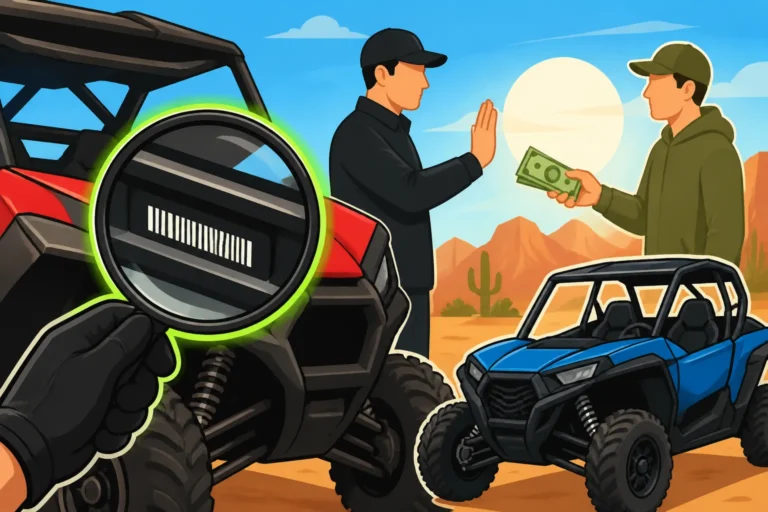
The Vehicle Identification Number (VIN) is your ATV or UTV's unique fingerprint. It's a 17-character code that can tell you a lot about the machine, including its make, model, and year, and most importantly, its history. Without a VIN, you're flying blind, and that's a risk no one should take.
You'll typically find the VIN stamped directly into the frame of the machine, often on the left front frame rail near the shock, or sometimes near the steering head. On some UTVs, it might be on a sticker or plate in the driver's side door jamb or under the seat. Look for it in multiple places if possible. Be aware that desert riding can make a VIN tough to read, sometimes requiring you to literally scrape away mud or rust to find it, which is why we have specific advice on [Finding the VIN on a Desert-Worn Machine]. Once you've found it, write it down accurately and take clear photos.
Crucially, examine the VIN carefully for any signs of tampering. Look for:
- Scratches or grinding marks around the VIN area, indicating an attempt to remove or alter the original number.
- Misaligned or mismatched characters in the stamp.
- A VIN plate that looks like it's been removed and reattached with different rivets or adhesives.
- Any evidence of heat damage or fresh paint over the VIN.
If anything looks off, walk away. It's not worth the risk.
Running a VIN Check Through Official Channels
Once you have the VIN, your next step is to run a check. While the Arizona MVD can't directly give you a theft history for privacy reasons, there are excellent resources available.
A great starting point is the National Insurance Crime Bureau (NICB). They offer a free VIN lookup service that checks if a vehicle has been reported stolen or deemed a total loss by an insurance company. This is a powerful tool because it pulls directly from law enforcement and insurance databases. You simply enter the VIN, and it will tell you if there's a record. This is a critical step in [Checking a Serial Number Before Handing Over Cash].
There are also various commercial VIN check services available online. While they often charge a fee, they can sometimes provide more comprehensive historical data, including accident reports, odometer discrepancies, and previous ownership information. While the NICB lookup is essential for theft, these paid services can give you a fuller picture of the machine's past. Remember, even if a machine has a clean title, it might still have a theft report attached if the theft was very recent and the title hasn't been flagged yet. It's also important to understand the difference between a stolen machine and one that might have a [Salvage and Rebuilt Machines in Arizona] title, which indicates a different kind of past but still requires scrutiny.
Cross-Referencing Seller Information and Documentation
The person selling you the quad should be the legitimate owner, and their identity should match the vehicle's documents. This sounds obvious, but it's where many scams begin.
First, ask the seller for their driver's license or state ID. Compare the name on the ID to the name on the vehicle's certificate of title. They should match exactly. If the names don't match, or if the seller claims to be selling for a friend or family member, proceed with extreme caution. Ask for a notarized power of attorney from the titled owner. A title signed by someone other than the person you are buying from is a major red flag.
Next, carefully inspect the Arizona certificate of title. Look for:
- The VIN: Does it match the VIN on the machine itself?
- The owner's name: Does it match the seller's ID?
- Liens: Does the title show any active liens? If so, the seller will need to provide a lien release from the lender. You don't want to accidentally buy a machine with an outstanding debt; this is covered in more detail when discussing [Liens on an Arizona OHV Title].
- Alterations: Look for any signs of correction fluid, erasures, or smudges on the title, which could indicate tampering.
If the seller claims they don't have the title, or it's "on its way," walk away. It's almost never worth the risk of [Buying From a Seller Who Has Nothing on Paper]. While a title can be replaced, it's the seller's responsibility to do so before selling the machine, not yours. For more on this, you can look into [Replacing a Lost Arizona Title]. A legitimate seller will have the title in hand.
Finally, insist on a comprehensive bill of sale. This document is your proof of purchase and transfer of ownership. It should clearly state:
- The date of sale
- The full names and addresses of both the buyer and seller
- The machine's make, model, year, and VIN
- The purchase price
- A statement that the seller guarantees they have the right to sell the machine and that it is free of liens or encumbrances.
A generic, handwritten note often isn't enough. Using a professional template, perhaps from a service like LawDepot, can ensure all necessary legal details are included, providing both parties with clear documentation of the transaction. For more on this, refer to [What an Arizona Bill of Sale Should Carry].
Red Flags and Trust Your Gut Warnings
Sometimes, the official checks are clean, but something still feels off. Learning to recognize these subtle (and not-so-subtle) red flags can save you a world of trouble.
Suspicious Seller Behavior
Your interaction with the seller is a huge indicator of legitimacy. Be wary if the seller:
- Is reluctant to meet in a public, well-lit place. Meeting in a remote location, especially at night, is a major red flag. Always insist on a safe meeting spot, preferably during daylight hours. This advice is critical for [Meeting a Seller in a Safe Place].
- Refuses to show ID or balks at providing their full name and contact information. A legitimate seller has nothing to hide.
- Pressures you for a quick sale, especially with cash-only demands. While cash is common in private sales, extreme pressure or a refusal to consider other payment methods (like a cashier's check) should raise an eyebrow.
- Has a story about the machine's history that seems inconsistent or vague. For example, they can't remember where or when they bought it, or their answers to your [Questions Buyers Skip and Regret] are evasive.
- Can't answer basic questions about the machine's maintenance or previous use. Someone who genuinely owned and rode the quad should know its history.
Machine Condition and Price Anomalies
The machine itself can also tell a story if you know what to look for.
- A price that's "too good to be true." This is perhaps the biggest red flag of all. If a quad is being sold for significantly less than its market value, there's usually a reason, and often, it's not a good one. Do your research on similar models and years to understand fair pricing.
- Signs of recent, sloppy repainting or bodywork. This could be an attempt to disguise identifying features or cover up damage. Check under panels and in less visible areas for original paint colors.
- Evidence of VIN plate alteration or removal. As mentioned before, any sign of tampering with the VIN is an immediate deal-breaker.
- Missing keys, a hot-wired ignition, or other signs of forced entry. While some older machines might have simple ignitions, anything that looks like it's been tampered with to bypass a security system is highly suspicious.
- Obvious damage not disclosed by the seller. If a seller is trying to hide significant issues, what else might they be hiding?
Incomplete or Missing Paperwork
This cannot be stressed enough: paperwork is paramount. If the seller can't provide proper documentation, do not proceed.
- No title, or a title that isn't in the seller's name and not properly signed over. This is the most common and dangerous red flag. Without a title, you won't be able to [Registering an OHV in Arizona] in your name.
- A bill of sale with minimal information. A simple receipt saying "sold ATV for $X" is not enough protection. You need a detailed document. Again, services like LawDepot can provide comprehensive templates that offer much better legal standing.
- A title that looks like a photocopy or has poor print quality. Always insist on the original, physical title.
- The seller makes excuses for why they don't have the paperwork. "My brother has it," "It's at my other house," "I'll mail it to you later" – these are all classic excuses that almost always lead to problems.
Here’s a quick summary of what to check and what to watch out for:
| Item to Check | What to Look For (Green Flags) | What to Watch Out For (Red Flags) |
|---|---|---|
| VIN | Clearly legible, 17 characters, original stamping, matches title. | Scratches, grinding, misaligned numbers, signs of re-stamping, doesn't match title. |
| VIN Check (NICB) | "No record of theft or total loss" | "Reported stolen" or "Total loss" |
| Seller's ID | Matches name on title, willing to show. | Refusal to show, name doesn't match title, excuses. |
| Arizona Title | Original, in seller's name, no liens, no alterations. | Missing, photocopied, not in seller's name, active liens, signs of tampering. |
| Bill of Sale | Detailed, includes VIN, buyer/seller info, purchase price, seller guarantee. | Vague, incomplete, missing key details. |
| Price | Consistent with market value for make, model, condition. | Significantly below market value ("too good to be true"). |
| Seller Behavior | Transparent, responsive, willing to meet safely, consistent story. | Pressuring, evasive, inconsistent story, wants to meet remotely/at night. |
| Machine Condition | Consistent with age/use, no suspicious new paint or damage. | Fresh paint in odd spots, signs of hot-wiring, VIN area tampered with. |
What to Do If You Suspect Theft
If, despite all your checks, something still feels wrong, or you uncover evidence that the machine might be stolen, here's how to proceed.
Don't Confront, Disengage Safely
Your safety is paramount. If you suspect the seller is involved with stolen property, do not confront them directly. This could put you in a dangerous situation. Instead, politely state that you've decided the machine isn't what you're looking for, or that you need more time to think about it. Make your excuses, disengage from the transaction, and leave the location as quickly and calmly as possible. Do not act suspicious or accusatory.
Reporting Your Concerns to Authorities
Once you are in a safe place, contact your local law enforcement agency – the city police department or county sheriff's office. Do not use 911 unless you feel you are in immediate danger. Call their non-emergency line.
Provide them with all the details you gathered:
- The VIN you inspected.
- The seller's description (name, if you got it, physical description).
- The vehicle's description (make, model, color).
- The location where you met the seller.
- Any photos you took of the machine or the VIN.
Your information could be crucial in helping recover a stolen machine and potentially catching those involved in illegal activities. The authorities are the ones equipped to handle investigations and, if necessary, initiate the process to [Recovering a Stolen Machine in Arizona].
Protecting Your Purchase: The Aftermath
The best defense is a good offense, and that means being incredibly diligent before you buy. If, by some unfortunate chance, you do end up buying a machine that is later determined to be stolen, it will be seized by law enforcement. You will lose the machine, and you will likely lose the money you paid. Your recourse will then be to pursue legal action against the seller, which can be a long and costly process with no guarantee of success.
This underscores, yet again, the value of detailed records. A comprehensive bill of sale, perhaps drafted using a reliable template from a service like LawDepot, can provide crucial documentation for any legal steps you might take. While it can't prevent the initial loss, it provides a paper trail to prove your good faith as a buyer, which can be essential if you ever need to seek restitution. Always err on the side of caution. If something feels off, it probably is. There will always be another great quad out there, but you only have one peace of mind.
Disclaimer
This article is for general informational purposes only and does not constitute professional advice. Laws, prices and regulations vary by location and change over time. Consult a qualified professional for guidance on your specific situation.