Where a Polaris RZR Carries Its VIN
It’s a scenario many Arizona off-road enthusiasts have faced: you're trying to register your beloved Polaris RZR, secure insurance, or even just order a specific part, and suddenly you're asked for the Vehicle Identification Number (VIN). Panic might set in as you realize you have no idea where to find this elusive string of characters on your machine, especially if it’s a used purchase or a sun-baked desert warrior. This guide is designed to cut through that frustration, walking you through exactly where to find the VIN on your Polaris RZR and what to do once you've found it, ensuring your adventures on Arizona's trails are smooth from the get-go.
Why Your RZR's VIN is Its Unique Fingerprint
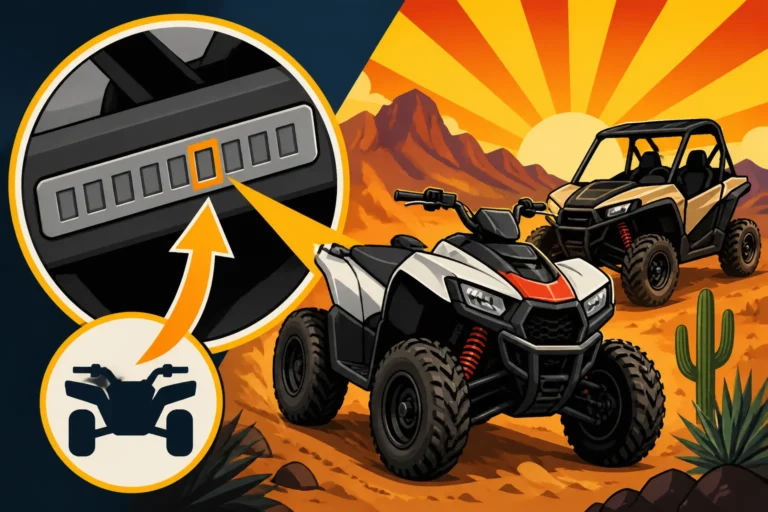
Think of your Polaris RZR's VIN as its unique identity card, a 17-character code that tells a comprehensive story about the machine's origin, specifications, and history. It's not just a random sequence; it's a meticulously crafted identifier that’s crucial for everything from legal ownership to tracking parts. Many new riders, or even seasoned veterans, might overlook its importance until they're faced with a situation that absolutely requires it.
The VIN is essential for legitimate reasons, serving as the bedrock for official documentation and safety. Without a clear, readable VIN, you could encounter significant hurdles. Imagine trying to prove ownership if your machine is ever stolen, or attempting to register it with the Arizona Motor Vehicle Division (MVD) when the critical identifier is missing or obscured. These scenarios underscore why knowing your RZR's VIN, and where to find it, is an absolute must for any responsible owner.
Legal and Ownership Importance
When you purchase a Polaris RZR, whether new from a dealer or used from a private seller in a place like Kingman or Mesa, the VIN is the cornerstone of the ownership transfer process. It's the definitive proof that the machine you're buying is the one being sold. When you fill out a bill of sale, which you can easily generate using platforms like LawDepot, the VIN is the most important piece of information on that document. Without it, the bill of sale loses much of its legal weight, potentially leaving you vulnerable in a dispute.
Arizona MVD offices, and even third-party providers, rely heavily on the VIN to issue a [Proof of Ownership for an Arizona Title]. This title is your legal declaration of ownership, and it directly correlates to the VIN. If the VIN on your machine doesn't match the one on the title, or if the VIN is unreadable, you could face significant delays or even be unable to title the machine at all. This becomes particularly problematic if you ever need to sell your RZR or if it's involved in an accident.
Theft Prevention and Recovery
In the unfortunate event that your Polaris RZR is stolen while parked at a trailhead near Sedona or even from your garage, the VIN is the first piece of information law enforcement will request. It's entered into national databases, making it possible for authorities across the country to identify and recover your machine. Without a VIN, or with a tampered one, recovering a stolen RZR becomes exponentially more difficult, often impossible.
Potential buyers of used RZRs are also advised to always check the VIN before handing over any cash. By using the VIN, you can perform checks to see if the machine has been reported stolen or has any other red flags in its history. This is why resources like [Screening a Used Quad for a Theft Report] and [Checking a Serial Number Before Handing Over Cash] emphasize the importance of the VIN as your first line of defense against purchasing a hot machine.
Maintenance and Parts Ordering
Beyond legal and security reasons, your RZR's VIN is incredibly helpful for routine maintenance and ordering parts. Each Polaris RZR model and year can have subtle differences in components. When you take your machine to a repair shop, or if you're trying to order a specific part yourself from an online retailer, providing the VIN ensures that you get the correct part for your exact model.
This prevents costly mistakes, such as ordering a brake caliper that only fits a 2020 RZR XP 1000 when you own a 2019 model. Dealerships and experienced parts departments often ask for the VIN first to avoid these errors, streamlining the process and getting you back on the Arizona trails quicker.
Pinpointing the VIN on Your Polaris RZR
Okay, so we know the VIN is important. Now, where the heck is it? Polaris, like most manufacturers, places the VIN in a few key locations designed to be permanent and easily accessible, though sometimes a bit hidden by mud, dust, or accessories. The primary location is always directly stamped into the frame, as this is the hardest to alter.
Knowing exactly where to look can save you a lot of time and frustration, especially if you're inspecting a used machine on a sunny Saturday morning in a seller's driveway in Phoenix or Tucson. Don't just glance; get down and dirty, flashlight in hand if necessary.
The Primary Location: Driver's Side Frame Rail
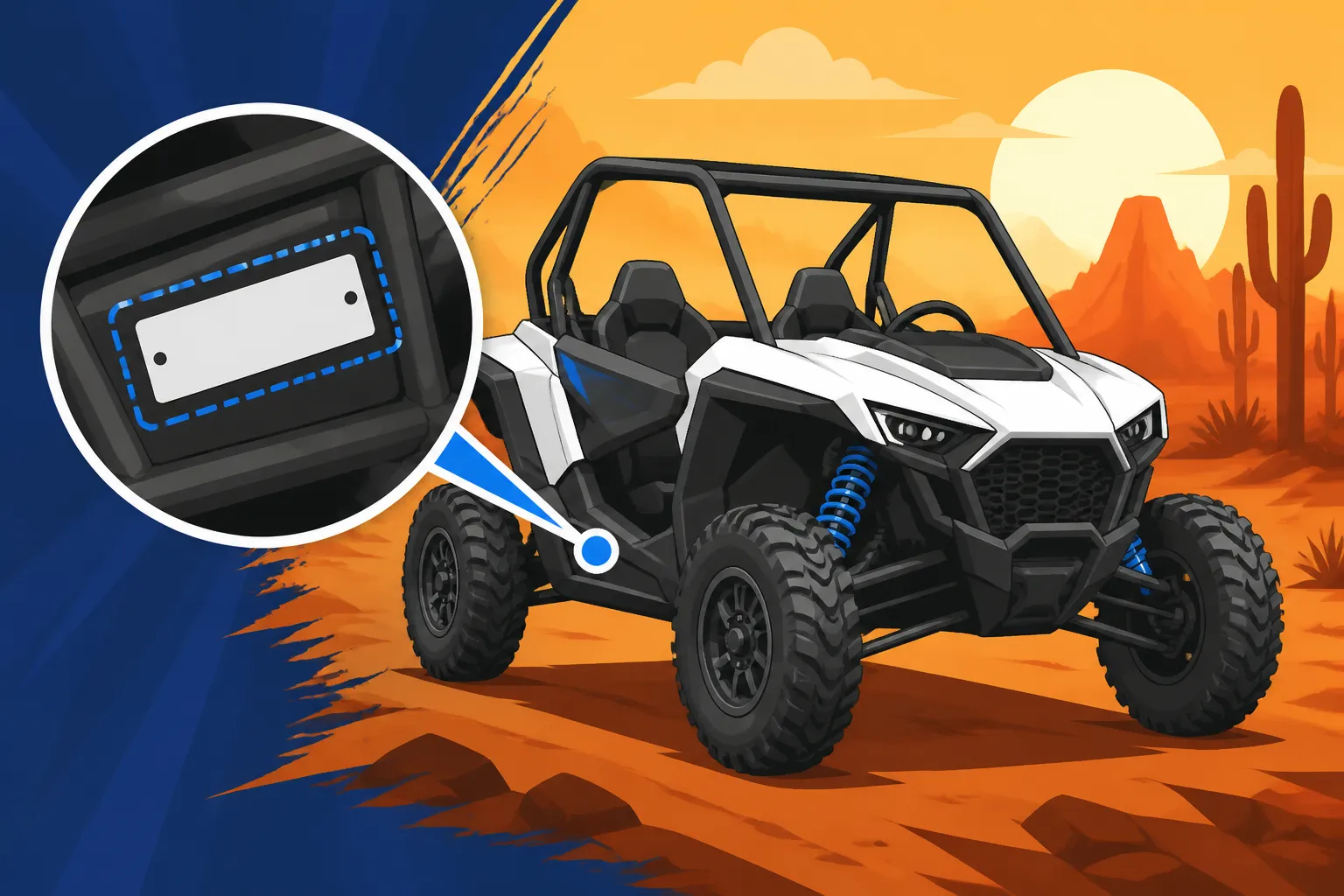
For most Polaris RZR models, you’ll find the primary VIN stamping on the driver's side frame rail. This is the main structural beam that runs along the side of the machine. The exact spot can vary slightly between models (like a RZR XP 1000, Turbo S, or Pro XP) and model years, but generally, you'll want to look in one of these areas:
- Near the front driver's side wheel: Often on the outside of the frame rail, sometimes just above the lower A-arm mount. You might need to turn the wheel for better access.
- Towards the middle of the machine, under the driver's seat area: This location is common, requiring you to get low and look underneath the machine, or perhaps even remove the seat if visibility is poor.
- Near the rear driver's side wheel: Less common, but still a possibility on some earlier or specialized models.
It's typically stamped directly into the metal of the frame itself, not on a sticker or plate that can be easily removed. The characters are usually clear but can become obscured over time by rust, mud, paint, or general desert wear and tear.
Secondary & Sticker Locations
While the frame stamping is the definitive VIN, Polaris often includes the VIN in a few other places for convenience. These are usually on stickers or labels and should always match the frame-stamped VIN. If they don't, that's a huge red flag that something is amiss.
Common secondary locations include:
- Under the hood or front storage compartment: Look for a decal or plate affixed to the inner fender well or the structure of the compartment.
- Inside the glove box: Some models have a sticker inside the glove compartment.
- Owner's manual: The VIN is almost always listed on the cover or inside the front pages of the original owner's manual.
- Dash sticker: On some models, there might be a sticker on the dashboard, often near the steering wheel or instrument cluster.
Remember, while these stickers are convenient, they are secondary. Always verify the frame-stamped VIN. If you're using a document like a bill of sale or other forms available through LawDepot, ensure the VIN listed matches the primary frame location.
Tips for Finding a Faint VIN
Arizona's intense sun, dust, and general off-road abuse can make finding a VIN a real challenge. Here are some tips to help you locate a faint or obscured VIN:
- Clean the Area Thoroughly: Start by wiping down the suspected VIN area with a rag. If there's caked-on mud or dirt, a stiff brush and some water (or even a gentle degreaser) can work wonders. Be careful not to scrub too aggressively if the stamping seems delicate or covered in a thin layer of paint.
- Use a Flashlight (and Angle It): A bright flashlight is your best friend. Instead of shining it directly on the area, try angling the light from different directions. The shadows created by the stamped characters can make them pop out, even if they're faint.
- Rubbing Technique: Sometimes, gently rubbing a piece of chalk or a crayon over the area can help highlight the characters. The chalk dust will settle into the indentations, making the numbers and letters more visible.
- Photograph It: Once you find it, take a clear photo. This can be invaluable for your records and for quickly providing the VIN when needed, without having to crawl under your RZR every time.
Decoding Your RZR's VIN: What the Numbers and Letters Mean
Once you've successfully located the 17-character VIN, you've got a treasure trove of information at your fingertips. This isn't just a random serial number; it's a globally recognized standard that holds specific data about your RZR. Understanding how to decode it can tell you a lot about your machine, from its manufacturing country to its model year. This knowledge is particularly useful when buying a used machine, as it allows you to verify what the seller is telling you against the machine's actual specifications.
The 17-character VIN system is universal for vehicles manufactured after 1981, making it a reliable source of truth. Each section of the VIN provides a different piece of the puzzle, and knowing how to interpret these sections will make you a more informed Polaris RZR owner.
The Universal 17-Character Code: WMI, VDS, VIS
The 17-character VIN is broken down into three main sections:
-
World Manufacturer Identifier (WMI) – Characters 1-3:
- 1st Character: Identifies the manufacturing country. For Polaris, this is typically '1' or '4' for the United States, or '2' for Canada.
- 2nd Character: Identifies the manufacturer. For Polaris, this is usually 'P'.
- 3rd Character: Identifies the vehicle type or division within the manufacturer. For Polaris OHVs, this can vary but helps narrow down the machine's category.
-
Vehicle Descriptor Section (VDS) – Characters 4-9:
- This section describes the general attributes of the vehicle. For a Polaris RZR, it will contain information about the vehicle line, series, body type, engine type, and sometimes restraint system type. These characters are unique to Polaris's internal coding system for its models.
- 9th Character: This is a check digit, used to verify the authenticity of the VIN and guard against fraudulent VINs. It's a calculated value based on the other characters.
-
Vehicle Identifier Section (VIS) – Characters 10-17:
- This is the unique identifier for your specific vehicle. No two vehicles will have the same VIS.
- 10th Character: This is one of the most useful characters for buyers and owners, as it represents the model year of the vehicle. It uses a specific code (numbers 1-9 and letters A-Y, excluding I, O, Q, U, Z, and 0) that repeats every 30 years. For example, a 'K' might signify a 2019 model year, 'L' for 2020, and so on. Understanding [Which VIN Character Gives Your Quad's Model Year] is invaluable.
- 11th Character: This typically indicates the manufacturing plant where the vehicle was assembled.
- Characters 12-17: These are the sequential production numbers, uniquely identifying your specific RZR as it came off the assembly line.
Unlocking the Model Year and Manufacturer
As mentioned, the 10th character is your key to the model year. This is particularly vital when you’re looking at a used RZR for sale. A seller might tell you it’s a 2022 model, but by checking the 10th VIN character, you can quickly confirm this. Discrepancies here are a major red flag and should prompt further investigation into the machine's history, especially using services that provide [Arizona Records and a Machine's Ownership History].
Here's a simplified table illustrating how the 10th character decodes the model year:
| 10th VIN Character | Model Year | 10th VIN Character | Model Year |
|---|---|---|---|
| A | 1980 | L | 1990 / 2020 |
| B | 1981 | M | 1991 / 2021 |
| C | 1982 | N | 1992 / 2022 |
| D | 1983 | P | 1993 / 2023 |
| E | 1984 | R | 1994 / 2024 |
| F | 1985 | S | 1995 / 2025 |
| G | 1986 | T | 1996 / 2026 |
| H | 1987 | V | 1997 / 2027 |
| J | 1988 | W | 1998 / 2028 |
| K | 1989 / 2019 | X | 1999 / 2029 |
| Y | 2000 / 2030 | 1-9 | 2001-2009 / 2031-2039 |
Note: The sequence repeats every 30 years. The 'Year' column above shows examples for both cycles.
Knowing this small detail can prevent you from overpaying for an older model or buying a machine that isn't what it's advertised to be. It empowers you as a buyer, helping you make informed decisions when navigating the market for a used RZR. This is just one of many crucial details that contribute to [Buying a Used Side-by-Side in Arizona: The Paperwork].
When the VIN is a Mystery: Dealing with Missing or Obscured IDs
While a clear, legible VIN is the ideal, reality on Arizona's dusty trails and sun-baked landscapes can be quite different. It's not uncommon to encounter a Polaris RZR with a VIN that's either barely readable, intentionally obscured, or in rare cases, entirely missing. This situation can range from a minor annoyance during a paperwork process to a major red flag signaling potential fraud or theft. Knowing how to react is key to protecting yourself and your investment.
Dealing with a problematic VIN can be stressful, especially if you've already fallen in love with a machine you're looking to purchase. However, it's critical to approach these situations with caution and a clear understanding of the implications, as a compromised VIN can lead to serious legal and financial headaches down the road.
Faded or Damaged VINs
Arizona's harsh desert environment is tough on everything, and VIN stampings are no exception. Constant exposure to UV rays, abrasive dust, and impacts from trail debris can gradually degrade the visibility of a VIN. What might have been a crisp, clear stamping when the RZR rolled off the assembly line can become a faint, barely discernible impression years later.
When faced with a faded or damaged VIN that you suspect is legitimate, your first steps should be meticulous cleaning and careful examination using the tips mentioned earlier (flashlight, rubbing techniques). Sometimes, a VIN that appears completely gone can be brought back into view with patience and the right approach. However, if even after your best efforts the VIN remains illegible, you might need to seek assistance from an MVD inspector or a certified mechanic who can potentially verify it using other records or specialized tools.
Missing VIN Plate or Illegible Stamping
This is where the red flags start waving. A completely missing VIN plate (if it was a plate, not a stamping), a VIN that appears to have been ground off, or one that is clearly re-stamped incorrectly, are all serious indicators of potential tampering. In the worst-case scenarios, this could mean the machine is stolen or has been involved in a "chop shop" operation where parts from multiple machines are used to create a new, illicit one.
It's also possible, though less common for newer machines, that older RZRs might have documentation issues if they were never properly titled in the first place. This can lead to situations like [Titling an Arizona Quad With No Ownership History], which can be a complex and lengthy process involving MVD investigations.
What to Do If the VIN Is Problematic
If you encounter a Polaris RZR with a questionable VIN, especially during a private sale, proceed with extreme caution. Here's a realistic look at your options:
- Do NOT Buy Without Verification: If the VIN is unreadable, missing, or appears tampered with, do not complete the purchase without thorough investigation. The potential risks far outweigh any "deal" you might be getting.
- Request a MVD Inspection: For a machine with a legitimately faded VIN, you might be able to take it to an Arizona MVD office or a certified third-party provider for a VIN inspection. They have experience in verifying obscure VINs and can guide you on the next steps, including potentially issuing a new title or verifying its legality.
- Consider a Bonded Title: In situations where the ownership history is completely broken or the VIN cannot be definitively tied to a legitimate prior record, a [Bonded Title for a Quad in Arizona] might be an option. This is a complex legal process that requires you to purchase a surety bond to protect previous owners or lienholders against potential claims. It's a last resort and typically only pursued when you are absolutely certain the machine is legitimately yours but lacks proper paperwork.
- Walk Away: Honestly, this is often the best advice. There are plenty of Polaris RZRs with clear, legitimate VINs out there. Don't let yourself get entangled in a complicated legal mess for the sake of a single machine. The headache and potential financial losses are rarely worth it.
When you're dealing with any vehicle transaction, ensuring your bill of sale, perhaps one you created using LawDepot, accurately reflects the VIN is a critical step in avoiding future headaches. Should you ever find yourself in a situation where a machine's ownership history is murky, having detailed purchase records, along with any documents like those available through LawDepot, can be invaluable for protecting yourself. Always prioritize a clear, verifiable VIN for your Polaris RZR to ensure your off-road adventures in Arizona are worry-free and legally sound.
Disclaimer
This article is for general informational purposes only and does not constitute professional advice. Laws, prices and regulations vary by location and change over time. Consult a qualified professional for guidance on your specific situation.