Titling a Machine the Seller Never Signed For
Oh, the sheer frustration! You've found your dream ATV or UTV, the deal felt right, you've handed over the cash, and you're already picturing yourself tearing up the Arizona desert. Then you get home, look at that title in your hand, and realize… the seller never signed it. Or maybe they signed it in the wrong spot, or the name doesn't match, or they just plain vanished. It’s a gut punch, turning excitement into a gnawing worry. This guide is here to walk you through exactly what to do when you’re facing the headache of titling a machine in Arizona when the seller’s signature is nowhere to be found, or it's just plain wrong.
The Crushing Reality of a Missing Seller Signature on Your Title
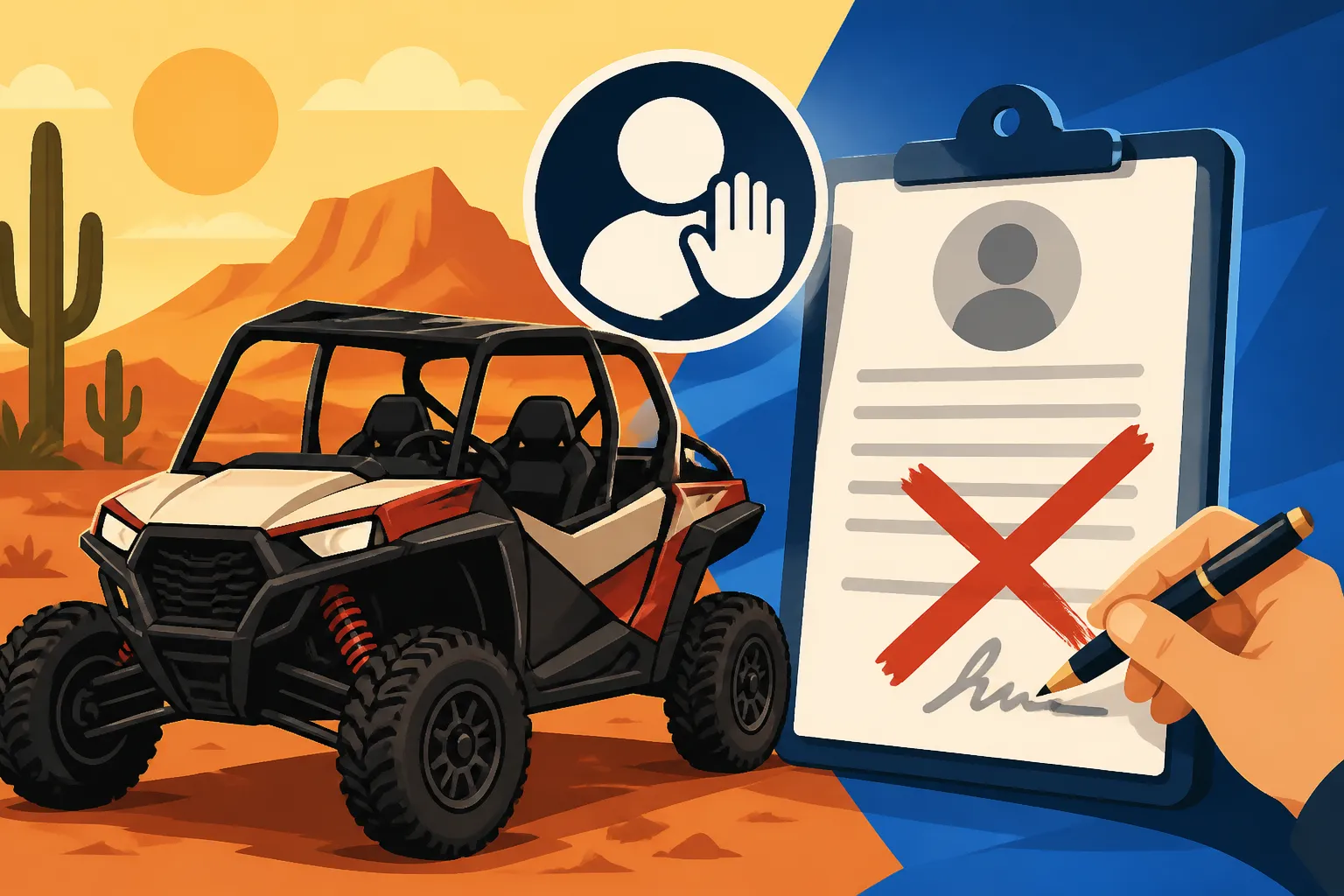
Let’s be honest, buying a used off-highway vehicle (OHV) can feel a bit like the Wild West sometimes. You meet a private seller, often in a parking lot or their driveway, you kick the tires, hear it run, negotiate a price, and then the paperwork happens. Or, in this case, it doesn't happen correctly. Discovering a missing or incorrect seller's signature on a title isn't just an annoyance; it's a massive roadblock to legally owning and registering your new desert toy in Arizona. Without that proper signature, the Arizona Motor Vehicle Division (MVD) can't confirm the transfer of ownership, and you’re stuck in limbo.
Why a Proper Signature is Non-Negotiable for Arizona Titles
The signature on a vehicle title isn't just a formality; it's the legal handshake that transfers ownership from one party to another. In Arizona, the MVD relies on this signature (along with the date of sale and purchase price) to update their records, ensuring that the new owner is officially recognized. Without it, the machine technically still belongs to the previous owner on paper, no matter how much money you shelled out. This isn't just about bureaucracy; it’s about preventing theft and fraud, and ensuring that there's a clear chain of ownership for every vehicle on Arizona's roads and trails. You can learn more about the critical importance of proper ownership documentation in our piece on [Proof of Ownership for an Arizona Title].
The Pain Points: What Happens Without a Signed Title
The moment you realize that title isn’t properly signed, a cascade of problems begins. First, you won't be able to get a new title issued in your name. This, in turn, means you can’t get an [Arizona's Annual OHV Decal Explained], which is mandatory for riding on most public lands in the state. No decal means no legal trail riding, and potentially a ticket if you're caught without it. Furthermore, if you ever decide to sell the machine yourself, you’ll run into the same issue – you can't transfer ownership to a new buyer if you don't officially own it in the MVD's eyes. It leaves you with an expensive paperweight instead of a fun recreational vehicle.
Immediate Action: Trying to Track Down the Seller
Okay, deep breaths. Before you panic, the very first step, no matter how frustrated you are, is to try and contact the seller. This might seem obvious, but sometimes, a simple oversight or a misunderstanding is all it is. People make mistakes, or they might not fully understand the exact requirements for signing a title.
Gathering All Your Purchase Information
Hopefully, you kept every scrap of paper from the transaction. Dig out the bill of sale, any receipts, text messages, emails, or even the original online listing. Every piece of information about the seller—their name, phone number, email, and the address where you met or picked up the machine—will be crucial. The more information you have, the better your chances of reaching them. Even a non-legally binding document, like a simple handwritten receipt, can provide valuable contact details. When it comes to buying a used machine, having a solid [What an Arizona Bill of Sale Should Carry] is always a good idea, even when things go smoothly.
Reaching Out: The Gentle Approach First
When you first contact the seller, try to keep your emotions in check, no matter how annoyed you are. Start with a polite, "Hey, I was reviewing the title for the ATV/UTV I bought from you, and I noticed your signature is missing/incorrect. I just need to get that sorted out with the MVD. Would you be available to meet up quickly?" Frame it as a minor inconvenience that needs to be fixed for the MVD. Often, sellers are reasonable and simply overlooked something. Suggest meeting at a local MVD office or a third-party MVD service provider if that makes it easier for them to sign in the presence of someone who can verify their identity or notarize the signature, if required. This can streamline the process of [Titling an ATV at an Arizona MVD Office].
When the Seller is Unresponsive or Unavailable
Unfortunately, sometimes the seller isn’t so cooperative, or worse, they’ve vanished into thin air. This is where things get a bit more complicated and you might need to explore options beyond a simple meet-up. This situation is why it’s so vital to properly vet sellers and secure all paperwork at the point of sale.
Sending a Formal Letter or Legal Notice
If repeated attempts to contact the seller via phone, text, or email fail, consider sending a formal letter by certified mail, return receipt requested, to the last known address you have for them. This letter should clearly state the issue (missing signature on the title for the specific ATV/UTV, identified by VIN), explain what you need (their signature on the title), and propose a solution (meeting at an MVD office, or even mailing the signed title back to you with clear instructions). The purpose here isn't just to get their attention, but also to create a paper trail demonstrating your efforts to resolve the issue. If you need help drafting such a letter, resources like LawDepot can provide templates for formal notices or affidavits that might be useful in situations where legal documentation is required.
Exploring the Bonded Title Route in Arizona
When all efforts to reach the seller fail, and you have no way to get that crucial signature, Arizona MVD offers a path for situations like yours: the bonded title. This is often the solution for [Titling an Arizona Quad With No Ownership History] or when the documentation is insufficient. A bonded title is essentially a title backed by a surety bond. This bond acts as an insurance policy, protecting previous owners and subsequent buyers against any claims of prior ownership. It's a way for the MVD to issue you a title when the normal chain of ownership documentation is broken, but you can prove you legitimately purchased the machine.
The Arizona Bonded Title Process: A Step-by-Step Guide
Applying for a bonded title can feel intimidating, but breaking it down into steps makes it more manageable. It's a process designed to protect all parties while allowing you to legitimize your ownership.
Step 1: Confirm Eligibility and Gather Documentation
First, you'll need to confirm that your specific situation qualifies for a bonded title in Arizona. Generally, this route is for vehicles (including OHVs) where the original title is missing, defective, or improperly transferred, and you can’t get the seller to fix it. You'll need to gather all the documentation you do have:
- Bill of Sale: Even if it's just a simple one, it proves you purchased the machine and ideally includes the VIN, date, and purchase price.
- Any prior registration or title copies: If you somehow have these.
- Evidence of payment: Canceled check, bank transfer records, or even a sworn statement if you paid cash.
- Proof of your attempts to contact the seller: Copies of letters, emails, or phone logs.
You'll also need to have the vehicle identification number (VIN) readily available, as the MVD will use this to run a search to ensure the vehicle isn't stolen or has any other major issues. For more on this, you might find our guide on [Correcting a VIN on an Arizona Record] helpful, though your issue is more about title transfer than a VIN correction itself.
Step 2: MVD Inspection and Application Submission
Once you have your documents, you’ll typically need to visit an Arizona MVD office or authorized third-party provider. They will likely want to inspect the OHV, verify the VIN, and check for any alterations or discrepancies. You'll then complete an application for a bonded title (often called a Title and Registration Application, with a specific box checked for "Bonded Title" or similar). This is where you lay out your case, explaining why you can't obtain a properly signed title from the seller. This situation is a perfect example of why [Using a Third-Party MVD Office for a Quad] can be beneficial; they often have staff experienced with these less common scenarios.
Step 3: Obtaining the Surety Bond
This is the core of the bonded title process. The MVD will determine the value of your OHV, which will dictate the amount of the surety bond you need to purchase. Typically, the bond amount is 1.5 to 2 times the value of the vehicle. You won't pay this full amount directly; instead, you'll pay a premium to a surety company. This premium is usually a small percentage of the bond amount, often just a few hundred dollars, but it can vary. The surety company essentially guarantees to the MVD that if a legitimate prior owner comes forward within a specified period (usually three years in Arizona) with proof of ownership and a claim against your machine, the bond will cover their losses up to the bond amount. LawDepot, while not a surety provider, is a good example of a platform where you might find resources related to legal forms, which could be useful if you need to draft any affidavits for the surety company.
Step 4: Finalizing the Bonded Title and Registration
Once you have the surety bond in hand, you’ll submit it along with your completed application and all supporting documentation to the MVD. After their review, if everything is in order, they will issue you a new title, often stamped as a "Bonded Title." After a certain period, assuming no claims are made against the bond, it will typically expire, and you can then apply for a regular, unbonded title. This process confirms your legal ownership, allowing you to proceed with [Registering an OHV in Arizona] and getting your much-needed decal.
| Document Type | Purpose | Required for Bonded Title? |
|---|---|---|
| Original Title (if found) | Direct transfer of ownership (ideally signed by seller) | No (if unsigned/defective) |
| Bill of Sale | Proof of purchase from previous owner | Yes |
| Evidence of Payment | Verifies transaction occurred | Yes |
| Photo ID | Identifies applicant | Yes |
| Affidavit/Statement of Facts | Explains why title is missing/defective | Yes |
| Surety Bond | Financial guarantee against prior claims | Yes |
| MVD Application | Official request for title | Yes |
| VIN Verification | Confirms vehicle identity | Yes (MVD often performs) |
Preventing This Headache: Best Practices for Buying a Used OHV
This whole experience is a powerful reminder that an ounce of prevention is worth a pound of cure, especially when buying a used ATV or UTV. Don't let the excitement of a new machine overshadow the critical importance of proper paperwork.
Always Verify the Title at the Point of Sale
Never, ever complete a private sale without physically inspecting the title and ensuring it’s properly signed by the person selling you the machine. Compare the name on the title to the seller's ID. Make sure the VIN on the title matches the VIN on the OHV itself. Check for any liens listed on the title; if there are, the lienholder needs to sign off too. A quick search on the MVD website or a visit to a third-party MVD office can also help you verify the title's validity before you hand over any cash. Taking these steps at the time of sale can save you countless hours of stress and bureaucratic red tape later. Our guide on [Buying a Used Side-by-Side in Arizona: The Paperwork] goes into even more detail on these crucial checks.
Complete a Comprehensive Bill of Sale
Always insist on a detailed bill of sale, even if the seller provides a signed title. This document should include:
- The full names and addresses of both buyer and seller.
- The date of sale.
- The exact purchase price.
- The year, make, model, and VIN of the OHV.
- A statement that the vehicle is sold "as is" (if applicable, which is common in private sales).
- Signatures of both buyer and seller.
A good bill of sale serves as an additional layer of protection and proof of transaction. While a basic form might do, a more robust template, perhaps found through legal document services like LawDepot, can offer peace of mind by ensuring all essential details are covered, especially the full names and addresses needed for follow-up if issues arise.
Consider a Transaction at the MVD Office
If possible, suggest meeting the seller at an Arizona MVD office or a reputable third-party MVD service provider to complete the transaction. This way, the transfer of title can be processed immediately, and any issues with signatures or paperwork can be caught and corrected on the spot with the help of MVD staff. While it might add a small amount of time to the transaction, the peace of mind is absolutely worth it. This also ensures the seller is the legal owner and can legally transfer the machine.
Dealing with an unsigned title is a major hassle, but it's not insurmountable. By understanding your options and following the proper steps, you can navigate the Arizona MVD system and eventually get that title in your name, finally freeing you to hit those incredible Arizona trails.
Disclaimer
This article is for general informational purposes only and does not constitute professional advice. Laws, prices and regulations vary by location and change over time. Consult a qualified professional for guidance on your specific situation.