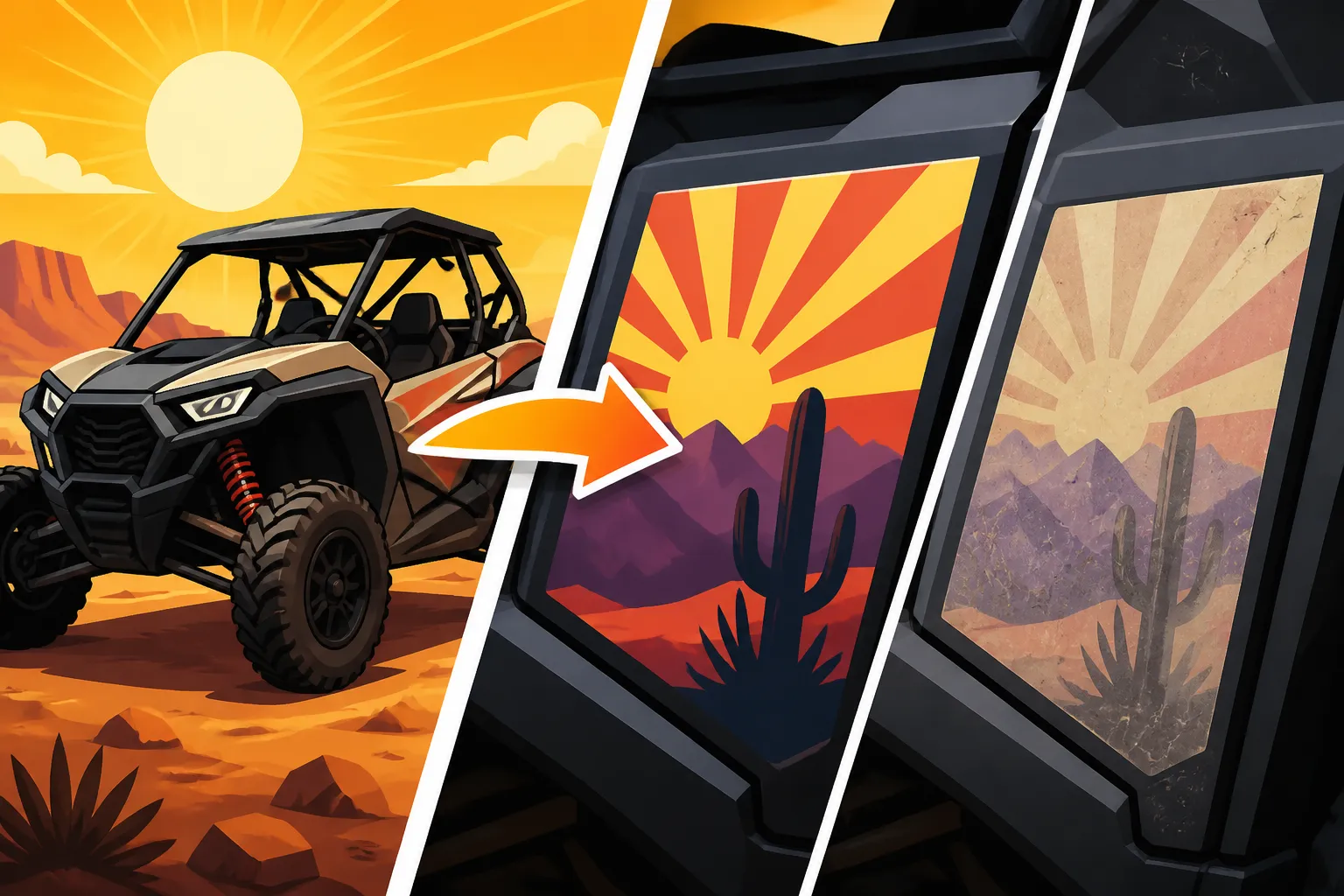
When Desert Sun Fades Your Arizona OHV Decal
There's nothing quite like the Arizona sun, is there? It’s magnificent for trail riding, drying out the washes, and giving us those incredible sunsets. But that same relentless sunshine, while a blessing for our riding season, can be a real headache for your Off-Highway Vehicle (OHV) decal. Many riders find their bright, new decal turning ghostly pale long before its expiration date, leading to questions about visibility and what to do next. This guide will walk you through why your Arizona OHV decal fades, the potential issues a faded decal can cause, and exactly how to get a fresh one so you can hit the trails with confidence.
The Problem with a Faded Arizona OHV Decal
It's a frustrating reality for many Arizona OHV owners: you diligently purchase your [Arizona's Annual OHV Decal Explained], stick it where it belongs, and then watch as the desert sun slowly but surely bleaches it into oblivion. This isn't just an aesthetic annoyance; a faded decal can actually pose some practical problems out on the trails.
Why Your Decal Fades in the Arizona Sun
Our desert environment is beautiful, but it's also incredibly harsh on materials. The primary culprit behind a faded OHV decal is the intense ultraviolet (UV) radiation from the sun. Think about how car paint or plastic trim can fade over time – your decal is no different. It's often made from materials designed for outdoor exposure, but sustained, direct sunlight, especially during those long Arizona summers, will degrade the pigments and adhesives.
High temperatures also play a role. When your OHV is parked outside, baking in 110-degree heat, the decal is subjected to extreme thermal stress. This constant heating and cooling, coupled with the UV exposure, accelerates the fading process. Where you park your machine can make a big difference, too. An OHV consistently stored outdoors, uncovered, will see its decal fade much faster than one kept in a garage or under a shaded carport. It’s a common issue, and you’re definitely not alone if you've noticed your decal starting to look more like a ghost than a vibrant sticker.
Visibility and Enforcement Concerns
An OHV decal isn't just a colorful sticker; it's a critical piece of identification that tells law enforcement your machine is legally registered for off-highway use in Arizona. The decal displays the expiration year, making it easy for rangers and deputies to quickly verify your compliance. When your decal becomes faded, the numbers and colors can become illegible.
Imagine a ranger pulling up behind you on a dusty trail. They glance at your plate, looking for that unmistakable [Decal Placement on the Upper-Left Corner]. If the decal is so washed out that the year can't be read, it raises a red flag. From their perspective, it could appear as if you don't have a current decal at all. While most officers understand the challenges of the Arizona sun, their job is to ensure everyone is riding legally and safely. A faded decal makes that verification process difficult and can lead to you being stopped for a closer look.
What Happens if Your Decal Isn't Legible?
While law enforcement officers in Arizona generally exercise discretion, a completely illegible OHV decal can lead to a stop and inspection. In the best-case scenario, the officer might simply advise you to replace the decal. However, if they cannot verify that your machine is properly registered, it could escalate. Technically, operating an OHV without a visible, valid decal is akin to operating an unregistered vehicle. This means you could potentially face a citation for non-compliance.
The goal of the decal is to show that you've contributed to the OHV fund, which helps maintain our incredible trail system, and that your machine is properly documented. A faded decal undermines this purpose. It's not about being intentionally mischievous; it's simply the desert taking its toll. But from an enforcement standpoint, the sticker must be clear. It’s always better to be proactive and ensure your decal is easily readable to avoid any unnecessary hassle or delay while you're out enjoying Arizona's stunning landscapes. Don't let a tiny, faded sticker ruin your perfect riding day.
How to Get a Replacement Arizona OHV Decal
Discovering your Arizona OHV decal has faded to the point of illegibility can feel like a setback, but thankfully, getting a replacement is a straightforward process. You'll want to address this sooner rather than later to ensure smooth riding experiences and avoid any potential issues with law enforcement.
Identifying When a Decal Needs Replacing
The line between "a little sun-kissed" and "needs replacing" can feel blurry, but there are clear signs. Start by giving your decal a good, close look. Can you still clearly read the year it expires? Are the colors still distinct enough that it stands out against your plate? If the answer is no, or even a hesitant "maybe," it's time to consider a replacement.
A good rule of thumb: if a law enforcement officer, standing a few feet from your machine, would struggle to read the year without squinting, then your decal has likely passed its prime. Don't wait until the numbers are completely gone or it's just a faint blur. Proactive replacement ensures you remain in compliance and can avoid potential stops. It's a small detail, but one that can prevent a lot of headaches on the trail.
The Process for Ordering a Replacement
Getting a replacement for your faded Arizona OHV decal typically involves contacting the Arizona Game and Fish Department (AZGFD), as they manage the OHV decal program. While the [Arizona MVD OHV Registration Explained] handles your vehicle's title and plate, the decal itself is a Game and Fish responsibility.
First, you'll usually need to log into your AZGFD Portal Account. This is the same portal where you likely purchased your original decal and completed the [Arizona's Free Mandatory OHV Decal Course]. Once logged in, navigate to the OHV section. There should be an option to request a replacement decal. You'll generally need your OHV's vehicle identification number (VIN) and possibly your current license plate number.
There may be a small fee for a replacement decal to cover administrative costs and shipping. Make sure your mailing address is current in the portal account so the new decal arrives at the correct location. The process is designed to be user-friendly, allowing you to handle it online from the comfort of your home. If you've recently bought or sold a machine, ensure your [Proof of Ownership for an Arizona Title] is clear, as this underlies all your registration records. Sometimes, having clear documentation like a well-drafted bill of sale, perhaps created using resources like LawDepot, can be invaluable if any questions arise about your machine's history during these processes.
What to Do While You Wait for Your New Decal
Once you’ve ordered your replacement Arizona OHV decal, you might wonder if you can still ride. While it's always best to have a clearly visible, current decal, the reality is that mail takes time. If you’ve just placed an order, keep a copy of your purchase confirmation or email receipt with you when you ride. This documentation serves as proof that you have a current decal and a replacement is on its way.
Many riders will print out this confirmation and keep it in a waterproof bag with their other [Keeping the Paperwork on the Machine]. If you happen to be stopped by law enforcement, you can show them this proof. While it doesn’t replace the physical decal, it demonstrates your compliance and that you are actively resolving the issue. This usually satisfies an officer and allows you to continue your ride without further incident. Just remember to apply the new decal as soon as it arrives!
Best Practices for Decal Longevity and Placement
While the Arizona sun is a formidable opponent, there are steps you can take to extend the life of your OHV decal and ensure it remains legible for as long as possible. A little proactive care can save you the hassle of ordering replacements and potential encounters with rangers.
Proper Placement for Maximum Life and Visibility
The Arizona Game and Fish Department specifies [Where the Arizona OHV Decal Goes on the Plate]: on the upper-left corner of your OHV's license plate. This isn't just a suggestion; it’s where law enforcement expects to see it for quick identification. Deviating from this placement can make it difficult for officers to spot, potentially leading to unnecessary stops, even if your decal is perfectly new.
When you [Sticking a Decal on the Upper-Left Plate Corner], ensure the plate surface is clean and dry. Any dirt, dust, or grease will prevent the adhesive from bonding properly, leading to peeling corners which then expose the decal to more moisture and sun damage. A good, firm application helps seal the decal to the plate, giving it the best chance against the elements. Resist the urge to place it anywhere else, even if you think another spot would be "cooler" or less exposed. Adhering to the regulation ensures maximum visibility and compliance.
Tips to Protect Your Decal from the Elements
Beyond correct placement, there are a few things you can do to shield your decal from the harsh desert environment. The most effective method is simply to store your OHV out of direct sunlight whenever possible. If you have a garage or carport, use it. If not, even a breathable cover can make a huge difference in protecting both your decal and the rest of your machine from UV rays and heat.
Some riders consider applying a clear protective film or spray over the decal. While these products might offer some additional UV protection, be very cautious. Ensure any product you use is safe for the decal material and won't cause it to degrade or peel prematurely. Always test on an inconspicuous area if possible, or consult the decal manufacturer (if information is available) before applying anything. Simple shading is often the safest and most effective strategy.
Regularly Checking Your Decal's Condition
Just like you check your tire pressure or oil levels, making a quick visual inspection of your OHV decal should become part of your routine. Before each major ride, or at least monthly, take a moment to look at your decal. Are the numbers still sharp? Is the background color still vibrant? Is it peeling at the edges?
This proactive check allows you to catch any significant fading or damage early. If you see signs of wear, you can then plan to order a new one well before it becomes a problem. This small habit can prevent the frustration of realizing your decal is unreadable just as you're about to head out on a long weekend trip. It’s all about staying ahead of the desert's relentless attack and ensuring your machine is always trail-ready and legal. Keeping a solid [Arizona Records Request for a Quad's History] or other ownership documents, potentially organized with tools like LawDepot, can also make decal management easier, as accurate records underpin all registration services.
Here's a quick comparison to help you assess your decal:
| Feature | New/Good Condition Decal | Faded/Poor Condition Decal |
|---|---|---|
| Color | Bright, vibrant, clearly distinguishable | Dull, pale, washed out, hard to distinguish |
| Text/Numbers | Crisp, sharp, easy to read at a distance | Blurred, faint, hard to make out, especially the year |
| Adhesion | Firmly attached, no peeling edges | Lifting, peeling, air bubbles visible |
| Material Integrity | Smooth, pliable, no cracks or brittleness | Cracking, brittle, feels dry or rough |
| Visibility | Highly visible, stands out on the plate | Blends into the plate, appears almost transparent |
Remember, your OHV decal is a small but mighty part of your machine's legal status in Arizona. By understanding why it fades, how to replace it, and how to prolong its life, you can ensure your desert adventures are always smooth and worry-free.
Disclaimer
This article is for general informational purposes only and does not constitute professional advice. Laws, prices and regulations vary by location and change over time. Consult a qualified professional for guidance on your specific situation.