Penalties for an Undecaled Machine in Arizona
It's a beautiful day for a ride in Arizona, and you’ve got your ATV or UTV loaded up, ready to hit some of those incredible trails. But imagine the sinking feeling when a ranger pulls you over, not for speeding, but for a seemingly minor detail: a missing or expired OHV decal. It happens to more riders than you'd think, often because the rules can feel like a maze. This guide is here to untangle the complexities of Arizona's OHV decal requirements and, more importantly, lay out the frustrating penalties you face if your machine isn't properly decaled, helping you avoid those unwelcome surprises.
The Basics of Arizona's OHV Decal Requirement
When you're eager to get out on Arizona's vast network of trails, the last thing you want is a legal snag. The OHV decal might seem like just another piece of paper or sticker, but it’s actually a crucial component of responsible off-highway vehicle operation in the state. Understanding its purpose and who needs it is your first line of defense against potential penalties.
Why the Decal Exists
Many riders find themselves asking, "Why do I need another sticker?" And it's a completely fair question, especially when you're already paying for registration, gas, and gear. The truth is, that little decal does a lot more than just identify your machine. The funds generated from the sale of Arizona OHV decals are directly funneled into the Arizona State Parks OHV Program. This program is responsible for maintaining existing trails, developing new ones, providing educational resources, and even assisting with enforcement and search and rescue efforts across the state.
Think of it this way: every decal purchased is a small investment in the very trails and infrastructure you enjoy. It’s a collective effort to keep Arizona’s incredible off-highway recreation opportunities accessible and sustainable for everyone. Without these funds, the trails we love would quickly fall into disrepair, and the resources to ensure rider safety would diminish. For a more detailed look at where your decal dollars go, check out [What the OHV Decal Buys an Arizona Rider].
Who Needs a Decal and Who Doesn't
Generally speaking, if you plan to operate any off-highway vehicle on public lands in Arizona, you need an OHV decal. This includes ATVs, UTVs, dirt bikes, sand rails, and any other vehicle primarily designed for off-highway use. The critical distinction is "public land." This covers everything from Bureau of Land Management (BLM) land to U.S. Forest Service roads and state parks. If you're riding your machine on your own private property, or strictly on another person's private land with permission, the decal isn't typically required. However, the moment your tires touch a public road or trail, the rules kick in.
There are specific exemptions, of course. For instance, if your OHV is truly street-legal and properly registered with a regular license plate (like an MC plate), it generally doesn't need an OHV decal in addition to its street registration, as long as it's only operating on roads where it's legally permitted. But making a machine truly street-legal involves a whole host of other requirements, which can be a journey in itself. It’s always best to be sure of your machine’s status. For a comprehensive overview of how to get your machine registered, you can read [Arizona MVD OHV Registration Explained].
What an "Undecaled" Machine Means
When we talk about an "undecaled" machine, it's not just about never having bought one. It encompasses a few different scenarios that can land you in hot water. First and foremost, if you've never purchased an OHV decal for your machine and you're riding it on public lands, that's being undecaled. This often happens with new riders or those visiting from out of state who might not be familiar with Arizona's specific requirements.
Secondly, an expired decal also counts as being undecaled. Those decals need to be renewed annually, and time flies, especially when you're busy planning your next adventure. Many riders forget to check the expiration date, only to realize too late that their decal has lapsed. Lastly, an improperly displayed decal can also lead to issues. There are specific rules about where the decal must be placed on your license plate, and if it's not there, or if it's damaged and unreadable, an officer might consider your machine non-compliant. Keeping track of these details can be a hassle, but it's essential for a stress-free ride.
The Immediate Consequences: Fines and Citations
Nobody wants their exhilarating day in the desert to end with a lecture and a piece of paper that costs more than a tank of gas. The immediate consequences of riding an undecaled machine in Arizona are often the most tangible and can quickly turn a fun outing into a frustrating ordeal.
The Financial Hit
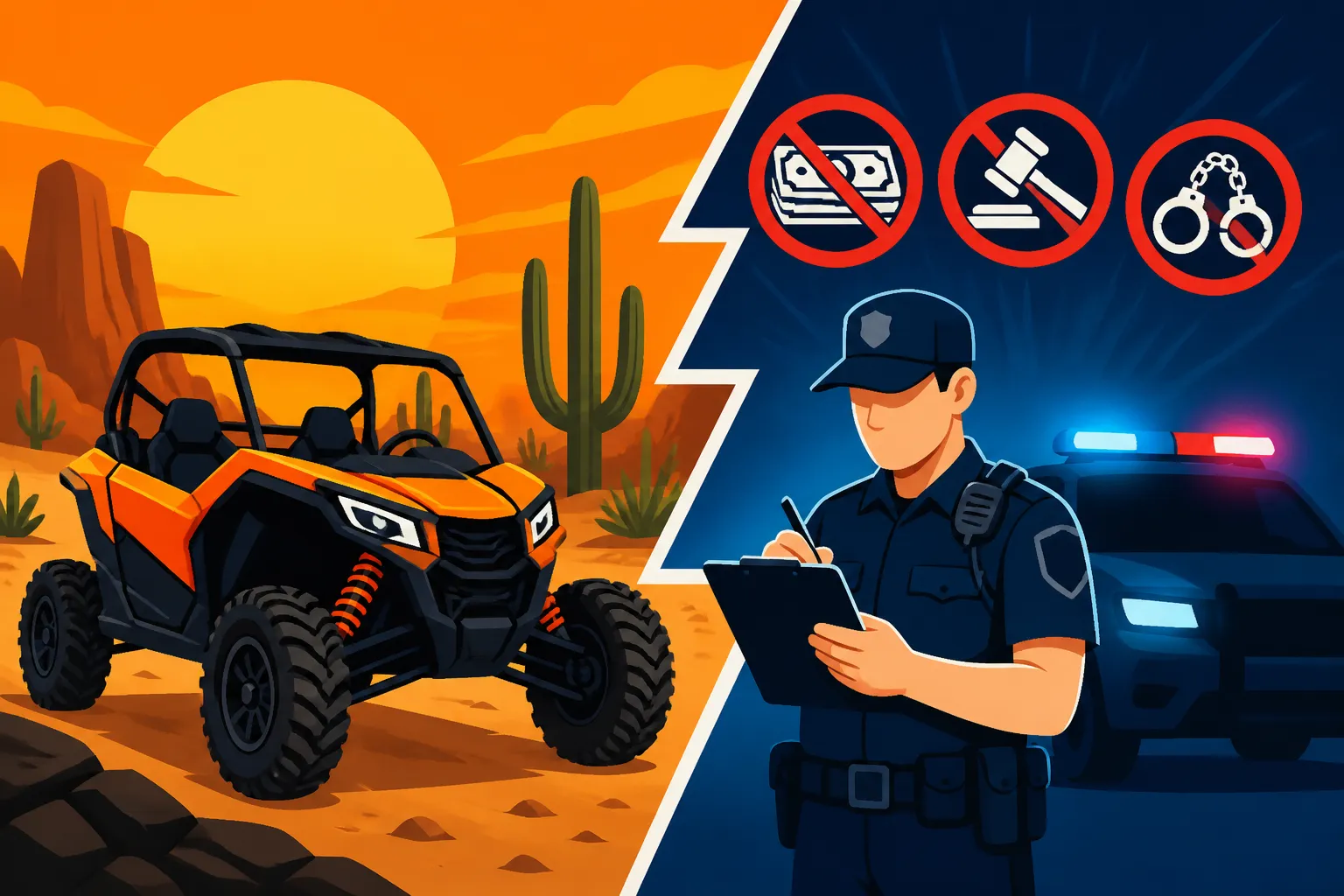
Let's face it, money talks, and the fines for operating an undecaled machine in Arizona can speak volumes, often much louder than the initial cost of the decal itself. While specific figures can fluctuate and depend on the jurisdiction, you can generally expect a citation to carry a significant monetary penalty. We're not talking about a slap on the wrist; these fines are designed to be a deterrent, making the cost of non-compliance far outweigh the cost of simply buying the decal in the first place.
Imagine planning a weekend trip, budgeting for fuel, food, and maybe a few nights of camping, only to have a substantial fine suddenly thrown into the mix. It can severely impact your trip budget, or even your household finances, turning what should have been a relaxing escape into a source of financial stress. These fines also don't factor in any potential court costs or administrative fees that might pile on top, further escalating the total expense. It's a stark reminder that staying compliant is genuinely the cheaper, less stressful option in the long run.
The Disruption to Your Ride
Beyond the financial penalty, an undecaled machine can lead to an immediate and unwelcome end to your ride. Law enforcement officers, whether they're Arizona Game and Fish Department rangers, sheriff's deputies, or local police, have the authority to stop you and, if your machine isn't compliant, order you off the trail. This isn't just a minor inconvenience; it can completely derail your plans for the day.
Picture this: You've driven hours to a remote trailhead with your family or friends, anticipating a full day of exploring. A ranger checks your registration, finds your decal expired, and suddenly, your adventure is over. You're left with the unenviable task of packing up, loading your machine back onto the trailer, and making the long drive home without having ridden a single mile. This kind of disruption can be particularly frustrating, especially if you're visiting from out of state and have limited time to enjoy Arizona's trails. For a closer look at what can happen if you're caught without a decal, read [What Riding Arizona Undecaled Costs You].
Beyond the Initial Stop
While typically an undecaled machine results in a fine and being asked to leave public lands, in more egregious circumstances, the consequences can escalate. While it's not common for a first offense, repeated violations or operating an undecaled machine in conjunction with other infractions—like reckless driving, environmental damage, or operating under the influence—could potentially lead to your machine being impounded. This is a severe measure, adding significant tow and storage fees on top of any fines, and causing a major headache to retrieve your vehicle.
Impoundment is a last resort for law enforcement, but it’s a possibility to be aware of, particularly if you have a history of non-compliance. It transforms a simple citation into a complex logistical and financial nightmare. Staying on top of your decal and other registration requirements isn't just about avoiding a ticket; it's about safeguarding your ability to enjoy your machine without unnecessary stress or severe legal repercussions.
The Broader Implications: Legal and Administrative Headaches
The problems with an undecaled OHV don't always end when the ranger drives away. A citation can ripple into other areas of your life, creating administrative burdens and potentially impacting future interactions with state agencies. These longer-term headaches are often overlooked but can be just as frustrating as the immediate fines.
Dealing with the Court System
Receiving a citation for an undecaled machine isn't always as simple as mailing in a payment. Depending on the jurisdiction and the specifics of the violation, you might be required to appear in court. This adds a whole new layer of inconvenience and stress, requiring you to take time off work, travel to a courthouse, and navigate a legal process that can feel intimidating and confusing. Even if an appearance isn't mandatory, you still have to ensure the fine is paid correctly and on time to avoid further penalties like late fees or even a warrant for non-payment.
Understanding how to address your citation, whether by paying the fine or considering a plea to mitigate the charges, requires careful attention. While you might opt to just pay it and move on, in some cases, you might believe the citation was issued in error. This would necessitate a court appearance to present your case, a process that many find daunting. Ensuring you have all your documentation, perhaps including a correctly filled-out bill of sale from LawDepot if you recently acquired the machine, can be helpful if you need to prove ownership or registration history.
Record Keeping and Future Registrations
A citation for an undecaled machine goes onto your record, potentially linking back to your Arizona Motor Vehicle Division (MVD) or Arizona Game and Fish Department (AZGFD) profile. While it might not affect your driver's license points in the same way a traffic ticket would, it can still flag you within state systems. This could lead to closer scrutiny during future registration renewals or if you encounter law enforcement again. Repeated offenses might even impact your ability to register other vehicles or obtain certain permits.
Maintaining a clean record with state agencies is always advisable. It makes future transactions, like renewing your OHV decal or registering a new machine, much smoother. Any prior infractions can lead to delays or additional questions, turning what should be a simple process into a drawn-out administrative ordeal. Keeping thorough records of your machine's ownership and registration, perhaps using templates for bills of sale or ownership transfers available through services like LawDepot, can be a lifesaver if you ever need to clarify your machine's history. Understanding your machine's past and present status is key, and you can learn more about how records are kept in [Arizona Records and a Machine's Ownership History].
Complications with Insurance and Liability
While an undecaled status might not directly void your insurance policy, it could certainly complicate matters if you're involved in an accident while riding illegally. Most insurance policies contain clauses that require you to operate your vehicle in accordance with all applicable laws and regulations. If you're involved in a collision or incident while riding an OHV that is not properly decaled, your insurance provider could potentially argue that you were operating outside the terms of your policy.
This could lead to a denial of your claim for damages to your machine or, even worse, denial of liability coverage if another party is injured or their property is damaged. The financial repercussions in such a scenario could be catastrophic, leaving you personally responsible for thousands or even tens of thousands of dollars in medical bills, repairs, or legal fees. It's a risk simply not worth taking. Ensuring your machine is always properly decaled is a small step that offers significant protection. For general information on insuring your OHV, see [Insuring an ATV in Arizona].
Avoiding the Penalties: Best Practices for Riders
Nobody wants to deal with fines, court appearances, or the embarrassment of having their ride cut short. The good news is that avoiding penalties for an undecaled machine in Arizona is entirely within your control. It comes down to understanding the requirements and establishing a few simple best practices.
Getting Your Decal Correctly
The most fundamental step to avoiding penalties is ensuring you purchase and maintain your OHV decal correctly. For new machines or first-time decal purchases, you'll go through the Arizona Game and Fish Department (AZGFD) or an authorized third-party provider. The process usually involves providing proof of ownership and paying the required fees. Don't procrastinate; get it done before your first ride on public land.
Once you have your decal, remember that it's not a one-time purchase. Arizona OHV decals expire annually. It's easy to lose track of the date, especially if your riding season isn't consistent year-round. Mark your calendar, set a reminder on your phone, or create an annual task in a digital planner to renew your decal. Many riders find it helpful to renew around the same time they handle other annual vehicle registrations. [Arizona's Annual OHV Decal Explained] offers a great overview, and for specifics on how to keep it current, you can consult [Renewing an Arizona OHV Decal Each Year]. When buying or selling, a good bill of sale, perhaps generated through a service like LawDepot, can provide clear proof of ownership necessary for obtaining or transferring decals.
Proper Display and Maintenance
Having a valid decal isn't enough; it must also be displayed correctly and remain legible. Arizona law specifies that the OHV decal must be affixed to the upper-left corner of the rear license plate. This placement ensures it's easily visible to law enforcement and helps avoid any ambiguity about your compliance. Don't put it on your fender, your helmet, or tucked away in your glove box—it needs to be on that plate. For precise instructions, refer to [Where the Arizona OHV Decal Goes on the Plate].
Over time, the harsh Arizona sun, dust, and general wear and tear can cause your decal to fade, peel, or become otherwise unreadable. A faded or damaged decal, even if technically still valid, could lead to questions from a ranger. If your decal is no longer clearly visible, it's time to order a replacement. This small proactive step can prevent an unnecessary stop on the trail. Read more about this specific issue in [When Desert Sun Fades Your Arizona OHV Decal], and make sure to follow the guidelines in [Sticking a Decal on the Upper-Left Plate Corner].
Understanding Arizona's Land Use Rules
Beyond the decal itself, it's crucial to understand where you're riding. The OHV decal is primarily for public lands. If you're only riding on private land that you own or have explicit permission to use, a decal isn't typically required. However, many riders inadvertently cross between private and public lands, or mistakenly believe certain areas are private when they are not. Always know your route and the land status of the areas you plan to traverse.
Arizona has vast tracts of State Trust Land, which require a separate recreational permit in addition to your OHV decal if you plan to access them. Mistaking State Trust Land for federal public land (like BLM or Forest Service) is a common error that can lead to additional citations. Always check maps and signage. For details on private land exemptions, see [Do You Need a Decal on Private Arizona Land?], and for State Trust Land requirements, explore [Arizona State Trust Land Recreational Permits]. Having clear agreements, especially when riding on someone else's private property, is always wise, and a legal document template from a service like LawDepot can help formalize such permissions.
What to Do If You're Cited
Even the most prepared rider can sometimes face unexpected situations. Perhaps you genuinely forgot to renew your decal, or there was a misunderstanding. If you find yourself pulled over and facing a citation for an undecaled machine, knowing how to react can make a significant difference in the outcome and your overall experience.
The Immediate Aftermath
First and foremost, if a law enforcement officer pulls you over, remain calm and respectful. Pull over safely to the side of the trail or road and follow all instructions the officer gives you. Provide your identification, registration, and any other requested documents promptly. Arguing, becoming confrontational, or attempting to flee will only escalate the situation and likely lead to more serious charges and harsher penalties. Even if you believe you are in the right, a roadside stop is not the place to debate legal technicalities.
Listen carefully to what the officer says and asks. Understand why you're being stopped and what the specific violation is. If you're unsure, politely ask for clarification. Take note of the officer's name and badge number, and the specific section of the law cited on your ticket. This information will be crucial if you decide to contest the citation later. For an idea of what an officer might ask for, review [What an Arizona Ranger Asks a Rider For].
Options for Resolution
Once you have your citation, you typically have a few options for resolving it. The most straightforward path, if you acknowledge the violation, is to pay the fine by the due date specified on the ticket. This closes the matter, but you'll still have the citation on your record. Ensure you understand all fees and how to submit payment correctly.
Alternatively, if you believe the citation was issued in error or that you have a valid defense, you can choose to contest it in court. This means you will plead "not guilty" and request a hearing. Prepare your case by gathering any relevant documents, such as proof that your decal was valid (if you mistakenly received a ticket), or documentation of ownership. While this guide cannot provide legal advice, seeking counsel from an attorney specializing in traffic or OHV law might be beneficial, especially if the penalties are severe or if you have other violations.
Learning from the Experience
Regardless of how you resolve the citation, take it as a learning opportunity. If your decal was indeed missing or expired, make it an absolute priority to get compliant immediately. Go online, renew your decal, and display it correctly. This isn't just about avoiding future fines; it's about being a responsible rider and contributing to the upkeep of the trails we all enjoy.
Arizona also has a mandatory OHV decal course that covers safe and ethical riding practices, as well as the rules and regulations for operating OHVs on public lands. While it's primarily designed for those who obtain an OHV decal, reviewing its contents can be an excellent way to refresh your knowledge and ensure you're up-to-date on all requirements, helping prevent future missteps. You can find more information about this course in [Arizona's Free Mandatory OHV Decal Course]. Embrace the experience as a lesson, and ensure your next ride is worry-free and fully compliant.
Arizona OHV Compliance: Decal vs. Street-Legal Plate
Navigating Arizona's OHV regulations can sometimes feel like distinguishing between two similar, but legally distinct, vehicles. Understanding the core difference between an OHV decal and a standard street-legal license plate is paramount to ensure your machine is compliant for its intended use. Here's a quick breakdown:
| Feature | OHV Decal | Street-Legal License Plate (MC or RV) |
|---|---|---|
| Purpose | Required for off-highway vehicles on public lands | Required for vehicles on public roads |
| Primary Use | Dirt bikes, ATVs, UTVs, sand rails for trail riding | Motorcycles, cars, trucks (some UTVs can qualify) |
| Issuing Agency | Arizona Game and Fish Department (AZGFD) | Arizona Motor Vehicle Division (MVD) |
| Annual Renewal | Yes, through AZGFD Portal | Yes, through MVD |
| Exemptions | Private land, fully street-legal machines | Off-highway trails (unless specific access is granted) |
| Requirements | Decal purchase, sometimes an educational course | Title, registration, insurance, emissions (for some areas), safety equipment |
| Cost | Nominal annual fee for decal | Standard vehicle registration fees |
This table highlights that while both serve to legitimize your machine's operation, they do so in different environments. An OHV decal funds trail maintenance and access, while a street-legal plate signifies adherence to road-specific safety and tax regulations. Having one does not automatically negate the need for the other if your machine will be used in both environments, though a truly street-legal machine won't need an additional OHV decal. Always check the specific requirements for your machine and planned riding areas to stay on the right side of the law.
Disclaimer
This article is for general informational purposes only and does not constitute professional advice. Laws, prices and regulations vary by location and change over time. Consult a qualified professional for guidance on your specific situation.