Sun Protection for a Desert Ride
Arizona desert riding sun protection requires proper clothing, eye care, route planning, and timing to avoid extreme heat exposure.
The map is not the permission.
National forest and BLM routes, state OHV parks, and club trails crossing private land — with the closures and passes that decide whether today counts.

Arizona desert riding sun protection requires proper clothing, eye care, route planning, and timing to avoid extreme heat exposure.
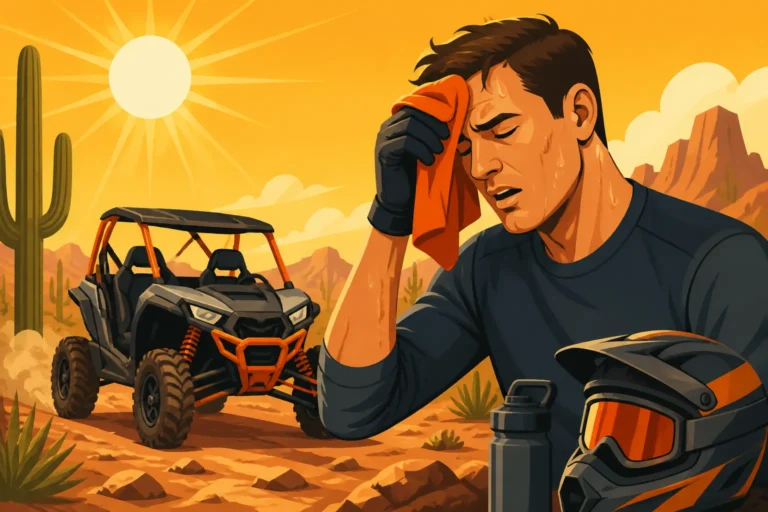
Heat illness symptoms during Arizona summer trail rides require recognizing early signs and knowing safe response steps.

Solo Arizona desert ATV and UTV riders learn route planning, machine preparation, and emergency management for safer trips.
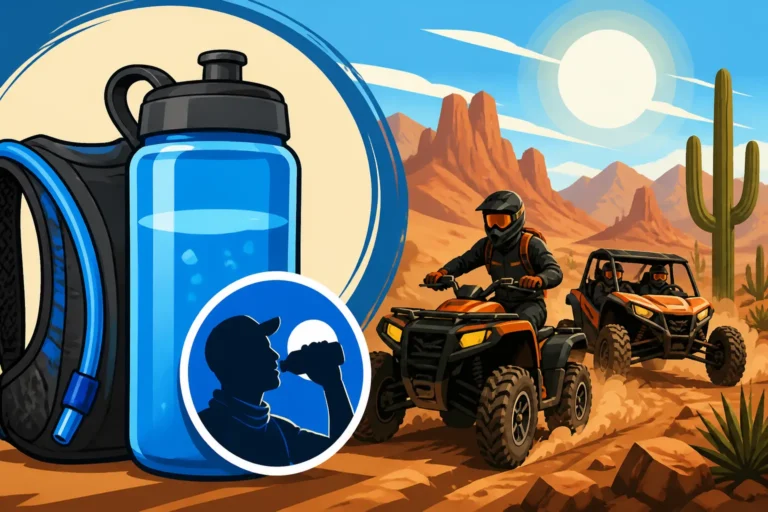
Arizona desert trail rides require one gallon of drinking water per person daily, plus extra reserves for delays and heat.
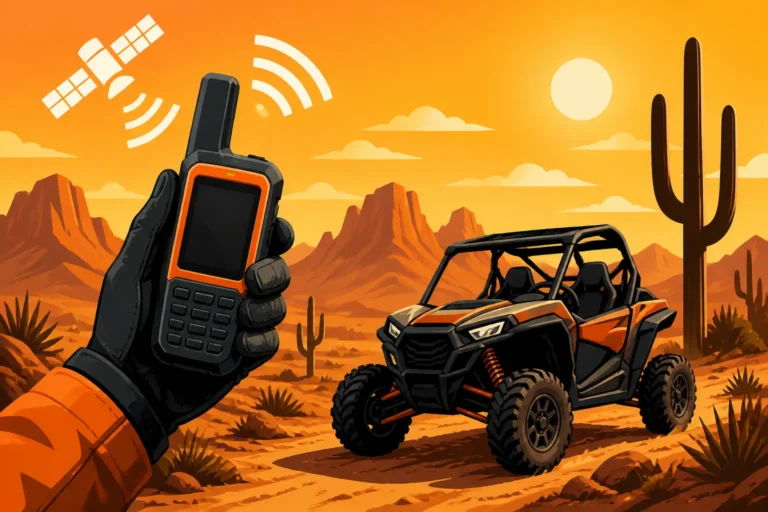
Satellite messengers help Arizona desert riders call for assistance when cellular service disappears beyond towns and trail networks.
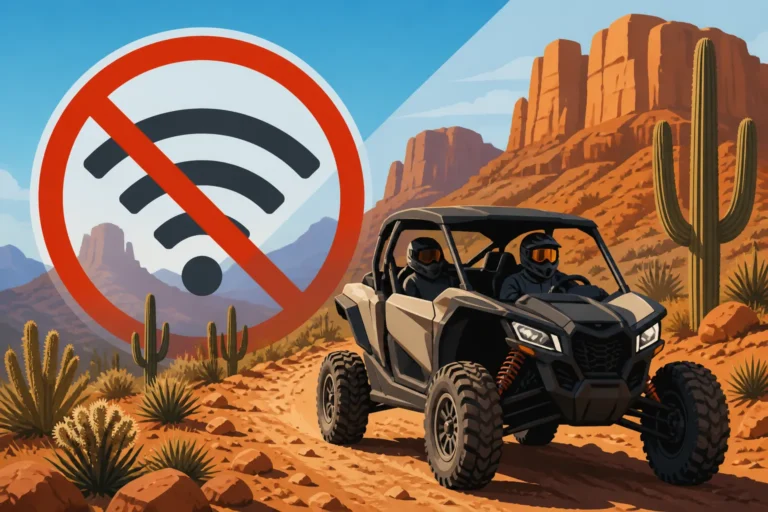
Arizona backcountry cell dead zones require offline maps and communication planning before riding ATVs near Sedona and Phoenix.
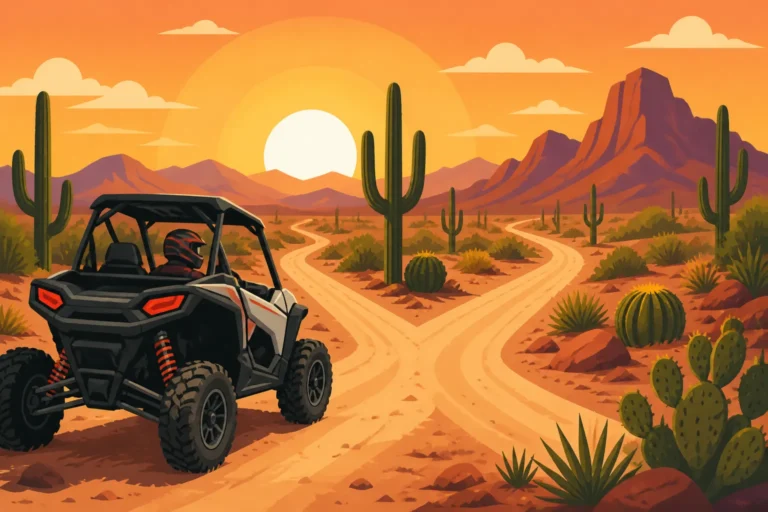
Sonoran Desert off-road navigation challenges and preparation steps help riders safely handle lost trails and confusing routes.

Arizona desert trail markers and route numbers help riders match mapped paths, verify directions, and avoid navigation mistakes.
Arizona desert travelers learn how to check route access, verify land boundaries, and make safe turnarounds on unsigned tracks.
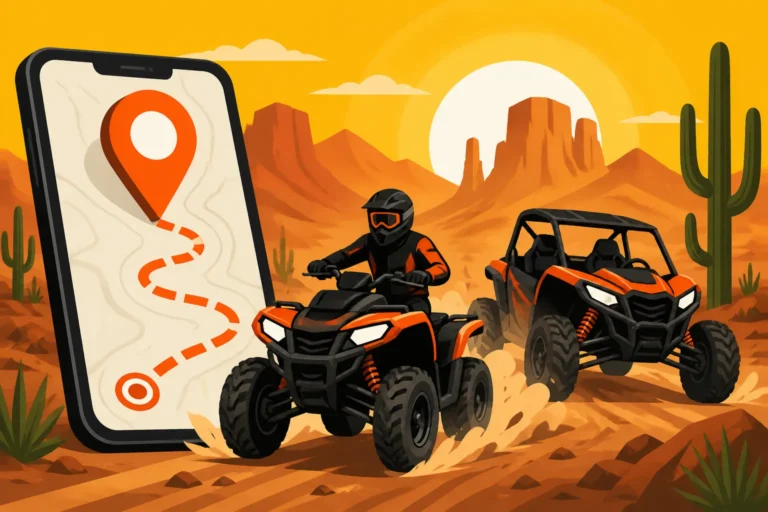
GPS files for Arizona desert routes explain tracks, waypoints, and land access to help riders navigate safely.