Supervising a Young Rider in the Desert
Desert supervision strategies help adults protect young riders from hazards like loose sand, heat, and changing trails.
Your sticker stops at the state line.
Non-resident permits, what they cost and how long they last, and which states honor each other’s — or, increasingly, none at all.
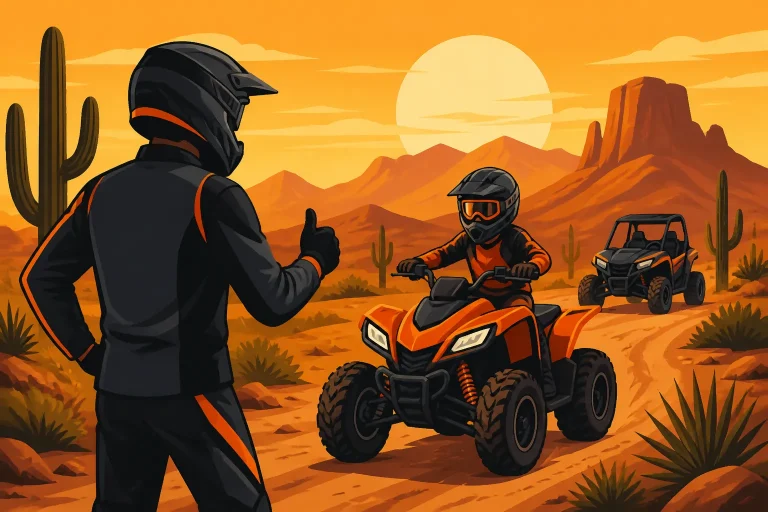
Desert supervision strategies help adults protect young riders from hazards like loose sand, heat, and changing trails.
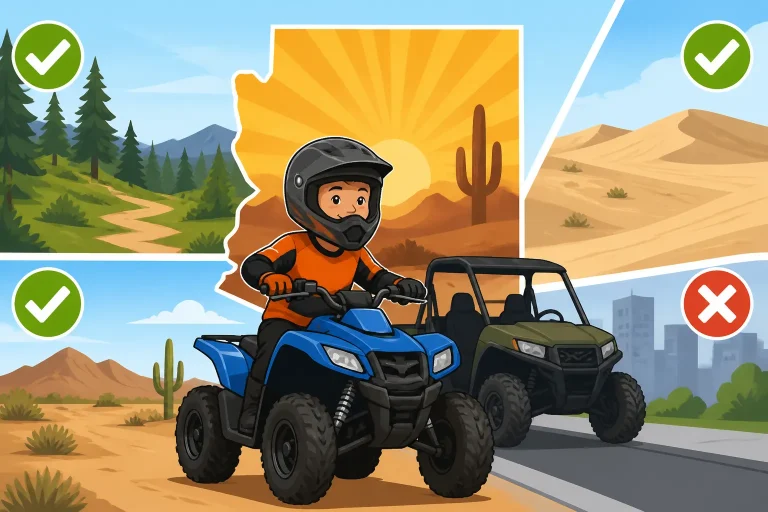
Where a child under 12 may legally ride in Arizona depends on whether the route is private land, a public trail or a public road.
Arizona rules for riders under 12 focus on adult supervision, machine size, helmets and land access; check current requirements before riding.
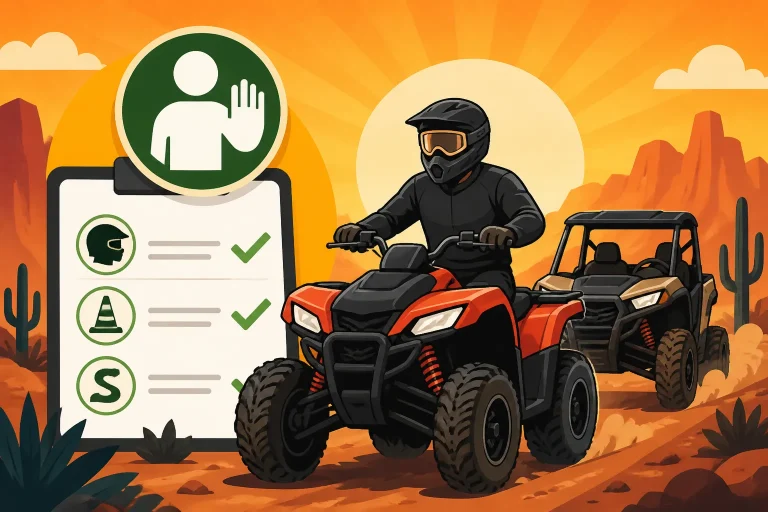
Arizona riders without a driver’s license generally do not need a separate OHV skills test; youth training and road rules still apply before riding.
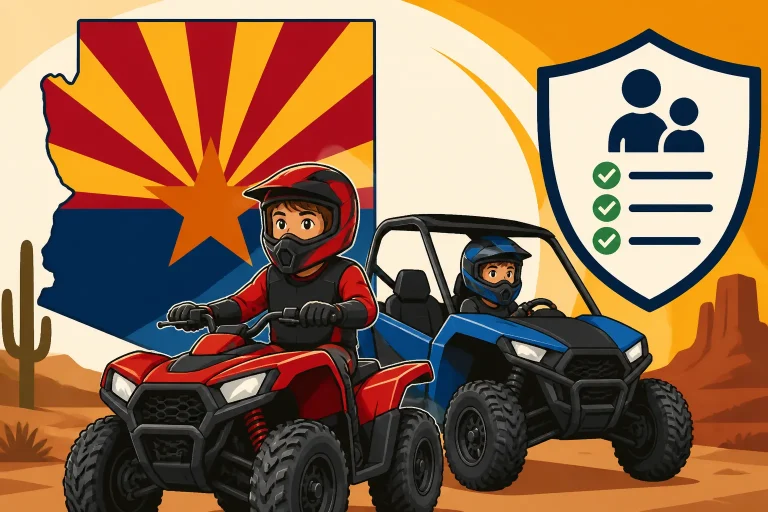
Arizona education rules for under-18 OHV riders: who needs the course, how to keep proof, and why decals, age limits, and land access remain separate.
Arizona OHV written testing is part of safety education, not a driver’s exam; confirm who must complete it and what permits riding still requires.
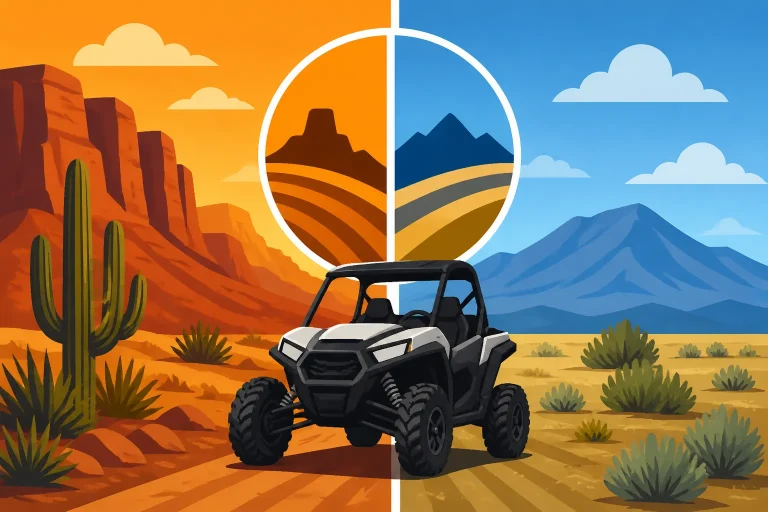
Telling Trust Land From BLM Ground in Arizona starts with checking boundaries, permits and route rules; a decal alone does not grant access.
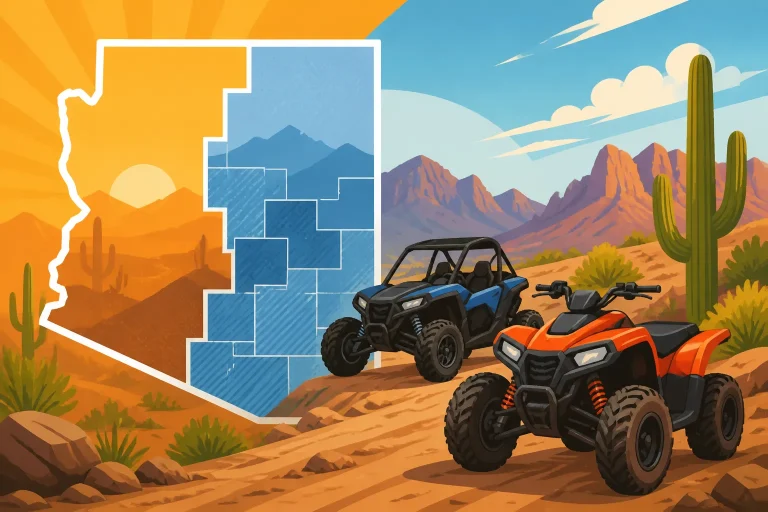
Arizona trust land is not ordinary public land: check boundaries, permits, open routes, and OHV decal rules before riding to avoid an illegal detour.
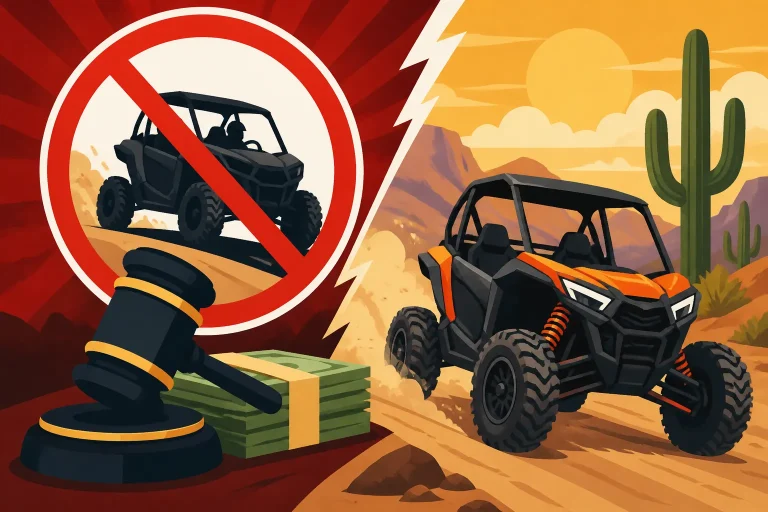
Fines for Trust Land Without a Permit explains Arizona’s citation risks and permit limits, and how to check access before an OHV trip.
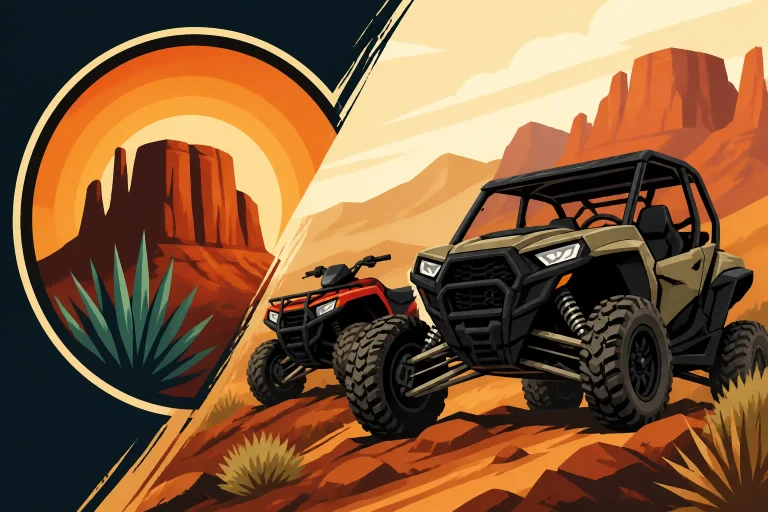
Machines over 1,800 pounds may not qualify for standard Arizona Trust Land recreation permits; verify weight, routes, and access before riding.