First Aid an Hour From Pavement
A crash on a remote Arizona trail can leave you far from an ambulance, cell service, or even a clear place for a vehicle to turn around. That distance makes preparation matter: a small first-aid kit, a calm response plan, and reliable location details can help you manage the first minutes while arranging professional care. This guide explains what to pack and what to do.
Prepare before an Arizona trail ride
Plan for the route, the group, and the delay
First aid starts before anyone gets hurt. Tell someone who is not riding where you plan to go, which staging area you will use, and when you expect to check in. Agree on what they should do if you miss that check-in. “We’re riding near Table Mesa” is less useful than a route, a planned turnaround point, a vehicle description, and a clear return time.
Look at the route and access points before leaving. A trail can feel close to a road on a map but take a long time to cover in a machine, especially if the route is rocky, sandy, steep, or unfamiliar. Use Planning an Arizona Riding Trip to think through route choices, and consider saving an offline map in onX Offroad or another navigation tool before you lose reception. A map can help you describe where you are, but it does not replace a satellite messenger or an emergency plan.
Check the day’s conditions as carefully as the route. In Arizona, heat, elevation, sudden storms, and fading daylight can change what a group can safely manage. A ride near Phoenix in summer calls for a different water and heat plan than a cooler day near Flagstaff. Review Arizona Monsoon Season and Flash Flooding before heading into canyons or washes, and leave room in the schedule to turn around rather than pushing on.
Build a first-aid kit you can actually use
A useful trail kit is compact, protected from dust and water, and organized so that someone else can find items quickly. Pack it where it can be reached without unloading the machine. Tell at least one other rider where it is, and check the contents before a trip; adhesive dressings and medication can be damaged by heat or expire while sitting in a storage box.
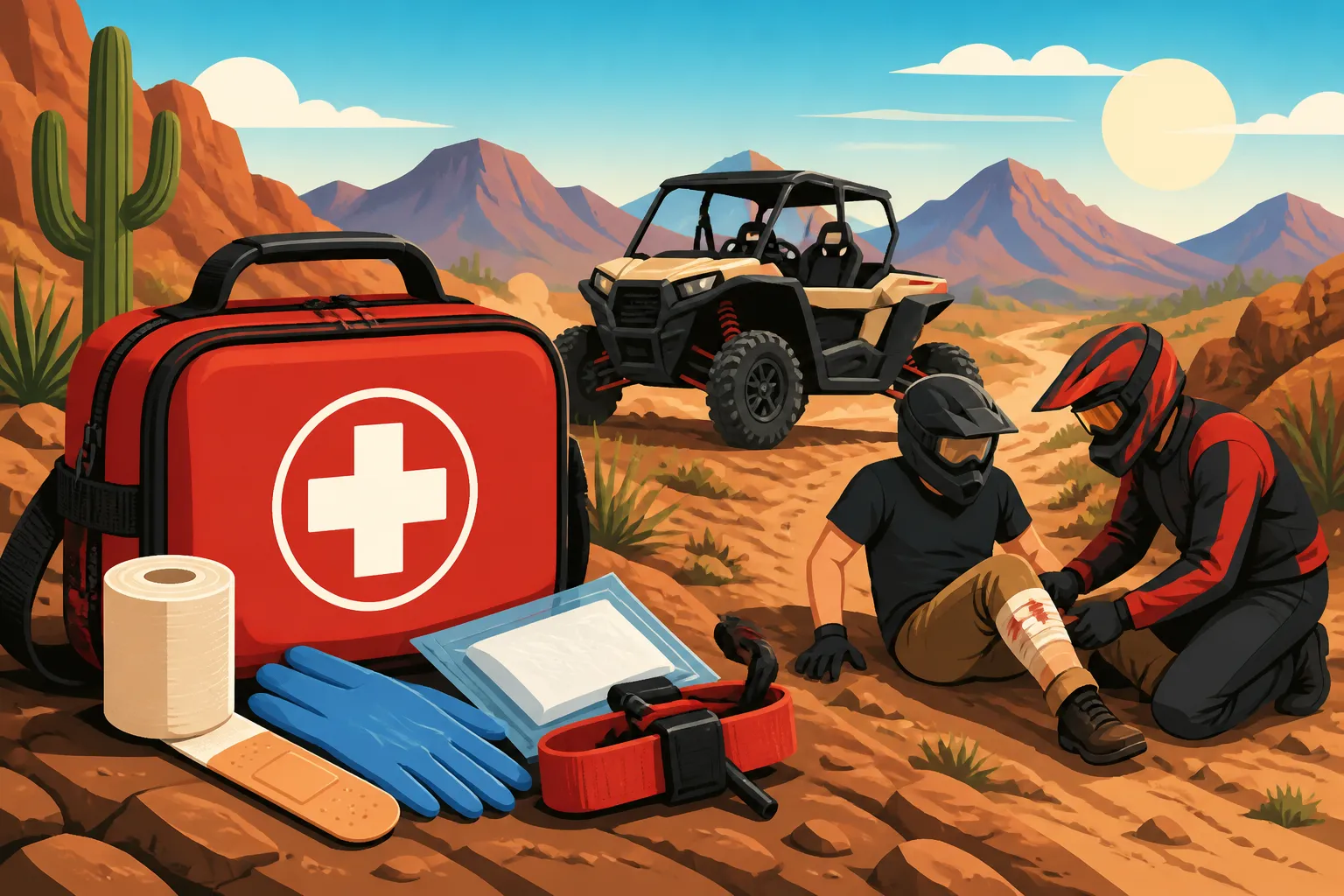
A practical kit may include disposable gloves, sterile gauze pads, roller gauze, adhesive dressings, medical tape, antiseptic wipes, tweezers, trauma shears, an elastic wrap, a triangular bandage, and a compact emergency blanket. Add any personal medication a rider may need, stored according to its label. A commercial tourniquet may be appropriate for a trained group, but it should be genuine, accessible, and used according to recognized training and its instructions—not improvised from a belt.
Bring supplies for the environment as well as injuries: drinking water, sun protection, a headlamp, a whistle, and a charged communication device. A first-aid kit cannot make up for missing water, poor navigation, or a dead phone. For longer or more isolated routes, review How Much Water a Desert Ride Needs and Cell Service in the Arizona Backcountry while planning.
| Situation | Useful preparation | Important limit |
|---|---|---|
| Minor cuts and scrapes | Gloves, clean gauze, dressings, tape | Seek help if the wound is deep, contaminated, or will not stop bleeding |
| Sprains or suspected fractures | Elastic wrap, padding, splinting supplies, blanket | Do not force a painful limb straight or test whether it is broken |
| Severe bleeding | Gloves, gauze, and a commercial tourniquet if someone is trained | Call emergency services and follow training; do not delay help to assemble supplies |
| Heat illness | Water, shade plan, cooling supplies, communication device | Confusion, collapse, or altered behavior is an emergency |
| Nightfall or separation | Headlamp, whistle, navigation device, backup power | A phone map may fail without service or battery |
Respond calmly when someone is injured
Make the scene safer before treating the rider
A crash can create a second emergency if other riders rush in without looking around. Stop machines away from the injured person, switch engines off, and watch for traffic, unstable terrain, fire, loose rocks, and other hazards. Keep bystanders and other vehicles clear. If the location itself is unsafe, move the person only as far as necessary to escape immediate danger, taking care not to twist the neck or back.
Ask the injured rider what happened and what hurts. Check whether they are awake and responding normally, and look for severe bleeding or trouble breathing. If they are unconscious, confused, having difficulty breathing, or bleeding heavily, treat the situation as urgent and arrange emergency help immediately. Do not leave a seriously injured person alone to search for reception if another rider can stay with them.
For a suspected head, neck, or back injury, encourage the person to remain still and in a comfortable position. Do not remove a helmet simply to make the person more comfortable. If breathing is compromised or the person vomits, follow emergency dispatcher instructions and your training; maintaining breathing takes priority, but unnecessary movement can worsen some injuries. If the rider is not breathing normally, call emergency services and begin CPR if you are trained, following dispatcher guidance where available.
Treat bleeding, wounds, and possible fractures
For a bleeding wound, put on gloves if you have them and apply firm, steady pressure with clean gauze or cloth. If blood soaks through, add more material over the top rather than pulling away the first layer. Severe bleeding needs urgent professional care. Use a tourniquet only if it is needed, you are trained to use it, and you can follow the device’s directions. Note when it was applied and tell responders.
For a small scrape or cut, rinse away visible dirt with clean water if available, cover it with a clean dressing, and keep an eye on it. Desert grit and plant material can make a wound harder to clean. Avoid putting soil, unclean water, or unverified remedies into an open wound. A wound that is deep, gaping, badly contaminated, or caused by an object that remains embedded needs medical assessment. Do not pull out an embedded object; stabilize it and seek help.
If a limb looks deformed or the rider cannot use it, treat it as a possible fracture. Support it in the position found with padding or a splint if you know how, and avoid unnecessary movement. Check circulation and sensation beyond the injury if you can do so without causing pain or changing the position. Do not give food or drink to someone who is confused, very drowsy, or may need urgent medical treatment.
Recognize heat illness and other desert risks
Take heat symptoms seriously
Heat illness can develop gradually, and a rider may not recognize that their judgment is changing. Headache, dizziness, nausea, weakness, unusual irritability, heavy sweating, or muscle cramps are reasons to stop riding, get into shade, loosen unnecessary gear, and begin cooling. Do not let someone with symptoms keep driving because they insist they are fine. Review Heat Illness on a Summer Trail before riding in hot conditions.
Confusion, fainting, seizures, or unusual behavior can signal a life-threatening emergency. Call emergency services or use a satellite communication device to request help. Begin cooling promptly: move the person out of direct sun, remove excess layers, wet the skin or clothing with available water, and use airflow or cool packs if you have them. Do not give drinks to someone who is not fully alert or cannot swallow safely. Stay with the person and keep reassessing them while help is on the way.
A cooling plan should be part of the ride plan, not something improvised after symptoms appear. Start early, take breaks, avoid pushing the slowest or least experienced rider, and turn back if conditions become unsafe. Riding an Arizona Road at 110 Degrees offers more context for planning around extreme heat. A phone app such as onX Offroad may help you follow a saved route, but navigation does not make a hot ride safe or replace medical communication.
Manage bites, stings, and changing weather
If someone is bitten by a snake, keep them as calm and still as possible, remove rings or tight items near the affected area, and arrange emergency care. Do not cut the wound, try to suck out venom, apply ice, or use a tight tourniquet. If you can do so safely, note the time and appearance of the snake without trying to catch or handle it. A photo from a safe distance may help, but getting closer is not worth another injury.
For a bee or wasp sting, move away from the area and watch for signs of a serious allergic reaction, such as trouble breathing, swelling of the face or throat, or collapse. Use the person’s prescribed emergency medication if they have it and you can assist appropriately, then call emergency services. A reaction can worsen quickly, so do not assume the rider will be fine just because the first symptoms seem mild.
Weather can become a medical hazard too. Arizona monsoon storms may bring lightning, strong wind, and fast-moving water in a wash. Do not ride into flowing water or wait in a low drainage channel for conditions to pass. Move to safer, higher ground when it is safe to do so, and follow local emergency guidance. Knowing how to report your position matters, so consider Carrying a Satellite Messenger in the Arizona Desert and practice sending a message before the ride.
Arrange help and keep the group together
Share a clear location and request assistance
When contacting emergency services, explain what happened, how many people are hurt, the injured person’s condition, and whether they are awake and breathing normally. Give the most precise location you can: trail or route name, nearby junction, mile marker if known, GPS coordinates, and the direction of travel. Mention hazards that could affect access, such as a narrow trail, steep slope, deep sand, or a blocked approach.
If one rider must travel to find reception or meet responders, make sure the injured person is not left without care. Send a capable person with a clear task and route; do not split the group casually or send an inexperienced rider alone into unfamiliar terrain. If the group has a satellite messenger, use its emergency function according to the device’s instructions and keep it available for follow-up messages.
A saved offline map in onX Offroad can help riders identify trail junctions and communicate a location, provided the map was downloaded before leaving coverage. Record coordinates in a format you can read aloud, and confirm that everyone knows how to share them. For more on getting turned around and finding your way back, see Getting Turned Around in the Sonoran Desert.
Keep monitoring the rider until help arrives
While waiting, keep the person as comfortable and still as possible. Protect them from sun, wind, and cold; desert evenings and higher elevations can become chilly even after a hot day. Recheck their alertness, breathing, and bleeding regularly. If their condition changes, update emergency services or the person coordinating the rescue.
Avoid moving an injured rider onto a machine unless there is an immediate threat or emergency professionals direct you to do so. A bumpy ride out may worsen an injury, and a group may not have the equipment to transport someone safely. Follow dispatcher guidance, preserve the scene when appropriate, and keep a record of key details such as the time of the crash, symptoms, first aid given, and any medication used.
After the incident, do not rush the group back onto the trail. Riders may be shaken, dehydrated, or tired, and a second mishap is more likely when people are focused on getting home. Check everyone, account for machines and gear, and choose a safe exit or wait for assistance. A first-aid class, a practiced communication plan, and a well-maintained kit make a remote ride more manageable—but they are not substitutes for professional medical care.
Disclaimer
This article is for general informational purposes only and does not constitute professional advice. Laws, prices and regulations vary by location and change over time. Consult a qualified professional for guidance on your specific situation.