Dawn Rides Before the Heat Builds
An Arizona dawn ride can feel like the perfect escape from the afternoon heat, but leaving before sunrise brings its own challenges: darkness, cool-to-hot temperature swings, limited visibility, and trails that may not be open or suitable for your machine. This guide explains how to plan an early ATV or UTV ride, choose a sensible route, and return before the desert gets punishingly hot.
Why dawn works for Arizona ATV and UTV rides
Beat the heat without underestimating the desert
Starting early can reduce your exposure to the hottest part of the day, especially on low-desert routes near Phoenix, Lake Havasu City, or Yuma. It can also mean quieter staging areas and calmer riding conditions before traffic and dust build. But an early departure is not a guarantee of a cool or easy ride. Temperatures can climb quickly after sunrise, and open desert routes offer little shade.
Plan for the conditions you expect later in the ride, not only the chilly air at the trailhead. Riders often begin in a sweatshirt, then find themselves sweating heavily once the sun is high and the machine is working through sand or steep terrain. Pack breathable layers you can remove, sun protection, and more water than you think you will need. For help estimating what to carry, see Water Planning for an Arizona Trail Day.
A dawn start also leaves less room for a slow return. A flat tire, wrong turn, or difficult obstacle can push your ride into hotter hours. Choose a route that you can shorten if needed, and agree on a turnaround time before the group starts. If anyone feels unwell, stopping the ride and finding a safe way back matters more than completing the loop.
Decide whether to ride low desert or higher country
Arizona’s riding conditions vary sharply with elevation. A route in the Sonoran Desert outside Phoenix may be hot and exposed by midmorning, while higher routes near Flagstaff or the Mogollon Rim can start cold and stay cool longer. Higher elevations are not automatically a safe summer choice: weather, road conditions, and fire restrictions can affect access. The guide to Riding Arizona High Country in Summer can help you think through the different conditions.
Use the forecast for the trail area, not just the nearest major city. A Phoenix forecast may not describe what you will encounter near a mountain staging area, and a forecast for Sedona does not tell you whether a specific trail is muddy, blocked, or closed. Elevation, wind, cloud cover, and recent rain can all change how a ride feels.
| Ride setting | Dawn advantage | Main early-ride concern | Planning response |
|---|---|---|---|
| Low desert near Phoenix or Yuma | Less afternoon exposure and often a quieter start | Heat may build rapidly after sunrise | Keep the route conservative and set an early turnaround |
| Red rock country near Sedona | Cooler air and softer morning light | Darkness, dust, and changing trail access | Confirm the route and avoid riding beyond your ability |
| Higher country near Flagstaff or the Rim | A cooler start during warm periods | Cold conditions, changing weather, or seasonal access limits | Bring layers and check local conditions before departure |
| Sandy routes near Lake Havasu | Earlier riding can help avoid the hottest hours | Deep sand can increase effort and delay the return | Carry recovery gear and choose a route that matches your machine |
Use the table as a planning aid, not as a substitute for checking current access, weather, and land-management rules. Conditions can change between one weekend and the next.
Plan the route before you leave home
Match the route to the machine and the group
A dawn ride should not be the time to find out that a route is too difficult for a newer rider or too narrow for a full-size side-by-side. Check route width, terrain, mileage, and any known obstacles before loading up. A trail that sounds manageable on paper can feel very different in darkness or when dust hangs in the air. If you are choosing a route for a larger vehicle, Arizona Trails Rated for Full-Size Rigs is a useful place to start.
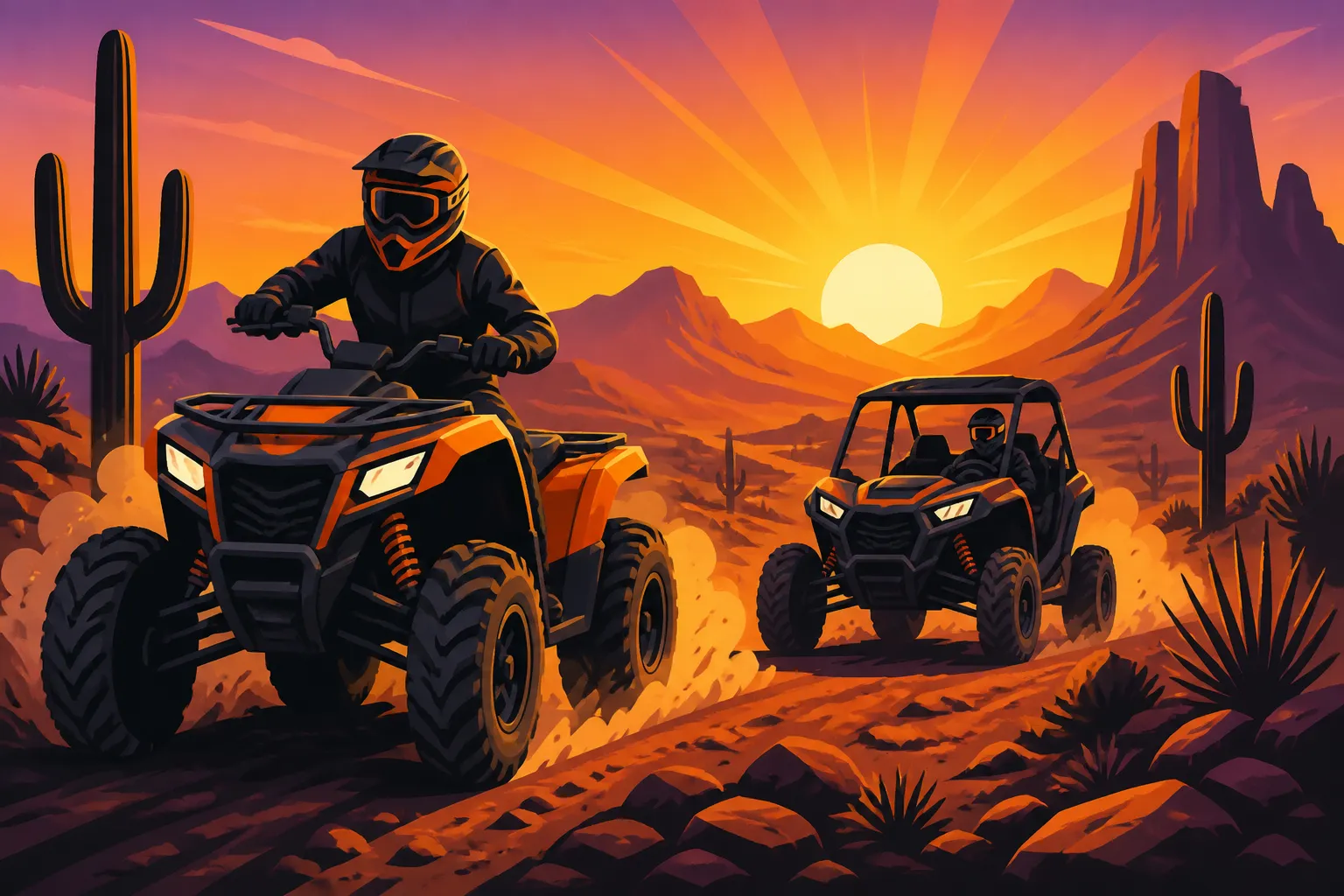
Be honest about the least experienced rider in the group. If someone is new to desert riding, pick an uncomplicated route with clear turnarounds rather than a technical trail that could become stressful before daylight. Keep the group together at junctions, and agree that no one rides ahead out of sight. In a mixed group of quads and UTVs, set a pace that gives every rider time to see hazards and stop safely.
Offline navigation is especially valuable when an early ride takes you beyond reliable cell coverage. A mapping tool such as onX Offroad can help you review a route and prepare for navigation without relying on a live connection, but it should not be treated as proof that a trail is open or legal to ride. Check the land manager’s information and posted signs, and carry a backup navigation method. Do not assume that a marked line on a map gives permission to cross private, tribal, or restricted land.
Check access and weather the day before and the morning of
A route you rode recently may be affected by rain, fire restrictions, maintenance, or a temporary closure. Check access information before you leave and again before setting out, especially during monsoon season. A dry-looking trailhead does not mean a wash farther along the route is safe. Checking Arizona Trail Status Before You Drive and Arizona Monsoon Season and Flash Flooding cover two checks that can prevent a costly or dangerous mistake.
Pay attention to the whole route, not just the staging area. A storm can cause water to move through a wash miles from where rain fell. Never enter a flooded wash simply because the water looks shallow or the track ahead seems passable. If conditions are uncertain, change the route or postpone the ride.
Check whether the trailhead, gate, or access road is available at the time you plan to arrive. Some locations have posted hours, seasonal rules, or restrictions that may affect an overnight or pre-sunrise arrival. Park and stage only where permitted, keep access roads clear, and avoid disturbing nearby residents with unnecessary noise. The page on Arizona Trailhead Parking and Staging offers more guidance for planning that part of the trip.
Prepare for darkness, changing temperatures, and delays
Make yourself visible before the sun comes up
At dawn, other vehicles, wildlife, rocks, and trail edges can be difficult to spot. Inspect your headlights and taillights before loading the machine, clean lenses, and check that your lights work as intended. Wear reflective or bright clothing where appropriate, and leave enough distance between machines for each rider to see dust and obstacles. Do not assume that a headlight makes it safe to ride at full daytime speed.
Give your eyes time to adjust when moving between dark and light. Avoid staring into another machine’s lights, and stop in a safe place if glare or dust makes it hard to see. A rider who cannot clearly identify the route ahead should slow down or wait for better visibility rather than follow taillights blindly.
Wildlife may be active around the same time you are. Scan the trail edges and approach blind corners cautiously. Keep a safe distance from animals and never chase or crowd them. On narrow routes, use extra care around other early risers, including hikers and cyclists who may be harder to see before full daylight.
Pack for the ride that takes longer than planned
A common dawn-ride mistake is packing for a short, simple outing and assuming everything will go smoothly. Carry drinking water, food, a basic first-aid kit, sun protection, a charged phone, and navigation that can work without cell service. Bring tools and repair items suited to your machine, plus recovery equipment if the route includes deep sand or difficult terrain. Tell someone who is not riding with you where you are going and when you expect to return.
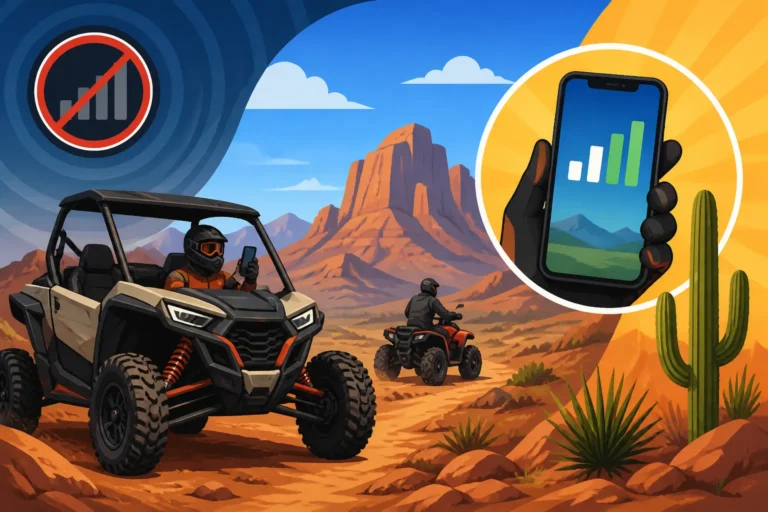
Cell coverage can disappear in backcountry areas, so do not rely on a phone call as your only way to get help. Share a route plan and a check-in time with a trusted person. For remote routes, consider whether your group needs a satellite communication device. [Cell Dead Zones in the Arizona Backcountry] explains why this backup planning matters.
Heat illness can develop even when the ride began in cool air. Watch for symptoms such as unusual weakness, dizziness, nausea, headache, confusion, or a loss of coordination. Stop riding if someone seems unwell, get them out of the sun, and seek appropriate medical help. Do not ask an impaired rider to drive themselves back. Review Heat Illness on a Summer Trail before heading out during hot weather.
Use a simple departure routine
The early start can make it tempting to hurry through checks while everyone is trying to get moving. A short routine helps catch problems before they become harder to deal with on the trail:
- Check the machine. Look over the tires, controls, brakes, fuel or charge level, lights, and visible leaks. Secure cargo so it cannot shift.
- Check the route and access. Confirm the intended trail, legal access, weather, and any current closures or restrictions.
- Set group expectations. Choose a lead and sweep rider, agree on regrouping points, and decide when the group will turn around.
- Pack essentials within reach. Keep water, navigation, communications, and first aid accessible rather than buried under cargo.
- Tell someone your plan. Share your route, expected return time, and what they should do if you miss your check-in.
- Reassess at the trailhead. If the weather, visibility, access, or condition of a rider is not right, adjust the plan before leaving.
Make the early start comfortable and sustainable
Dress for cold air and rising sun
A dawn departure can feel cold when you are standing at the trailer, then hot once the machine is moving and the sun reaches the route. Wear layers that allow you to adapt without stopping for a full clothing change. Gloves and eye protection can make the first chilly miles more comfortable, while a breathable base layer and sun-protective clothing help later in the morning.
Bring eye protection appropriate for dust and changing light. A tinted lens that feels comfortable in full sun may be too dark before sunrise; clear or adaptable options can make more sense for the first part of the ride. Keep a spare pair if your group will be out long enough for dust, scratches, or fogging to become a problem.
Do not treat a windshield, roof, or shade structure as a replacement for water and sun protection. UTV cabins can still become hot, and open machines leave riders exposed to sun and blowing dust. If the machine has seat belts or nets, use them as intended and follow the manufacturer’s guidance for the vehicle and passengers.
Keep the return flexible
A good dawn ride does not need to be a long one. Choose a route with a practical turnaround point, and be willing to shorten the day if temperatures rise, clouds build, someone tires, or the trail is rougher than expected. A group that reaches the trailer comfortably has made a better decision than one that completes every planned mile while pushing through worsening conditions.
On the ride back, do not let the group spread out just because daylight has improved. Fatigue and heat can make riders less attentive, even on familiar ground. Regroup after difficult sections, check that everyone is drinking and feeling well, and leave enough time to load safely rather than rushing at the end.
If you ride at dawn regularly, keep notes about what worked: departure time, route length, water use, weather, and any problems. Those details make it easier to choose a suitable outing next time, especially when comparing a low-desert ride near Phoenix with a cooler route in higher country. For broader seasonal planning, see Arizona’s Best Riding Months.
Disclaimer
This article is for general informational purposes only and does not constitute professional advice. Laws, prices and regulations vary by location and change over time. Consult a qualified professional for guidance on your specific situation.