Riding Sedona on a Weekday
Sedona’s red-rock trails can feel very different on a weekday than they do on a busy weekend, but lighter traffic does not guarantee an empty trail or an easy ride. This guide explains how to choose a suitable route, plan around trailhead congestion and changing conditions, and ride Sedona respectfully without assuming every road is open to every machine.
Why ride Sedona on a weekday
Fewer vehicles can mean a calmer ride
Weekdays often bring a welcome break from weekend traffic, especially at popular trailheads and scenic stops. With fewer rigs passing in both directions, it may be easier to pause, take in the red-rock scenery, and keep a comfortable pace. That can make a big difference if you are riding with a newer operator or simply prefer a quieter day outdoors.
Still, “weekday” does not mean “empty.” Sedona remains a popular destination, and visitor numbers can build around holidays, school breaks, and pleasant-weather periods. You may also encounter hikers, mountain bikers, tour groups, and other motorized users. Expect to share legal routes and give other visitors room rather than treating a quieter day like a private trail.
A weekday can also make logistics less stressful. You may find less competition for parking or space to unload, but a small staging area can fill earlier than you expect. Check where you are allowed to park and stage before towing into the area. [Arizona Trailhead Parking and Staging] explains why a good ride plan starts before you reach the trail.
Pick your route for the experience you want
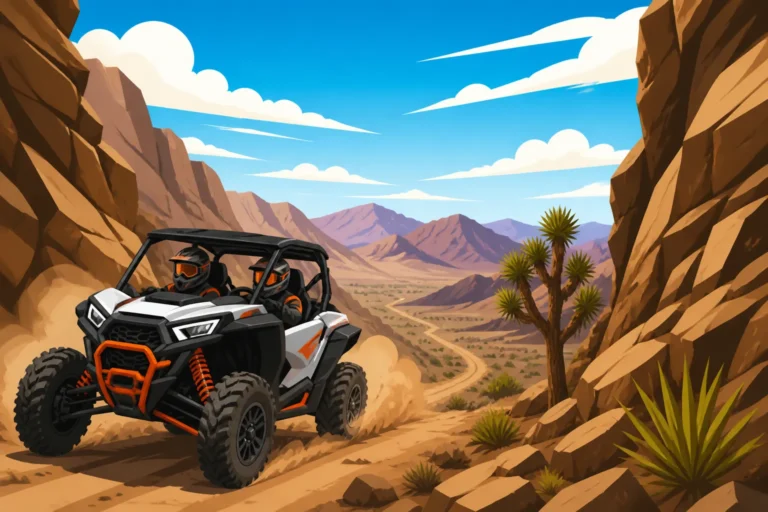
Sedona has a mix of route types, from scenic drives to more demanding off-highway routes. Think about your machine, experience, comfort with rocky or uneven terrain, and the group’s expectations before choosing. A route that looks short on a map can still take a while if the surface is rough, traffic is moving in both directions, or your group stops often for photos.
Broken Arrow is widely known for its striking red-rock scenery and challenging terrain. It is not a route to choose casually just because it appears close to town. Review the route’s difficulty, access rules, and machine suitability before committing. For a better sense of what to expect, read [Broken Arrow Trail Difficulty] and [Sedona Trails Open to Side-by-Sides]. These details matter whether you are riding your own machine or arranging a rental.
If you want more broad route ideas, start with [Riding Arizona's Sedona Red Rock Trails]. Then narrow the options based on your group’s ability and the conditions you can confirm for your travel day. A weekday gives you more breathing room, but it does not change a trail’s difficulty or make an unsuitable machine a good fit.
Choose a route and verify access
Confirm that the route is legal for your machine
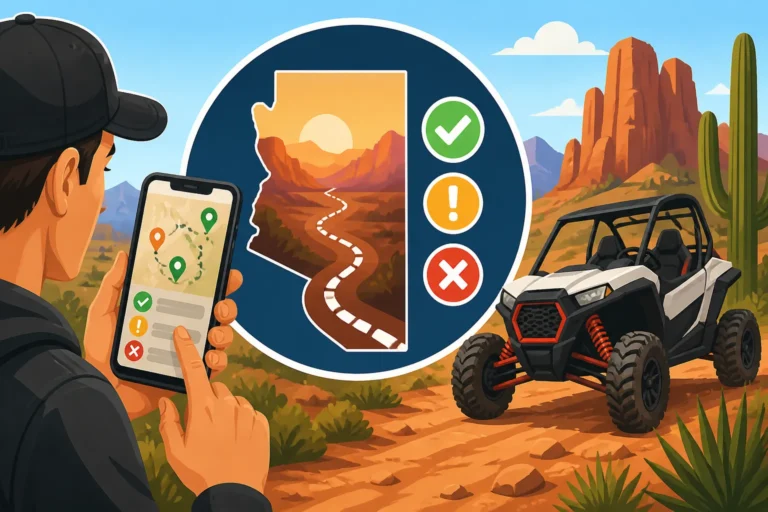
A line on a consumer map does not, by itself, prove that a route is open to motorized use. Routes can have restrictions based on land management, vehicle type, width, or seasonal conditions. Before you head out, verify the route with the appropriate official land-management information and check that your machine is allowed there.
The Motor Vehicle Use Map is an important planning tool for routes on National Forest land. Read its legend and route designations carefully instead of relying only on a highlighted line or a friend’s saved track. [Reading an Arizona Motor Vehicle Use Map] walks through how to interpret this kind of map. For Sedona-specific planning, [Sedona Trail Permits and Fees] is also a useful starting point for understanding access requirements.
A map app can help with navigation, but it should complement—not replace—official route information. Some riders use onX Offroad to review routes and prepare for navigation away from reliable cell service. If you use it, compare the route with official maps and current land-manager notices. Save the information you need before leaving town, and do not assume an app’s route line settles whether a road is currently open or appropriate for your machine.
Check closures and surface conditions before driving out
Trail conditions can change after storms, maintenance work, fire restrictions, or other land-management decisions. A route that was passable on a prior visit may be muddy, rougher than expected, or temporarily closed on the day you arrive. Check for closures and restrictions shortly before the ride, and be prepared to change plans if the information does not support your original route.
This is especially important in the Sedona area, where rain can affect rocky surfaces, washes, and access roads. A clear sky over town does not necessarily tell you what happened higher up or elsewhere along a route. Avoid entering a flooded wash, and do not ride around a closure or create a new track to get past an obstacle. [Checking Arizona Trail Status Before You Drive] offers a practical reminder to confirm conditions before towing to a trailhead.
| Planning question | What to confirm | Why it matters |
|---|---|---|
| Is the route open? | Current land-manager notices and official route maps | Closures and restrictions can change |
| Is my machine allowed? | Route designation and vehicle-width or type limits | A route may not suit every ATV or UTV |
| Where can I stage? | Legal parking, unloading, and trailer arrangements | Trailhead space may be limited |
| What is the surface like? | Recent weather, route notes, and local conditions | Rain and rough terrain can change ride difficulty |
| What do I need to ride? | Applicable decal, permit, and access requirements | Paperwork requirements depend on the route and land |
Plan a practical weekday ride
Start with timing, parking, and a backup plan
A weekday ride goes more smoothly when you plan the whole outing, not just the trail itself. Decide where you will unload, how long it takes to reach the route, and how much daylight your group needs. If the most popular staging area is full, you should already know whether another legal starting point is available. Never block a gate, roadway, or access for emergency vehicles while looking for a place to park.
Earlier starts can help you avoid the warmest part of the day and may give you more flexibility at busy trailheads. But do not rush through the pre-ride checks to beat other visitors. Confirm fuel, tires, basic recovery equipment, communications, and the route plan before leaving. In a group, agree on a lead rider and a sweep rider, and decide where everyone will regroup if the group gets separated.
It is also sensible to have a backup route that matches your machine and experience level. If the primary option is closed, too crowded, or beyond someone’s comfort zone, switching plans is better than pressing on. Sedona’s scenery can make a route feel inviting even when its terrain or access conditions are a poor match for the group.
Carry what you need for a desert ride
Even a relatively short outing can become a long one if a machine develops a problem or a group takes a wrong turn. Bring enough water for everyone, along with sun protection, basic first aid supplies, and a way to navigate if phone service drops. Keep the group together and avoid relying on a single person’s phone for all route information.
Navigation tools are most useful when prepared ahead of time. With onX Offroad or another mapping option, save the area you expect to ride and review the route before you depart. Carry a backup navigation method where practical, and remember that a route shown on a screen still needs to be checked against official access information. A good map helps you stay oriented; it does not replace good judgment when a route is closed or conditions are unsafe.
Water deserves special attention in Arizona. The amount you need depends on weather, activity, ride length, and individual needs, so do not assume a small bottle will be enough for the day. [Water Planning for an Arizona Trail Day] can help you think through a more complete plan. For broader timing considerations, see [Arizona's Best Riding Months], while still checking the forecast and local conditions for your specific outing.
Ride courteously and leave the area as you found it
Share the route and respect nearby communities
A quieter weekday does not remove the need for careful, considerate riding. Slow down when visibility is limited, leave space for other users, and avoid kicking up unnecessary dust near homes or other visitors. On narrow routes, be patient when passing is difficult. Stop only where it is safe and legal, and do not assume another group has seen or heard you.
Sedona’s red-rock landscape is part of what makes riding there memorable, but it is also easy to damage fragile ground by driving off-route. Stay on designated roads and trails, follow signs, and do not widen a track to get around a rough patch. Pack out all trash, including small items that are easy to overlook, such as food wrappers and zip ties. Respect private property and posted closures even when a route appears to continue beyond them.
Before riding, make sure your machine meets the requirements that apply to your planned use. Arizona’s OHV decal and other access rules can depend on where and how you ride. [Arizona OHV Rules for First-Time Visitors] is a helpful overview, and [What Arizona Riders Need Before They Ride] can help you build a pre-trip checklist.
Make the day enjoyable for the whole group
A good Sedona ride is not measured by how many miles you cover. If one person is new to off-roading, choose a route that allows them to build confidence rather than turning the day into a test. Set expectations before you leave: talk about the pace, planned stops, hand signals, and what the group will do if someone wants to turn around.
Check in with everyone as the ride progresses. A driver who is comfortable on firm dirt may feel differently on exposed rock or a steep section. Taking a break, changing the route, or heading back early is a sensible decision—not a failure. Weekday riding gives you a chance to enjoy the area at a more relaxed pace, so leave room in the plan for that.
Before unloading, review your route and access information one last time. When you return, check that everyone is accounted for, inspect the machines, and make sure nothing has been left at the staging area. Thoughtful planning helps keep a weekday ride peaceful for your group and for the people, wildlife, and communities sharing Sedona’s landscape.
Disclaimer
This article is for general informational purposes only and does not constitute professional advice. Laws, prices and regulations vary by location and change over time. Consult a qualified professional for guidance on your specific situation.