Eye Protection on an Arizona Road
Riding an ATV or UTV on Arizona's roads, whether it's a quick hop from the trailhead to a gas station or a scenic cruise through a trail town, offers an unparalleled sense of freedom. But that freedom comes with a significant responsibility, especially when it comes to your safety gear. Many riders, especially those new to street-legal off-roading, overlook the critical importance of proper eye protection, only to find themselves battling dust, debris, and painful impacts. This guide is here to shed light on why eye protection isn't just a suggestion but a necessity for every street-legal OHV rider in Arizona, covering everything from legal mandates to choosing the perfect lens.
Why Eye Protection Isn't Just a Rule, It's Your Vision's Lifeline on Arizona Roads
When you're out on a quad or side-by-side in Arizona, the world rushes past in a thrilling blur. But amidst that exhilaration, your eyes are constantly exposed to an onslaught of potential hazards. Thinking about eye protection as merely a "rule" is missing the bigger picture – it's about safeguarding one of your most vital senses. Without clear, protected vision, you're not just uncomfortable; you're putting yourself and others at serious risk.
The Unseen Hazards of Arizona's Paved and Unpaved Roads
Even on what seems like a perfectly smooth paved road, countless dangers can assault your eyes. Think about it: a semi-truck passing you on the highway kicks up a swirl of fine grit, an unexpected gust of wind can whip sand right off the shoulder, or a pebble flung from another vehicle's tire can become a high-speed projectile. It's not always the big, obvious things that cause trouble. Sometimes it's the tiny, almost invisible particles – pollen, insects, road grime, or even a sudden sprinkle of rain – that can instantly impair your vision and cause a dangerous distraction. On the dusty dirt roads that often connect paved sections, these hazards are magnified tenfold, creating a constant cloud of fine particles that cling to everything.
Imagine you're cruising down a county road, enjoying the desert scenery, when a sudden gust of wind catches a loose plastic bag, sending it tumbling directly into your path. Without proper eye protection, your instinct might be to flinch or close your eyes, even for a split second. That fraction of a second is all it takes for things to go wrong, especially if you're navigating traffic or a tricky turn. The Arizona landscape, with its unique blend of paved arteries and dusty veins, demands a proactive approach to protecting your most precious asset: your eyesight.
Beyond Comfort: Protecting Against Permanent Damage
While discomfort is certainly a reason to wear eye protection, the potential for permanent eye damage is far more sobering. A direct impact from a flying rock can cause scratches, corneal abrasions, or even more severe trauma that requires emergency medical attention and could lead to lasting vision impairment. Dust and sand, while seemingly innocuous, can scratch the surface of your eye, leading to chronic irritation, infections, and reduced clarity over time. Moreover, the intense Arizona sun, with its relentless UV rays, poses a long-term threat. Prolonged exposure to ultraviolet light without proper UV-blocking eyewear can contribute to conditions like cataracts and macular degeneration down the line.
Consider a rider who opts for simple sunglasses that lack impact resistance or full UV protection. They might feel comfortable initially, but that small piece of gravel that ricochets off a tire ahead of them could shatter their lenses, sending sharp fragments into their eye, or worse, penetrate the eye entirely. It's a stark reminder that cheap sunglasses are no substitute for purpose-built eye protection designed to withstand the rigors of off-highway vehicle use, even when crossing paved sections. Investing in quality gear isn't just about avoiding a ticket; it's about preserving your ability to see the world, both on and off the trail.
The Ripple Effect of Impaired Vision While Riding
When your vision is compromised, even slightly, it creates a dangerous chain reaction. If dust gets in your eyes, you might tear up, causing blurred vision. If the sun glares off the pavement, you could be temporarily blinded, missing a stop sign or an approaching vehicle. Squinting or rubbing your eyes takes your focus away from the road and your hands off the controls. This momentary distraction, combined with the decreased ability to accurately judge distances, speed, and potential obstacles, significantly increases your risk of an accident.
Think about riding through a small Arizona town, where children might be playing near the roadside or a dog could dart into the street. If a sudden glare or a cloud of dust forces you to momentarily lose sight of the scene, you might not react in time to prevent a collision. Similarly, on a fast-moving county road, misjudging the speed of oncoming traffic because your vision is blurred could lead to a catastrophic incident during a turn or merge. Proper eye protection ensures consistent, clear vision, allowing you to react quickly and confidently to any situation the road throws your way, maintaining safety for yourself, your passengers, and everyone else on the road.
Deciphering Arizona's Legal Requirements for Eye Protection on Roads
Arizona law is quite clear when it comes to operating any vehicle on public roads, and that includes your street-legal ATV or UTV. While some aspects of OHV riding might seem a bit grey, eye protection on public roads is not one of them. Understanding these legal mandates isn't just about avoiding a fine; it's about adhering to the baseline safety standards the state has put in place to protect riders.
The Letter of the Law: What Arizona MVD Expects
Arizona Revised Statutes (A.R.S.) Section 28-964, specifically pertaining to motorcycle and ATV operators, generally states that "a person operating a motorcycle or motor-driven cycle on a highway shall wear a protective helmet, and goggles, a face shield or glasses." While OHVs on streets are a slightly different category, the spirit of the law extends to them, particularly street-legal machines that share the road with motorcycles and cars. The Arizona MVD expects that if you're driving an open-air vehicle, which includes most ATVs and UTVs, you'll have adequate eye protection. This isn't just for highways; it applies to any public road, including city streets, county roads, and state routes where your OHV is legally permitted to travel.
The intent here is obvious: to prevent accidents caused by impaired vision. A law enforcement officer on patrol, whether it's an Arizona State Trooper on a highway or a local sheriff's deputy on a rural county road, can and will enforce this regulation. If you're pulled over for another reason, or even just riding past a checkpoint, a lack of appropriate eye protection could lead to a citation. It's a simple, non-negotiable part of responsible road riding in Arizona, just like carrying your [Arizona Insurance Minimums for Road Riding] proof or having a valid driver's license.
Who Needs What: Operators, Passengers, and Minors
The requirement for eye protection extends beyond just the operator. In Arizona, if you're a passenger on an ATV or UTV that's street legal and being ridden on a public road, you also need to have appropriate eye protection. This makes perfect sense; a passenger is just as exposed to flying debris, dust, and wind as the driver. What might surprise some is that there aren't many explicit age exemptions for eye protection when on public roads. While [Arizona Helmet Rules for Riders Under 18] specifically address helmets for minors, eye protection is a universal requirement for anyone exposed to the elements in an open vehicle on the road.
This means if you're taking your kids for a cruise in your street-legal UTV down to the local ice cream shop, everyone in the vehicle needs to be wearing adequate eye protection. Don't assume that because they're sitting in a multi-seat side-by-side they're somehow protected by the driver's windshield. Unless the UTV has a full, sealed cab with a proper windshield and working wipers, eye protection is still paramount for every occupant. It's a collective responsibility to ensure everyone's safety, and that begins with clear, unobstructed vision for all.
The Consequences of Riding Unprotected: Fines and Safety
The most immediate consequence of riding without eye protection on an Arizona road is a potential traffic citation. While the exact fine can vary by jurisdiction and whether it's part of a larger stop, it's an avoidable expense that no rider wants. However, the financial penalty pales in comparison to the safety risks. As discussed, even a momentary lapse in vision can have severe, life-altering consequences. An officer isn't just looking to write a ticket; they're looking to enforce safety standards that prevent serious injuries.
Imagine you're cited for not wearing eye protection. That's a hassle, a fine, and maybe a point on your driving record. But now, imagine that citation was avoided because you were wearing goggles, and those goggles just saved your eye from a piece of gravel that would have otherwise caused permanent damage. The inconvenience of wearing proper gear is a minuscule price to pay for preventing an injury that could affect your quality of life for years, or even forever. It's truly one of those [Arizona Road Rules Riders Get Wrong] if they believe it's an optional guideline rather than a strict safety mandate.
A Deep Dive into Your Eye Protection Options for Arizona's Diverse Terrain
When we talk about eye protection for ATVs and UTVs on Arizona roads, it's not a one-size-fits-all situation. The vast differences in riding conditions, from bright desert sun to twilight cruises, and the varying speeds encountered on paved versus dirt sections, mean you'll need to consider a range of options. Each type of eye protection offers distinct advantages, and often, a combination of solutions works best for the versatile Arizona rider.
Goggles: Your Go-To for Dust and Debris
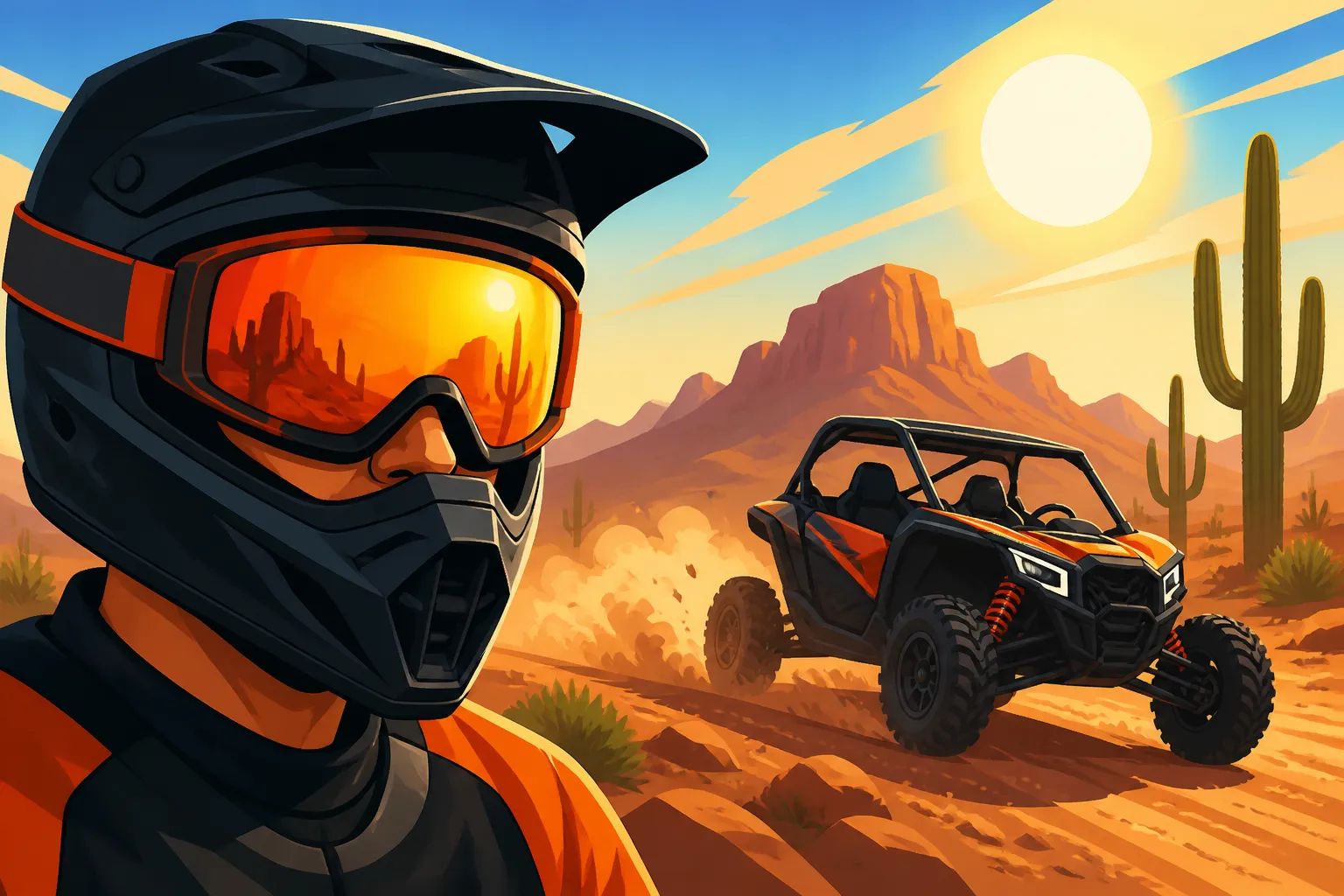
For many serious OHV riders, goggles are the gold standard for eye protection, and for good reason. They offer superior sealing around the eyes, creating a barrier against dust, wind, and airborne debris that no pair of sunglasses can match. High-quality goggles are designed to fit snugly inside or over most open-face helmets, providing an uninterrupted field of vision. They typically feature impact-resistant lenses, often made of polycarbonate, which can withstand significant force without shattering. Many also come with anti-fog coatings, a crucial feature when you're exerting yourself in varying temperatures.
Think about a common scenario: you're riding your street-legal side-by-side from a dirt trail onto a paved county road. You’ve just experienced dusty conditions, and now you’re transitioning to higher speeds. A good pair of goggles will keep the fine desert dust from irritating your eyes, prevent wind from drying them out, and protect against any unexpected road debris. Some brands, like those offered by SuperATV, even integrate goggle-compatible helmet designs or offer specialized lenses for different light conditions. The ability to swap lenses quickly—from clear for night riding to tinted for bright sun—adds immense versatility. It's this comprehensive protection that makes goggles indispensable, especially when a significant portion of your ride involves traversing unpaved sections before hitting the asphalt.
Face Shields: Integrating Protection and Convenience
For riders who prefer the convenience of a full-face or modular helmet, an integrated face shield is often the primary form of eye protection. These shields provide a wide, unobstructed view and, when properly sealed, offer excellent protection from wind, dust, and rain. The convenience factor is huge: you simply flip the shield down, and you're protected. Many modern face shields are designed with anti-scratch and anti-fog coatings, and some even come with built-in sun visors or photochromatic properties that adjust to light conditions.
However, face shields do have some limitations compared to dedicated goggles. They might not seal as tightly around the eyes, meaning very fine dust can sometimes find its way in, especially at lower speeds or on particularly bumpy terrain. Also, if a face shield gets scratched or damaged, it can be expensive to replace, and a damaged shield can compromise visibility and safety. When choosing a helmet with a face shield, ensure it meets [DOT Helmet Ratings Arizona Accepts] for both impact and optical clarity. While a face shield is fantastic for street cruising, many riders still carry a pair of goggles for particularly dusty off-road excursions, especially if their machine doesn't have a full cab, offering a truly versatile solution for Arizona's diverse riding conditions.
Specialty Eyewear: Sunglasses, Prescription Lenses, and Photochromatic Options
Beyond goggles and face shields, there's a range of specialty eyewear that plays a role, either as primary protection or as complementary gear.
- Impact-Resistant Sunglasses: These are a step up from fashion sunglasses. They should be rated ANSI Z87.1 for impact resistance, offering protection against flying objects. Look for polarized lenses to cut glare, especially on bright Arizona pavement or shimmering desert washes. While they don't seal like goggles, they're a good choice for some UTVs with full windshields that offer significant protection.
- Prescription Lenses: For riders who wear corrective lenses, options include wearing prescription eyeglasses under goggles (ensure the goggles are "OTG" – Over The Glasses compatible) or getting prescription inserts for goggles/face shields. Some riders even opt for prescription-grade impact-resistant sunglasses specifically designed for active use. Never compromise on vision clarity because of prescription needs; find a solution that integrates your vision correction with proper protection.
- Photochromatic Lenses: These "transition" lenses automatically darken in sunlight and clear up in lower light. They offer incredible convenience, eliminating the need to swap lenses or carry multiple pairs of eyewear. While they might not react as quickly as a manual swap from clear to dark, they're an excellent all-around solution for rides that start in the morning and extend into the evening, especially when paired with a good helmet.
Here's a quick comparison of common eye protection types:
| Feature | Goggles | Face Shield (on Helmet) | Impact-Resistant Sunglasses | Photochromatic Lenses (Goggle/Shield) |
|---|---|---|---|---|
| Primary Use | Dust, debris, off-road | On-road, general protection | Glare, light dust | All-around, changing light |
| Seal Against Dust | Excellent | Good (can have gaps) | Poor | Excellent (if goggles) |
| Impact Resistance | Excellent | Excellent | Good (ANSI Z87.1) | Excellent |
| Anti-Fog Options | Common, highly effective | Available, varying effectiveness | Less common | Available |
| UV Protection | Standard on quality lenses | Standard on quality shields | Standard on quality lenses | Standard on quality lenses |
| Prescription Comp. | OTG options, inserts | Inserts, wear glasses underneath | Specific Rx options | Inserts, specific Rx options |
| Versatility | Good (swappable lenses) | Good (built-in, but single tint) | Limited | Excellent (auto-adjust) |
| Cost | Moderate to High | Integrated with helmet cost | Low to Moderate | Higher |
Tailoring Your Eye Protection for Specific Arizona Road Conditions
Arizona's environment is incredibly diverse, offering everything from scorching bright deserts to surprisingly cool mountain roads, and from bone-dry conditions to sudden monsoon downpours. Each of these unique road conditions demands a specific approach to eye protection to ensure maximum safety and comfort. Thinking strategically about your gear for the day's ride can make all the difference.
Battling the Arizona Sun: UV Protection and Glare Reduction
The Arizona sun is legendary for its intensity, especially during those long summer days when you might be [Riding an Arizona Road at 110 Degrees]. Riding directly into the sun, or even having it glint off shiny pavement or sandy washes, can cause severe glare that temporarily blinds you. This isn't just uncomfortable; it's extremely dangerous, making it hard to see other vehicles, road signs, or unexpected obstacles. Therefore, robust UV protection is non-negotiable for any eyewear you choose. Look for lenses that block 99-100% of UVA and UVB rays.
Beyond UV protection, glare reduction is key. Polarized lenses are incredibly effective at cutting through glare reflecting off horizontal surfaces like asphalt and water, offering a clearer, crisper view. While polarization can sometimes interfere with LCD screens on dashboards, for most open-air OHV riding, the benefits of glare reduction far outweigh this minor drawback. Tinted lenses in shades like grey, bronze, or amber are excellent for bright conditions, but ensure the tint isn't so dark that it compromises visibility in shaded areas or as dusk approaches. Some riders even opt for specialized high-contrast lenses that enhance terrain definition in bright light.
Conquering Dust and Wind: Sealing Out the Elements
Even if you're primarily on paved roads, Arizona's proximity to vast desert landscapes means dust is always a factor. A crosswind can whip up fine silt from the shoulder, or you might follow another vehicle on a transition road that's still unpaved. The key to conquering dust and wind is a tight seal around your eyes. This is where goggles truly shine. Their foam-lined frames conform to your face, preventing even the finest particles from getting in. If you're using a helmet with a face shield, ensure it closes securely against the helmet's gasket to minimize gaps.
Wind, beyond carrying dust, can also cause your eyes to tear up uncontrollably, leading to blurred vision and discomfort. This is particularly noticeable at higher speeds on county roads or when navigating long stretches of open road. A good seal from goggles or a face shield not only blocks dust but also deflects the direct force of the wind, keeping your eyes from drying out and watering. Remember, even a small gap can create enough airflow to cause significant irritation, turning a pleasant ride into an uncomfortable and dangerous struggle for clear vision. This is especially true if you're experiencing [Dust Behind You on a Desert Road] and it catches up to you.
Night Riding and Inclement Weather: Maintaining Clarity
Night riding on an Arizona road presents a different set of challenges. Glare from oncoming headlights can be disorienting, and overall visibility is drastically reduced. For night riding, clear lenses are essential. Any tint, no matter how slight, will further reduce the already limited light available. Look for clear lenses with anti-reflective coatings to minimize headlight glare. If your goggles or face shield has interchangeable lenses, swap to a clear option before sunset. Similarly, if you're riding with a helmet that has a built-in sun visor, make sure it's fully retracted for night operations.
Inclement weather, while less common than intense sun, can happen, especially during monsoon season. Rain, even a light drizzle, can obscure your vision. Water beading up on lenses or shields can distort your view, much like a dirty car windshield. Anti-fog coatings are critical here to prevent condensation from forming on the inside of your lenses. Some advanced face shields come with Pinlock inserts that create a dual-pane system to almost entirely eliminate fogging. For rain, considering a full-face helmet with a good face shield and perhaps a hydrophobic coating (like those applied to car windshields) can help water bead off quickly, maintaining clearer vision. Remember, your [Arizona's 500 Foot Headlight Rule] isn't much help if your own eyes can't see past your wet or fogged lenses.
Maintenance, Care, and Longevity of Your Eye Protection Gear
Your eye protection gear, whether it's a trusty pair of goggles or a sophisticated face shield, takes a beating out on Arizona's roads and trails. Dust, sweat, sun, and impacts all contribute to wear and tear. Proper maintenance isn't just about making your gear last longer; it's about ensuring it performs optimally when you need it most. Neglected eye protection can become scratched, fogged, or damaged, rendering it ineffective and potentially dangerous.
Keeping Lenses Clear: Cleaning Techniques and Products
The cardinal rule of cleaning lenses is: never wipe a dry, dusty lens with a cloth. This is the fastest way to create permanent scratches. Instead, always rinse your goggles or face shield thoroughly with clean water first, ideally lukewarm, to remove all loose dirt and grit. Once rinsed, you can gently wash them with a mild, non-abrasive soap (dish soap works well) and your fingertips. Avoid harsh chemicals like glass cleaner, as they can damage anti-fog or UV coatings. After washing, rinse again completely and then air dry, or gently blot with a soft, clean microfiber cloth specifically designed for optics.
For stubborn grime or smudges, many brands, including some from SuperATV, offer specialized lens cleaning solutions that are safe for coated lenses. These often come with a soft cleaning cloth. Carry a small spray bottle of cleaner and a microfiber cloth in your ride pack for quick clean-ups on the trail or at a gas stop. Remember that a clear view starts with clean lenses, and making this a routine after every dusty ride will significantly prolong the life and clarity of your essential gear.
Preventing Scratches and Damage: Storage and Handling
Prevention is the best medicine when it comes to scratches. Always store your goggles or helmet with the face shield down in a protective bag or case when not in use. Don't just toss them on the seat of your UTV or in a gear bag where they can rub against hard objects, tools, or other abrasive materials. Many goggles come with a soft microfiber bag, which is perfect for storage and can double as a cleaning cloth (after rinsing, of course).
When handling your helmet, try to avoid letting the face shield come into contact with rough surfaces. If you put your helmet down, place it on a soft surface or upside down to protect the shield. For goggles, try to avoid placing them lens-down on any surface. Treat your eye protection with care, just as you would any other precision instrument. Remember, even a small scratch in your line of sight can become a major distraction, especially when you're trying to spot hazards on a fast-moving road or negotiate technical terrain.
Knowing When to Replace: Wear, Tear, and Safety Compromises
Nothing lasts forever, and your eye protection is no exception. Over time, anti-fog coatings can degrade, lenses can accumulate micro-scratches that cause blurriness, and elastic straps on goggles can lose their stretch.
- Deep Scratches or Cracks: Any significant scratch or crack that obstructs your vision or compromises the structural integrity of the lens means it's time for a replacement. A cracked lens won't provide adequate impact protection.
- Degraded Anti-Fog/UV Coatings: If your lenses start fogging up relentlessly despite cleaning, or if you notice increased glare and eye strain even with tinted lenses, the coatings may have worn out.
- Loose Straps/Poor Fit: Goggles that no longer fit snugly will allow dust and wind to enter, defeating their purpose. Replace the strap or the entire goggle if the fit is compromised.
- Discoloration or Haziness: Lenses that become permanently hazy or discolored after years of sun exposure are past their prime.
Regularly inspect your eye protection for signs of wear and tear. If you question its effectiveness, it's better to replace it than risk your vision. New lenses are almost always cheaper than an eye injury, and many goggle systems allow you to replace just the lens, extending the life of the frame and strap. This proactive approach ensures that your essential safety gear is always ready to perform at its peak.
Common Pitfalls and Smart Practices for Arizona Road Riders
Even experienced riders can sometimes get complacent about eye protection, especially when transitioning from hardcore trail riding to the perceived "safer" environment of public roads. However, the road presents its own unique challenges, and a casual approach to eye protection can lead to regrettable consequences. Developing smart habits and avoiding common pitfalls will keep your vision clear and your rides safe.
The "Just Around the Corner" Mentality: Why Short Rides Still Need Protection
One of the most frequent mistakes riders make is assuming they don't need full eye protection for "just a short ride" – a quick trip down the street to the corner store, across town to a friend's house, or a brief paved section connecting two trails. This "just around the corner" mentality is incredibly dangerous. Accidents don't only happen on long, challenging rides. A small stone can be kicked up from the road just as easily on a short trip as on a long one. A sudden gust of wind doesn't discriminate based on your destination.
Even if you're only going a few blocks, the hazards are still present. You might encounter traffic, children, pets, or unexpected debris. A moment of distraction caused by something in your eye, or impaired vision from glare, can be catastrophic. Make it a non-negotiable habit: if your helmet is on for a road ride, your eye protection should be too. Treat every single ride, no matter how brief, as if it were a full-day adventure in the deep desert. This consistency is key to safety.
Passenger Protection: Ensuring Everyone is Covered
As mentioned earlier, Arizona law requires passengers to also wear eye protection on public roads. Yet, it's startling how often passengers, especially children, are seen without adequate gear. Parents might assume the UTV's windshield offers enough protection, or that their child won't mind the dust for a short bit. This is a critical oversight. Passengers are just as vulnerable to airborne debris and wind as the driver, if not more so, as they might not anticipate hazards as readily.
Before setting out, double-check that every passenger has and is wearing appropriate eye protection. For children, this is even more vital, as their eyes are more sensitive and still developing. Ensure their goggles or glasses fit properly and don't obscure their vision or slip down. Explain why it's important, so they understand it's not just a nagging rule. Consider options for kids from reputable brands, perhaps even those that cater to the off-road segment like SuperATV, which often provides robust solutions for all ages. Establishing this expectation early ensures a safer and more comfortable experience for everyone on board, no matter the length of the journey.
Testing Your Gear Before You Hit the Asphalt
Before you roll out onto any Arizona road, take a moment to test your eye protection.
- Clarity Check: Are your lenses clean and free of smudges or fog? Even a small thumbprint can significantly reduce visibility, especially when the sun hits it just right.
- Fit and Comfort: Do your goggles or face shield fit snugly? Goggles shouldn't pinch or leave large gaps, and face shields should close completely without excessive pressure. A comfortable fit means you won't be constantly adjusting them, taking your hands off the controls and your focus off the road.
- Field of Vision: Does your eye protection offer an unobstructed field of vision? Ensure the frames don't create blind spots, and that the lenses are optically clear without distortion.
- Compatibility: If you're wearing prescription glasses under goggles, confirm they fit without pressing uncomfortably or shifting around. If your helmet has an integrated face shield, ensure it operates smoothly.
This quick pre-ride check takes mere seconds but can save you from discomfort, distraction, and potential danger down the road. It's akin to checking your tire pressure or fuel level – a basic, yet crucial, part of a safe riding routine. Just like you'd ensure your [Goggles or a Windshield on the Street] are clean and ready, do the same for your entire ensemble.
Choosing the Right Eye Protection: A Checklist for Arizona's Roads
Making the right choice in eye protection can feel overwhelming with the sheer number of options available. However, by focusing on a few key factors tailored to Arizona's riding environment, you can narrow down your choices and invest in gear that truly enhances your safety and enjoyment. It’s about finding the balance between protection, comfort, and functionality.
Fit, Comfort, and Compatibility with Your Helmet
The most protective eyewear in the world is useless if it doesn't fit correctly or is so uncomfortable that you're tempted to take it off.
- Fit: Goggles should sit snugly against your face, without pinching or leaving large gaps around the temples or cheeks where dust and wind can sneak in. The strap should be adjustable to provide a secure fit around your helmet without being overly tight. Face shields should align perfectly with the helmet's opening, providing full coverage.
- Comfort: Look for padding around the goggle frame that is soft, moisture-wicking, and hypoallergenic. Over-the-glasses (OTG) goggles should have enough space for your prescription frames without pushing them against your face. A comfortable fit means you can focus on the ride, not on adjusting your gear.
- Helmet Compatibility: This is crucial. If you wear a full-face or modular helmet, its integrated face shield is your primary protection. If you wear an open-face or motocross-style helmet, ensure your chosen goggles integrate seamlessly. They should fit snugly within the helmet's eyeport without being compressed or causing pressure points, and the strap should securely grip the helmet shell. Some helmet manufacturers design their helmets to work best with specific goggle brands, so it's worth checking recommendations.
A poor fit can lead to fogging, discomfort, and reduced protection, defeating the entire purpose. Don't be afraid to try on several pairs with your helmet before making a decision.
Lens Features: Anti-Fog, Anti-Scratch, and Impact Resistance
The lens is the heart of your eye protection, and its features are paramount for performance in Arizona's varied conditions.
- Anti-Fog Coatings: Absolutely essential. Without it, your lenses will quickly fog up from sweat, humidity, or temperature changes, especially during cooler mornings or strenuous riding. While no coating is 100% foolproof, a good anti-fog treatment dramatically reduces the likelihood of obscured vision.
- Anti-Scratch Coatings: While no lens is truly scratch-proof, good anti-scratch coatings provide an extra layer of durability against minor abrasions from dust and incidental contact. This helps maintain optical clarity over time, which is vital for safe riding.
- Impact Resistance: This is non-negotiable. Lenses should be made from impact-resistant materials like polycarbonate. Look for certifications such as ANSI Z87.1, which indicates the eyewear has passed rigorous impact tests. This protects your eyes from flying rocks, debris, and even in the event of a crash.
- UV Protection: As discussed, full UV400 (blocks 99-100% of UVA and UVB rays) is critical for long-term eye health in the Arizona sun.
- Tints and Tones: Consider having multiple lenses – clear for night/low light, and a tinted or polarized lens for bright daylight. Photochromatic lenses offer a convenient all-in-one solution for changing light conditions.
When researching goggles or replacement shields, look into the specific lens technology offered by reputable brands. Companies that specialize in off-road accessories often prioritize these features.
Budgeting for Quality: Investing in Your Safety
While it's tempting to opt for the cheapest option, eye protection is an area where investing in quality truly pays off. Cheap, flimsy goggles or sunglasses may offer minimal impact resistance, distort your vision, fog up easily, and lack proper UV protection. They can actually create more problems than they solve. Think of quality eye protection as an investment in your safety and comfort, similar to how you invest in a good helmet or proper tires for your machine.
You don't necessarily need the most expensive option on the market, but aim for reputable brands that specialize in motorsports or safety eyewear. They typically use higher quality materials, better coatings, and ergonomic designs that deliver superior performance and durability. Consider the cost-benefit: a slightly more expensive pair of goggles that lasts longer, performs better, and keeps your eyes safe is far more valuable than a cheap pair that fails when you need it most. Prioritize clear, impact-resistant lenses with good anti-fog and UV protection. Your eyesight is priceless, so don't cut corners on protecting it.
Disclaimer
This article is for general informational purposes only and does not constitute professional advice. Laws, prices and regulations vary by location and change over time. Consult a qualified professional for guidance on your specific situation.