Fitting Two Quads on a Single Trailer
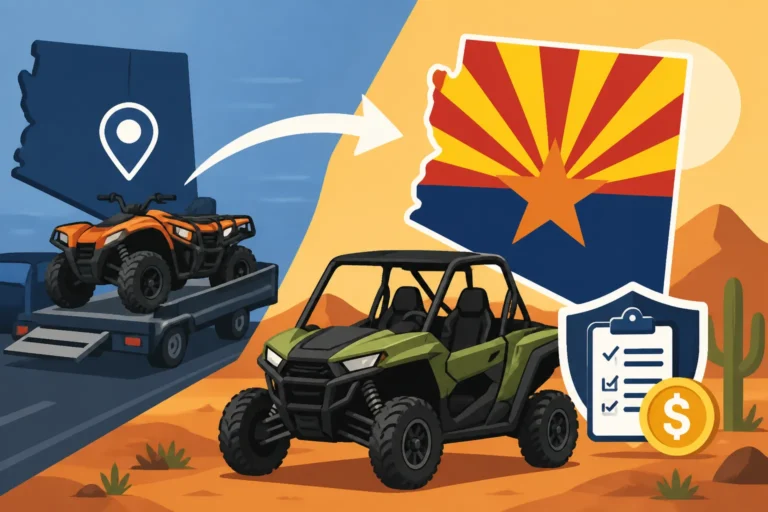
It’s a common scenario out here in the Arizona desert: you’ve got two trusty quads, maybe a couple of friends or family members ready to hit the trails, but only one trailer. Trying to figure out how to safely and legally load two machines onto a trailer designed for one can feel like a puzzle, often leading to frustrations about space, weight, and proper securement. This guide is all about navigating those challenges, offering practical advice and techniques to help you fit two quads on a single trailer, ensuring a safe trip to your favorite [Where to Ride an OHV in Arizona] destinations.
Understanding Your Trailer's Capacity and Design
Before you even think about loading a second quad, you absolutely must know your trailer inside and out. Many a desert trip has been delayed or ruined because a rider underestimated what their trailer could truly handle. It's not just about if the machines "fit" physically; it's about whether the trailer can safely bear the weight and whether the setup is stable for highway travel.
Trailer Length and Deck Space
First things first: measure your usable deck space. This might sound obvious, but people often forget about the tongue length, the ramp gate when closed, or even toolboxes that eat into precious real estate. Grab a tape measure and get precise. Most standard utility trailers are 10, 12, or 14 feet long. A typical ATV is around 7-8 feet long, but that can vary wildly. A longer utility quad might be pushing 90 inches (7.5 feet), while a sport quad could be closer to 70-80 inches (6-6.5 feet). Side-by-sides, of course, are a whole different beast, but we're talking quads here.
When you're dealing with two machines, it’s not just their individual lengths but how they interact. Handlebars can overlap, bumpers can snug up against each other, and you might even consider some creative angling. Keep in mind that a ramp gate, while fantastic for loading, might shorten your usable deck length if your quads are exceptionally long and you need to close the gate for travel. Knowing these dimensions cold will dictate your entire loading strategy.
Weight Limits and Axle Capacity
This is arguably the most critical factor, and one often overlooked. Every trailer has a Gross Vehicle Weight Rating (GVWR), which is the maximum total weight of the trailer plus its cargo. It also has a Gross Axle Weight Rating (GAWR) for each axle. Overloading your trailer is incredibly dangerous. It can lead to tire blowouts, axle damage, brake failure, and severely compromise your towing vehicle's handling, especially when navigating Arizona's winding desert roads or busy freeways like I-10 or US-60.
Find the VIN sticker on your trailer, usually on the tongue or frame. It will list the GVWR and GAWR. Add the empty weight of your trailer (its "curb weight") to the combined weight of your two quads, plus any gear, fuel, or spare tires you're throwing on there. Don't guess the weight of your quads—check the manufacturer's specs or, even better, weigh them at a local truck stop or recycling center if you're unsure. Exceeding these limits isn't just risky; it can also lead to fines from law enforcement, especially if you get stopped or are involved in an accident. Make sure your truck or SUV is rated to tow the combined weight as well; that's another important layer of safety. This is closely related to [Weight Limits That Decide What Your Decal Covers] for your machine, but here we're talking about the trailer itself.
Trailer Types and Their Advantages
Different trailers offer different benefits when it comes to hauling multiple machines.
- Open Utility Trailers: These are the most common and versatile. They typically have a flat deck, side rails, and a ramp gate. Their open design makes them easy to load from various angles, and you often have plenty of tie-down points. The challenge is often fitting the length of two quads, which might require creative positioning.
- Enclosed Trailers: While great for security and protection from Arizona's intense sun and dust, enclosed trailers can be trickier for multi-quad loading due to fixed interior walls and often a single rear ramp. You're generally limited to nose-to-tail loading unless you have side doors, which can make things interesting. They also add significant weight.
- Specialized ATV/UTV Trailers: These are designed with specific features like drive-on/drive-off ramps, multiple tie-down tracks, and sometimes even staggered deck designs to accommodate machines. If you're frequently hauling two or more quads, investing in one of these can be a game-changer, as they take a lot of the guesswork out of loading and securing. For general trailering, make sure you're up to speed on [Trailer Registration for Hauling Quads in Arizona] and whether [Do You Need a Trailer Title in Arizona?].
Strategic Loading Techniques for Multiple Quads
Once you've done your homework on your trailer's capacity, it's time to get creative with how you actually arrange those machines. This is where most people face the biggest challenge, especially with two full-size quads.
Staggering and Angling Machines
This is often the secret sauce to fitting two quads on a seemingly small trailer. Instead of trying to load them perfectly straight, side-by-side (which rarely works for full-size quads on a standard utility trailer) or end-to-end (which usually exceeds trailer length), you'll want to stagger and angle them.
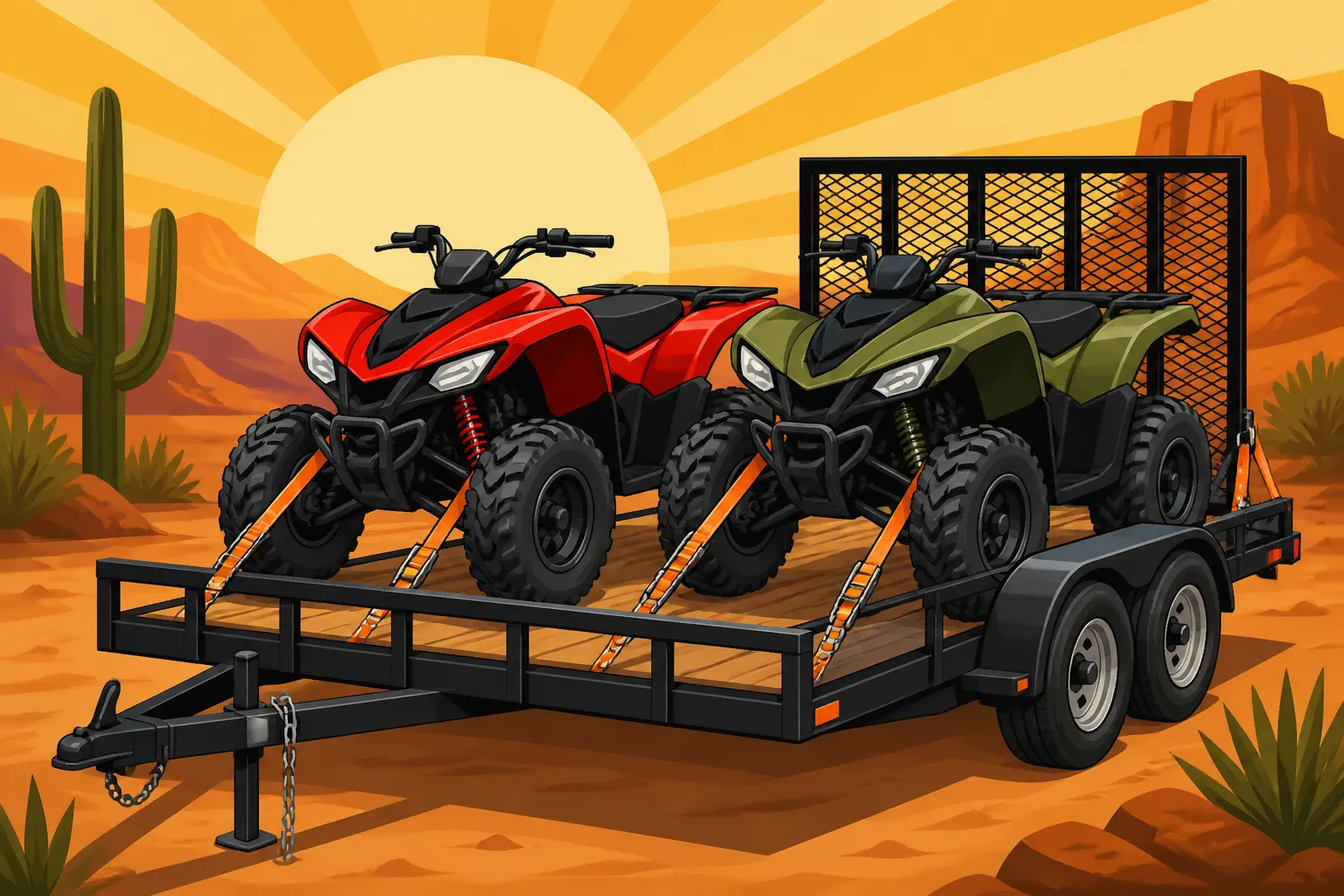
- Nose-to-Tail, Offset: Load one quad forward on one side of the trailer. Then, load the second quad backward on the other side, tucking its front end between the rear of the first quad and the trailer's side rail. This allows the wider handlebars and footwells to overlap in the middle, saving considerable length. You might need to adjust the angle slightly to make the most of the space.
- Angled Side-by-Side: On wider utility trailers, you might be able to load both quads facing forward, but at opposing angles. Picture them forming a "V" shape, or even just slightly angled inwards from the rear. This reduces their effective length footprint on the trailer bed and can allow handlebars to clear side rails or other machines. This takes practice to get just right, ensuring you don't exceed the trailer's width limit while still being stable.
- Overlapping Elements: Don't be afraid to let small parts overlap, as long as they don't cause damage. For example, a quad's front bumper might tuck slightly under the rear rack of the quad in front of it. Just ensure no delicate components like headlights or radiators are taking a hit.
Using ATV Ramps and Extensions
Getting two machines onto a trailer, especially if they’re staggered, requires careful ramp work. Standard single ramps might not cut it, or they might make loading a second, angled quad awkward.
- Multiple Ramps: If you're loading side-by-side or even angled, having two separate ramps can make the process much smoother and safer. You can position them specifically for each quad, avoiding precarious angles.
- Wider Ramp Gates: If your trailer has a full-width ramp gate, this is a huge advantage. You can drive up, make your initial angle adjustments, and then maneuver the second quad.
- Extended Ramps or Loading Decks: Some riders construct or purchase custom loading solutions, like extended ramps that fold out from the side, or small auxiliary decks that create extra space for a quad to partially sit on. This is more common with highly specialized setups but can be a custom solution if you're struggling. Always prioritize safety and structural integrity if you're modifying your setup.
Maximizing Space with Creative Positioning
Sometimes, it's the little things that make all the difference. Think about the profile of your quads and how you can exploit every inch of deck space.
- Handlebar Clearance: Handlebars are often the widest point on a quad. When loading, try to orient the quads so that their handlebars don't collide or get hung up on each other. If one quad is facing backward, its handlebars might tuck into the footwell area of the forward-facing quad.
- Bumper to Bumper: Get them as close as safely possible. Every inch saved by snugging bumpers or tires can free up space. Just leave enough room for your tie-downs.
- Mirror and Accessory Removal: For particularly tight fits, you might consider temporarily removing mirrors or other bolt-on accessories that add width. It's a hassle, but it can be the difference between a safe fit and an overloaded, oversized load. Always remember that each quad on your trailer needs to be registered and titled, so make sure you're familiar with [Arizona MVD OHV Registration Explained] and [Arizona Certificate of Title for an Off-Highway Vehicle].
Securing Your Load: Safety First
Loading two quads onto a single trailer is only half the battle. If they're not secured properly, they become dangerous projectiles or can shift and cause an accident. This is where meticulous attention to detail truly matters.
Choosing the Right Tie-Downs
Don't skimp on tie-downs. Those cheap cam-buckle straps from the hardware store might be fine for a cooler, but not for hundreds of pounds of machine bouncing down an Arizona highway.
- Ratchet Straps: These are your best friend. Look for straps with a high working load limit (WLL) – not just the breaking strength. A good rule of thumb is that the combined WLL of all your straps should be at least equal to the weight of the machine you're securing. For two quads, you’ll typically need at least four heavy-duty ratchet straps per machine (eight total), or even more if you want extra security.
- Wheel Nets: These are excellent for securing quads with independent suspension, as they hold the tires directly to the trailer deck without compressing the suspension. This prevents the machine from "bouncing" against the straps over bumps.
- Chains and Binders: For heavier machines or extreme security, chains and binders are an option, though they are often overkill for quads and can be harder to use without damaging the machine's finish. Stick to quality ratchet straps for most ATV applications. Remember that [Tying a Machine Down for the Highway] is a critical skill for any desert rider.
Proper Tie-Down Points
Where you attach your straps is just as important as the straps themselves. Improper tie-down points can damage your machine or, worse, fail during transit.
- Frame/Axles: These are generally the strongest and most secure points on your quad. Strapping directly to the frame or around the solid axles (not the flexible suspension components) provides a solid anchor.
- A-Arms/Control Arms: You can strap around the A-arms, ensuring they are compressed slightly. The key here is slight compression. You don't want to bottom out the suspension, but rather create enough tension so the machine can't bounce freely. Avoid strapping to handlebars, plastic fenders, or other fragile components.
- Trailer Anchor Points: Your trailer should have robust D-rings or other designated tie-down points. If your trailer lacks enough, consider installing more, making sure they are bolted securely to the frame, not just the deck.
Loading Safety Checklist Table:
| Step | Action | Why It's Important |
|---|---|---|
| 1. Trailer Prep | Inspect tires, lights, hitch, and safety chains. | Ensures the trailer itself is roadworthy and safe. |
| 2. Measure | Know your quads' dimensions and trailer's usable deck. | Prevents frustrating surprises and unsafe configurations. |
| 3. Weigh | Calculate total load vs. trailer GVWR and GAWR. | Prevents overloading, tire blowouts, and poor handling. |
| 4. Load First Quad | Drive up straight or slightly angled, position for best fit. | Sets the stage for the second quad and overall balance. |
| 5. Load Second Quad | Angle or reverse-load as needed to maximize space. | The most crucial step for fitting two machines. |
| 6. Position for Balance | Adjust quads for slight tongue weight and even distribution. | Critical for stable towing and preventing sway. |
| 7. Tie-Down Fronts | Secure front of both quads to trailer frame. | Prevents forward movement during braking. |
| 8. Tie-Down Rears | Secure rear of both quads to trailer frame. | Prevents backward movement and side-to-side shift. |
| 9. Cross-Strap (Optional) | Use additional straps to pull opposing directions. | Adds redundancy and minimizes lateral movement. |
| 10. Final Check | Tug all straps, check for slack, re-verify all connections. | Catches any missed steps before hitting the road. |
| 11. Mid-Trip Check | Re-check straps after 10-15 miles, then periodically. | Straps can loosen due to road vibration and load settling. |
Pre-Trip Checks and On-Road Adjustments
Before you pull out of your driveway and head for Arizona's beautiful Cinder Hills OHV Area or the trails around Lake Havasu, perform a thorough pre-trip inspection.
- Walk Around: Double-check every single strap. Tug on them. Make sure there’s no slack and the quad can't move more than an inch or two in any direction.
- Lights: Verify your trailer lights are working – brake lights, turn signals, and running lights. Arizona drivers are used to seeing plenty of trailers, but you still need to be visible.
- Tires: Check tire pressure on both your tow vehicle and trailer. Incorrect pressure can lead to blowouts or poor handling.
- Initial Drive: Drive a short distance, maybe 10-15 miles, and then pull over in a safe spot to re-check everything. Straps often settle or loosen slightly after the first few bumps. This quick stop can prevent major issues later on. Continue to check your load during fuel stops or other breaks on longer journeys.
Legalities and Considerations for Arizona Riders
Hauling two quads isn't just about physical fit and safety; there are also legal considerations to keep in mind, especially in a state as vast and trail-rich as Arizona.
Avoiding Overhang and Width Violations
While Arizona's roads are generally accommodating, there are limits to how wide or long your trailer and its cargo can be. Overhangs, particularly at the rear, can be dangerous and illegal if not properly flagged. Exceeding the legal width (usually 8.5 feet for trailers without special permits) can lead to fines and safety hazards. When staggering or angling quads, be mindful of how much the widest points extend beyond the trailer's frame. If you're teetering on the edge of legal width, consider if it's truly worth the risk. Always aim for a setup that keeps the load within the trailer's physical footprint where possible.
Weight Distribution and Trailer Sway
Proper weight distribution is critical, particularly when hauling two machines. Too much weight in the rear can cause the trailer to sway violently, especially at highway speeds or in windy conditions, which we get a lot of in Arizona. This sway can quickly become uncontrollable, leading to accidents.
Ideally, you want about 10-15% of the total trailer weight (including cargo) to be "tongue weight" – the downward force on your hitch. If you're experiencing sway, it often means you need to move weight forward on the trailer. This might mean adjusting the position of one or both quads, or ensuring heavier gear is stored near the front. A weight distribution hitch can also help, especially with heavier loads, by distributing the tongue weight more evenly to all axles of the tow vehicle and trailer.
Documentation and Agreements for Borrowed Machines
It’s common to haul a friend's quad along with yours, or to lend your machine to someone. But what happens if something goes wrong, or if you're stopped by a ranger asking for proof of ownership for both machines?
- Proof of Ownership: Always carry the registration and title (or a copy) for each quad on your trailer. If a quad isn't yours, have a written note of permission from the owner. This avoids headaches if an Arizona Game and Fish Department officer asks about [Proof of Ownership for an Arizona Title] while you're parked at a trailhead.
- Loan Agreements: If you're borrowing or lending a quad, a simple written loan agreement can protect everyone involved. This document might state who is responsible for damage, insurance, or tickets. Services like LawDepot offer templates for personal loan agreements or general legal forms that can be adapted for situations like this, providing clarity and peace of mind. While not specifically for quads, the principles of documenting agreements are the same.
- Bill of Sale: If you've just purchased a second quad for your fleet, you absolutely need that [What an Arizona Bill of Sale Should Carry] document in hand, along with proof of payment for [Arizona Sales Tax on a Machine Purchase], as you'll soon be heading to the MVD or a third-party service for registration. Using an online resource like LawDepot for a customizable bill of sale can ensure you cover all the necessary bases for a private transaction, making the titling process smoother. Having all your paperwork in order, as detailed in [Keeping the Paperwork on the Machine], is not just a good idea, it's often legally required.
Fitting two quads on a single trailer requires a bit of planning, a dash of creativity, and a heavy dose of caution. But with the right techniques and a commitment to safety, you can confidently haul your machines out to enjoy Arizona's incredible landscapes without worry.
Disclaimer
This article is for general informational purposes only and does not constitute professional advice. Laws, prices and regulations vary by location and change over time. Consult a qualified professional for guidance on your specific situation.