Buying a Quad at an Estate Sale in the Valley
Estate sales in Arizona's Valley can feel like treasure hunts, especially when you spot an ATV or UTV that looks like a steal. But buying a quad from an estate can come with a unique set of challenges, often involving murky paperwork or a lack of clear ownership history that can turn your dream machine into a bureaucratic nightmare. This guide will walk you through the ins and outs of securing that off-highway vehicle (OHV) from an estate sale, helping you navigate the paperwork and avoid common pitfalls.
The Lure and The Trap: Why Estate Sales are Different for Quads
Estate sales offer a fascinating glimpse into someone's life, and often, a chance to acquire items at a reduced price. For OHV enthusiasts, the idea of finding a well-loved quad or side-by-side that's priced to move can be incredibly exciting. You might imagine hitting the trails around Table Mesa or the sandy washes of Bulldog Canyon with your new-to-you machine. However, the unique nature of estate sales, stemming from the passing of an owner, introduces complications that aren't typically present in a private party sale or a dealership transaction.
What Makes Estate Sales Unique for OHV Purchases
When you buy a quad from a private seller, you're usually dealing directly with the person who owned and operated the machine. They can tell you its history, explain any quirks, and, most importantly, provide all the necessary paperwork. At an estate sale, the sellers are often family members, executors, or professional liquidators who might have minimal personal connection to the OHV. They may not know how often it was ridden, what maintenance it received, or even where the original title might be. Their primary goal is to clear out the estate, and while they want to be helpful, their knowledge base about a specific quad might be limited to what they can literally find on a shelf.
This lack of firsthand knowledge can be a real frustration. You might find a beautiful machine, seemingly in great condition, but the person selling it can only offer vague details. "Oh, Dad loved that thing, rode it out by Lake Havasu every winter." While charming, this doesn't help you understand its mechanical history or, crucially, its legal status. The emotional aspect can also play a role; family members might be overwhelmed with grief or the sheer volume of tasks, making them less focused on the precise details of an OHV transaction.
Common Paperwork Pitfalls at Estate Sales
The biggest headache with estate sales, particularly for titled items like ATVs and UTVs, revolves around the paperwork. Unlike household goods, an OHV requires specific documentation for legal ownership transfer and registration in Arizona. The most common issues you'll encounter include:
- Missing Titles: This is perhaps the most frequent and frustrating problem. The [Arizona Certificate of Title for an Off-Highway Vehicle] might have been lost years ago, misplaced during the estate's organization, or simply never obtained by the deceased owner. Without a title, transferring ownership officially becomes a much more complex process involving the Arizona Motor Vehicle Division (MVD) and potentially a bonded title application.
- Incomplete or Incorrectly Transferred Titles: Sometimes, a title exists, but it was never properly signed over to the deceased when they bought it. This means the title might still be in a previous owner's name, or it could have a lien listed that was never released. You might find a title that’s perfectly legitimate but lacks the crucial signature of the deceased seller, which means the estate needs to provide additional documentation like a Letter of Testamentary or Small Estate Affidavit.
- No Bill of Sale: While a title is paramount, a well-drafted bill of sale is also essential, especially for proving the purchase price for sales tax calculations and establishing a clear chain of ownership. At an estate sale, you might just get a handwritten receipt or nothing at all, which is far from ideal for MVD.
These issues aren't meant to scare you away, but rather to prepare you for what could be a bumpy road. It's vital to remember that a good deal on a quad isn't so good if you can't legally register and ride it on Arizona's public lands. [Penalties for an Undecaled Machine in Arizona] can be significant, and you certainly don't want to invest in a machine you can't use.
Essential Documents You Need to Secure Your Estate Sale Quad
When you're eyeing that perfect quad at an estate sale, it's easy to get caught up in the excitement. But before you open your wallet, you need to understand precisely what documents are absolutely critical for a smooth transfer of ownership in Arizona. The MVD is very particular about its requirements, and cutting corners here will only lead to delays and potential heartbreak.
The Absolute Must-Haves: Title and Bill of Sale
For any OHV transaction, whether it's a private sale or an estate sale, two documents stand above all others: the Certificate of Title and a comprehensive Bill of Sale. These aren't just pieces of paper; they are your legal proof of ownership and the foundation for registering your machine.
First, let's talk about the Certificate of Title. This is the single most important document for an OHV. It legally identifies the owner of the vehicle. Ideally, at an estate sale, you'd find the original title, clearly showing the deceased as the owner, and ready for transfer. The estate's representative (executor, administrator, or a legal heir) would then sign the seller's portion of the title, officially endorsing it over to you. This signature should be exactly as the name appears on the title, or accompanied by legal documents proving their authority to sign on behalf of the estate. Without a properly signed title from the legal owner or their authorized representative, you're going to face significant challenges at the MVD. This is the moment to verify the vehicle identification number (VIN) on the title matches the VIN physically located on the quad.
Next up is the Bill of Sale. Even if you have a perfectly executed title, a detailed bill of sale is still a non-negotiable. It serves several crucial purposes: it records the date of sale, the purchase price (which the MVD uses to calculate [Arizona Sales Tax on a Machine Purchase]), and a detailed description of the OHV, including the VIN, make, model, and year. It also clearly identifies both the buyer and the seller (in this case, the estate or its representative). A well-drafted bill of sale, signed by both parties, acts as a critical backup to the title transfer and can prevent misunderstandings down the line. If the estate doesn't have a formal bill of sale form, you can always suggest using a template from a service like LawDepot, which provides legally sound documents. It ensures all necessary fields are covered, protecting both you and the estate. [What an Arizona Bill of Sale Should Carry] details what should be on this document.
Dealing with Missing or Imperfect Paperwork
It's common for estate sales to present less-than-perfect scenarios regarding OHV paperwork. What happens if the title is missing, or if the title presented is still in the name of a previous owner, not the deceased? Don't despair immediately, but be prepared for extra steps.
If the title is completely absent, you might still be able to acquire the quad, but you'll need the estate's full cooperation. You would need the estate representative to provide you with a properly executed bill of sale, and potentially an affidavit of heirship or a small estate affidavit (if the estate qualifies) stating their authority to sell the machine and that they're unable to locate the title. With these documents, your path to ownership will likely involve applying for a [Bonded Title for a Quad in Arizona]. This process requires you to purchase a surety bond for a certain value of the OHV, which protects previous owners or lienholders in case they come forward later. It’s a way for Arizona MVD to issue a title when the normal chain of ownership is broken, but it comes with its own costs and timelines.
Another scenario is finding a title that was never properly transferred to the deceased. Perhaps the deceased bought the quad from a friend and simply never went to MVD to put it in their own name. In this situation, the title might still be signed by the previous owner, not the deceased. This creates a challenging situation often referred to as a "title jump" or [Titling a Machine the Seller Never Signed For]. The MVD usually wants to see a clear chain of ownership, with each owner formally transferring the title to the next. You might need to contact the person whose name is actually on the title, or if that's impossible, you might again be looking at the bonded title route. It's a complex dance, and sometimes, the best advice is to consider if the deal is truly worth the potential hassle and expense. Always try to involve the estate's legal counsel if you hit these kinds of snags.
Navigating the Purchase Process and What Comes Next
You've found a promising quad at an estate sale, the price is right, and you're ready to make it yours. But don't just hand over the cash and ride off into the sunset. There are crucial steps to take before the transaction is complete and essential actions for what comes next to ensure your new machine is legally registered and ready for Arizona's trails.
Verifying Ownership and Machine History Before You Buy
This step is absolutely critical and should happen before any money changes hands. You need to do your due diligence to protect yourself from buying a stolen machine or one with hidden liens.
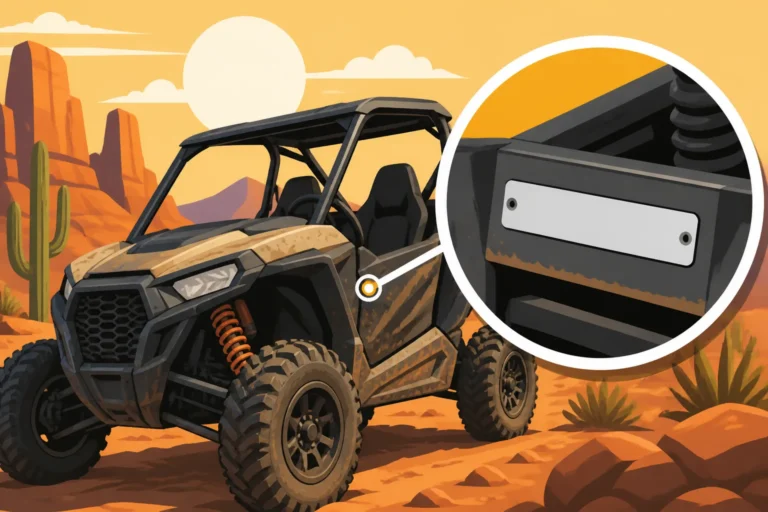
First and foremost, locate the Vehicle Identification Number (VIN) on the quad itself. This multi-character code is unique to every machine and is usually found stamped into the frame. It's typically on the front frame tube, under the seat, or near the left front wheel. Compare this VIN exactly to any VIN listed on the title or a bill of sale the estate provides. If they don't match, or if the VIN appears tampered with, that's an immediate red flag, and you should walk away.
Once you have the VIN, use it to perform a quick check for theft. There are various online databases that can help, or you can even call a local law enforcement agency's non-emergency line to run the VIN. It's a simple step that can save you immense trouble later. [Checking a Serial Number Before Handing Over Cash] is a must-do before parting with any money. You don't want to accidentally become involved with a stolen vehicle, no matter how good the deal seemed.
Additionally, ask the estate representative for any and all paperwork they have, beyond just the title and bill of sale. This could include old registration cards, maintenance records, or even original purchase receipts. These documents can help build a more complete picture of the OHV's history and prove the deceased's ownership. You might also consider asking if the estate has contacted the Arizona MVD to inquire about the machine's records under the deceased's name. This can often reveal if a title exists electronically, even if the physical document is missing.
Transferring Ownership and Getting Your OHV Ready for the Arizona Trails
Once you've verified the VIN and are confident in the paperwork, and the sale is complete, your next stop is the Arizona MVD or an authorized third-party MVD service provider. This is where you formally transfer ownership and apply for your OHV registration and decal.
You'll need to bring all your documents: the properly signed-over Certificate of Title, your detailed Bill of Sale (complete with purchase price, VIN, and signatures), and your identification. If you're relying on a bonded title process due to a missing title, you'll need all the estate's affidavits and the surety bond documentation. The MVD will process the title transfer, calculate and collect any applicable [Arizona Sales Tax on a Machine Purchase] (even from private sales, unless an exemption applies), and then issue you a new title in your name. This process might take a few weeks for the physical title to arrive by mail, but you'll usually get a temporary registration on the spot.
Along with the title transfer, you'll need to secure an [Arizona's Annual OHV Decal Explained]. This decal is mandatory for riding on designated public lands in Arizona. When you register the OHV, you'll pay the [Arizona OHV Decal Price and Processing Fee]. The MVD will provide you with the decal, which you must affix to your license plate in the upper left corner. Once you have this, and your title is in your name, you're officially good to go!
Here’s a quick overview of what MVD will typically want to see:
| Document Type | Purpose | Notes |
|---|---|---|
| Arizona Title | Proof of ownership, signed over by estate representative | Must match VIN, no liens or releases required |
| Bill of Sale | Details of sale: price, date, parties, VIN | Essential for sales tax calculation and ownership record |
| Estate Documents | Proof of representative's authority (e.g., Letter of Testamentary, Small Estate Affidavit) | Only if title is not in the representative's name or if title is missing |
| Valid ID | Your identification as the buyer | Driver's License or other state-issued ID |
| Payment for Fees/Taxes | Title transfer fee, registration fee, OHV decal fee, sales tax | Check current rates with MVD; exact cash or accepted payment methods |
Avoiding Future Headaches and Common Mistakes
Buying an OHV at an estate sale can be a fantastic way to find a unique machine, but overlooking critical details can lead to lasting problems. A little extra attention up front can save you significant time, money, and frustration down the road.
The Importance of a Detailed Bill of Sale
You might be tempted to accept a simple handwritten note or even just rely on the signed title when buying at an estate sale. Resist this urge. A detailed bill of sale is your best friend in this transaction. It's not just a formality; it's a legally binding record of the sale that protects both you and the estate from future disputes.
A thorough bill of sale should include:
- The full legal names and addresses of both the buyer and the seller. For an estate sale, this means the name of the estate and the legal name and title of the person authorized to sell it (e.g., "Estate of John Doe, by Jane Doe, Executor").
- A complete description of the OHV: Make, model, year, color, and most importantly, the full Vehicle Identification Number (VIN).
- The purchase price: This is vital for calculating sales tax and establishing the value of the transaction.
- The date of the sale.
- A clause stating the OHV is sold "as-is," if that's the agreement, which is typical for estate sales.
- Signatures of both the buyer and the authorized seller, along with the date of signing.
- Contact information for the estate's representative or attorney, in case you need to follow up.
Even if the estate has a basic form, consider supplementing it with a more comprehensive template, perhaps one from LawDepot, to ensure all these crucial details are captured. Having a robust [What an Arizona Bill of Sale Should Carry] on file from day one will make any future MVD interactions or even a resale much smoother. This document provides clarity and legal standing, preventing potential headaches if questions arise about the sale after the estate has been closed.
When to Walk Away: Red Flags at an Estate Sale
Not every quad at an estate sale is a diamond in the rough. Some are simply trouble waiting to happen. Knowing when to disengage from a deal is just as important as knowing how to complete one successfully. Keep an eye out for these significant red flags:
- No Paperwork, No Cooperation: If the estate representative is unwilling or unable to provide any documentation for the quad—no title, no old registration, no credible explanation for why—this is a major red flag. Without any starting point, you're looking at a potentially long and expensive journey to establish ownership, possibly requiring a [Titling an Arizona Quad With No Ownership History] process or a bonded title, which isn't always successful. If they also seem unwilling to cooperate with your requests for information or proof of their authority to sell, it's best to walk away.
- Tampered VIN: A VIN that appears to have been altered, ground off, or poorly re-stamped is an immediate deal-breaker. This almost always indicates a stolen vehicle or a machine with a dubious past. Buying such an OHV could lead to legal trouble, seizure of the vehicle, and loss of your investment. Always physically inspect the VIN.
- Price Too Good to Be True: While estate sales can offer good value, an OHV priced significantly below market value, especially for a desirable model, should raise your suspicion. This can sometimes indicate mechanical problems that the estate isn't aware of or isn't disclosing, or it could be a tactic to move a problematic machine quickly. Always do your research on comparable models. [Screening a Used Quad for a Theft Report] applies to more than just theft; it's about screening the entire legitimacy of the machine.
- Unclear Authority to Sell: Ensure the person selling the quad truly has the legal authority to do so. They should be the executor, administrator, or a legal heir with supporting documentation (like a Letter of Testamentary or a Small Estate Affidavit if applicable). Don't just take their word for it. If they can't prove their authority, the sale might not be legally binding.
- Pressured or Rushed Sale: While estate sales are often time-sensitive, be wary if you feel unduly pressured to buy without sufficient time to inspect the machine or review the paperwork. A legitimate seller will understand your need to do your due diligence.
Remember, your excitement for a great deal should never overshadow your common sense. Investing time to verify ownership and inspect the machine beforehand is always worth it. Ultimately, you want to be out on the Arizona trails, not stuck in an MVD office trying to sort out a complicated ownership mess. It's often better to let a seemingly good deal pass than to inherit a bundle of legal problems. [Registering an OHV in Arizona] should be a straightforward process, not a saga.
Disclaimer
This article is for general informational purposes only and does not constitute professional advice. Laws, prices and regulations vary by location and change over time. Consult a qualified professional for guidance on your specific situation.