Arizona Small Estate Paperwork for a Machine
It's incredibly tough when you've lost someone, and then you're left wading through all the practicalities, including figuring out what to do with their beloved off-highway vehicle. The last thing you need is a complicated, drawn-out legal battle just to transfer ownership of a quad or side-by-side. This guide is here to walk you through the Arizona small estate paperwork process for transferring an OHV, helping you understand how to navigate the system without getting bogged down in full probate, and ultimately, bring some closure to that part of the process.
Understanding Small Estates in Arizona for OHVs
When someone passes away, their assets, like an ATV or UTV, become part of their estate. Depending on the total value of these assets, Arizona law provides a streamlined process for smaller estates, often allowing you to avoid the lengthy and expensive probate court proceedings. This is a huge relief for many families who are already dealing with so much emotional strain.
What Qualifies as a Small Estate in Arizona?
Arizona law sets specific monetary thresholds for what qualifies as a "small estate," and it differentiates between real property (like land or a house) and personal property (which includes vehicles, bank accounts, and other movable assets). For an off-highway vehicle, we're primarily looking at the personal property limit. Currently, if the total value of all personal property in the deceased's estate is below a certain dollar amount, you can likely use a small estate affidavit. This means if your loved one's OHV, along with their other personal belongings like furniture, jewelry, or cash, collectively falls under that cap, you can proceed with the simplified process.
It’s important to accurately estimate the value of the OHV and any other personal property. You can use resources like Kelley Blue Book, NADAguides, or recent sales of similar machines in your area to get a fair market value. Don't forget about any accessories or upgrades that might increase its value. If you find the combined value exceeds the state's small estate limit for personal property, then a full probate might be necessary, but for many single machines, especially older ones, the small estate affidavit is a perfect fit.
Why Small Estate Affidavits Are Your Friend
The thought of going through probate can be daunting. It's often portrayed as a complex, time-consuming, and costly legal process, and frankly, that's often true. Lawyers' fees, court costs, and the sheer amount of time it takes can add significant stress to an already difficult situation. This is precisely why the small estate affidavit exists – it's designed to be a practical, more accessible alternative for simpler estates.
Using a small estate affidavit means you can often complete the entire transfer process in weeks rather than months or even years. It significantly reduces or even eliminates legal fees, as you can typically handle most of the paperwork yourself, or with minimal assistance. This simplification is not just about saving money; it's about giving grieving families the ability to quickly and respectfully settle their loved one's affairs without getting trapped in bureaucratic red tape. Imagine being able to get the quad titled and either sell it to help with expenses or enjoy it as a memorial, all without constant court appearances. It truly streamlines what can otherwise be an overwhelming process. You can learn more about how the MVD typically handles these transfers in [Transferring an Arizona OHV After a Death].
The Arizona Small Estate Affidavit for Personal Property
Okay, so you’ve determined that a small estate affidavit is the right path for your situation. Now comes the nitty-gritty of filling out the actual form. It might seem intimidating at first glance, but breaking it down into steps makes it much more manageable. The goal here is to provide accurate information to the court so they can authorize the transfer of the OHV's title to the rightful heir without a full probate proceeding.
Gathering the Necessary Information
Before you even touch the affidavit form, you need to collect all the critical details. Think of it like preparing for a big ride – you wouldn’t just jump on the machine without checking fluids, tires, and gear, right? This preparation is equally crucial for paperwork. You'll need the full legal name of the deceased, their date of death, and their last known address. This information will establish their identity and the timing of their passing.
Next, focus specifically on the OHV. You'll need its full Vehicle Identification Number (VIN), which can be found on the machine itself (often on the frame near the front wheel or under the seat) or on the existing title or registration. Make a note of the make, model, and year of the ATV or UTV. If you're having trouble locating the VIN, especially on an older, well-ridden machine, you might find some tips in [Finding the VIN on a Desert-Worn Machine]. Also, you'll need to know if there were any outstanding liens on the vehicle – meaning, was there a loan still being paid off? This is vital information, as liens must be addressed before a clean title can be issued. Finally, compile a list of all other personal property owned by the deceased and its estimated value, to ensure the total still falls within Arizona's small estate limits.
Filling Out the Affidavit Correctly
Once you have all your ducks in a row, it's time to tackle the Small Estate Affidavit for Collection of Personal Property. These forms are typically available through the Arizona Superior Court website or directly from the court clerk's office. You’ll need to clearly state that you are the successor to the deceased, outlining your relationship (e.g., spouse, child, sibling). The form will ask you to confirm that no application or petition for appointment of a personal representative is pending or has been granted in any jurisdiction. This is just a legal way of confirming that no one else is currently trying to formally probate the estate.
You'll also list the specific personal property you are seeking to transfer – in this case, the OHV, complete with its VIN and description. This is where the accurate valuation comes in handy, as you'll confirm that the value of all personal property does not exceed the statutory limits. Be meticulous here; any errors or omissions could lead to delays or rejection. If you’re feeling a bit lost, online legal document services like LawDepot often provide user-friendly templates and guidance for filling out these types of affidavits, which can be a real lifesaver when you're navigating complex legal forms for the first time. They help ensure you don't miss any critical sections.
Notarization and Filing
After meticulously completing the affidavit, your next crucial step is notarization. This isn't just a formality; it's a legal requirement that verifies your identity and confirms that you signed the document under oath, affirming the truthfulness of the information provided. You can typically find a notary public at banks, credit unions, legal offices, or even some shipping centers. Call ahead to ensure they offer notary services and what their fee might be. Remember to bring a valid government-issued ID, like your driver's license, for the notary.
Once notarized, the affidavit needs to be filed with the clerk of the Superior Court in the county where the deceased lived. For example, if your loved one lived in Mesa, you would file it with the Maricopa County Superior Court. There will be a filing fee, which can vary, so it’s always a good idea to check the current fee schedule on the court’s website or call the clerk's office beforehand. Make sure you get several certified copies of the filed affidavit; you'll need these for the next steps, particularly when dealing with the Arizona Motor Vehicle Division (MVD). This official stamp from the court is what gives the affidavit its legal weight, enabling you to proceed with the actual title transfer.
Transferring the OHV Title After a Small Estate Affidavit
So, you’ve successfully filed the small estate affidavit with the court, and you have your certified copies in hand – congratulations, you've completed a major hurdle! Now it's time for the final leg of the journey: getting that OHV title officially transferred into your name. This step involves working directly with the MVD or one of its authorized third-party providers.
Working with Arizona MVD or a Third-Party Provider
With your certified small estate affidavit, you’ll head to an Arizona MVD office or a qualified third-party service provider. Many people find the third-party providers more convenient due to potentially shorter wait times and more personalized service. Places like Express MVD or MVD Express are often much quicker for these types of transactions. You can explore options like [Third-Party MVD Providers That Register OHVs] to find one near you. Be prepared to present the certified copy of the affidavit, as this document now serves as your legal proof of entitlement to the vehicle.
The MVD agent will review the affidavit to ensure it’s properly filed and executed. They will also look for any previous title information. It’s important to be patient and bring all documentation you have, even if you think it might not be relevant. The MVD's role is to ensure a smooth, legal transfer, and sometimes they may ask for additional clarification. They’re essentially replacing the traditional title transfer process with the authority granted by your small estate affidavit.
Essential Documents for the Title Transfer
While the small estate affidavit is your primary document, the MVD will require a few other items to complete the title transfer. First and foremost, you'll need the death certificate of the deceased. This verifies the date of passing and is a standard requirement for any estate-related transaction. Secondly, you'll need your own valid government-issued identification. This proves you are the successor named in the affidavit.
If you have the original Arizona Certificate of Title for the OHV, bring it with you, even if it's still in the deceased's name. While the affidavit bypasses the need for the deceased's signature, having the physical title can sometimes expedite the process by providing the MVD with all the historical vehicle information readily. If the original title is lost or misplaced, don't panic. You can still proceed, but the MVD may require additional forms or steps to verify ownership history, which you can learn more about in [Proof of Ownership for an Arizona Title] or [Replacing a Lost Arizona Title]. Sometimes, if the original title is completely missing and the ownership history is murky, you might even have to look into a [Bonded Title for a Quad in Arizona], but this is usually a last resort.
Understanding Liens and Outstanding Issues
One of the critical pieces of information you gathered earlier was whether there were any liens on the OHV. A lien means there was an outstanding loan secured by the vehicle, and until that loan is paid off, the lender technically holds an interest in the title. The MVD cannot transfer a clean title to you if a lien is still active on their records.
If there was a lien, you’ll need to contact the financial institution that held the loan. You'll need to provide them with the death certificate and the small estate affidavit. They will then guide you on how to satisfy the outstanding debt. Once the loan is paid off, the lender will provide a lien release, which is a document stating that their interest in the vehicle has been satisfied. You must bring this original lien release to the MVD along with your other documents. Without it, the title transfer won't proceed smoothly. It's a common hurdle, but one that’s absolutely necessary to clear to ensure you receive a free and clear title for the OHV. For more on this, check out [Liens on an Arizona OHV Title].
What Comes Next: Registration, Decals, and Use
Once the title is officially in your name, you're almost ready to hit the Arizona trails! However, simply having the title isn't quite enough for legal off-road use. There are a couple more steps to ensure your inherited OHV is fully compliant with Arizona law, whether you plan to keep it or sell it.
Getting Your OHV Registered and Decaled
For any OHV operating on Arizona's public lands, state trust lands, or even some county roads, you absolutely need to have it properly registered and display an annual OHV decal. This isn't just a suggestion; it's a mandatory requirement. You can handle this process at the same MVD office or third-party provider where you transferred the title. They'll process the registration and issue your new license plate (which might be an MC plate or an RV plate depending on the machine's weight and intended use) and the crucial annual OHV decal. For a full breakdown, read [Arizona MVD OHV Registration Explained].
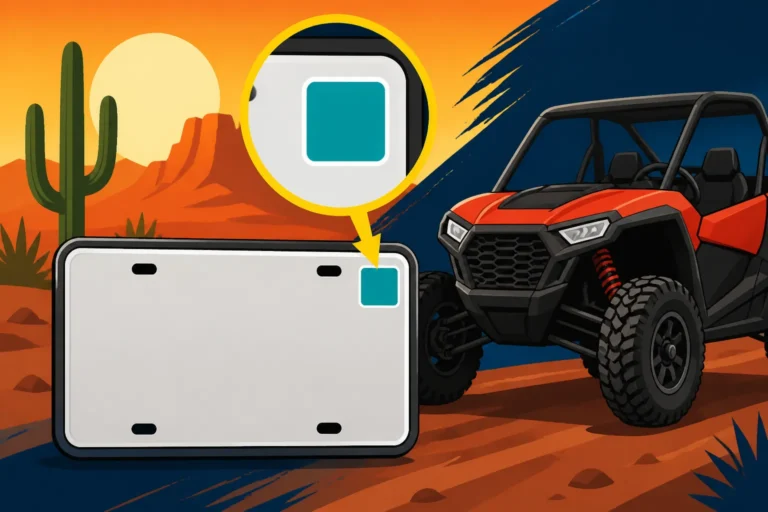
The OHV decal is your ticket to Arizona's vast network of trails. It contributes to the state's OHV fund, which helps maintain and develop trails, educate riders, and support enforcement efforts. You'll need to pay the [Arizona OHV Decal Price and Processing Fee] at the time of registration. The decal needs to be renewed each year, and you'll typically receive reminders. Make sure to affix the decal in the designated spot on your license plate, usually the upper-left corner, as specified in [Decal Placement on the Upper-Left Corner]. Failing to have a current decal can result in citations and fines if you're encountered by a ranger or law enforcement officer on the trails.
Considerations for Selling or Keeping the Machine
Now that you've got the OHV titled and registered, you'll face a decision: do you keep it as a remembrance, or is it time to sell it? If you choose to keep the machine, make sure you understand the ongoing responsibilities. This includes regular maintenance, knowing [When an Arizona OHV Decal Expires] so you can renew it on time, and considering [Insuring an ATV in Arizona]. While insurance isn't always mandatory for off-road use, it's a wise investment to protect yourself and your asset. You’ll want to make sure you know [What the OHV Decal Buys an Arizona Rider] in terms of trail access and support.
If you decide to sell the OHV, having a clean title in your name makes the process much smoother for the buyer. You'll need to provide the new owner with the signed-over title and a bill of sale. A detailed [What an Arizona Bill of Sale Should Carry] is crucial for both your protection and the buyer's. It documents the sale price, date, VIN, and confirms the transfer of ownership. Many buyers will also ask about the OHV's history, so be prepared to share any maintenance records or information you have. By taking the time to properly transfer the title through the small estate affidavit, you've ensured that you can legally pass on this machine, whether to a new owner or for your own continued enjoyment.
Key Documents for Arizona Small Estate OHV Transfer
Here's a quick look at the essential documents you'll need to manage an OHV transfer through an Arizona small estate affidavit:
| Document | Purpose | Where to Get It / What to Do |
|---|---|---|
| Death Certificate | Proves the date of passing of the deceased. | Obtained from the county vital records office where the person passed away. |
| Small Estate Affidavit for Personal Property | Legal document bypassing probate for small estates. | Download from Arizona Superior Court website, or use a template from services like LawDepot. Fill out accurately. |
| Certified Copy of Filed Affidavit | Official proof that the court has accepted your affidavit. | File the original affidavit with the Superior Court clerk in the deceased's county of residence; request certified copies. |
| Current OHV Title (if available) | Provides VIN, ownership history, and other vehicle details. | Found with the deceased's important documents, or request a replacement from MVD if lost. |
| Lien Release (if applicable) | Confirms any outstanding loans on the OHV have been satisfied. | Obtained from the lender after the loan is paid off. |
| Your Government-Issued ID | Verifies your identity as the successor named in the affidavit. | Your valid driver's license or state ID. |
| MVD Forms for Title & Registration | Required for the actual transfer of ownership and registration. | Available at MVD offices or third-party providers. |
| Proof of Arizona Residency (if needed) | May be required if you are a new resident or for certain transactions. | Utility bills, lease agreements, etc., showing your current Arizona address. |
Disclaimer
This article is for general informational purposes only and does not constitute professional advice. Laws, prices and regulations vary by location and change over time. Consult a qualified professional for guidance on your specific situation.