After an Engine Swap, What Changes
You've poured your heart, sweat, and probably a fair bit of cash into your Arizona ATV or UTV, and now you've given it a whole new lease on life with an engine swap. But as the roar of the new motor settles, a nagging question often surfaces: what exactly changes when you swap the engine? This guide is here to walk you through the practical, legal, and common-sense considerations you need to be aware of to keep your machine legal, insured, and ready for Arizona's incredible trails.
Understanding the Basic Arizona Rules for Machine Modifications
Undertaking an engine swap on your off-highway vehicle (OHV) can feel like a major project, and it absolutely is from a mechanical standpoint. However, when it comes to the Arizona Motor Vehicle Division (MVD), the impact on your registration and titling might be less dramatic than you'd expect, depending on the nature of the swap. It's crucial to understand when the MVD cares, and when they don't.
When an Engine Swap Triggers Official Scrutiny
For most casual engine replacements in an ATV or UTV, if you're swapping like-for-like—say, replacing a worn-out 800cc engine with another 800cc engine of the same make and model, or even a similar one—the MVD typically doesn't need to be notified. Your machine's core identity for registration and titling purposes in Arizona isn't tied to its engine number but to its Vehicle Identification Number (VIN), which is stamped on the frame. As long as that VIN remains unchanged, your registration and title documents usually remain valid without modification.
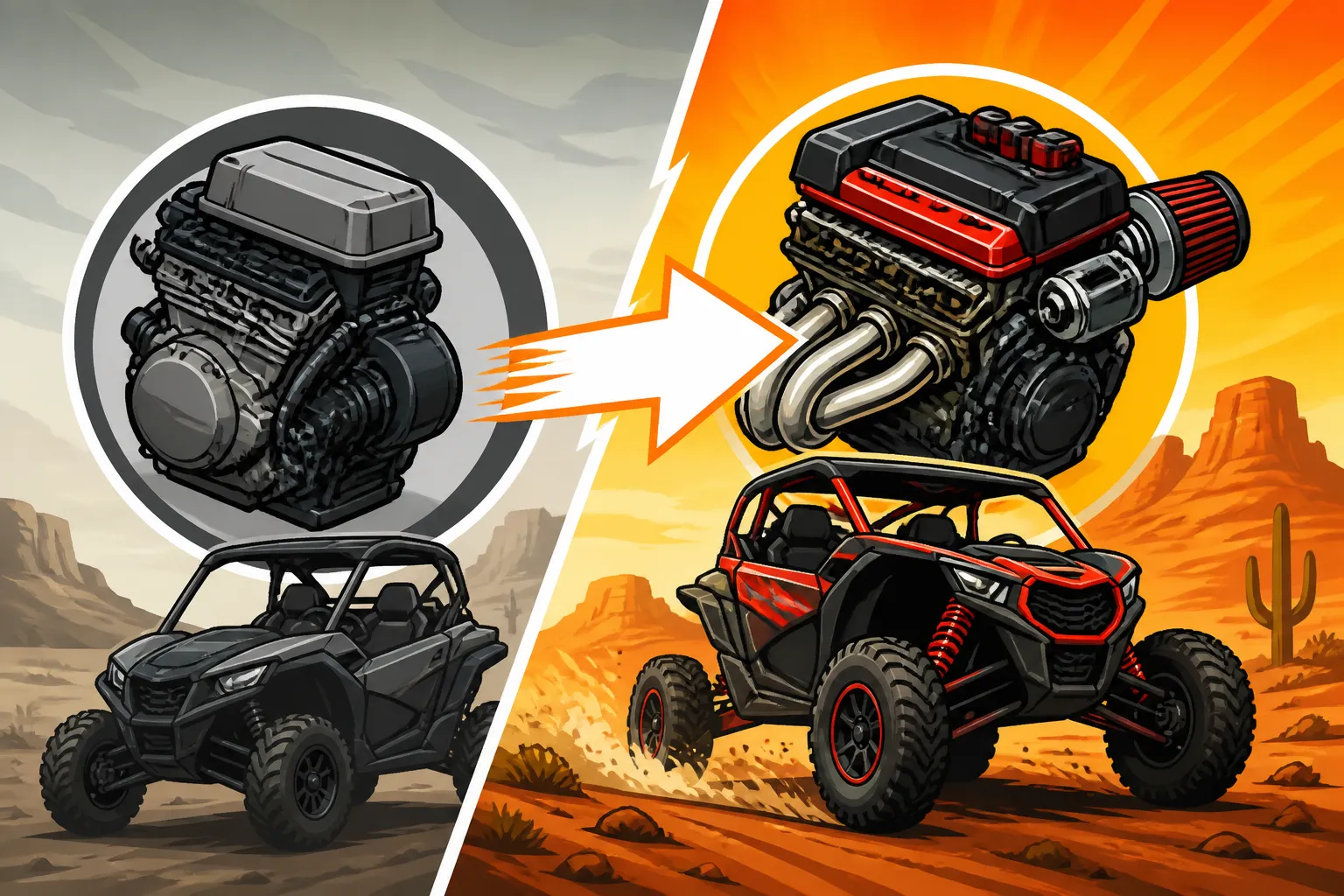
However, the situation can change if the swap is drastic. For instance, if you're completely altering the fuel type (like converting a gasoline engine to an electric powertrain, which is rare but not unheard of for experimental builds), or if the swap fundamentally changes the vehicle's class or intended use in a way that impacts safety or emissions regulations. Imagine transforming a standard utility UTV into a high-performance, purpose-built racing machine with a significantly different engine. While the VIN on the frame remains, such a radical change could potentially trigger a closer look from authorities or impact how the vehicle is legally classified, particularly if you're aiming for street-legal status. Always keep detailed records of your new engine purchase – it's your proof of legitimate ownership.
The VIN and Your Machine's Identity
This point really can't be stressed enough: for official Arizona MVD purposes, the VIN etched into your ATV or UTV's frame is its absolute identity. This unique sequence of characters is what links your machine to its title, registration, and ultimately, to you as the owner. Unlike some older automobiles where engine numbers were sometimes recorded on titles, modern OHV titling and registration in Arizona primarily rely on the frame VIN. This means that when you perform an engine swap, as long as the frame (and therefore the VIN) remains the same, your existing Arizona title and registration documents are typically still perfectly valid.
It’s an important distinction because it simplifies the process significantly. You won’t usually need to go through the hassle of amending your title or re-registering your machine just because you’ve changed the motor. However, this doesn't mean the engine itself is irrelevant. If you ever need to prove ownership of the engine—perhaps after a theft or when selling the machine—a bill of sale for that engine is invaluable. In a state like Arizona, where machines can get a lot of use and sometimes abuse, knowing [Finding the VIN on a Desert-Worn Machine] is good practice, but always remember the frame's VIN is paramount.
Paperwork and Practicalities After Your Engine Swap
So, you've got a shiny new engine purring in your ATV or UTV. While the MVD might not need an update on your title, there are still important administrative and practical considerations to handle. Thinking ahead about documentation and insurance can save you a world of headaches down the dusty road.
Updating Records and Proof of Ownership
As we've touched upon, for most engine swaps on an ATV or UTV in Arizona, the MVD doesn't require you to update your title or registration since the VIN on the frame remains the same. Your existing Arizona Certificate of Title for your quad still applies. This is great news for reducing bureaucratic hassle! However, this doesn't mean you're entirely off the hook when it comes to paperwork. What you must do is keep impeccable records of the new engine.
Think of it this way: if you ever decide to sell your machine, or worse, if it's stolen, having a clear paper trail for the engine itself is incredibly important. You'll want a purchase receipt or a formal bill of sale for the new engine, detailing where it came from, its serial number (if it has one), and the date of purchase. This documentation acts as your proof that you legally acquired the engine. You can find excellent templates for creating a robust bill of sale online, perhaps using a resource like LawDepot, to ensure all the necessary details are included. This proactive step helps to prove legitimate ownership of all components of your machine, should the need ever arise. Just like knowing [What an Arizona Bill of Sale Should Carry] for the entire machine, having one for a significant component like the engine adds another layer of security.
Insurance Implications of a Modified Machine
This is perhaps one of the most critical aspects of an engine swap that riders often overlook: your insurance policy. While the MVD might not care, your insurance provider absolutely will – or at least, they should. An engine swap, especially one that significantly increases the horsepower, performance, or overall value of your ATV or UTV, needs to be discussed with your insurance company. Failing to do so could have severe financial repercussions if you ever need to file a claim.
Imagine you’ve replaced a standard 600cc engine with a high-performance 1200cc motor, dramatically boosting your machine’s power and market value. If you don't inform your insurer, and your OHV is unfortunately stolen or involved in an accident, they might only be obligated to pay out based on the original, unmodified value and specifications. This could leave you significantly underinsured and out of pocket. Many riders take the time to figure out [Insuring an ATV in Arizona] when they first buy it, but forget that modifications can change that equation.
Your insurer will want to know about significant modifications because they alter the risk profile of your machine. Higher performance can sometimes mean a higher risk of accidents, and increased value means a higher payout if something happens. Be prepared for your premiums to potentially adjust, or for your policy to be updated to specifically cover the new components and increased value. It's always best to be transparent and provide them with details about the swap, including receipts for the new engine and any related performance parts. A quick call to your agent could save you thousands down the line.
Potential Issues and Proactive Measures
While an engine swap might seem straightforward once the wrenches are put away, there are still some key areas where you need to be proactive, especially concerning emissions and future resale. These aren't just minor details; they can genuinely impact your ability to legally operate or sell your Arizona OHV.
Emissions Testing for Street-Legal Builds
This is where an engine swap can introduce a genuine hurdle, particularly if you have or plan to make your OHV street-legal in Arizona. Most off-highway only machines are exempt from emissions testing, but if your ATV or UTV is registered for street use in the Phoenix or Tucson metropolitan areas, it will be subject to emissions testing. When you swap an engine, you fundamentally change the vehicle's original emissions profile.
If you’re swapping in an engine that is older, less efficient, or not designed to meet modern emissions standards, you could find yourself failing the required tests. Arizona's Department of Environmental Quality (ADEQ) has specific standards, and a non-compliant engine can be a significant problem. It’s not just about passing; it’s about maintaining the integrity of the air quality, especially in our beautiful desert communities. When considering [Emissions Testing for OHVs in Phoenix and Tucson], remember that the engine itself is the heart of the emissions system. If your goal is a street-legal machine, you'll need to ensure your chosen engine is compatible with Arizona's emissions requirements, or that you can equip it with the necessary components to pass inspection. Sometimes, an engine swap into an older frame might actually be an upgrade in terms of emissions, but without proper planning, it can quickly become a headache. Understanding [Emissions Testing and Street-Legal Machines] is critical for this specific scenario.
Selling a Machine with an Engine Swap
When the time comes to sell your beloved, engine-swapped OHV, transparency is paramount. Buyers want to know exactly what they're getting, and hiding an engine swap, especially a significant one, can lead to distrust and potential legal issues down the road. You should be prepared to clearly disclose the engine swap to any potential buyer, explaining why it was done, what engine was installed, and any performance changes that resulted.
The best way to facilitate a smooth sale is to provide all the documentation for the new engine. This includes your purchase receipts, the bill of sale for the engine (perhaps drafted with help from LawDepot to ensure it's comprehensive), and any maintenance records related to the swap. This not only builds trust with the buyer but also protects you as the seller. A detailed bill of sale that explicitly notes the engine change and any modifications is your best friend in this scenario. While the actual title transfer process, like [Transferring an Arizona OHV After a Death], focuses on the frame VIN, the engine's history is a crucial part of the machine's overall value and appeal. Be honest about how the swap affects the machine's value – an upgrade might fetch a higher price, but a non-standard or older engine might mean a lower one. Providing a complete history makes the buyer more comfortable and less likely to encounter surprises later. If you were ever in a situation of [Selling a Quad in Arizona With No Title], having the engine documentation would be even more critical.
Engine Numbers, Aftermarket Parts, and General Best Practices
Successfully swapping an engine involves more than just getting the new motor bolted in. It's also about understanding the nuances of how engine numbers play into the grand scheme of things, and ensuring that all your related modifications contribute to a safe and reliable machine.
Engine Numbers vs. VINs: Why the Distinction Matters
Let's circle back to a key point: every engine has its own unique serial number, distinct from the VIN. While the MVD in Arizona primarily uses the frame's VIN for titling and registration of OHVs, the engine's serial number still holds significance. It's a critical identifier for the engine itself, valuable for warranty claims, parts ordering, and—most importantly—for theft recovery.
In the unfortunate event your machine is stolen, law enforcement will use the frame's VIN as the primary identifier. However, if the machine is recovered with a different engine, or if the frame's VIN has been tampered with, the engine's serial number can become a secondary but very important piece of evidence to help track down components or prove ownership. Therefore, it's a very good practice to keep a record of your new engine's serial number right alongside its purchase documentation. This simple step adds another layer of security and traceability to your valuable investment. While we talk about [Correcting a VIN on an Arizona Record] for the frame, the engine number is a separate, but valuable, data point.
Aftermarket Parts and Overall Machine Integrity
An engine swap rarely happens in isolation. Often, it's accompanied by a host of other aftermarket parts and modifications designed to complement the new powerhouse. These can include upgraded exhaust systems, heavy-duty cooling components, enhanced fuel delivery systems, and even drivetrain reinforcements. While these additions can certainly boost performance and reliability, they also demand careful consideration.
The biggest takeaway here is compatibility and quality. A powerful new engine will undoubtedly place greater stress on other components of your OHV. Ensure that your cooling system can handle the increased heat, your fuel lines and pump can deliver the necessary flow, and your electrical system is robust enough for any new demands. Cutting corners on supporting components can lead to costly failures, or worse, dangerous situations out on the trail. Always choose quality aftermarket parts from reputable manufacturers. If you've also installed a new exhaust system, be mindful of Arizona's noise regulations. While off-highway riding often allows for a bit more roar, if you're venturing near populated areas or making your machine street-legal, [Arizona Muffler and Noise Limits] become very relevant.
Ultimately, an engine swap is a significant investment of time and money. By proactively addressing the paperwork, insurance, and broader implications of your modifications, you ensure that your revitalized Arizona ATV or UTV remains a source of joy and adventure, rather than a bureaucratic headache.
Here’s a quick overview of how different engine swap scenarios might affect your interaction with the Arizona MVD:
| Scenario | MVD Notification Required? | Key Actions |
|---|---|---|
| Identical Engine Replacement | No | Keep all purchase receipts and bill of sale for the new engine. |
| Performance Upgrade (More HP) | No (typically) | Update your insurance provider about the modification; keep detailed receipts and bill of sale for engine. |
| Fundamental Fuel Type Change | Yes (significant change) | Consult Arizona MVD for potential re-classification or inspection; may require new title/registration. |
| Emission-Impacting Swap | Potentially (for street-legal builds) | Verify emissions compliance with ADEQ; ensure engine meets standards for registration areas. Keep records. |
Disclaimer
This article is for general informational purposes only and does not constitute professional advice. Laws, prices and regulations vary by location and change over time. Consult a qualified professional for guidance on your specific situation.