Arizona Registration for a New Resident
Moving to a new state is a huge undertaking, and bringing your beloved ATV or UTV with you adds a whole new layer of paperwork and head-scratching. You're probably wondering, "Do I really have to re-register my machine, even if it's current in my old state?" The short answer, for Arizona, is usually "yes." This guide will walk you through everything you need to know about getting your off-highway vehicle (OHV) properly registered and titled in Arizona as a new resident, making sure you're ready to hit those incredible desert trails legally and without a hitch.
Understanding Arizona's Residency Rules for OHVs
When you pack up your life and your OHV and head for the Grand Canyon State, one of the first things you'll encounter is the concept of establishing residency. It's not just about finding a place to live; it impacts how you interact with state agencies, including the Motor Vehicle Division (MVD). Knowing when Arizona considers you a resident is crucial because it dictates the timeline and requirements for transferring your OHV registration.
When You Become an Arizona Resident
Arizona has a pretty clear definition of what makes someone a resident, and it's not always about how long you've been here. The clock generally starts ticking when you engage in specific activities that signal your intent to make Arizona your permanent home. For example, if you start working in Arizona, enroll your kids in public school, register to vote here, or get an Arizona driver's license, the state considers you a resident. The same goes for accepting employment in Arizona or establishing a business presence.
Once these triggers occur, you typically have a grace period to get your out-of-state vehicles, including your OHV, switched over to Arizona plates and titles. It's usually a short window, often around 30 days, from the date you establish residency. Missing this window can lead to complications, so it's best to get ahead of it rather than waiting until the last minute. Don't let the excitement of exploring new trails distract you from these important administrative steps!
Why Residency Status Matters for Your Machine
Your residency status in Arizona directly impacts the type of registration and decal your OHV needs. If you're deemed a resident, you'll be applying for a standard Arizona OHV registration and title, along with the annual resident OHV decal. This decal is required for operating your machine on any Arizona public lands, trails, or open areas. It's how the state funds trail maintenance and enforcement, so it's a big deal.
Conversely, if you're a temporary visitor or a "snowbird" who maintains permanent residency elsewhere, you might qualify for a non-resident OHV decal. This distinction is really important, as the requirements and process for a non-resident decal are different. However, if you're truly moving here, that non-resident decal isn't for you. You'll need to go through the full resident registration and titling process. It’s a common point of confusion, but the MVD is looking for your intent to reside here permanently, and your actions will reflect that. Essentially, once you're an Arizonan, your machine needs to be one too, at least on paper.
The Core Requirements for Registering Your Out-of-State OHV
Bringing an OHV from another state isn't just about showing up at the MVD with your old title. Arizona wants to make sure everything is legitimate, from proof of ownership to compliance with state regulations. Understanding these core requirements upfront will save you a lot of time and potential headaches down the line.
Proof of Ownership and Identity
This is probably the most critical piece of the puzzle. You absolutely must be able to prove that the ATV or UTV you're trying to register actually belongs to you. The primary document for this is your out-of-state certificate of title. It needs to be properly endorsed, meaning if you bought it from someone, they should have signed it over to you. If your previous state didn't issue titles for OHVs (which some states don't), you'll likely need a bill of sale or other strong proof of ownership. [What an Arizona Bill of Sale Should Carry] is a good resource here. The more documentation you have, the smoother the process will be.
Along with proof of ownership, you'll need a valid, government-issued photo ID. This verifies your identity and ensures that the person registering the machine is indeed the rightful owner. If you have multiple owners listed on the title, all of them might need to be present or provide notarized authorization. If you're missing a clear chain of ownership, or if the seller never properly signed over the title, you might be looking at a more complex process like a bonded title, which is designed for situations where proof of ownership is murky. For those situations where you might need to formalize a private sale or create an affidavit, resources like LawDepot can be helpful for generating templates for documents such as bills of sale or affidavits of ownership. They provide customizable forms that can ensure you're including all the necessary details, which Arizona MVD will appreciate.
Satisfying Arizona's Emissions Requirements (if applicable)
Here's where it can get a little tricky, but thankfully, for most traditional OHVs, it's not a major hurdle. Generally, off-highway vehicles that are not street legal are exempt from emissions testing in Arizona. This means if your ATV or UTV is purely for trail use and will only be transported to trailheads, you likely won't need an emissions test.
However, if you're planning to make your OHV street legal and get a regular license plate (which is possible for many UTVs and some ATVs under specific conditions), then it's a different story. Street-legal vehicles registered in specific metropolitan areas like Phoenix and Tucson are subject to emissions testing requirements. This applies even if your OHV is brand new. Make sure you understand whether your machine will be exclusively off-highway or if you intend to convert it for street use, as this determines if emissions testing will be on your to-do list.
The Arizona OHV Decal and Education Course
Every resident-owned OHV in Arizona needs an annual OHV decal if it's going to be operated on public lands. This isn't just a suggestion; it's the law. The decal helps fund the trails, staging areas, and educational programs that make Arizona such a fantastic place to ride. [Arizona's Annual OHV Decal Explained] details the whole system. The decal is generally renewed annually and must be affixed to your license plate in a specific location.
Beyond the decal itself, Arizona introduced a mandatory OHV education course. As a new resident, you'll need to complete this free online course before you can get your decal. It covers important safety guidelines, environmental ethics, and state laws to ensure everyone is riding responsibly. It’s a pretty straightforward course, but it’s an absolute requirement. Think of it as your welcome-to-Arizona OHV riding orientation. You can usually complete it through the Arizona Game and Fish Department's online portal.
Step-by-Step: Getting Your Arizona Title and Registration
The actual process of getting your OHV registered and titled in Arizona is manageable if you tackle it systematically. It's about gathering your ducks in a row and knowing where to go and what to expect. This section will guide you through the practical steps, from documentation to dealing with the MVD or a third-party provider.
Gathering Your Documentation
Before you even think about heading to an MVD office or authorized third-party, you need to have all your paperwork organized. This is where most people get tripped up, causing delays and multiple trips. Here’s a checklist of the core documents you’ll likely need:
- Out-of-State Certificate of Title: This is paramount. Ensure it's original and properly endorsed if you're not the original owner.
- Bill of Sale: Even if you have a title, a bill of sale can be very useful, especially if it details the purchase price, which helps with sales or use tax calculations. If you're in need of a robust bill of sale, LawDepot provides a good template that helps ensure you're capturing all essential information, offering peace of mind during a private sale.
- Proof of Identity: Your valid Arizona driver’s license or another government-issued photo ID.
- Proof of Arizona Residency: Documents like a utility bill, rental agreement, or Arizona driver’s license show your physical address in the state.
- VIN Verification: For vehicles coming from out-of-state, a VIN verification may be required. This can often be done by an MVD agent, a law enforcement officer, or an authorized third-party provider. They'll physically inspect your machine to ensure the Vehicle Identification Number matches your documents. Make sure you know [Checking a Serial Number Before Handing Over Cash] if you're buying a used machine here!
- Lien Release (if applicable): If you had a loan on the OHV in your previous state, you'll need proof that the lien has been satisfied.
Having originals is always best, and it's a good idea to make photocopies for your records before you submit anything.
Where to Process Your Registration
In Arizona, you have a couple of options for handling your OHV title and registration needs. Each has its pros and cons, and your choice might depend on your preference for convenience versus direct interaction with the state.
Arizona MVD Offices: These are the official state-run facilities. You can complete all your titling and registration paperwork here. The benefit is that you're dealing directly with the state agency, ensuring everything is processed according to official guidelines. The downside? MVD offices are notorious for long wait times, and their hours can sometimes be limited. Many people find the experience to be a bit of a bureaucratic maze. However, if your situation is complex, or if you have specific questions, dealing directly with an MVD agent might be your best bet. [Titling an ATV at an Arizona MVD Office] covers more details.
Third-Party MVD Providers: Arizona has a network of authorized third-party businesses that can process many MVD transactions, including OHV registrations and titles. [Third-Party MVD Providers That Register OHVs] explains these in more detail. These providers are typically private businesses licensed by the state to offer MVD services. They often boast shorter wait times, more convenient locations, and extended hours. The trade-off is that they usually charge a small convenience fee on top of the standard MVD fees. For many new residents, the extra cost is well worth the time saved and the smoother customer experience. Just make sure the provider you choose is genuinely authorized for titling and registration services.
Completing the Application and Fees
Once you have your documents and have decided where to go, the next step is filling out the necessary application forms. The primary form for titling and registering your OHV will typically be the Title and Registration Application. You’ll need to provide details about yourself, your OHV (make, model, VIN, year), and the purchase information. Be meticulous in filling out these forms, as any errors can lead to rejection and delays.
Now, let's talk about the money. There are several fees involved in getting your OHV properly set up in Arizona:
- Title Fee: A relatively small fee to issue your new Arizona Certificate of Title for an Off-Highway Vehicle.
- Registration Fee: This is the annual fee for your OHV registration.
- OHV Decal Fee: The annual fee for your off-highway vehicle decal. This is critical for riding on public lands.
- Sales Tax or Use Tax: This is a big one. If you recently purchased your OHV and haven't paid sales tax on it in Arizona or another state (or if the tax paid was less than Arizona's rate), you will owe Arizona sales tax. If you bought it out of state and paid less than Arizona's sales tax, you'll owe the difference as a "use tax" when you register it here. [Arizona Sales Tax on a Machine Purchase] and [Use Tax on a Machine Brought Into Arizona] are important reads. Make sure you're clear on how this applies to your situation, as it can be a significant cost.
- Service Fees: If you use a third-party provider, they will add their own service fee.
It's always a good idea to check the current fee schedule on the Arizona MVD website or with your chosen third-party provider before you go, so you can bring the correct payment method and avoid surprises.
Common Challenges New Residents Face
Even with the best intentions, moving an OHV across state lines can present some unexpected hurdles. Arizona's system might have slightly different rules than what you're used to, and specific situations can throw a wrench in the works. Being aware of these potential challenges can help you prepare and find solutions more quickly.
Dealing with Missing or Incomplete Paperwork
Perhaps the most common frustration for new residents is discovering that their paperwork isn't quite up to Arizona's standards. Maybe the previous state didn't title OHVs, and all you have is a crumpled bill of sale. Or perhaps a signature is missing, or the VIN on your title doesn't exactly match the machine. These are not uncommon scenarios, but they require specific remedies.
If you don't have a clear, transferable title, you might need to pursue a bonded title. This is a process where you purchase a surety bond to protect against any claims to the vehicle's ownership. It involves an application, a bond, and typically a physical inspection. It's a more involved process, designed to establish clear ownership when the paper trail is incomplete or lost. Another scenario might involve getting an affidavit of ownership if a simple bill of sale needs bolstering. In situations where you need to create legal documents to establish ownership or prove details, using platforms like LawDepot can be beneficial for generating the correct forms with state-specific considerations, helping you get that crucial paperwork in order. The key is to be upfront with the MVD or third-party provider about what you do have, so they can guide you toward the correct solution.
Understanding Sales Tax vs. Use Tax
When you bring an OHV into Arizona that you've purchased elsewhere, the state wants its fair share of tax revenue. This often comes in the form of sales tax or use tax.
- Sales Tax: If you purchase the OHV from an Arizona dealer, they will collect Arizona sales tax at the time of sale. If you buy it privately within Arizona, you are responsible for reporting and paying the sales tax to the MVD when you register.
- Use Tax: This is where new residents often get confused. If you purchased your OHV in another state and paid sales tax there, Arizona will typically credit you for the amount of sales tax you already paid, up to Arizona's current sales tax rate. However, if the sales tax rate in your previous state was lower than Arizona's, or if you didn't pay any sales tax at all (e.g., if you bought it in a state with no sales tax), then you will owe Arizona the difference. This "use tax" ensures that everyone who brings a vehicle into Arizona pays a comparable amount of tax, regardless of where it was originally purchased. It’s important to bring proof of any sales tax you paid in your previous state to ensure you get the proper credit. [Registering an Out-of-State Machine in Arizona] delves deeper into these tax considerations.
Navigating Liens from Out-of-State Lenders
If you financed your ATV or UTV and still owe money on it, your lender likely holds the title as a lienholder. When you move to Arizona, this doesn't automatically mean your loan magically disappears. You'll need to work with your lender to transfer the lien to Arizona. This usually involves:
- Contacting Your Lender: Inform them that you're moving to Arizona and need to transfer the title and lien. They may have specific forms or procedures.
- Requesting the Out-of-State Title: Your lender might need to send your original out-of-state title directly to the Arizona MVD or to you (to then submit to the MVD) so that a new Arizona title can be issued with the lien correctly recorded.
- New Arizona Title with Lien: The Arizona MVD will then issue a new Arizona title, listing your lender as the lienholder. This title will typically be sent directly to your lender, just as it was in your previous state.
It's a good idea to start this process well in advance, as communication between state MVDs and financial institutions can sometimes take time. Make sure you keep copies of all correspondence and documents related to your lien transfer.
Post-Registration Responsibilities and Best Practices
Once your OHV is officially an Arizona machine, with a shiny new title and registration, your journey isn't quite over. There are ongoing responsibilities and smart practices to ensure you stay legal, safe, and ready to enjoy all the incredible riding Arizona has to offer.
Decal Placement and Renewal
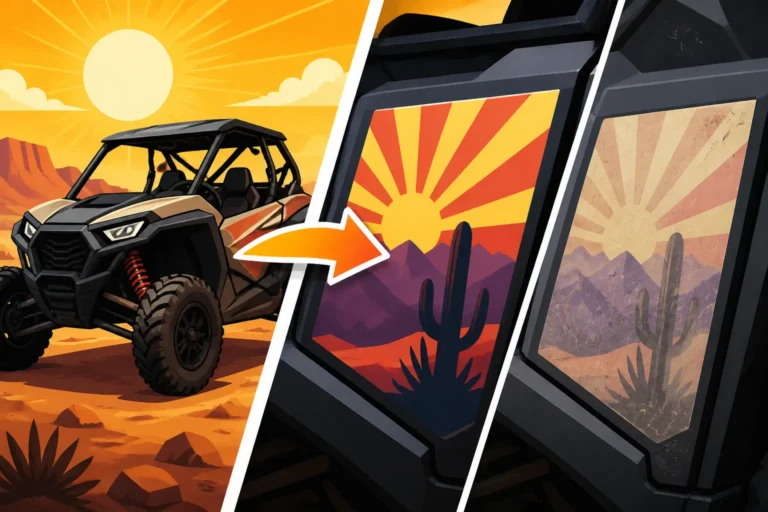
The annual OHV decal is a critical component of Arizona OHV law. It must be displayed prominently on the upper-left corner of your Arizona license plate. This isn't just a suggestion; it's how law enforcement verifies your compliance. If your decal isn't visible or is improperly placed, you could face fines. [Decal Placement on the Upper-Left Corner] provides a visual guide. Make sure the decal is clean and unobstructed, so it's easy for park rangers or deputies to see.
The decal, like your registration, has an expiration date, usually tied to your birth month. You'll receive renewal notices from the Arizona MVD (if you’ve kept your address updated) or the Arizona Game and Fish Department, reminding you when it's time to renew. It's crucial to renew your decal each year to continue riding legally on Arizona's public lands. Many people choose to renew online through the Arizona Game and Fish Portal account, which is a convenient way to keep everything up-to-date. [Renewing an Arizona OHV Decal Each Year] has all the details on this.
Insurance and Street-Legal Considerations
While Arizona doesn't mandate liability insurance for purely off-highway vehicles, it's a strongly recommended best practice. Accidents happen, even to the most careful riders, and having insurance can protect you from significant financial burdens if you're involved in a collision or cause damage. Many homeowners' policies might offer limited coverage, but a dedicated OHV policy usually provides much more comprehensive protection. [Insuring an ATV in Arizona] offers a full rundown of your options.
If you've gone the extra mile to make your UTV or ATV street legal (adding turn signals, mirrors, a horn, etc.) and received a regular MC or RV plate, then specific insurance requirements do apply. These machines must meet Arizona's minimum liability insurance limits, just like any other road-going vehicle. You'll need to carry proof of this insurance whenever you operate the machine on public roads or highways. Understanding the difference between off-highway insurance and street-legal insurance is key to staying compliant.
Knowing Where to Ride and OHV Rules
Arizona boasts an incredible network of OHV trails, but not every piece of land is open to machines. It's your responsibility as a rider to know where you can legally ride and to respect land designations. Public lands managed by the Bureau of Land Management (BLM) and the Forest Service generally have designated OHV routes. Arizona State Trust Land, however, requires an additional [Arizona State Trust Land Recreational Permits] on top of your OHV decal. Private property is, of course, off-limits without explicit permission.
Beyond land access, brush up on Arizona's specific OHV laws regarding helmets (mandatory for riders under 18), spark arrestors, sound limits, and passenger rules. The Arizona Game and Fish Department is an excellent resource for current regulations and educational materials. Many local riding clubs also provide valuable insights into specific trail conditions and etiquette. Becoming a responsible and informed rider not only enhances your own experience but also helps preserve access for future generations.
Here's a quick comparison of key documentation for new residents:
| Document Type | Purpose | Required for MVD | Where to Get/Verify | Notes |
|---|---|---|---|---|
| Out-of-State Title | Proof of Ownership (original) | Yes | Issued by your previous state's DMV/MVD | Must be properly signed over if purchased from previous owner. |
| Bill of Sale | Details of purchase, sales/use tax calculation | Yes (if no title) | Private sale document (LawDepot template available) | Crucial if your previous state didn't title OHVs. |
| Photo ID | Verifies your identity | Yes | State Driver's License/ID, Passport | Must be current and government-issued. |
| Proof of Residency | Shows your Arizona address | Yes | Utility bill, rental agreement, AZ driver's license | Establishes you as an AZ resident. |
| VIN Verification | Confirms machine's VIN matches documents | Often | MVD office, authorized third-party, law enforcement | May be required for out-of-state vehicles. |
| Lien Release | Proves loan paid off (if applicable) | Yes (if lien exists) | Your previous lender | Needed to obtain a clear title in Arizona. |
| OHV Education Cert. | Proof of completing mandatory AZ OHV safety course | Yes | Arizona Game and Fish Department online portal | Required for all resident OHV decal applicants. |
| Emissions Test | Required for street-legal machines in specific areas | Sometimes | Authorized Arizona emissions testing station | Not typically needed for strictly off-highway machines. |
Disclaimer
This article is for general informational purposes only and does not constitute professional advice. Laws, prices and regulations vary by location and change over time. Consult a qualified professional for guidance on your specific situation.