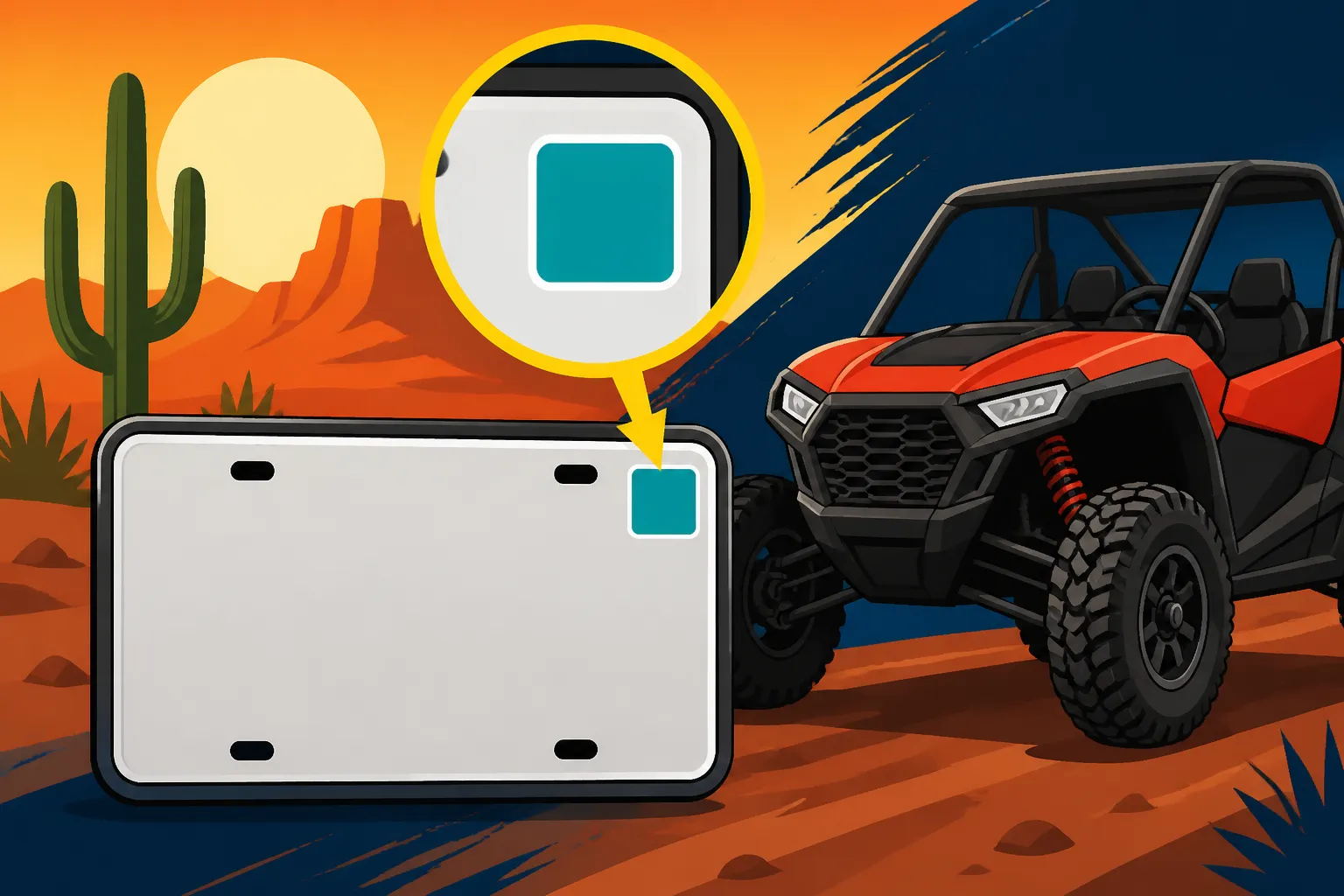
Where the Arizona OHV Decal Goes on the Plate
There's nothing quite like the feeling of hitting the Arizona trails, the desert stretching out around you, engine humming. But before you can kick up that dust, there’s a small, sticky detail that trips up a lot of riders: figuring out exactly where that all-important OHV decal actually goes on your machine's license plate. It seems simple, right? Just stick it on. But trust me, put it in the wrong spot, and you could find yourself chatting with a ranger about a fine instead of enjoying the open air. This guide is going to walk you through the precise placement, why it matters, and how to make sure your decal is always right where it needs to be.
The Basics of Arizona OHV Decals and Plates
Navigating the world of off-highway vehicle (OHV) regulations in Arizona can sometimes feel like trying to find a clear path through a saguaro forest – there are a lot of details to consider! One of the most common questions, and often a source of frustration, is about the little sticker that makes all the difference: the OHV decal. It’s more than just a sticker; it's your ticket to legal trail access, and its placement is surprisingly specific.
Why Decal Placement Matters So Much
You might be thinking, "It's just a sticker, who cares exactly where it goes?" Well, Arizona law enforcement, rangers, and even other riders care a lot! The precise placement of your OHV decal isn't just a suggestion; it's a critical component of being in compliance with state regulations. When you're out on the trails, especially in popular riding areas like Table Mesa or the Cinder Hills, visibility is key. Enforcement officers need to be able to quickly and easily identify that your machine is legally permitted to be there.
Improper decal placement can lead to delays, questions, and even citations. Imagine you're enjoying a beautiful day riding near Sedona, only to be stopped because your decal is partially obscured or in the wrong corner. It can really put a damper on your adventure. The decal helps prove that you've paid your part into the state's OHV program, which, by the way, helps fund trail maintenance, law enforcement, and educational initiatives. So, getting it right isn't just about avoiding a penalty; it's about contributing to and showing respect for the riding community and the land.
Understanding the Arizona OHV Plate Format
Before we talk about exactly where the decal goes, let's quickly touch on the plate itself. In Arizona, OHVs typically get one of two types of license plates: either an "MC" plate or an "RV" plate. The "MC" usually stands for motorcycle and is often seen on dirt bikes or street-legal conversions. The "RV" plate is more common for traditional ATVs and UTVs that are registered as off-highway vehicles and aren't necessarily street-legal. Regardless of whether your plate reads MC or RV, the physical plate itself serves as the canvas for your OHV decal. [Why Arizona Plates Read MC or RV]
These plates are designed with a specific layout, usually featuring the registration number, the state name, and sometimes a motto. Critically, they also have blank space. This blank space isn't just for decoration; it's intended to accommodate additional information, like your annual OHV decal. Understanding this standard format helps clarify why the placement is so particular—it ensures consistency across all OHVs, making it easier for everyone, from riders to rangers, to identify valid registrations at a glance.
What the Arizona Decal Really Signifies
Beyond just being a compliance sticker, the Arizona OHV decal represents your contribution to a vital fund that supports the state's extensive OHV program. Each year, when you purchase and apply your decal, a portion of that fee goes directly into the Arizona State Parks and Trails OHV Fund. This fund is absolutely crucial for the riding community. It helps pay for maintaining those amazing trails we love to explore, like those around Lake Havasu or up in the Prescott National Forest.
But it's not just about trails. This money also supports educational programs, enhances enforcement efforts to keep our public lands safe and accessible, and even aids in mapping new riding areas. So, that little sticker on your plate is a direct link to the preservation and improvement of Arizona's vast off-highway opportunities. It signifies that you're a responsible rider who is invested in the future of the sport. It's truly a small investment that yields big returns for everyone who loves to ride the Arizona desert and mountains. [What the OHV Decal Buys an Arizona Rider]
The Official Word: Exact Decal Placement Requirements
Okay, let's get down to brass tacks. You've got your new OHV decal in hand, ready to stick. But where, exactly, does it go? The Arizona Motor Vehicle Division (MVD) is very clear about this, and following their guidelines is the easiest way to avoid any headaches down the trail. It might seem like a minor detail, but the specific location is mandated for consistency and quick visual verification by anyone, from fellow riders to law enforcement.
The Upper-Left Corner Rule, Explained
When it comes to your Arizona OHV decal, there's one golden rule: it must be affixed to the upper-left corner of your OHV's license plate. This isn't a suggestion; it's the specific instruction from the MVD. You'll want to place it squarely within that corner, ensuring it doesn't overlap the plate numbers or any other vital information. The goal is to make it visible and unambiguous. [Decal Placement on the Upper-Left Corner]
Think of it like this: every single OHV in Arizona, whether it's a Polaris RZR in Glamis or a Honda ATV cruising near Parker, is supposed to have its decal in that exact spot. This uniformity makes it incredibly easy for an officer to glance at your plate and instantly confirm your registration status, even from a distance or while passing on the trail. It streamlines enforcement and helps keep everyone compliant without unnecessary stops or questions. Don't be tempted to put it on the bumper, the fender, or anywhere else; the license plate, upper-left corner, is the only place it belongs.
How to Ensure Proper Orientation and Adhesion
Once you've identified that upper-left sweet spot, the next step is applying the decal correctly. Proper orientation means ensuring the decal is right-side up and readable. While it might seem obvious, in the rush to get out on the trails, people sometimes get a little hasty. Take a moment to align it. More importantly, proper adhesion is crucial for the decal's longevity, especially with the intense Arizona sun and desert dust. You don't want it peeling off after a few rides.
Before you peel and stick, make sure the surface of your license plate is absolutely clean and dry. Any dirt, grease, or moisture will prevent the decal from adhering properly. Use a mild cleaner and let it air dry completely. Once clean, carefully peel the backing off the decal, align it precisely in the upper-left corner, and then firmly press it down from one edge to the other, smoothing out any air bubbles as you go. A credit card or a squeegee can be a big help here. The goal is a flat, secure application that will stand up to the elements.
Avoiding Common Placement Mistakes
It’s easy to make a small error when applying something as seemingly simple as a sticker, especially if you’re eager to get back to riding. One common mistake is placing the decal so it covers one of the plate's bolt holes. This might not seem like a big deal, but it can make it harder to remove or replace your plate in the future, and sometimes the decal can tear when you tighten the bolt. Another error is applying it crookedly or partially covering the registration numbers or letters on the plate. While not usually grounds for a citation on its own, it can make your plate harder to read and draw unwanted attention.
Some riders, in an attempt to "protect" the decal, might place a clear protective film over the entire plate after applying the decal. While the intention is good, make sure any such film doesn't obscure the decal or the plate in any way, especially with glare. The MVD's primary concern is clear, unobstructed visibility of the decal in its designated spot. Taking an extra minute to align it perfectly and smooth it out will save you potential hassle down the road.
Practical Tips for Decal Application and Maintenance
Arizona's environment is beautiful, but it can be tough on just about everything, including your OHV decals. The scorching summer sun, the fine desert dust, and occasional monsoon downpours all conspire to test the durability of that little sticker. Taking a few extra steps during application and being mindful of maintenance can significantly extend the life and legibility of your decal, ensuring you stay compliant and avoid repeat trips to get replacements.
Prepping Your Plate for a Long-Lasting Decal
A solid foundation is everything, even for a decal. Before you even think about peeling off the backing, dedicate a few minutes to preparing your license plate. First, you need to clean the plate thoroughly. Dirt, dust, mud, and even invisible road grime can all prevent the decal from adhering correctly. A good scrub with soap and water, followed by a rinse, is a great start. For any stubborn residue, a little isopropyl alcohol can work wonders to cut through grease and ensure a perfectly clean surface.
Crucially, the plate must be completely dry before application. Any moisture trapped underneath the decal can lead to bubbles, peeling, or a weakened adhesive bond. If you're applying it outdoors, try to do it on a day when there's no strong wind that might kick up dust just as you're applying it. Also, consider the temperature; applying a decal on a freezing cold morning or a blistering hot afternoon can affect its flexibility and adhesion. A moderate ambient temperature, typically above 50°F and below 90°F, is ideal for the adhesive to bond effectively.
Best Practices for Applying the Decal Smoothly
Once your plate is sparkling clean and dry, it's time for the main event. Start by carefully peeling back only a small portion of the decal's backing paper, maybe an inch or two from the top edge. Position the decal precisely in the upper-left corner of your plate, ensuring it's straight and doesn't overlap any numbers or bolt holes. Once you're happy with the initial alignment, firmly press down that exposed sticky edge onto the plate.
Now, slowly and steadily, continue peeling the backing paper away from underneath the decal with one hand while simultaneously smoothing the decal down onto the plate with the other. A credit card, a squeegee, or even a clean cloth can be used to press down and work out any air bubbles as you go. The key here is patience and a smooth, even pressure. Rushing will likely result in trapped air bubbles or wrinkles, which not only look unsightly but can also compromise the decal's adhesion and lead to premature peeling or fading. Take your time, work from the top down or from the center outwards, and aim for a perfectly flat, bubble-free finish.
Protecting Your Decal from Arizona's Harsh Sun and Elements
The Arizona sun is legendary for its intensity, and unfortunately, it's a decal's worst enemy. Over time, that relentless UV exposure will cause your decal to fade, making the colors dull and the year unreadable. Dust and grime from the trails can also pit and degrade the decal's surface. While you can't completely shield your decal from the elements when you're out riding, there are steps you can take to prolong its life. [When Desert Sun Fades Your Arizona OHV Decal]
One simple tip is to park your OHV in the shade whenever possible, especially during the hottest parts of the day. If it's stored outside, a cover can provide excellent protection from both UV rays and dust. Some riders even apply a clear UV-resistant protective spray over the decal after it's fully adhered, though you should always test such products on a non-visible area first to ensure they don't react negatively with the decal material. Despite your best efforts, decals do eventually fade or get damaged. When that happens, or if your decal simply wears out from countless rides and washes, don't hesitate to order a replacement. Maintaining a clear, legible decal is essential for staying compliant and enjoying your rides without worry. And remember, if you ever need to document your machine's condition for a sale or insurance, having clear photos of your decals and plates can be very helpful. Services like LawDepot offer templates for bills of sale and other documents that can help ensure you have all your paperwork in order when buying or selling, which ties into having a well-maintained and compliant machine.
What Happens If Your Decal Isn't Placed Correctly?
It's tempting to think that a slightly misplaced decal is a minor oversight, something that won't really matter out on the vast trails of Arizona. However, that little sticker, and its precise positioning, is a detail that law enforcement and land managers take seriously. Ignoring the placement rules can lead to consequences that will definitely put a damper on your riding day, or even your whole riding season.
The Risk of Citations and Fines
The most immediate and unwelcome consequence of an improperly placed or missing OHV decal is a citation. Arizona's regulations are quite clear: an OHV operating on public land must have a valid decal properly affixed to the license plate. If a ranger or sheriff's deputy spots your machine with a decal in the wrong place, partially obscured, or even missing altogether, they are well within their rights to issue you a ticket. [Penalties for an Undecaled Machine in Arizona]
These fines can vary, but they are generally not trivial. They're designed to act as a deterrent and to encourage compliance. Beyond the monetary cost, there's the inconvenience and frustration of having to deal with the legal process. It’s far easier, and certainly more enjoyable, to spend a few careful minutes applying your decal correctly than it is to spend hours in court or paying a hefty fine. Think of it as investing a small amount of time upfront to protect your wallet and your peace of mind.
Field Checks and Ranger Stops
Arizona's public lands, from the vast Bureau of Land Management (BLM) acreage to the national forests, are patrolled by a variety of law enforcement agencies, including Arizona Game and Fish Department rangers, Forest Service rangers, and county sheriff's deputies. During their patrols, these officers frequently conduct field checks to ensure OHV riders are following all state regulations. This includes verifying registration, proof of ownership, and, you guessed it, correct decal placement.
If you're stopped, the officer will likely ask for your registration, driver's license, and proof of insurance, and they will certainly look at your OHV plate and decal. [What an Arizona Ranger Asks a Rider For] If your decal isn't in the upper-left corner or is otherwise not clearly visible, it immediately raises a red flag. While some officers might offer a warning for a minor, easily correctable issue, many will proceed with a citation, especially if they perceive a pattern of non-compliance. Having everything in order, including that perfectly placed decal, allows these interactions to be brief and pleasant, letting you get back to your ride quickly.
Ensuring Your Decal is Visible to All
The requirement for proper decal placement isn't just about making an officer's job easier; it's also about clear identification for everyone. In an emergency situation, a clearly visible decal can aid in identifying a machine if it's involved in an accident or needs assistance. It also helps other riders quickly see that you're a compliant and responsible member of the OHV community.
Think about it: when you're coming up on another machine or seeing one pass, you want to easily verify that they're legal. This mutual understanding helps foster a safer and more accountable riding environment. Whether it's daytime or you're riding a short stretch in the twilight hours with your headlights on, the decal needs to stand out. Its standardized location means nobody has to hunt for it, reducing confusion and increasing the overall efficiency of identification on our busy Arizona trails.
Decal Logistics: Getting, Renewing, and Replacing
Understanding where to put the decal is just one piece of the puzzle. You also need to know how to acquire your first one, keep it current, and what to do if it gets lost or damaged. The process for managing your Arizona OHV decal is straightforward, but it does require attention to detail and awareness of the official channels.
How to Get Your First Arizona OHV Decal
For many new OHV owners in Arizona, getting that first decal is an exciting step towards exploring the state’s incredible trail network. The process typically begins after you’ve completed your OHV registration and titling. You can apply for your decal through the Arizona Motor Vehicle Division (MVD) or via one of their authorized third-party providers. Both options will get you to the same end goal, but some riders find the third-party offices more convenient for their often extended hours and quicker service. [Registering an OHV in Arizona]
Generally, you'll need to provide proof of ownership (like your title or a bill of sale) and pay a nominal fee. The good news is that Arizona makes the process fairly accessible, with much of it now manageable online. Once everything is processed, your shiny new decal will be mailed to you. Make sure all your contact information is up to date with the MVD or the third-party provider to avoid any delays in receiving it. Having all your documentation clearly organized is key here. If you're ever buying a used machine, remember that a solid bill of sale is crucial to prove ownership. Services like LawDepot can help you create a detailed and legally sound bill of sale, which is a vital document in this process. [Arizona MVD OHV Registration Explained]
The Annual Renewal Process and Decal Shipping
Like clockwork, your Arizona OHV decal needs to be renewed annually. This ensures continuous funding for the state's OHV program and keeps you compliant year after year. The renewal process is thankfully quite streamlined. Most riders find it easiest to renew their decal online through the Arizona Game and Fish Department's online portal. This usually involves logging into your account, verifying your vehicle information, and paying the annual renewal fee. [Renewing an Arizona OHV Decal Each Year]
Once renewed, a new decal, valid for the upcoming year, will be mailed to your registered address. It's crucial to pay attention to your decal's expiration date, which is printed right on the sticker. Don't wait until the last minute, especially if you have a big ride planned. Allow ample time for the new decal to arrive in the mail before your current one expires. Many riders prefer to renew a month or two in advance to ensure there's no lapse in coverage. You'll typically get a reminder from the MVD, but it's always a good idea to mark your calendar just in case. [Renewing an Arizona Decal Online]
What to Do If Your Decal is Lost, Damaged, or Faded
Even with the best care, sometimes things happen. Your decal might get torn on a branch, scuffed beyond recognition, or simply fade into obscurity under the relentless Arizona sun. If your decal is no longer legible or has gone missing, it's essential to get a replacement promptly. Operating with a damaged or missing decal is the same as operating without one in the eyes of the law, and it can lead to those unwelcome citations we talked about.
You can order a replacement decal through the Arizona Game and Fish Department's online portal or by contacting the MVD. There will typically be a small fee associated with issuing a replacement, but it's a small price to pay for peace of mind and legal compliance. Make sure you have your vehicle information handy when you request it. Once you receive your replacement, remember all those tips for cleaning the plate and applying it smoothly to ensure this new one lasts as long as possible. A clear, current, and correctly placed decal is your best defense against trailside hassles and a guarantee that you're doing your part for Arizona's OHV community. [Ordering a Replacement Decal]
Special Scenarios and Common Questions
The general rules for OHV decals cover most situations, but what about those unique circumstances that always seem to pop up? From street-legal conversions to out-of-state visitors, there are a few special scenarios that often lead to questions about decal placement and requirements. Let's tackle some of those specific concerns.
Decal Placement for Street-Legal OHVs
Arizona offers a pathway for some OHVs, particularly UTVs, to become street-legal, allowing them to travel on certain public roads. This involves adding specific equipment like turn signals, horns, and mirrors, and obtaining an "MC" (motorcycle) license plate instead of an "RV" plate. Even if your OHV is street-legal and has an MC plate, it is still required to display the annual Arizona OHV decal if you plan on riding it off-highway on designated trails. [MC Plates and Street-Legal Machines]
The decal placement rule doesn't change for these machines: it still goes in the upper-left corner of your MC license plate. The key distinction is that while your MC plate allows you on approved roads, it's the OHV decal that specifically grants you legal access to the state's OHV trails. So, if you've gone through all the effort of making your side-by-side street legal, don't overlook this crucial detail. You'll need both the proper plate for road use and the decal for trail use to be fully compliant in all environments. [Making a UTV Street Legal in Arizona]
Riding an OHV Temporarily Without a Decal
What if you've just bought a used OHV, or you're a new Arizona resident moving in with an out-of-state machine? Is there a grace period for the decal? Generally, Arizona law expects you to have a current and correctly placed decal before you hit the trails. There isn't an official "grace period" for the decal itself in the same way there might be for a new vehicle registration from a dealer. If you've just purchased a machine, you'll need to go through the titling and registration process to obtain your decal.
For new residents bringing an OHV from another state, you're expected to register your machine in Arizona and obtain an OHV decal within a specified timeframe after establishing residency. [Arizona Registration Deadline for New Residents] The best advice here is to complete all necessary paperwork before taking your machine out on public lands. If you're caught without a current decal, you risk a citation. If you're in the middle of a transaction, ensuring you have a signed and dated bill of sale (which a service like LawDepot can help you generate) can be helpful for proving recent ownership, but it doesn't replace the need for a current decal once you're on the trail. Plan ahead to avoid any legal entanglements.
Decal Placement for Out-of-State Riders
Arizona is a hugely popular destination for out-of-state OHV riders, especially during the cooler winter months when snowbirds flock to the desert. If you're visiting Arizona with your OHV from another state, you are required to purchase a non-resident OHV decal. This decal grants you legal access to Arizona's OHV trails and is specifically designed for visitors. [Arizona's Non-Resident OHV Decal]
Just like with resident decals, the non-resident decal also needs to be placed in the upper-left corner of your out-of-state license plate. It's the same rule, regardless of where your home state plate is from. This ensures consistency for enforcement and clearly indicates that your visiting machine is compliant with Arizona's OHV laws. The non-resident decal is typically valid for one year from the date of purchase. It's easily obtainable online through the Arizona Game and Fish Department. Getting it before you travel ensures a smooth, worry-free riding experience from the moment you unload your machine in the Grand Canyon State.
Beyond the Decal: A Quick Look at Other OHV Requirements
While the OHV decal is a critical piece of the puzzle, responsible riding in Arizona involves more than just a sticker. To ensure both your safety and compliance, it’s important to be aware of other essential requirements and best practices. These elements work together to create a safer and more enjoyable environment for everyone on the trails.
Proof of Ownership and Registration
Beyond your decal, you should always have your proof of ownership and current registration readily available when operating your OHV. This typically means carrying your certificate of title (or a copy) and your current registration card. Law enforcement officers, whether from the Game and Fish Department or local sheriffs, have the right to ask for these documents during a stop. [Keeping the Paperwork on the Machine]
It's a good practice to keep these documents in a waterproof bag, perhaps stored in a glove box or under a seat on your machine, rather than in your wallet, which could be lost or damaged during a ride. Having these papers ensures you can quickly verify that the machine you're riding truly belongs to you and is properly registered with the state. This helps deter theft and ensures a clear chain of ownership. If you've just bought a machine, particularly in a private sale, a well-drafted bill of sale is crucial proof of ownership before your title comes through. Again, resources like LawDepot can provide templates for these legal documents, giving you an extra layer of security.
Safety Gear and Equipment
Arizona's OHV laws aren't just about paperwork; they also mandate certain safety equipment and gear, particularly for younger riders. For instance, all OHV operators and passengers under the age of 18 are required to wear a properly fitted and fastened helmet. This is non-negotiable and strictly enforced, as head injuries are a significant risk in OHV accidents. [Arizona Helmet Rules for Riders Under 18]
Beyond helmets, all OHVs must be equipped with a U.S. Forest Service-approved spark arrestor on their exhaust system. This is a crucial fire prevention measure, especially in our dry desert and forest environments. [Arizona's Spark Arrestor Requirement] Machines also generally need functional headlights and taillights, and if they're operated during limited visibility or nighttime, these are absolutely essential. Having the right gear isn't just about avoiding a ticket; it's about protecting yourself and your passengers from the inherent risks of off-road riding.
The Importance of Knowing Where You Can Ride
Finally, a valid decal, proper registration, and all the right safety gear won't do you much good if you're riding where you're not allowed. Arizona boasts an incredible network of OHV trails, but not every piece of land is open to motorized vehicles. Understanding land designations—whether it's BLM land, Forest Service land, State Trust Land, or private property—is paramount. [Where to Ride an OHV in Arizona]
Many areas are restricted to protect sensitive habitats, cultural sites, or simply because they are private property. Riding on State Trust Land, for example, requires an additional recreational permit from the Arizona State Land Department. [Arizona State Trust Land Recreational Permits] Always consult current Motor Vehicle Use Maps (MVUMs) for Forest Service and BLM lands, and familiarize yourself with local ordinances before you head out. These maps clearly show which roads and trails are open to OHV use. Respecting these boundaries helps preserve access for all riders and protects the natural beauty of Arizona for generations to come.
Decal Placement Summary
Getting your Arizona OHV decal in the right place isn't complicated, but it is important. Here's a quick recap to keep you on the right track:
| Aspect | Requirement | Why it Matters |
|---|---|---|
| Location | Upper-left corner of the license plate | MVD mandate; quick identification by law enforcement. |
| Orientation | Right-side up, legible | Ensures clarity and proper visual verification. |
| Adhesion | Smooth, flat, no bubbles | Longevity; prevents peeling due to weather and riding. |
| Plate Cleanliness | Clean and dry before application | Critical for strong, lasting adhesion. |
| Visibility | Unobscured by bolts, dirt, or other items | Prevents confusion, potential fines, and aids enforcement. |
| Type | Resident or Non-Resident decal, as applicable | Legal access to Arizona OHV trails. |
| Status | Current and unexpired | Avoids fines; funds trail maintenance and OHV programs. |
Disclaimer
This article is for general informational purposes only and does not constitute professional advice. Laws, prices and regulations vary by location and change over time. Consult a qualified professional for guidance on your specific situation.