Getting an Arizona Certificate of Title for a Quad
Trying to make sense of the paperwork for your quad or side-by-side in Arizona can feel like navigating a maze in the desert heat – confusing, frustrating, and sometimes you just want to give up and ride. One of the most critical pieces of that puzzle is obtaining an Arizona Certificate of Title for your off-highway vehicle. This comprehensive guide will walk you through every step, demystifying the process so you can get your machine properly titled and hit the trails with peace of mind.
Understanding the Arizona Certificate of Title for Your Quad
When you own an ATV, UTV, or any other off-highway vehicle (OHV) in Arizona, understanding the concept of a Certificate of Title is absolutely paramount. It’s not just another piece of paper; it’s the cornerstone of your ownership. Without a proper title, proving your machine is truly yours can become a nightmare, whether you're trying to sell it, register it, or even if it's unfortunately stolen.
What is an Arizona Certificate of Title and Why You Need It
Think of an Arizona Certificate of Title as the official legal document that proves who owns a specific quad or side-by-side. It’s the definitive record from the state that establishes your legal proprietorship. Unlike a registration, which allows you to operate the vehicle, the title is all about ownership. It includes critical information about your machine, such as the Vehicle Identification Number (VIN), make, model, and year, along with the name and address of the legal owner.
You absolutely need this title for a host of reasons. First and foremost, it's your ultimate proof of ownership. If you ever want to sell your quad, the buyer will demand a properly transferred title to ensure they are getting legitimate ownership. Without it, you’ll find it incredibly difficult, if not impossible, to complete a sale. Secondly, the Arizona Motor Vehicle Division (MVD) requires a valid title to issue a registration and the necessary [Arizona's Annual OHV Decal Explained]. It’s part of the state’s system for tracking vehicles and ensuring they are legally owned and operated. Finally, in the unfortunate event that your machine is stolen, the title is crucial for reporting the theft to law enforcement and for any insurance claims you might need to file. It validates your claim to the property.
Differentiating Title from Registration and Decal
It's really easy to get confused between a Certificate of Title, registration, and the annual OHV decal, as they all come from the MVD and involve your machine. However, they serve very distinct purposes. The Certificate of Title, as we've discussed, is the official proof of legal ownership. It tells the state (and anyone else who needs to know) who actually owns the quad. This document usually changes hands only when the machine is sold, bought, or inherited.
Registration, on the other hand, is the process of officially recording your vehicle with the state so it can be legally operated on public lands or roads where allowed. When you register your quad, you're essentially getting permission from the state to use it. This often involves paying annual fees and ensuring your machine meets certain requirements. The registration often comes with a license plate (either an MC plate for street-legal machines or an RV plate for off-highway only vehicles) which must be displayed. Think of it like a driver's license for your vehicle – it permits its operation.
Finally, the OHV Decal is a specific sticker that Arizona requires on most off-highway vehicles to allow them to operate on designated public lands. It's often linked directly to your registration and signifies that you've paid the necessary OHV user fee that helps fund trails and facilities. While you usually need a title to get a registration, and a registration to get a decal, they are separate items. You can have a title without an active registration or decal, but you generally cannot get a registration or decal without a valid title. For more on this, you can check out [Arizona MVD OHV Registration Explained].
Machines That Require an Arizona Title
Arizona law is pretty clear about which types of off-highway vehicles need a Certificate of Title. Generally, if it's a motorized vehicle designed for off-highway use, you'll need a title. This includes:
- All-Terrain Vehicles (ATVs): Your typical four-wheeler, whether it's a sport quad or a utility ATV.
- Utility Terrain Vehicles (UTVs) or Side-by-Sides (SxS): These increasingly popular multi-passenger machines, like Polaris RZRs or Can-Am Mavericks, absolutely require a title.
- Dirt Bikes and Off-Road Motorcycles: If it's designed exclusively for off-highway use, it needs a title.
- Sand Rails: These custom-built, open-wheel vehicles used in sand dunes are also subject to titling requirements.
There are some nuances, of course. For example, if you're talking about a very small, youth-sized machine that is exclusively ridden on private property, it might not need to be titled or registered unless you intend to use it on public lands. However, even for youth machines, it's often a good idea to title it for proof of ownership and to track its value. Farm and ranch machines might also have specific exemptions depending on their use, but generally, if it’s going to see any public land use or if you want clear proof of ownership for a significant investment, titling is the way to go. You can find more specific details about this in [Arizona OHV Rules for Ranch and Farm Machines].
The Essential Documents for Titling Your Quad in Arizona
The Arizona MVD needs to know you're the rightful owner of your quad before they'll issue a title in your name. This means bringing the right stack of papers to the table. Missing a single form or having an incorrect VIN can send you home empty-handed, which is a real drag when you’ve already taken time off work.
Proof of Ownership: The Core Document
The absolute bedrock of your titling application is undeniable proof that you legitimately own the machine. Without this, the MVD simply cannot proceed. The specific document you’ll need depends on where and how you acquired your quad:
- If you bought it from a licensed Arizona dealer: The dealer is typically responsible for submitting all the necessary paperwork to the MVD on your behalf. They will provide you with a temporary registration and a copy of the sales agreement. The critical document here is the Manufacturer's Certificate of Origin (MCO) or Manufacturer's Statement of Origin (MSO). This document is like the vehicle's birth certificate, proving it's new and has never been titled before. The dealer will sign this over to you and submit it to the MVD.
- If you bought it from a private seller: This is where things get a little more hands-on for you. You’ll need the original Arizona Certificate of Title (or an out-of-state title if the seller lived elsewhere) that has been properly signed over by the previous owner. This means their signature in the seller's section, and often yours in the buyer's section, along with the odometer reading (if applicable, though less common for strictly off-road quads), and the date of sale. Additionally, a Bill of Sale is highly recommended, even if not strictly required for titling, as it provides a clear record of the transaction, purchase price, and condition of the machine. You can find templates for a solid bill of sale from resources like LawDepot, which can help ensure you cover all your bases with things like buyer and seller information, VIN, and sale price. [What an Arizona Bill of Sale Should Carry] is a great resource to ensure you have all the details.
- If you brought the machine into Arizona from another state: You’ll need the original title from your previous state. The Arizona MVD will convert this into an Arizona title. You may also need to provide additional documentation like your previous registration to confirm ownership.
- If you are applying for a bonded title: In rare cases where you don't have clear proof of ownership (e.g., if you bought a machine without a title, or the title was improperly signed), you might need to apply for a bonded title. This is a more complex process that involves obtaining a surety bond to protect against claims of previous ownership. We'll dive into this more later, but it underscores the importance of proper paperwork from the start.
Always, always ensure that the VIN on your ownership document exactly matches the VIN on your quad. A mismatch will cause immediate delays and headaches.
Identifying and Verifying Your Vehicle Identification Number (VIN)
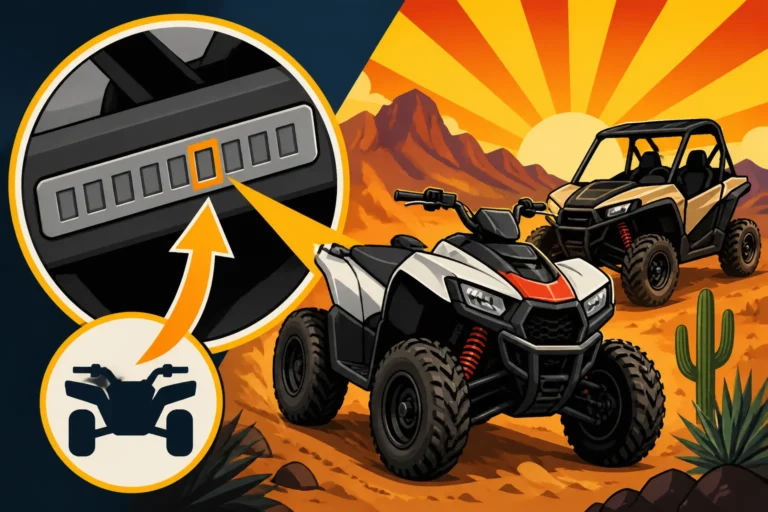
The Vehicle Identification Number, or VIN, is your quad’s unique fingerprint. It's a 17-character alphanumeric code that identifies your specific machine and differentiates it from every other vehicle on the planet. For titling purposes, this number is critical. The MVD uses it to track ownership, verify vehicle details, and check for any outstanding liens or theft reports.
- Where to find the VIN: On most ATVs and UTVs, you'll typically find the VIN stamped onto the frame. Common locations include:
- On the front right-hand frame rail, near the front suspension.
- On the left-hand lower frame rail, often near the engine or footpeg.
- Sometimes on the steering head or beneath the seat.
- For side-by-sides, it might also be on the dash or inside the glove box, in addition to the frame.
Knowing [Where a Polaris RZR Carries Its VIN] can be really helpful if you own one.
- Verifying the VIN: Before you even think about heading to the MVD, double-check that the VIN on your proof of ownership (title, MCO, bill of sale) exactly matches the VIN stamped on your quad. Any discrepancies, even a single character, will cause problems. You'll often need a VIN Inspection as part of the titling process, especially if you're bringing an out-of-state machine into Arizona or if there are any questions about the originality of the VIN. This inspection can be performed by an MVD agent, law enforcement officer, or an authorized third-party provider. The purpose is to ensure the VIN is legitimate and hasn't been tampered with.
Additional Forms and Paperwork You'll Encounter
Beyond your primary proof of ownership, there are several other forms and pieces of information you'll need for a smooth titling experience:
- Application for Arizona Certificate of Title (Form 96-0236): This is the main application form you'll fill out. It requires your personal information, details about the quad, and information about the seller if applicable. Be meticulous when filling this out, as errors can lead to delays.
- Lien Information (if applicable): If you financed your quad, the lender will hold a lien on your title until the loan is paid off. You'll need to provide their information, and the MVD will record the lien on the title. Once you pay off the loan, the lender will issue a [Lien Release Once the Loan Clears], which you'll need to submit to the MVD to get a clear title.
- Sales Tax Payment: Arizona requires sales tax to be paid on the purchase of an OHV. If you bought from a dealer, they collect and remit this. If you bought from a private party, you are responsible for paying the sales tax directly to the MVD during the titling process. Be prepared to pay the current Arizona sales tax rate on the purchase price of the machine. The MVD will have clear guidelines on how to calculate this, but essentially, it's a percentage of the purchase price. For machines brought from out of state, you may be subject to a [Arizona Use Tax After an Out-of-State Buy] if you didn't pay equivalent sales tax in the original state.
- Identification: Always bring a valid, government-issued photo ID (like an Arizona driver's license) with you when conducting MVD business.
- Power of Attorney: If someone else is handling the titling process on your behalf, they will need a properly executed Power of Attorney document. This is often created using legal forms from providers like LawDepot, ensuring it's recognized by the MVD.
It's always a good idea to check the official Arizona MVD website or call a third-party MVD office before you go to confirm you have the absolute latest versions of all forms and all required documents.
Navigating the Arizona Titling Process: Step-by-Step
Once you've gathered all your documents, it's time to actually get that title in your hand. The process itself is fairly straightforward, but knowing what to expect can save you a lot of hassle and waiting around. Whether you prefer the official MVD route or a quicker third-party option, understanding each step is key.
Where to Apply: MVD vs. Third-Party Providers
In Arizona, you generally have two main avenues for titling your quad:
- Arizona Motor Vehicle Division (MVD) Offices: These are the official state-run offices. You can visit one in person to submit your application. MVD offices are known for being thorough, but they can also be notoriously busy, often requiring long waits, especially during peak hours. If you're someone who likes to go straight to the source and doesn't mind a bit of a wait, this is a solid option. They're equipped to handle every type of titling scenario, including the more complex ones like bonded titles or lien issues.
- Authorized Third-Party MVD Providers: Arizona has a fantastic network of privately owned businesses that are authorized by the MVD to perform many of the same services, including titling and registration. These providers often offer quicker service, shorter wait times, and more personalized attention. They are a popular choice for many Arizonans who value convenience. While they charge a small service fee on top of the standard MVD fees, many people find it well worth the cost for the time saved. Just be sure to choose a reputable, authorized provider. You can find a list of [Third-Party MVD Providers That Register OHVs] on the MVD website. Whether you're titling an ATV at an Arizona MVD office or using a third-party, the required documents will be the same.
Regardless of where you go, the essential paperwork, forms, and fees will largely be consistent. The primary difference is the level of convenience and speed of service.
The Application Submission and Review Process
Once you've chosen your venue (MVD or third-party), here’s what the submission and review process typically looks like:
- Present Your Documents: You'll hand over all your gathered documents – the signed-over title or MCO, bill of sale, application form, and your ID.
- VIN Inspection (if required): If your machine is new to Arizona, or if there's any question about the VIN, an MVD agent or a certified third-party inspector will perform a physical VIN inspection. They’ll verify that the VIN on your documents matches the one stamped on the frame. This ensures the machine is correctly identified and helps prevent fraud.
- Application Review: The agent will carefully review all your paperwork. They'll check for proper signatures, correct dates, matching VINs, and that all required fields are filled out on the application form. If anything is missing or incorrect, they will let you know what needs to be fixed. This is why being prepared upfront is so important!
- Fee and Tax Calculation: The agent will calculate the applicable fees, including the title fee itself, any registration fees if you're doing both at once, and most importantly, the sales tax (if you bought from a private party).
- Payment: You'll pay the calculated fees and taxes. Make sure you have the necessary funds or an accepted payment method (cash, check, or credit/debit card, depending on the office).
- Temporary Documentation: Once everything is processed, you'll typically receive a temporary registration document. The actual physical Certificate of Title usually isn't printed on the spot.
- Title Mailing: The Arizona MVD will then mail the official Certificate of Title to you. The wait time for an Arizona title can vary, but generally, you can expect it to arrive in the mail within a few weeks. It's important to be patient during this waiting period. During this time, your temporary registration (if applicable) allows you to legally operate your machine.
Fees, Taxes, and What to Expect for Your Wallet
Titling your quad isn't free, but the fees are generally quite reasonable for the security it provides. Here’s a breakdown of what you can expect:
- Arizona OHV Title Fee: There is a standard fee for issuing a new or transferred title. This fee is relatively modest.
- Sales Tax: This is often the largest cost. As mentioned, if you purchased your quad from a private seller, you are responsible for paying Arizona sales tax on the purchase price. The exact percentage can vary slightly by county or city, but the state rate applies, and it's calculated on the agreed-upon sale price. Be honest about the sale price on your bill of sale, as the MVD may question significantly undervalued machines. You can learn more about [Arizona Sales Tax on a Machine Purchase] in detail.
- Registration Fees: If you're also registering your machine and getting an OHV decal at the same time (which most people do), you'll pay additional annual registration fees and the OHV decal fee. These fees are separate from the title fee and cover your ability to legally ride on public lands.
- Third-Party Provider Fees: If you use a third-party MVD provider, they will charge a small service fee on top of the state-mandated fees. This is their compensation for providing a convenient and often faster service.
- Lien Recording Fee: If you have a loan on your machine, there may be a small fee to record the lien on the title.
It's advisable to check the official Arizona MVD website for the most current fee schedules, as these amounts can change. Always be prepared for the total cost, including sales tax, to ensure a smooth transaction.
Common Titling Challenges and How to Overcome Them
While the titling process is usually straightforward with the right paperwork, sometimes life throws a curveball. From missing previous titles to correcting errors, these challenges can be daunting. But don't worry, there are solutions for most situations.
Titling a Quad Without a Proper Ownership History (Bonded Titles)
This is one of the more challenging scenarios for many Arizona quad owners. You might have bought a machine at a great price, only to discover the seller lost the title, never had one, or the chain of ownership is completely broken. Or perhaps you inherited an old quad from a family member who never bothered with a title. You’re left with a machine that you rightfully own, but lack the critical piece of paper proving it.
In Arizona, the solution for many of these situations is a bonded title. This process involves:
- Attempting to Locate the Previous Owner: The MVD will often require you to make a good faith effort to contact the last known registered owner. This might involve sending certified letters or trying to track them down.
- Affidavit of Ownership: You'll complete an affidavit swearing to the circumstances of how you acquired the vehicle and why you don't have a title.
- VIN Inspection: A VIN inspection is almost always required for a bonded title to ensure the machine isn't stolen and the VIN is legitimate.
- Surety Bond: This is the key component. You’ll need to purchase a surety bond from an insurance company. This bond is essentially an insurance policy that protects the state and any previous unknown owners for a set period (often three years). If a legitimate previous owner comes forward during that period with a valid claim to the vehicle, the bond ensures they can be compensated. The cost of the bond depends on the value of your quad.
- MVD Review: The MVD will review your entire application, including proof of the bond. If approved, they will issue you a title with a "bonded" notation. After the bond period expires (and if no claims are made), you can usually apply for a clear title without the bonded notation.
This process is more involved and takes longer than a standard title transfer. It's designed to protect all parties when the ownership history is murky. If you're facing this, look into [Bonded Title for a Quad in Arizona] for more detailed steps and specific forms needed.
Correcting Errors or Replacing a Lost Arizona Title
Mistakes happen, and titles can go missing. Both scenarios have solutions, but they require attention to detail.
- Correcting Errors: If you receive your title and notice an error – perhaps a misspelled name, an incorrect VIN (though this should have been caught during inspection), or a wrong address – you need to address it promptly. Typically, you'll need to fill out an application for a corrected title, bring your incorrect title, and provide proof of the correct information. There might be a small fee for issuing a corrected title. The MVD wants their records accurate, so they have processes in place for this. If you need to know [Correcting a VIN on an Arizona Record], the MVD can guide you.
- Replacing a Lost Arizona Title: Misplacing an important document like a title is frustrating, but it's not the end of the world. You can apply for a duplicate title. This usually involves:
- Filling out an Application for Duplicate Title.
- Providing your valid photo ID.
- Paying a duplicate title fee.
The MVD will then mail you a new title. It’s a relatively simple process designed to help owners maintain clear records. Just remember, a lost title application means your original title is immediately voided, preventing any fraudulent use if it were to fall into the wrong hands. For comprehensive instructions, check out [Replacing a Lost Arizona Title].
Dealing With Liens on Your Arizona OHV Title
When you finance your quad, the lender wants assurance that they have a legal claim to the machine until it's paid off. This claim is called a lien, and it is recorded on your Certificate of Title.
- Lien Recorded on Title: When you first title a financed machine, the MVD will list the lender as the "lienholder" on the physical title document. Often, the title is sent directly to the lienholder, or a notice is sent to them indicating their lien is recorded.
- Paying Off the Loan: Once you've made your final payment and the loan is satisfied, the lender is legally obligated to release their lien. They will typically send you a Lien Release document (sometimes called a lien satisfaction or payoff letter).
- Getting a Clear Title: To remove the lien from your title and get a "clear" title in your name only, you’ll need to take that official Lien Release document to the MVD or an authorized third-party provider. You’ll submit it along with an application to remove the lien, and usually a small fee. The MVD will then issue a new Certificate of Title that no longer lists the lienholder. This is a crucial step, especially if you plan to sell the machine, as buyers will almost always want a clear title. Don't skip this step! Information on [Liens on an Arizona OHV Title] can help you understand the full scope of this.
Special Scenarios: Buying, Selling, and Inheriting Quads
The titling process isn't just for brand-new machines. It's a critical part of every transaction involving an OHV, from private sales to inheriting a beloved machine. Understanding these specific scenarios will save you a lot of grief.
Titling a Used Quad Purchased Privately in Arizona
Buying a used quad from an individual seller can often be a great deal, but it puts the onus on you, the buyer, to ensure the paperwork is correct. This is where most titling issues arise, so pay close attention.
Here's the checklist for a private purchase:
- Verify the Title: Before you hand over any money, demand to see the original Arizona Certificate of Title. Make sure the seller's name on the title matches their ID. Check for any lienholders listed on the title; if there’s a lien, ensure the seller provides a lien release from the lender before you finalize the purchase. You don’t want to buy a machine with an outstanding loan on it.
- Inspect the VIN: Compare the VIN on the title to the VIN stamped on the quad itself. They must match perfectly.
- Bill of Sale: Create a detailed bill of sale. Even if the state title has space for sale details, a separate bill of sale is smart practice. It should include:
- Full names and addresses of both buyer and seller.
- Date of sale.
- Purchase price.
- VIN, make, model, and year of the quad.
- A statement that the machine is sold "as-is" (unless otherwise agreed).
- Signatures of both buyer and seller. LawDepot offers excellent templates for a [Writing an Arizona Private Sale Agreement] that can help you document everything properly.
- Seller's Signature on Title: Ensure the seller signs the title in the designated "seller" section. In Arizona, this is crucial for transferring ownership.
- Submit to MVD/Third-Party: As the buyer, you are responsible for taking the signed-over title, the bill of sale, and your titling application to the MVD or a third-party provider. You will pay the applicable sales tax and the title transfer fee at this time. Don't delay, as Arizona gives you a limited window (usually 15 days) to title and register a newly purchased vehicle to avoid potential penalties. If you're wondering about [Titling a Machine the Seller Never Signed For], that's a situation that often leads to needing a bonded title.
Registering an Out-of-State Machine as a New Arizona Resident
Welcome to Arizona! If you're moving here with your quad, you'll need to transfer its title and registration to Arizona. It's a standard process, but there are a few extra steps.
- Gather Out-of-State Documents: You'll need your original out-of-state title and current registration.
- Arizona VIN Inspection: Since the machine is new to Arizona, a VIN inspection will likely be required. This can be done by the MVD or authorized third parties. They just want to ensure the VIN is legitimate and the vehicle matches its description.
- Application for Arizona Certificate of Title: Fill out the standard Arizona titling application.
- Sales/Use Tax: If you haven't paid sales tax on the machine in another state, or if the tax paid was less than Arizona's rate, you might owe [Arizona Use Tax After an Out-of-State Buy] to make up the difference. The MVD will calculate this for you.
- Submit Paperwork: Take all your documents, including your Arizona ID, to an MVD office or third-party provider. They will process your application, collect fees and taxes, and then issue your Arizona title and registration.
Remember, Arizona generally requires new residents to register their vehicles within a specific timeframe, so don't put this off! Whether you're [Registering a California Quad After Moving to Arizona] or from any other state, the process will be similar.
Transferring an Arizona OHV After a Death or Divorce
These are sensitive and often complex situations, but the MVD has procedures for transferring ownership in these circumstances.
- After a Death: If an Arizona quad owner passes away, transferring the title depends on whether there was a will, the value of the estate, and whether the quad was jointly owned.
- Small Estate Affidavit: For smaller estates (under a certain monetary threshold), Arizona allows for a Small Estate Affidavit process, which can simplify the transfer of vehicles like quads without full probate. [Arizona Small Estate Paperwork for a Machine] can be a great resource here.
- Probate: For larger estates, the transfer will typically go through the probate process. The executor of the will or the appointed personal representative will have the authority to sign over the title to the inheritor. You'll need certified copies of court documents (Letters Testamentary or Letters of Administration) to prove this authority.
- Joint Ownership: If the quad was titled with "rights of survivorship" (e.g., "John Doe OR Jane Doe"), the surviving owner typically just needs to present a death certificate and apply for a new title in their sole name. If it was "John Doe AND Jane Doe," it usually has to go through probate. It's always a good idea to seek legal advice or consult with the MVD for the exact requirements for [Transferring an Arizona OHV After a Death].
- After a Divorce: In cases of divorce, the transfer of a quad's title is typically dictated by the divorce decree or property settlement agreement.
- The spouse awarded the quad will need to present a certified copy of the divorce decree to the MVD.
- The spouse relinquishing ownership will usually need to sign over the current title.
- If the original title is missing or the other party is uncooperative, the divorce decree itself can often serve as proof of transfer of ownership, allowing the MVD to issue a new title in the name of the spouse awarded the machine. For complex situations, legal forms from LawDepot can assist with formalizing agreements, though court orders are usually the final word here. For guidance on [Taking a Name Off After a Divorce], the MVD can provide clear instructions.
What Happens After You Get Your Title?
Receiving your Arizona Certificate of Title is a huge step, but it’s not the end of your responsibilities as a quad owner. Understanding how your title interacts with other aspects of ownership, how to protect it, and when you might need to present it is crucial for long-term peace of mind.
Connecting Your Title to Your Arizona OHV Decal and Registration
As we discussed earlier, the title is the proof of ownership, while registration and the OHV decal allow you to legally operate your machine on public lands. In Arizona, these three elements are intrinsically linked.
- Sequential Process: You generally need a valid title in your name before you can register your quad and obtain the annual OHV decal. The MVD uses your title to verify you are the rightful owner before they grant you the privilege of operating it on public lands. This is why you often handle titling and initial registration at the same MVD visit or through the same third-party provider.
- Proof of Compliance: Once you have your title, registration, and decal, you’ve met the fundamental state requirements for operating your OHV. Your registration document and the physical decal on your license plate (see [Where the Arizona OHV Decal Goes on the Plate]) serve as visible proof to law enforcement that your machine is properly authorized for the trails.
- Annual Renewal: While your title is a one-time issuance (unless it's lost, corrected, or a lien is removed), your registration and OHV decal require annual renewal. The MVD typically sends out renewal reminders, but it’s ultimately your responsibility to ensure they are current. If you’re ever stopped by an Arizona Ranger on the trails, they’ll want to see proof of registration and a valid decal. [Renewing an Arizona OHV Decal Each Year] is a critical step to stay legal.
Keeping Your Title Safe and Accessible
Your Certificate of Title is one of the most important documents related to your quad, essentially its legal identity. Treating it with care is paramount.
- Store It Securely: Do NOT keep your title on your quad, in your glove box, or anywhere in your trailer. If your machine or trailer is stolen, the thief would then have the title, making it much easier for them to sell it illegally. Instead, store it in a secure location, like a fireproof safe, a safe deposit box, or a secure file cabinet in your home.
- Keep a Copy (Optional): While an official title is always preferred, having a digital scan or a photocopy stored separately can be useful for your records or in an emergency, though it will not replace the original for official transfers.
- Do Not Laminate: It's tempting to protect paper documents by laminating them, but never laminate your Certificate of Title. Lamination can obscure security features, make it difficult to verify authenticity, and some states (including Arizona, like many others) will refuse to accept a laminated title for transfer or other official transactions. If your title gets damaged, apply for a duplicate.
When You Might Need to Show Your Title
While you won't be flashing your title on every trail ride, there are specific situations where you will absolutely need to present the original document:
- Selling Your Quad: This is the most common reason. When you sell your machine, you must sign over and provide the original title to the new buyer. Without it, the buyer cannot legally transfer ownership into their name.
- Gifting Your Quad: If you're giving your quad to a family member or friend, you'll still need to formally transfer the title, even if no money changes hands.
- Removing a Lien: As discussed, to get a clear title after paying off a loan, you'll present your lien release to the MVD, and they'll issue a new title.
- As Collateral: If you use your quad as collateral for a loan, the lender will likely require you to hand over the title so they can record their lien.
- Major Insurance Claims: In some cases, your insurance company might require the original title as proof of ownership if you're filing a total loss claim due to theft or severe damage.
- Certain Legal Proceedings: In rare instances, such as estate settlements, bankruptcy, or other legal disputes, your title might be required as evidence of asset ownership.
Always be prepared to present the original document when one of these scenarios arises. Knowing [Proof of Ownership for an an Arizona Title] is vital for all owners.
Beyond the Basics: Important Considerations for Arizona Quad Owners
As you become more comfortable with the titling process, you might encounter some more nuanced situations that go beyond a simple title transfer. Understanding these can help you make informed decisions and avoid potential pitfalls.
Salvage and Rebuilt Titles: What They Mean for Buyers
When a quad is declared a total loss by an insurance company due to accident, theft, or natural disaster, it's typically issued a salvage title. This indicates that the cost to repair the vehicle exceeded a certain percentage of its value, marking it as severely damaged.
- Salvage Title: A salvage title essentially means the vehicle is not roadworthy or trail-worthy and cannot be registered or operated legally. It’s primarily for parts or for a dedicated builder looking to restore it. If you buy a quad with a salvage title, be aware of its limitations.
- Rebuilt Title: If a salvage-titled quad is repaired and inspected to meet safety standards, it can then be issued a rebuilt title. This signifies that the machine has been restored to an operable condition after being a total loss. While a rebuilt title allows for registration and operation, it often lowers the machine's market value. Buyers are generally cautious of rebuilt titles because they indicate a history of significant damage. Always ask for detailed repair records if you're considering a machine with a rebuilt title. Knowing [What a Rebuilt Title Signals to a Buyer] is important for making a sound purchase.
Registering an OHV Under an Arizona Business or LLC
Many quad owners, especially those who use their machines for business purposes (like guiding tours, ranch work, or construction) or those who want to separate personal and business assets, choose to title and register their OHVs under a business entity, such as an Arizona LLC.
- Legal Separation: Titling under an LLC provides a layer of legal separation between your personal assets and the business's assets. This can be beneficial for liability protection, as the business, not you personally, would primarily be liable for incidents involving the quad.
- Process: The titling process itself is similar to titling under an individual's name, but you'll need to provide documentation for your business entity, such as articles of organization for your LLC and an Employer Identification Number (EIN). The title will be issued in the name of the business.
- Insurance Implications: Insuring a business-owned quad often requires a commercial insurance policy, which differs from a personal policy. You'll need to discuss this with your insurance provider. You can read more about [Registering an OHV Under an an Arizona Business] to understand the full implications.
- Montana LLC Route: Some individuals explore setting up a Montana LLC to title their vehicles, often with the goal of avoiding sales tax or personal property tax in their home state. While this might seem appealing, it comes with significant legal complexities and potential risks, especially for Arizona residents who primarily use their machines here. Arizona authorities are aware of this practice, and riders risk penalties if they are found to be improperly avoiding Arizona taxes and fees. It's often not worth the potential legal headaches. You can explore [The Montana LLC Route and What Arizona Owners Risk] for more information.
The Relationship Between Titling and Insurance
While your title proves ownership, insurance protects your investment and covers liabilities. These two aren't directly processed together by the MVD, but they are intrinsically linked in the real world of OHV ownership.
- Proof of Ownership for Insurance: When you obtain an insurance policy for your quad, the insurance company will require proof of ownership, and your Certificate of Title is the primary document they'll accept. They need to verify that you have an insurable interest in the machine.
- Mandatory for Street Legal: If you make your quad street legal in Arizona (requiring an MC plate), liability insurance becomes mandatory, just like for a car. You'll need to meet Arizona's minimum liability limits. Even if your OHV is not street legal, it's highly recommended to carry insurance to protect against theft, damage, and liability when riding on public lands. [Insuring an ATV in Arizona] is a must-read for any responsible owner.
- Claims Process: In the event of a major claim (like a total loss due to theft or a significant accident), your insurance company will require the title. If the claim results in a total loss, the insurance company will often take possession of the title once they pay out the claim.
Ensuring your quad is properly titled and adequately insured is the best way to protect your investment and enjoy the Arizona trails with ultimate peace of mind.
Disclaimer
This article is for general informational purposes only and does not constitute professional advice. Laws, prices and regulations vary by location and change over time. Consult a qualified professional for guidance on your specific situation.