Registering an OHV in Arizona
Riding the Arizona desert on an ATV or UTV is an experience like no other, but navigating the state's registration and titling requirements for your off-highway vehicle (OHV) can feel like a trek through uncharted territory. Many riders get frustrated trying to figure out if they need a decal, a plate, a title, or all three, and where to even begin with the paperwork. This comprehensive guide will demystify the entire process, walking you through everything you need to legally and confidently hit Arizona's incredible network of trails.
Navigating the Essentials of Arizona OHV Registration
Before you even think about hitting the gas pedal on Arizona's vast and breathtaking trails, there's a crucial first step: understanding the state's registration requirements. This isn't just about following the rules; it's about contributing to the maintenance and future of the trails we all love, and frankly, avoiding a costly ticket. For many newcomers to the OHV scene, or even seasoned riders moving to Arizona, the system can seem a little complicated, mixing decals, titles, and sometimes even traditional license plates. But once you break it down, it's pretty straightforward, designed to ensure safety, fund trail systems, and track ownership.
Who Needs to Register an OHV in Arizona?
This is often the first question on everyone's mind, and it's a critical one. Generally, if you plan to operate an OHV on public lands and trails in Arizona, it needs to be registered and display the current OHV decal. An "OHV" in Arizona broadly refers to any motor vehicle designed for or capable of travel over unimproved terrain and that is not otherwise registered as a street-legal vehicle. This includes a wide array of machines: ATVs (all-terrain vehicles), UTVs (utility terrain vehicles, often called side-by-sides), dirt bikes, sand rails, and even larger off-road vehicles that weigh 1,800 pounds or less. If your machine weighs more than 1,800 pounds but is designed for off-highway use, it still needs the OHV decal.
There are a few key exceptions, of course. If you only ride your machine on private property that you own or have permission to use, you don't need the decal. Similarly, vehicles registered with a street-legal license plate and that meet all street-legal requirements in Arizona generally don't need the separate OHV decal, as their street registration covers public land use. However, even if your machine is street-legal, it's a good idea to understand the distinction, as the OHV decal funds dedicated off-highway programs. We'll delve deeper into the benefits of that decal shortly.
It's also worth noting that non-residents visiting Arizona often wonder if their out-of-state registration is sufficient. The answer is usually no. If you're coming from out of state and plan to ride on Arizona's public lands, you'll need to purchase a non-resident OHV decal. This ensures that everyone who enjoys Arizona's trails contributes to their upkeep, regardless of where their machine is primarily registered. This decal is specific to Arizona and helps maintain the incredible riding opportunities here.
The Difference Between Street-Legal and Off-Highway Registration
This is where some of the confusion often creeps in for new riders or those looking to expand their riding options. In Arizona, an OHV can be registered in one of two primary ways: as a purely off-highway machine or as a street-legal vehicle that can also be used off-highway. The type of registration dictates what kind of plate you receive and which rules apply to your machine.
An OHV registered for off-highway use only will receive an "RV" (Recreational Vehicle) license plate. This plate is typically smaller than a standard car plate and is specifically designated for vehicles that operate primarily on trails and unpaved surfaces. Crucially, even with an RV plate, your machine must also display the annual [Arizona's Annual OHV Decal Explained]. The RV plate itself doesn't grant you access to public roads; it merely provides a unique identifier for your off-highway machine and is required for proper decal placement. This setup is perfect for riders who intend to trailer their machines to trailheads and stick exclusively to the dirt.
On the other hand, if you want the flexibility to ride your OHV on public roads (where allowed, of course), you'll need to make it "street-legal." This process involves adding specific equipment like turn signals, a horn, mirrors, and sometimes more, to meet Arizona's Department of Transportation (ADOT) standards for on-road vehicles. Once converted and inspected, your OHV would receive an "MC" (Motorcycle) license plate. A machine with an MC plate generally does not need the separate OHV decal, as its full street registration implicitly covers public land use while also allowing access to many roads. However, the costs associated with making an OHV street-legal and maintaining that status can be higher, and you'll be subject to all traffic laws just like any other vehicle on the road.
Why Arizona's OHV Program is So Important
It's easy to see registration as just another hoop to jump through, another fee to pay. But Arizona's OHV program is actually a shining example of how user fees can directly benefit the user community. The funds generated from the sale of those annual OHV decals are specifically earmarked for enhancing and preserving our riding opportunities. [What the OHV Decal Buys an Arizona Rider] is more than just a sticker; it's an investment in the trails we love.
This money goes directly into things like constructing and maintaining OHV trails, which means fewer washouts, better signage, and more accessible areas for everyone. It also funds safety and education programs, helping to ensure that riders of all ages understand safe operating practices and environmental stewardship. Beyond that, the funds support critical law enforcement efforts to patrol trails, respond to incidents, and prevent illegal riding, which protects both riders and the delicate desert environment.
Without this program, the burden of trail maintenance and management would fall to other sources, potentially leading to fewer open trails, degraded conditions, or even closures. So, when you purchase that decal, you're not just complying with the law; you're actively contributing to a vibrant, sustainable future for off-highway recreation in Arizona. It's a way for the riding community to take ownership of its passion and ensure future generations can experience the same incredible adventures.
The Arizona OHV Decal: Your Ticket to the Trails
The annual Arizona OHV Decal is arguably the most recognizable part of off-highway vehicle compliance in the state. It's that little sticker you see on the upper-left corner of an OHV's license plate, signifying that the machine is current with its contribution to the state's OHV program. But it's much more than just a sticker; it represents access, funding, and a commitment to responsible recreation. Understanding its purpose, how to get one, and how to properly display it is essential for every Arizona OHV enthusiast.
What the OHV Decal Covers and What it Funds
As mentioned before, the OHV decal is a dedicated funding mechanism for Arizona's thriving off-highway vehicle community. Every dollar generated from its sale goes directly into the Arizona Off-Highway Vehicle Recreation Fund. This fund is critical for maintaining and improving the vast network of trails across the state, from the red rocks of Sedona to the sandy washes near Lake Havasu. [What the OHV Decal Buys an Arizona Rider] includes things like repairing eroded sections of trail, installing informative signage, and creating designated staging areas with amenities like restrooms and trash receptacles.
Beyond infrastructure, the decal funds also support vital safety and education initiatives. These programs teach responsible riding practices, promote environmental awareness, and help reduce accidents. They also cover the costs of law enforcement patrols by agencies like the Arizona Game and Fish Department and county sheriffs, who ensure compliance with OHV laws and provide assistance to riders in need. Essentially, the decal is your passport to legally explore Arizona's public lands, while simultaneously investing in the very resources you use. It's a prime example of a user-pays, user-benefits system that has kept Arizona at the forefront of OHV recreation.
How to Obtain Your Annual OHV Decal
Getting your annual OHV decal is a fairly straightforward process, primarily handled through the Arizona Game and Fish Department (AZGFD). The easiest and most common way is to purchase it online directly from the AZGFD website. This typically involves creating an online portal account, if you don't already have one, and providing your vehicle information. You'll need details like your VIN (Vehicle Identification Number) and proof of ownership.
Once purchased, the decal is mailed to your registered address. It's important to remember that while the decal itself is what allows you to ride legally, your machine still needs a valid [Getting an Arizona Certificate of Title for a Quad] and an Arizona license plate (RV plate for off-highway only, or MC plate if street-legal). The decal adheres directly to this plate. The process also requires you to complete a mandatory online OHV safety course if you haven't already. This course is free and covers crucial information about safe and ethical riding in Arizona.
If you prefer an in-person transaction, you might be able to purchase the decal at select AZGFD offices or authorized vendors, though online is heavily encouraged for convenience. Be sure to check their website for current locations and operating hours. Keep in mind that the decal is valid for one year from the date of purchase, not a calendar year, so note your expiration date and plan for [Renewing an Arizona OHV Decal Each Year] well in advance.
Decal Placement and What to Do When it Fades
Once your shiny new OHV decal arrives in the mail, proper placement is key. The rule is simple: the decal must be affixed to the upper-left corner of your Arizona OHV license plate. It should be clearly visible and not obstructed by any part of your vehicle or plate frame. Attaching it anywhere else, like directly to your fender or helmet, is not compliant and could still result in a citation if a ranger can't easily see it in the correct location.
The Arizona sun can be brutal, and over time, even the most durable decals can fade, crack, or peel. When this happens, it can become difficult for law enforcement to verify its validity. If your decal is no longer clearly legible, or if it's damaged to the point where it's no longer securely affixed, you'll need to obtain a replacement. This usually involves contacting the Arizona Game and Fish Department and following their process for ordering a new one. Don't wait until you're pulled over; proactive replacement keeps you in compliance and avoids potential hassle on the trail.
Similarly, if you ever need to replace your license plate for any reason (loss, damage, or renewal of a street-legal plate), you'll also need to get a new OHV decal to affix to the new plate. The decal is tied to the plate and the vehicle, not just the vehicle itself. Always double-check that your decal is present, legible, and correctly placed before heading out for a ride.
Securing Your Arizona Certificate of Title for an OHV
Beyond the annual decal, having a clear and properly recorded Certificate of Title is the absolute bedrock of OHV ownership in Arizona. It's the legal document that proves you own your machine, much like the title to your car. Without it, you could face significant hurdles when trying to register, sell, or even reclaim your OHV if it's ever stolen. Understanding the titling process is crucial, whether you're buying a brand-new side-by-side or picking up a classic dirt bike from a private seller.
The Importance of a Clean Title and Proof of Ownership
A Certificate of Title is more than just a piece of paper; it's the official record of legal ownership for your OHV. In Arizona, the Arizona Department of Transportation (ADOT), through its Motor Vehicle Division (MVD), issues these titles. When you have a "clean title," it means there are no outstanding liens (loans) on the machine, and the ownership chain is clear and unbroken. This is paramount for several reasons. First, you cannot officially register an OHV in Arizona without a valid title in your name. The title is the foundation upon which all other registration steps are built.
Second, if you ever decide to sell your OHV, a clean title is absolutely essential for a smooth transaction. Buyers will (and should!) demand to see the title, ensuring they are purchasing the machine from its rightful owner and that they won't inherit any hidden debts. A missing or improperly transferred title can be a major red flag and severely complicate the sale, potentially even rendering the machine difficult or impossible to sell legally. Using a reliable resource for documentation, such as LawDepot, can help ensure you have all the necessary paperwork, like a proper bill of sale, when buying or selling, which then aids in the titling process.
Finally, in the unfortunate event that your OHV is stolen or involved in an accident, having the title in your name provides the definitive proof of ownership needed for insurance claims and recovery efforts. Without it, proving your claim could be incredibly challenging and time-consuming. It’s always best to keep your title in a safe place, not on the machine itself, and know where to find it when needed.
Common Titling Scenarios: New Purchases, Used Machines, and Missing Paperwork
The process of obtaining a title can vary slightly depending on how you acquire your OHV. If you purchase a brand-new ATV or UTV from an authorized dealer in Arizona, they will typically handle all the initial titling and registration paperwork for you as part of the sale. They'll submit the manufacturer's certificate of origin (MCO) and other necessary forms to the MVD, and your title will eventually be mailed to you. This is usually the easiest route, as the dealer acts as an intermediary.
Buying a used OHV from a private seller, however, places the responsibility on you, the buyer, to ensure the title is properly transferred. This is where many people run into issues. You'll need the seller to sign over their existing Arizona title to you, indicating the sale price and date. It's crucial to verify the VIN on the title matches the machine itself. You'll then take this signed title, along with a [What an Arizona Bill of Sale Should Carry] (which you can often find templates for on sites like LawDepot), and sometimes a lien release if there was a loan, to the MVD or a third-party service to have a new title issued in your name.
What happens if you buy a used machine and the seller doesn't have a title, or the title is missing? This is a tricky situation. Arizona does have processes for obtaining a bonded title or a title for machines with no ownership history, but these can be complex and require additional steps, such as obtaining a surety bond or undergoing a VIN inspection. Avoid purchasing a machine without a title unless you are fully prepared for the extra effort and potential costs involved in securing one.
Addressing Liens and Transfers on Your Arizona OHV Title
When you finance an OHV purchase, whether new or used, the lender typically places a "lien" on the title. This means the lender has a legal claim to the machine until the loan is fully paid off. The lienholder's name will appear on the Certificate of Title. You cannot legally transfer ownership of the OHV until this lien is satisfied and the lender provides a lien release.
Once you've paid off your OHV loan, the lender should send you a lien release document. It's imperative to keep this document safe and eventually submit it to the MVD so they can remove the lienholder's name from your record and issue you a "clean" title. While you can often sell a machine with a lien, the process is more complicated, requiring coordination with the lender to release the lien at the time of sale. Most buyers prefer to purchase machines with clear titles, so it's always best to get that lien released as soon as your loan is paid off.
Transferring an OHV title after a sale or gift is also a critical step. When selling your machine, you sign the title over to the buyer. As the buyer, you then have 15 days from the date of purchase to apply for a new title in your name to avoid late fees. This ensures the MVD records reflect the current legal owner. If you're transferring an OHV within the family, perhaps from a parent to a child, the same title transfer process generally applies, although the declared sale price might be zero for a gift. Accurate and timely title transfers protect both the buyer and the seller, establishing clear ownership and responsibility.
The Step-by-Step Process for Registering Your OHV
Once you understand the requirements for the OHV decal and securing your title, it's time to actually get the registration done. This involves gathering your documents and choosing where to submit them. In Arizona, you typically have two main avenues for registration: the Motor Vehicle Division (MVD) offices or one of the many authorized third-party providers. Both options will get the job done, but they offer different experiences.
Registering Through Arizona MVD Offices
The Arizona Motor Vehicle Division (MVD) is the state agency responsible for vehicle registrations, titling, and driver's licenses. Visiting an MVD office is the traditional way to register your OHV. You'll go in person, often take a number, and wait for your turn to speak with a customer service representative. They will review your documents, process your application, and collect any applicable fees.
The benefit of using a direct MVD office is that you're dealing directly with the state agency. While wait times can sometimes be long, especially during peak hours, you often get direct answers to complex questions, and they handle all aspects of the process. This can be reassuring for those who prefer to go straight to the source. You'll need to make sure you have all your paperwork in order, as an incomplete application will mean another trip. Remember to bring your proof of ownership (title or MCO), identification, and possibly a bill of sale. [Titling an ATV at an Arizona MVD Office] covers more specifics.
One important note for MVD offices: while they handle the title and plate issuance, the annual OHV decal itself is typically purchased through the Arizona Game and Fish Department, usually online. So, you might find yourself completing two separate transactions with two different state agencies to be fully compliant, unless you obtain a street-legal (MC) plate which generally negates the need for the separate OHV decal. Always check the specific requirements before your visit to ensure you're not missing any crucial steps.
The Convenience of Third-Party MVD Providers
For many Arizona residents, third-party MVD providers offer a much more convenient alternative to the state's official MVD offices. These are privately owned businesses that are authorized by the MVD to perform many of the same services, including OHV titling and registration. They often have shorter wait times, more flexible hours, and a more personalized customer service experience. [Registering Through Arizona MVD or a Third Party] highlights the differences.
These third-party providers can process your title transfers, issue license plates, and handle your OHV registration applications. They typically charge a small service fee on top of the standard state fees, but for many people, the saved time and reduced hassle are well worth the extra cost. It's a trade-off that many busy individuals appreciate. You can often find these providers scattered throughout Arizona communities, making them more accessible than the often centralized MVD offices.
When choosing a third-party provider, look for one that is clearly licensed and reputable. A quick online search or recommendations from other riders can help. Just like with the MVD, you'll need to bring all your necessary documents. While these providers can streamline much of the process, remember that the annual OHV decal is still typically an Arizona Game and Fish Department item, so plan accordingly.
Essential Documents to Bring for Registration
Whether you go to the MVD or a third-party provider, being prepared with all the necessary documents is critical for a smooth registration process. Showing up with missing paperwork is a surefire way to get sent home and delay your ability to hit the trails. Here’s a rundown of what you’ll generally need:
Required Documents for Arizona OHV Registration:
| Document Type | Purpose | Notes |
|---|---|---|
| Proof of Ownership | Establishes who legally owns the OHV. | – Certificate of Title: For used machines. Must be signed over by seller. |
| – Manufacturer's Certificate of Origin (MCO/MSO): For brand-new machines. | ||
| Current ID | Verifies your identity as the applicant. | – Valid Arizona Driver's License or State ID. |
| – If new to Arizona, an out-of-state ID may be accepted initially, but you'll need to obtain an AZ ID. | ||
| Bill of Sale | Documents the purchase price and terms of sale. | – Especially crucial for private sales. Can affect sales tax calculation. Templates available via LawDepot. |
| Lien Release | Proves any outstanding loans on the OHV have been paid off. | – Only if there was a lienholder on the previous title. |
| Proof of Arizona Residency | For new residents or specific circumstances. | – Utility bill, lease agreement, etc., showing an Arizona address. |
| Payment | For registration fees, titling fees, and any applicable sales tax. | – Check accepted payment methods (cash, credit/debit card, check). |
| Emissions Test (if applicable) | Required for some street-legal conversions in specific counties. | – Only for street-legal machines registered in parts of Maricopa or Pima County. Not for off-highway only. |
Always double-check the specific requirements on the Arizona MVD website or with your chosen third-party provider before heading out. Having everything organized will save you a lot of time and frustration.
Special Registration Considerations for Arizona Riders
Arizona is a diverse state, and its OHV community is equally varied. This means there are several special scenarios and exemptions that riders might encounter when it comes to registration. Whether you're moving into the state, bringing in an OHV from elsewhere, or using your machine for agricultural purposes, understanding these nuances is crucial for staying compliant and avoiding unnecessary headaches.
Registering an Out-of-State Machine in Arizona
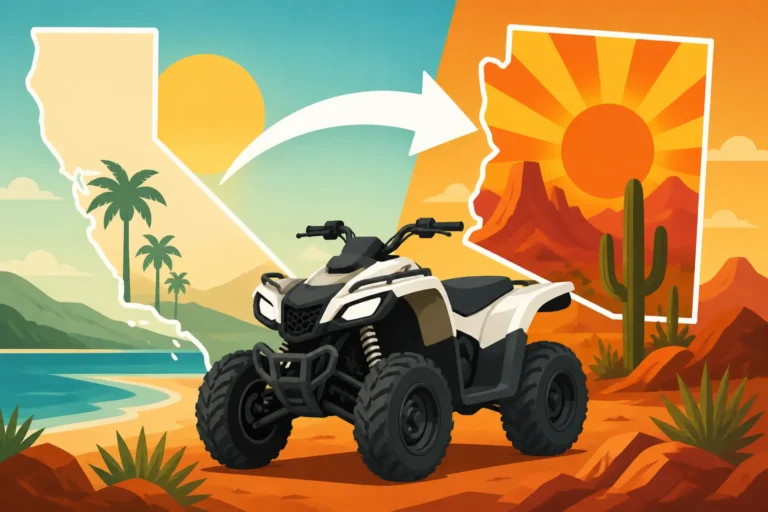
If you've bought an OHV from a dealer or private seller in another state and are bringing it into Arizona, the registration process will have a few extra steps compared to an in-state purchase. The goal is to get an Arizona title and then proceed with the regular OHV decal. [Registering an Out-of-State Machine in Arizona] involves some specific paperwork.
First, you'll need the out-of-state title. Ensure it's properly signed over to you by the previous owner, and if there was a lien on it, make sure you have the lien release. You'll also need a bill of sale, especially if sales tax wasn't collected in the original state, as Arizona will likely charge you [Arizona Sales Tax on a Machine Purchase] or use tax. You'll take these documents to an Arizona MVD office or authorized third-party provider to apply for an Arizona Certificate of Title. They will verify the VIN, and in some cases, may require a physical inspection of the vehicle to ensure the VIN matches the paperwork.
Once you have an Arizona title issued in your name, you can then proceed to obtain your Arizona OHV license plate (RV or MC, depending on your intent) and, if applicable, purchase your annual OHV decal from the Arizona Game and Fish Department. It's important to complete this process promptly after bringing the machine into the state to avoid any penalties or issues. The state wants to ensure all vehicles operating on public lands are properly documented and contribute to the OHV fund.
New Arizona Residents and Their OHV Registration Requirements
Welcome to Arizona! If you're a new resident moving to the Grand Canyon State and bringing your OHV with you, you'll need to register it in Arizona. The state gives new residents a grace period, but it's important not to delay, typically you have 15 days once you establish residency. This process is very similar to registering an out-of-state machine that was just purchased.
You'll need your out-of-state title, proof of identity, and proof of your new Arizona residency (like a utility bill or lease agreement). Just like with an out-of-state purchase, you'll apply for an Arizona Certificate of Title first. Be prepared for potential [Arizona Use Tax After an Out-of-State Buy] if you haven't paid sales tax on the machine in another state, or if the tax paid was less than Arizona's rate. You'll then get your Arizona license plate and, if necessary, purchase the annual OHV decal.
Even if your OHV was perfectly registered and legal in your previous state, those registrations typically aren't valid for ongoing use in Arizona once you've established residency. The state wants all its residents to be part of the Arizona OHV program, ensuring everyone contributes to trail maintenance and safety initiatives. It's a minor hurdle for the incredible riding opportunities that await you!
Exemptions for Ranch, Farm, and Certain Utility Machines
Not every off-highway machine needs the annual OHV decal, even if it touches public land occasionally. Arizona offers some specific exemptions, particularly for vehicles used primarily for agricultural purposes or for specific types of governmental or utility work. These exemptions are designed to avoid burdening those who use OHVs as essential tools for their livelihoods, rather than primarily for recreation.
For example, an OHV used exclusively for agricultural purposes on a farm or ranch, or when traveling on a public road within one mile of the farm or ranch, might be exempt from the decal requirement. This would apply to a UTV used to haul feed, check fences, or move equipment on your property. Similarly, vehicles owned and operated by government agencies (like a fire department's ATV) or utility companies for official business are generally exempt.
However, these exemptions are often narrowly defined. If that same ranch UTV is then taken out for a recreational ride on a designated OHV trail away from the farm, it would typically need the decal. It's the intent and location of use that often determines eligibility for an exemption. If you believe your OHV falls under one of these categories, it's always best to consult the Arizona Game and Fish Department or MVD directly to confirm your eligibility and understand any specific conditions or limitations. Misinterpreting an exemption could still lead to a citation on the trail.
Keeping Your Arizona OHV Registration Current
Getting your OHV registered and titled is a great first step, but it's not a one-time affair. Just like any other vehicle, your off-highway machine requires ongoing maintenance of its legal status. This means understanding how to renew your annual decal, what to do if your plates or decals get lost or damaged, and how to update your records when life changes. Staying on top of these details ensures uninterrupted access to Arizona's trails and keeps you compliant with state law.
Annual Renewal of Your Arizona OHV Decal
The Arizona OHV Decal is an annual requirement, meaning it needs to be renewed every year. Unlike some vehicle registrations that might run on a calendar year or your birth month, the OHV decal is valid for 12 months from the date of purchase. For example, if you bought your decal on March 15th, it will expire on March 15th of the following year. This rolling expiration date means it's extra important to keep track of your own renewal date.
Thankfully, [Renewing an Arizona OHV Decal Each Year] is typically a straightforward process, primarily done online through your Arizona Game and Fish Department portal account. You'll log in, find your registered OHV, and follow the prompts to purchase a new decal. The AZGFD usually sends out reminders via email as your expiration date approaches, but it's ultimately your responsibility to ensure it's renewed on time. Once purchased, the new decal will be mailed to you.
Riding with an expired decal is just as problematic as riding with no decal at all and can lead to the same penalties. So, make it a habit to check your decal's expiration date annually and renew it before it lapses. A fresh decal on your plate signals to law enforcement that you're a responsible rider contributing to the OHV program.
Replacing a Lost, Stolen, or Damaged Decal or Plate
Life happens, and sometimes decals or license plates can be lost, stolen, or damaged beyond recognition. The desert environment, with its sun, dust, and brush, can be particularly tough on these items. If you find yourself in this situation, don't just hope for the best; take immediate steps to get replacements.
If your OHV decal is lost, stolen, or so faded/damaged that it's illegible, you'll need to contact the Arizona Game and Fish Department to inquire about ordering a replacement. There's usually a small fee involved, and you'll likely need to verify your vehicle information. It's crucial to replace it as soon as possible, as riding without a visible, valid decal can lead to citations.
For a lost or stolen license plate (either an RV or MC plate), you'll need to go through the Arizona MVD or a third-party provider. You'll typically need to file a police report if it was stolen and then apply for a replacement plate. Again, there will be a fee. If you had an OHV decal on that lost or stolen plate, remember that you'll also need to get a new decal for your new plate. The goal is always to ensure your machine has a clearly visible, current, and correctly affixed plate and decal (if applicable) whenever you're on public lands.
Updating Your Records: Address Changes and Ownership Transfers
Keeping your OHV records up-to-date with the state is just as important as keeping your decal current. If you move, change your mailing address, or transfer ownership of your machine, these details need to be reflected in the MVD and AZGFD systems.
Changing your address is probably the most common update. If you've moved within Arizona, you'll need to notify the Arizona MVD of your new address. This can often be done online through the MVD's portal. It's essential that your mailing address is current so you receive important notices, such as renewal reminders for your registration and any physical decals or plates mailed to you. Also, ensure your address is updated with the Arizona Game and Fish Department for your OHV decal records.
When you sell your OHV, it's not enough to just sign over the title. As the seller, it's a good practice to notify the MVD that you've sold the vehicle to release yourself from any future liability. The new owner is responsible for transferring the title into their name, but a seller's report of sale can provide an extra layer of protection for you. Similarly, if you're taking your OHV off the road permanently, perhaps by junking it or stripping it for parts, you should consider notifying the MVD to avoid any lingering registration requirements. These steps ensure that state records accurately reflect ownership and responsibility for every OHV.
Understanding the Penalties for Non-Compliance
Nobody wants to have their exciting day on the trails cut short by a law enforcement officer, but ignorance of the law is never an excuse. Arizona takes its OHV regulations seriously, and for good reason: they fund the trails, ensure safety, and protect the environment. Understanding the penalties for non-compliance, particularly for riding an undecaled or improperly plated machine, is crucial for every rider. It's not just about avoiding a ticket; it's about being a responsible member of the OHV community.
What Happens if You Ride an Undecaled Machine
Riding an OHV on Arizona's public lands without a current, properly displayed OHV decal is a violation of state law, and law enforcement officers are actively patrolling to ensure compliance. The most immediate consequence is typically a citation or ticket. [Penalties for an Undecaled Machine in Arizona] can include fines that vary depending on the jurisdiction and the officer's discretion, but they can be substantial. These fines are often designed to be greater than the cost of simply buying the decal in the first place, serving as a deterrent.
Beyond the monetary fine, an officer might also require you to immediately trailer your machine off the trail, ending your ride prematurely. This can be incredibly frustrating, especially if you've traveled a long distance to reach a trailhead. In some cases, repeated offenses or particularly egregious violations could lead to more severe actions, though these are less common for a simple missing decal. The goal of law enforcement is largely educational and preventative, ensuring everyone understands and follows the rules.
The Arizona Game and Fish Department, along with county sheriffs and other land management agencies, regularly conduct checkpoints and patrols on popular OHV routes. They are specifically looking for valid decals and plates. Investing in that annual decal is a small price to pay for peace of mind and full enjoyment of Arizona's stunning backcountry.
Consequences of Missing or Improper Plates
Just like the decal, having a proper Arizona license plate on your OHV is a legal requirement if you're operating on public lands. This means either a valid "RV" plate for off-highway-only machines (which then requires the OHV decal) or an "MC" plate if your machine is street-legal. Riding with a missing plate, an expired plate, or an improperly displayed plate can also lead to citations and fines.
An officer will likely issue a ticket if your plate is missing or expired. If your machine is registered as off-highway only with an RV plate, but you're found operating it on a paved public road where OHVs are not allowed, you could face additional charges for illegal road use, which can carry even stiffer penalties. Similarly, if your street-legal machine has an MC plate but is missing essential street-legal equipment (like headlights, taillights, turn signals, or mirrors), you could be cited for those deficiencies.
The plate serves as a primary identifier for your vehicle, linking it to your registration and title. It's what allows law enforcement to quickly verify your compliance and ownership. Ensuring your plate is securely attached, clearly visible, and current is a basic responsibility of OHV ownership. Don't give a ranger a reason to stop you; make sure your machine is squared away before you head out.
What Law Enforcement Looks For on the Trail
When you encounter law enforcement on an Arizona OHV trail, they're not there to ruin your fun, but to ensure everyone's safety and compliance with the law. They're trained to quickly identify common violations. Knowing what they're looking for can help you be prepared and confident during a brief interaction.
Here's a quick checklist of what an Arizona ranger or deputy will typically check:
- Valid OHV Decal: Is it present, current, and properly affixed to the upper-left corner of the license plate? This is often the first thing they'll look for.
- Valid License Plate: Is an Arizona RV or MC plate present, current, and clearly visible?
- Proof of OHV Decal Course Completion: For many riders, especially those under a certain age or those new to Arizona, proof of having completed the [Arizona's Free Mandatory OHV Decal Course] is required.
- Arizona State Trust Land Permit (if applicable): If you're riding on State Trust Land, do you have a valid permit? [Arizona State Trust Land Recreational Permits] are required for access.
- Driver's License (for street-legal machines): If you're operating a street-legal OHV on a public road, do you have a valid driver's license?
- Spark Arrestor: Is your machine equipped with a US Forest Service approved spark arrestor? This is a critical fire prevention measure in Arizona's dry climate.
- Safety Equipment: Are helmets worn by riders under 18? Are seatbelts and safety nets used in UTVs?
- Proof of Insurance (for street-legal machines): If your OHV is street-legal, do you have proof of the required liability insurance? [Insuring an ATV in Arizona] will have more details on this.
- Safe Operation: Are you riding responsibly, within posted speed limits, and not engaging in reckless behavior or riding off-trail?
- Open Containers: Are there any open alcoholic beverage containers? Arizona's DUI laws apply to OHVs.
Being able to confidently present these items and demonstrating safe, responsible riding will usually result in a friendly wave and a continuation of your ride.
Beyond Registration: Other Crucial Arizona OHV Requirements
While getting your OHV registered and titled in Arizona is foundational, it's by no means the only set of rules and requirements riders need to be aware of. The state has a comprehensive approach to OHV recreation, encompassing safety education, land access permits, and even financial protection. Overlooking these additional, yet equally critical, elements can lead to fines, restricted access, or worse, an unsafe riding experience. Let's delve into what else every Arizona OHV enthusiast needs to know.
The Mandatory Arizona OHV Decal Course
As of January 1, 2025, Arizona implemented a significant change to its OHV program: a mandatory online OHV safety education course. If you're getting an OHV decal, you (and anyone who will operate the machine) are now required to complete this course. This isn't just busywork; it's a vital program designed to enhance rider safety, promote ethical riding practices, and ensure riders understand their responsibilities to the environment and other trail users. [Arizona's Free Mandatory OHV Decal Course] is provided free of charge by the Arizona Game and Fish Department.
The course covers a wide range of topics, including basic OHV operation, riding etiquette, environmental awareness, and specific Arizona laws and regulations. It's designed to be engaging and informative, making sure that riders of all experience levels are up-to-date on best practices. Upon successful completion, you'll receive a certificate or record of completion, which you should keep accessible (either digitally on your phone or a physical copy) while riding. Law enforcement officers may ask for proof of completion during trail stops.
This educational requirement is a proactive measure to reduce accidents and conflicts on Arizona's increasingly popular trails. By ensuring all riders have a baseline knowledge of safe and responsible riding, the state aims to preserve its natural resources and maintain a positive experience for everyone who ventures into the backcountry.
Arizona State Trust Land Recreational Permits
Arizona boasts millions of acres of beautiful public lands, but not all "public" land is the same when it comes to access. Many riders mistakenly believe that once they have their OHV decal, they can ride anywhere. However, a significant portion of Arizona's landscape is managed as "State Trust Land," and while it's public, it operates under different rules than federal lands (like National Forests or BLM land). To legally access and recreate on Arizona State Trust Land, including simply driving across it to reach a federal trail, you need a separate [Arizona State Trust Land Recreational Permits].
These permits are issued by the Arizona State Land Department (ASLD) and are required for activities like hiking, camping, photography, and, yes, OHV riding on Trust Land. The funds generated from these permits go towards supporting public institutions like schools and universities, as the ASLD manages these lands to generate revenue for specific beneficiaries. The permit is typically inexpensive and can be purchased online or by phone.
Riding on State Trust Land without a permit is considered trespassing and can result in significant fines. It's crucial for riders to understand land designations and carry the appropriate permits. Tools like Motor Vehicle Use Maps (MVUMs) for federal lands and maps provided by the ASLD can help you identify land ownership. Always check before you ride, and if in doubt, get the permit. It’s a small investment to ensure legal and responsible access to vast areas of Arizona.
Insuring Your ATV or UTV in the Grand Canyon State
While Arizona does not generally require liability insurance for OHVs that are only used off-highway, it's an absolutely crucial consideration for any responsible owner. Just because it's not mandated doesn't mean you shouldn't have it. Accidents happen, and the costs associated with property damage, medical expenses, or legal fees can be astronomical without proper coverage. [Insuring an ATV in Arizona] is about protecting yourself and your investment.
If your OHV is converted to be street-legal and obtains an "MC" license plate, then Arizona's minimum liability insurance requirements do apply, just like any other vehicle on the road. This typically involves minimum coverage amounts for bodily injury and property damage. Without this coverage, you could face penalties for driving uninsured on public roads.
Even for off-highway-only machines, many riders choose to carry comprehensive coverage for their OHV. This can protect against theft, fire, vandalism, and damage from collisions. Some homeowner's insurance policies might offer limited coverage for OHVs, but often only when the machine is on your property. For full protection, a dedicated OHV insurance policy from a specialized provider is usually the best bet. These policies are tailored to the unique risks of off-road riding and can cover everything from machine damage to medical costs for riders and passengers. Don't let an unexpected incident turn your desert adventure into a financial nightmare; explore your insurance options.
Disclaimer
This article is for general informational purposes only and does not constitute professional advice. Laws, prices and regulations vary by location and change over time. Consult a qualified professional for guidance on your specific situation.